

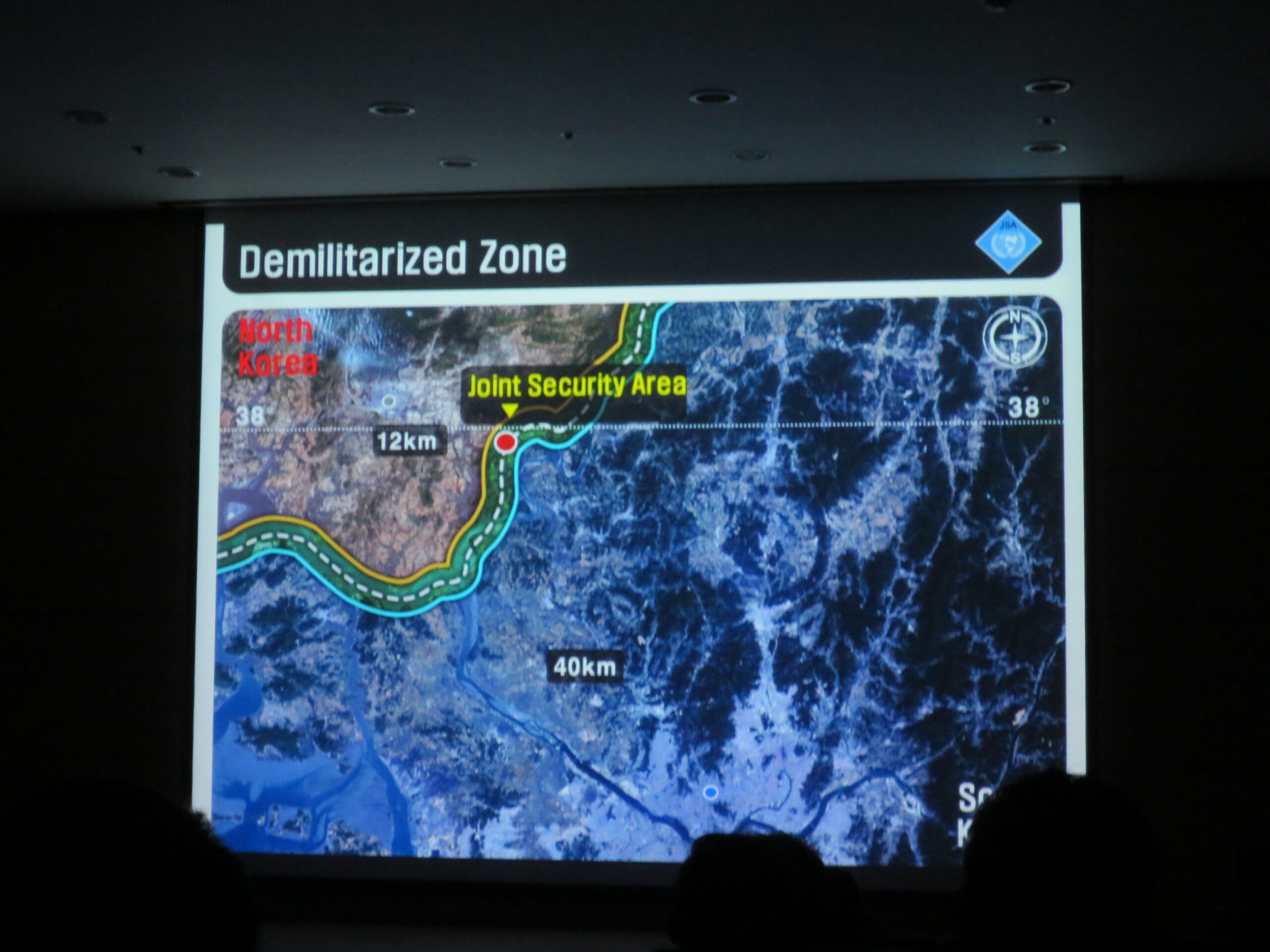
In January 2017, I scheduled a trip through Koridoor tours to visit the Korean DMZ – the demilitarized zone between North and South Korea. In particular, I wanted to see the Joint Security Area (JSA) in the village of Panmunjom – the area that straddles the border between North and South Korea. This seemed like the safest way to visit North Korea.
Safest but not simple. Koridoor is quick to point out that this is an active military area. For this reason, tours to the JSA can be canceled on short notice due to any increase in hostilities between the two sides. Indeed, one section of the JSA, the Bridge of No Return, has been off-limits for several months due to tensions. Passports are required. Attire should be modest and not military in appearance (cargo pants seem to be OK). Any suspicion of alcohol use will have you removed from the tour.
Visit the JSA. See the gift shop.
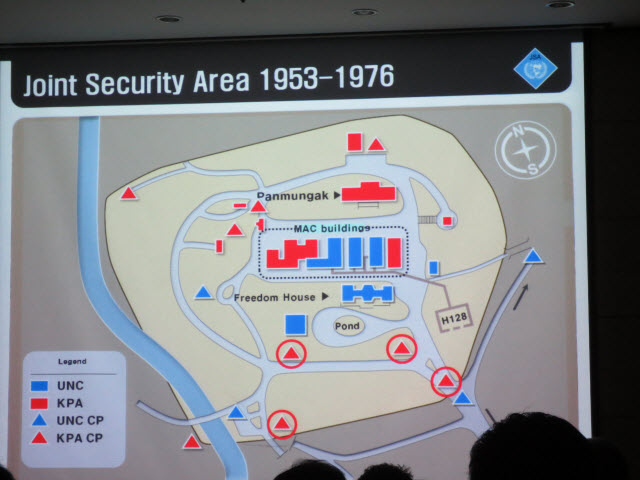
It is a full-day event – departing the USO building at Camp Kim in Seoul at 7.30am and returning about 15.30pm. We loaded ourselves on the bus on the dark January morning and made our way to the UN command post, Camp Bonifas, about 90 minute away. At Camp Bonifas, our credentials were checked again. Then we left the bus for an official briefing prior to entering the JSA. The briefing provided an overview of the Korean War and the curious circumstances that created the Truce Village in Panmunjom. One question at the briefing was if anyone planned to defect to North Korea today. No one raised their hands. I suspect hand-raisers would return to the bus.
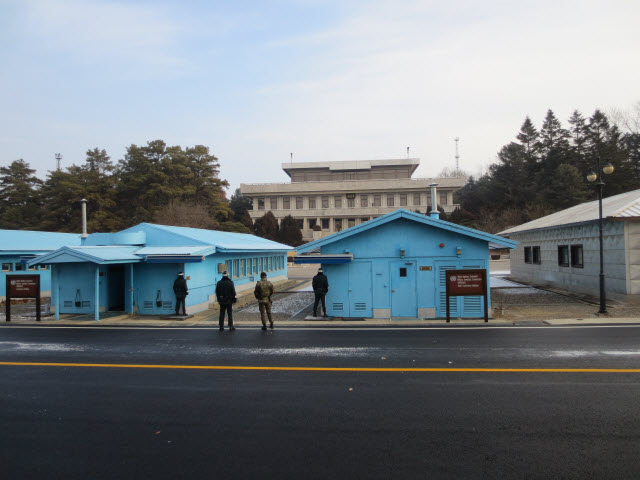
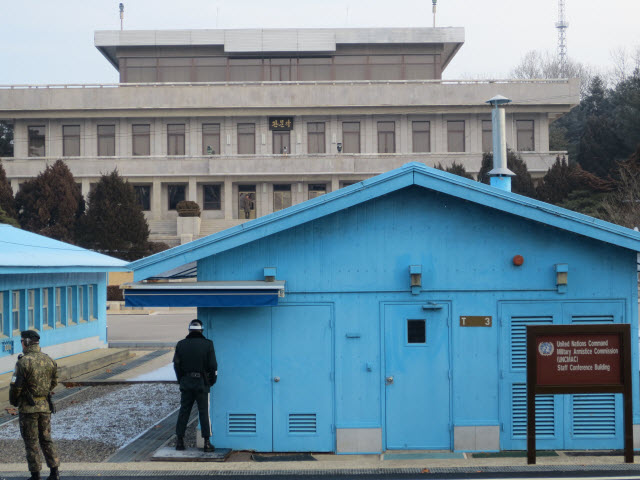
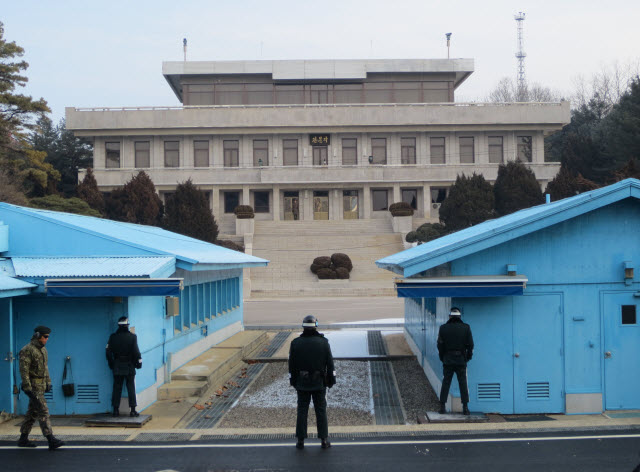
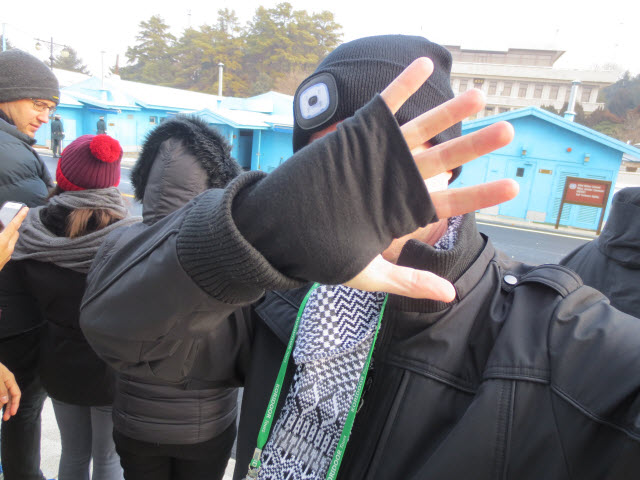
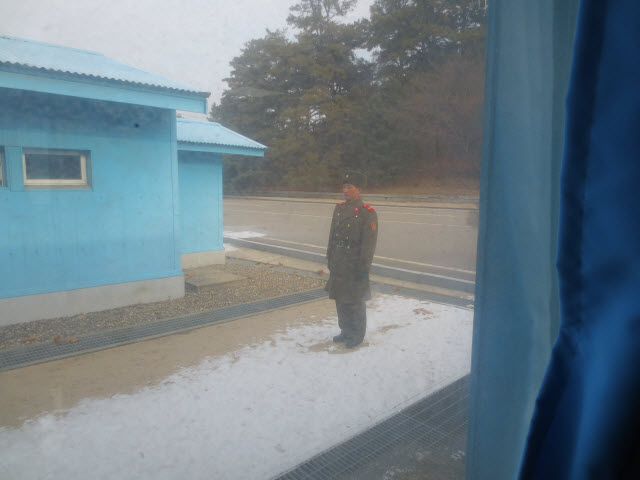
Those working in the JSA have a tough role. They are subject to any number of major and minor provocations from their counterparts in the North. The last thing that they want is some stupid tourists to make their lives any harder. We were told in advance where we would be going, how we would expect to move from place to place, and what appropriate behaviour would be. No loud voices. No pointing. No getting out of line. Only pictures facing north were allowed – in other words, no pictures of the UN buildings in the JSA. Chances were that we were only going North Korean we were going to see was “Bob” – the sole visible guard pulling a 12-hour shift standing in front of Panmungak, the large building on the North Korean side of the Military Demarcation Line.
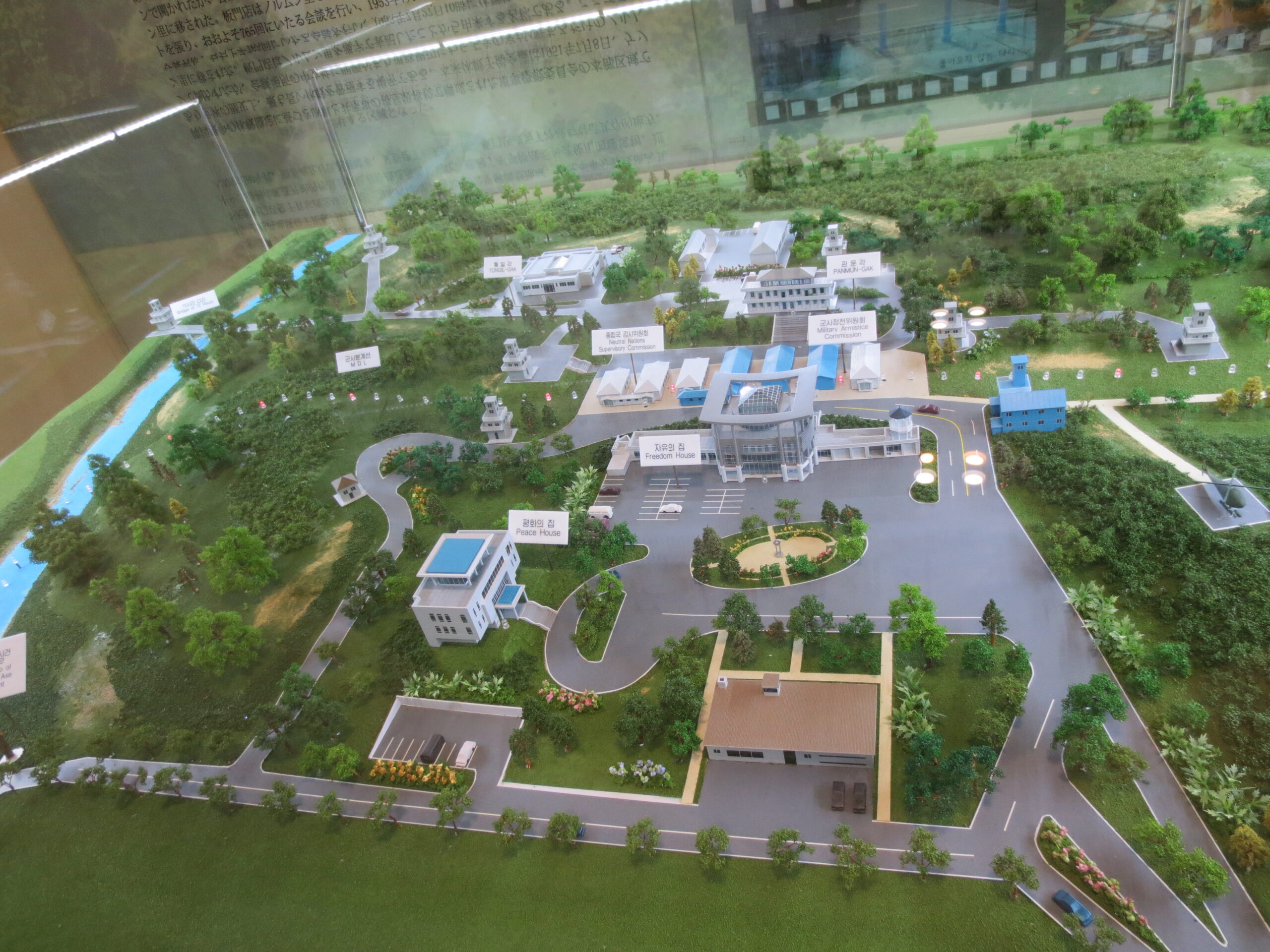
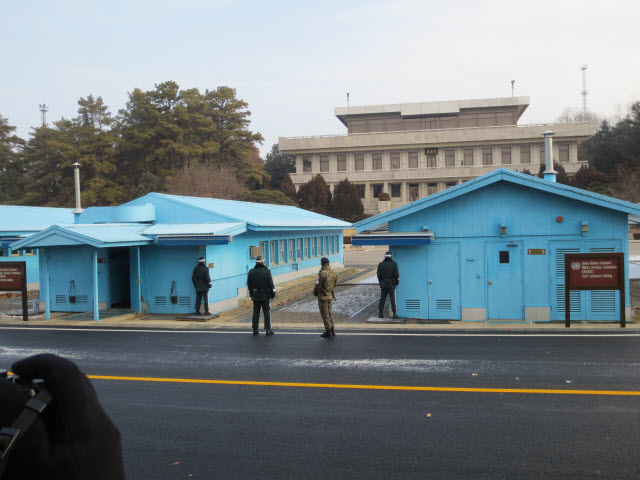
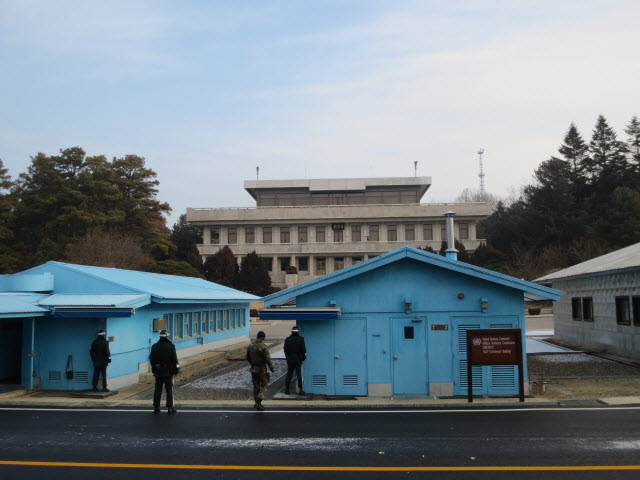
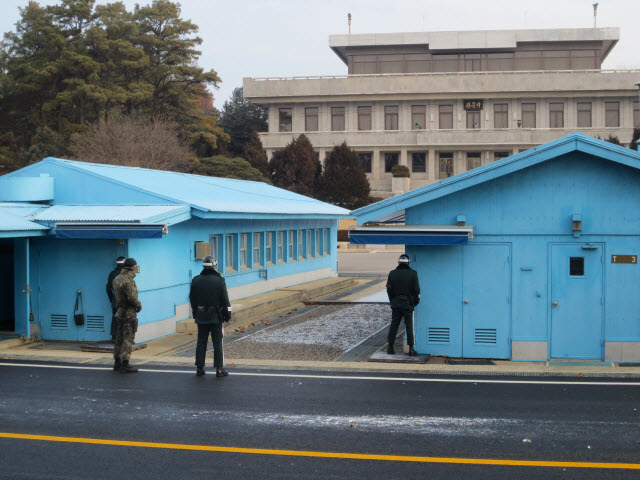
Briefing complete, we boarded a second bus to take us into the JSA. During this short ride, we could look out the windows but no photos. At the Freedom House, they divided us into two groups – one group entered the conference room first, while the other took photos in the JSA. Then the would swap. Our group toured the conference room last, so we got to stand outside and look across into North Korea. South Korean guards formed a boundary on either side of us. We could walk around in the area between the guards and onto the first step. There were warnings if we got close to moving past the guards. In hindsight, it was an easy way for the guards to identify potential troublemakers – anyone planning a quick dash across the border would be behaving suspiciously.
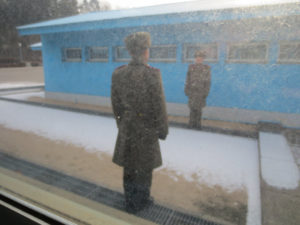
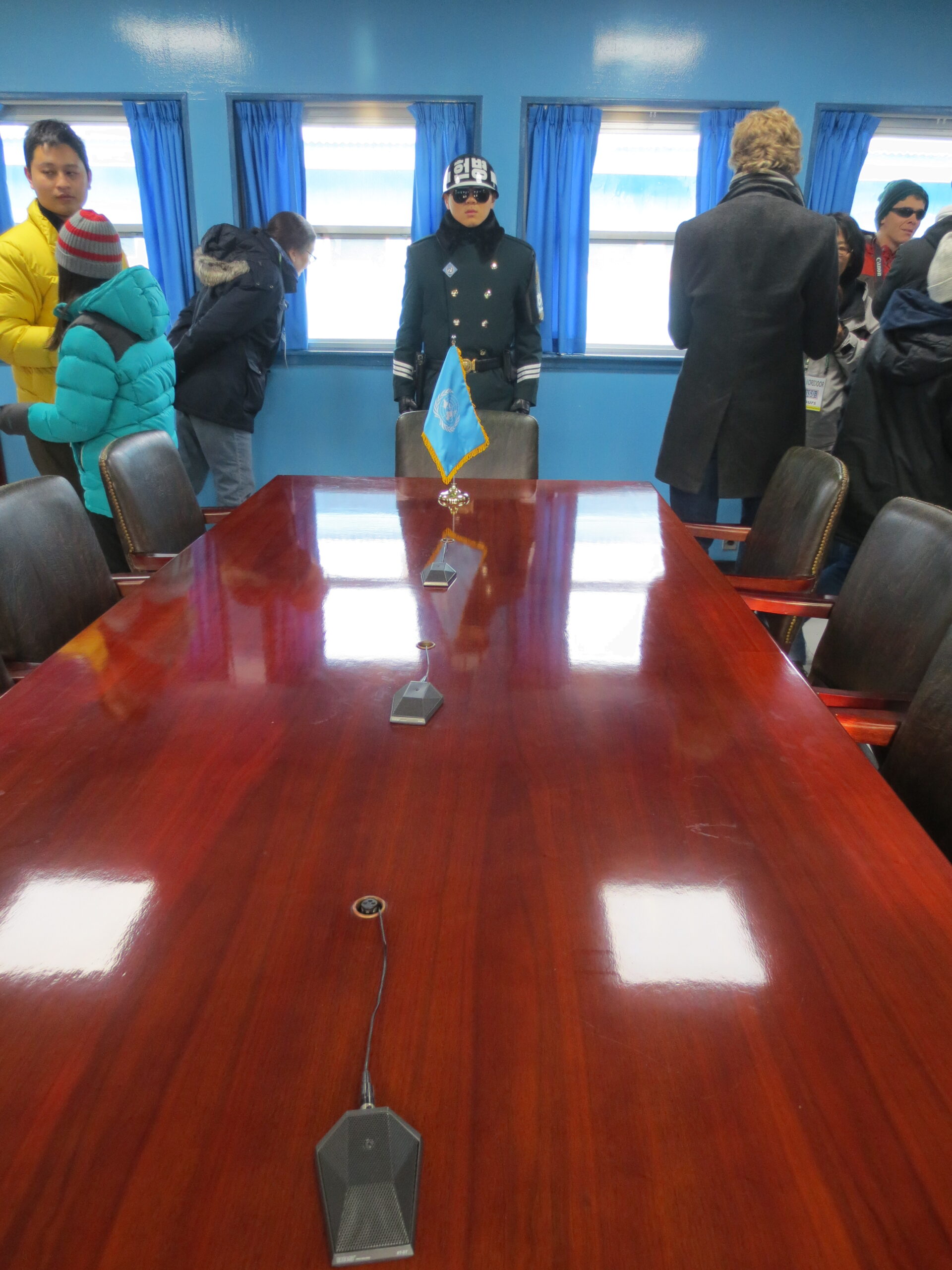
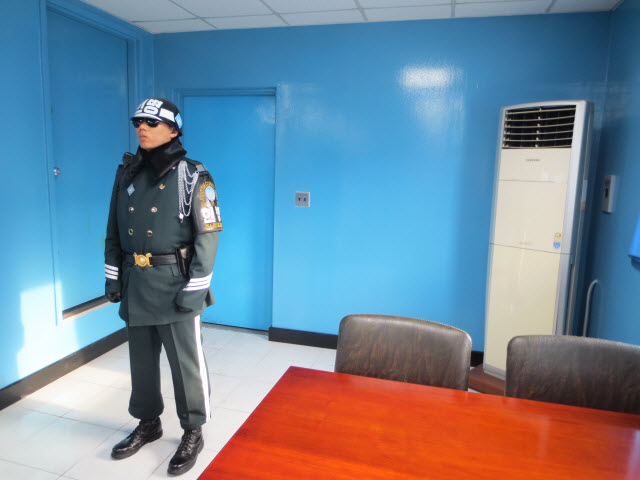
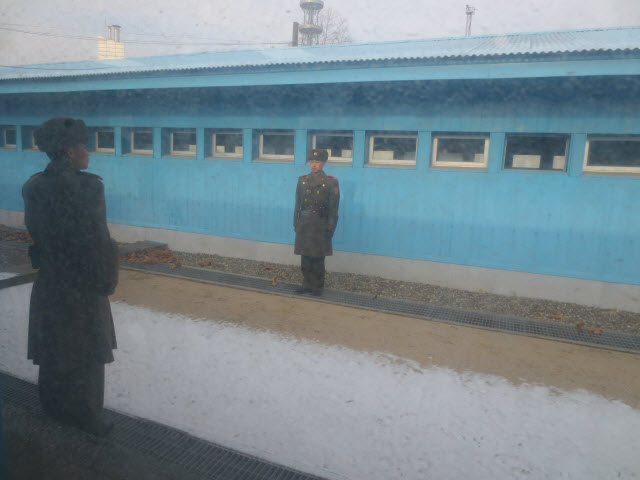
Joint meeting houses such as the conference room are painted blue. The grey buildings straddling the border are occupied by the North Koreans. The Military Demarcation Line – effectively the border between North and South Korea – is denoted by a raised piece of concrete. The line defined by the Demarcation Line bisects the conference room. The positioning of the conference room table demonstrates this line. Anything north of the microphone in the middle of the table was effectively and officially in North Korea. Needless to say, we all rushed to the far end of the table for our chance to visit North Korea. A sentry from the Republic of Korea (South) outfitted in dark sunglasses guarded the northernmost door lest we foolishly attempt to open it.
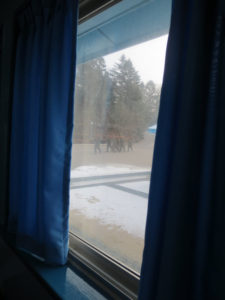
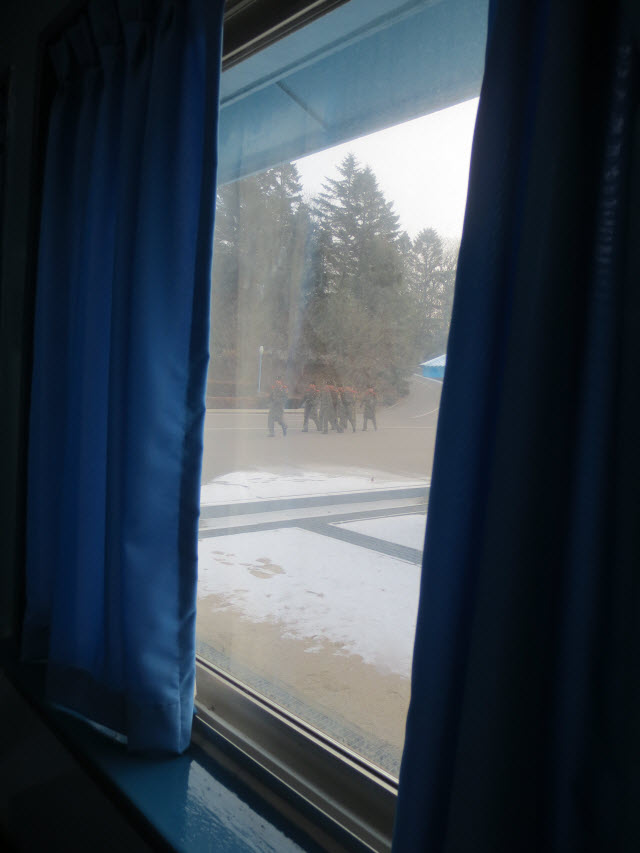
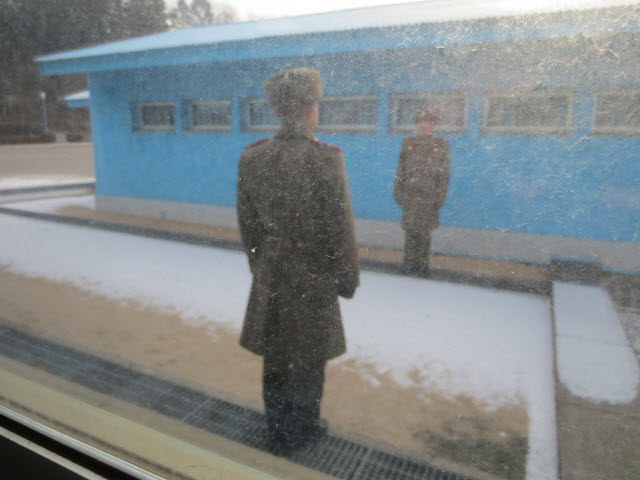
And then a surprise. A small contingent of eight North Korean guards marched down and took up positions surrounding the conference room building. We all excitedly dashed to the windows to snap pictures – photographing any North Korean guards that appeared was an acceptable response on one often resulting in the departure of said guards. Our bemused guide – a soldier from the US military – asked if we could share our photos with him: this was his third tour in the JSA and he had not seen anything like this before. Another think I noticed in retrospect is that our US military guide did not cross north of the Demarcation Line in the conference room.
Conan O’Brien does a far better job of being informative and entertaining in the JSA during his 2016 visit to Korea.
Tour complete, we were bundled back into the bus and returned to Camp Bonifas. Our guide answered questions about events in the JSA, rowdy behaviour on the part of North Korean sentries, and security plans should any tensions escalate. At this point, our guide revealed that all the bridges we crossed were rigged with explosives, ready for demolition if necessary. Good to know.
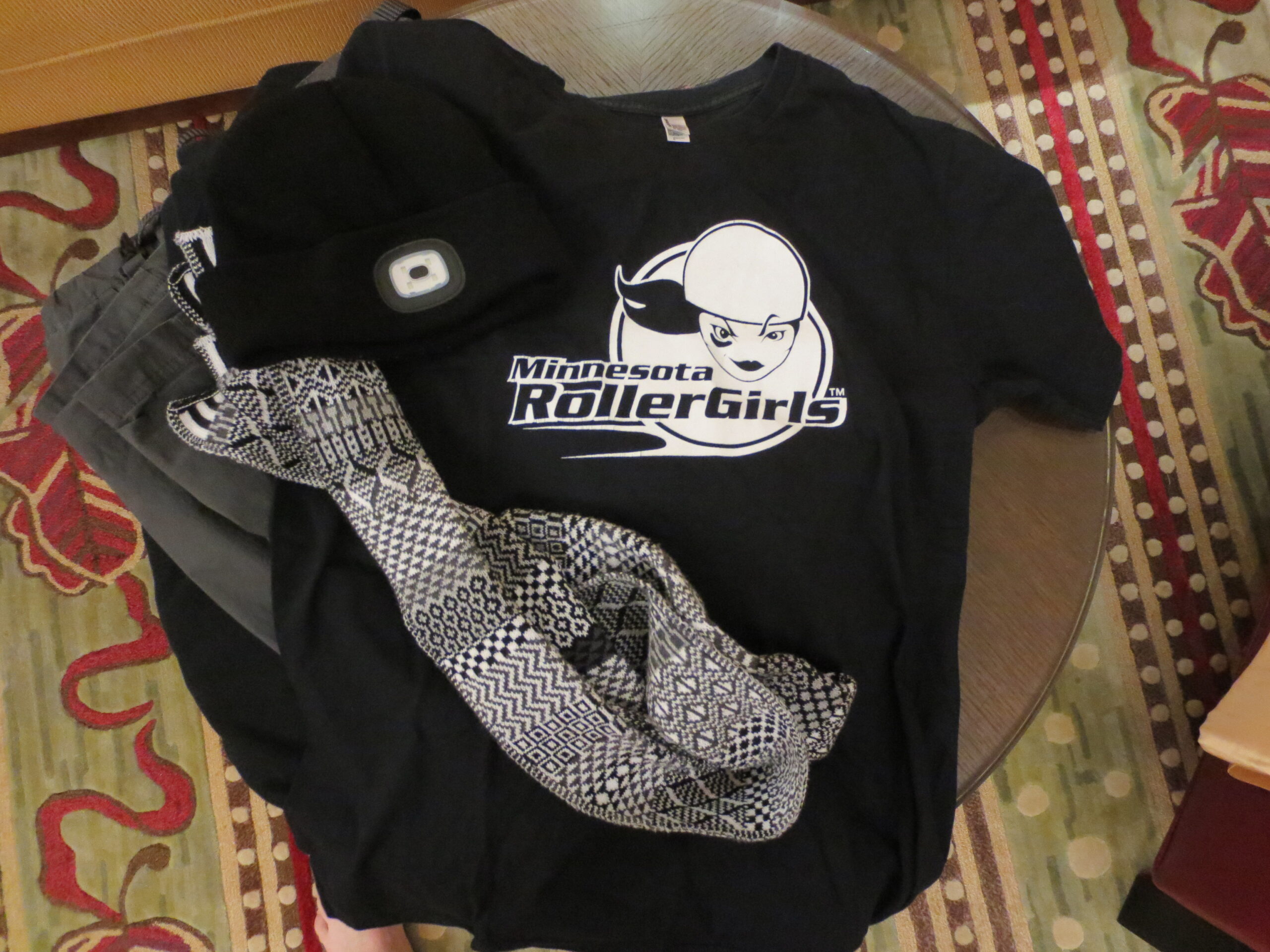
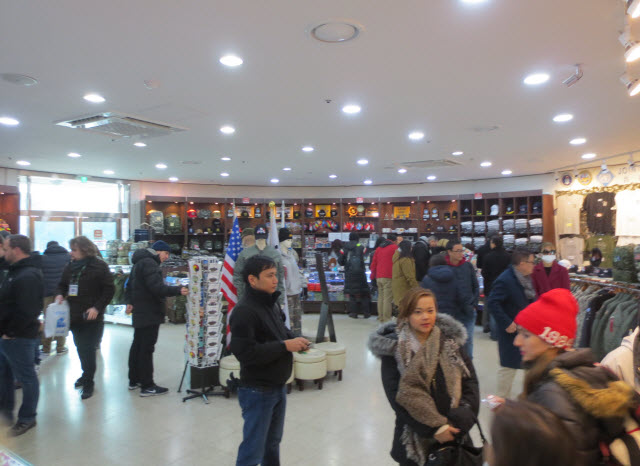
And because no trip is complete or valid without souvenirs, we got time to visit the Joint Security Area Gift Shop which is a real thing. There you can buy North Korean soju and crafts as well as any number of t-shirts and hats to verify your visit. Dear reader, I made several purchases because I have nieces and nephews …and seriously, how could anyone resist the idea of a JSA gift shop?
Post DMZ
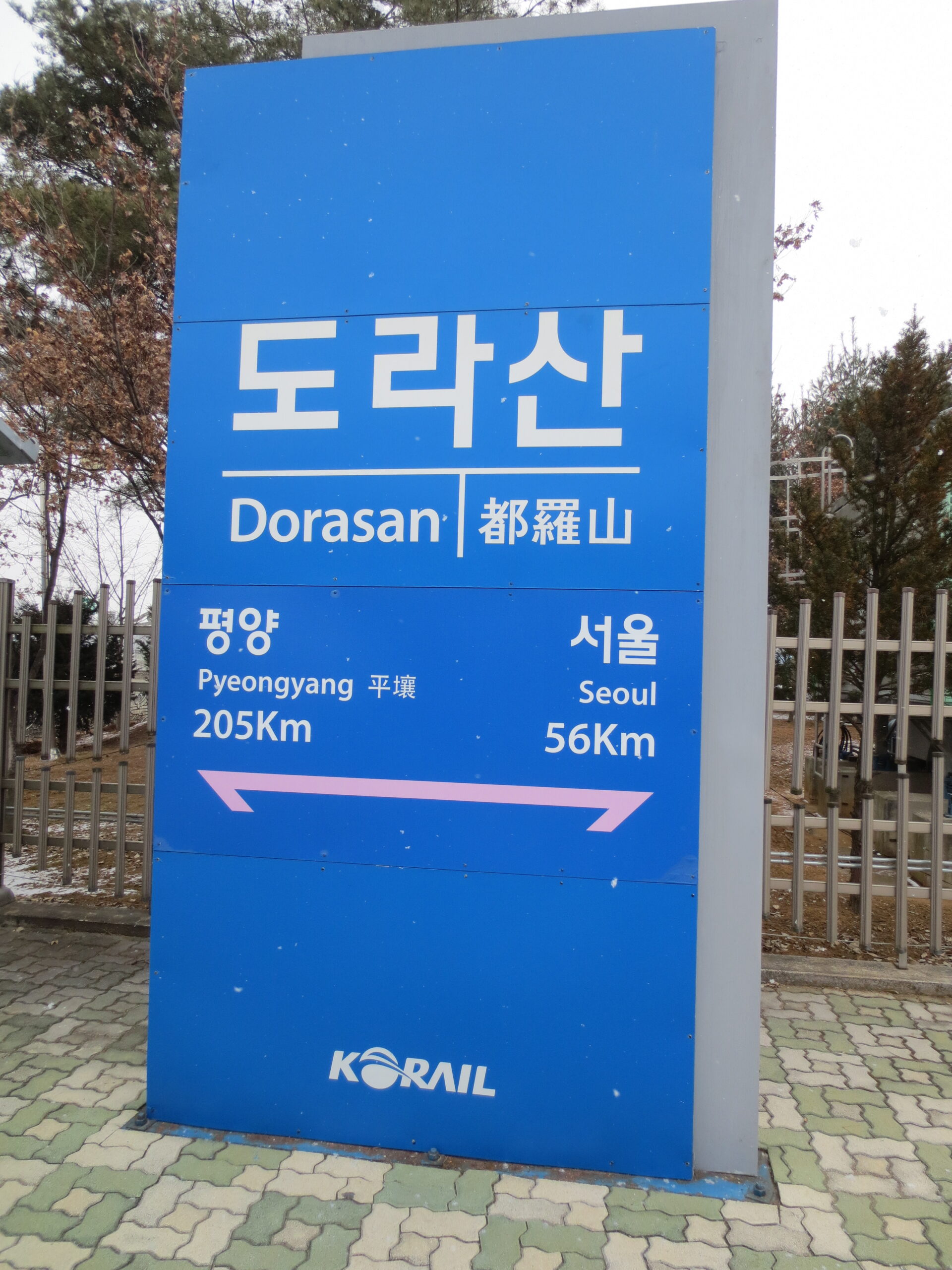
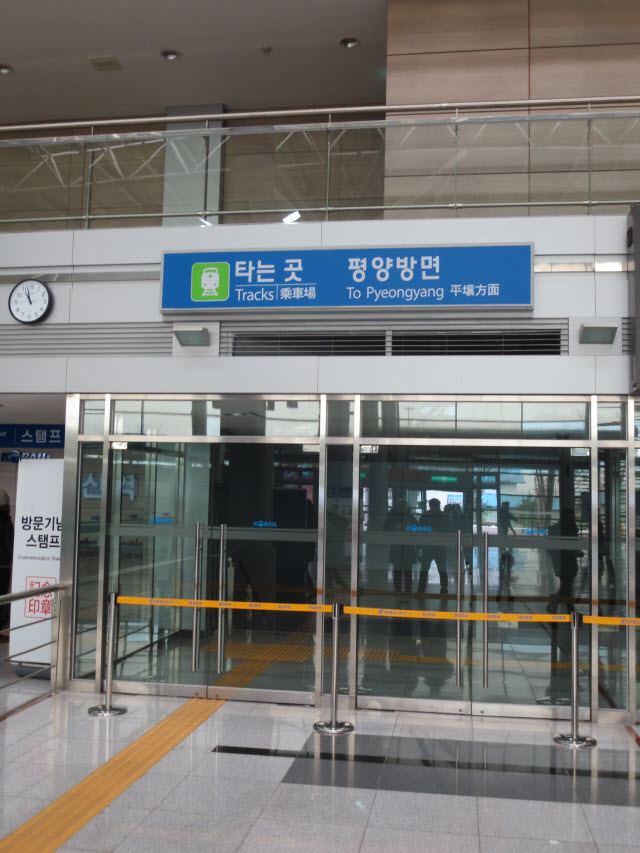
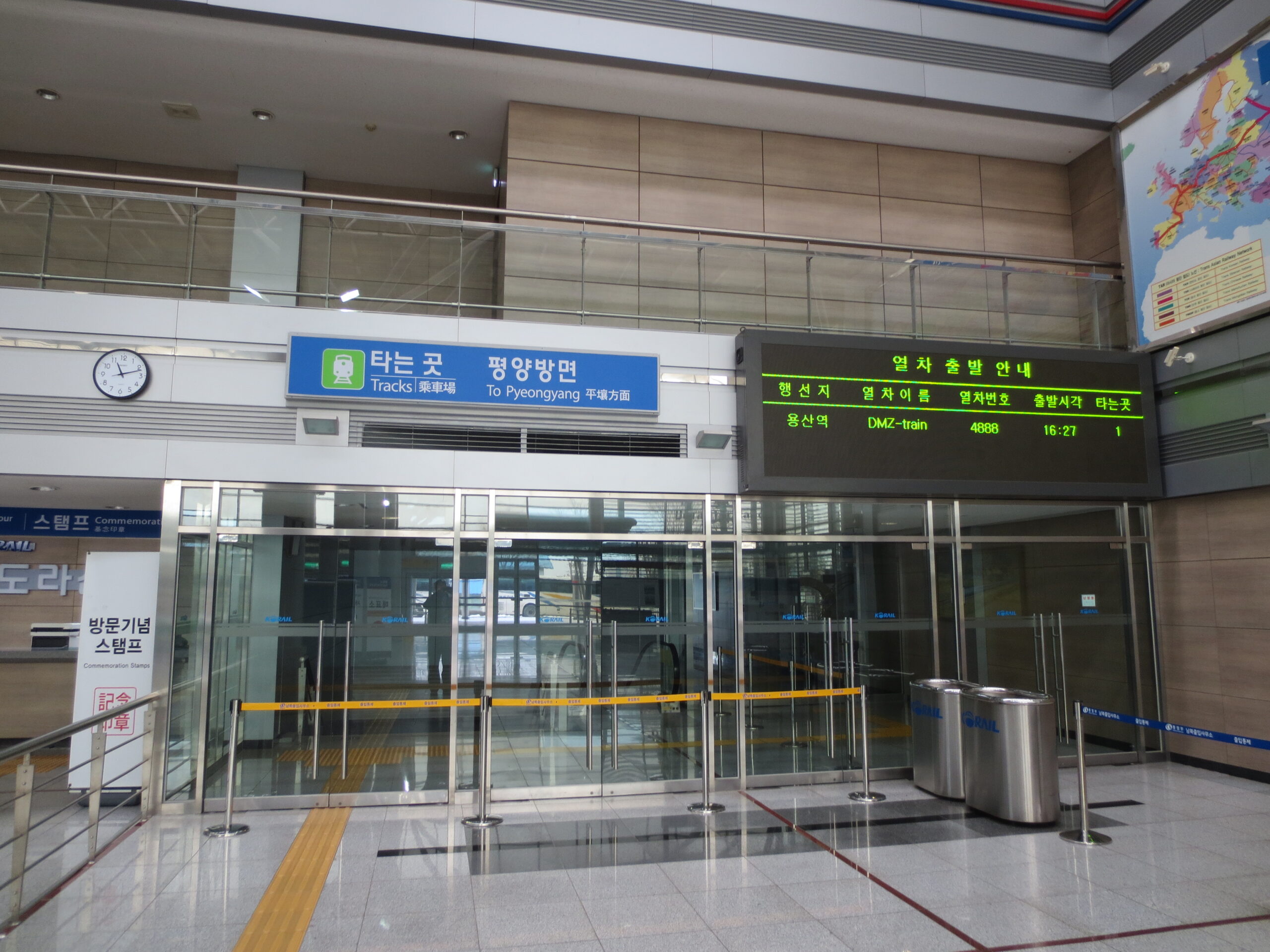
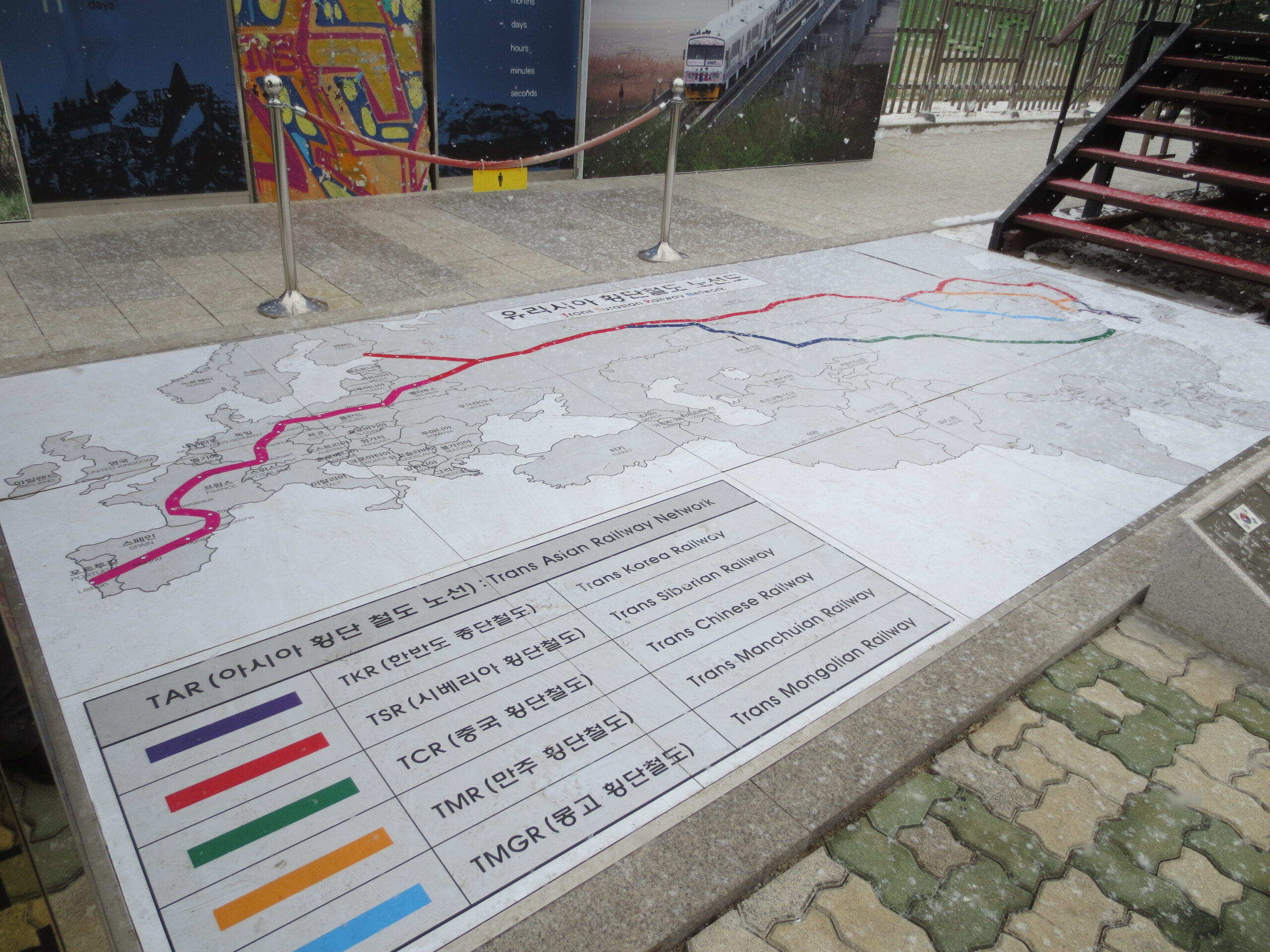
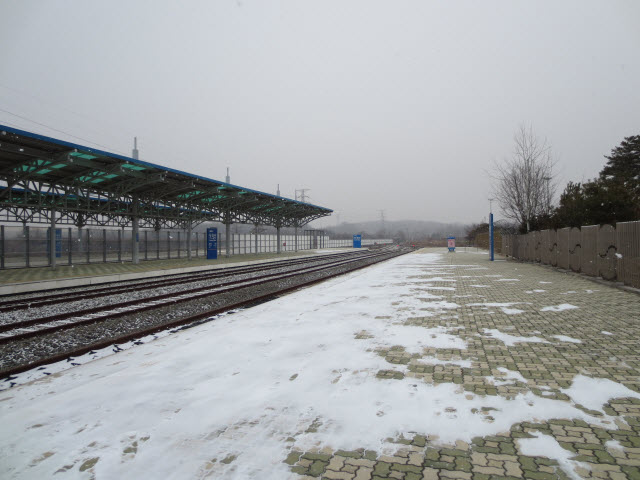
After that, the rest of the stops were kind of uneventful. We visited the Dorasan station – the last train station in South Korea before the DMZ. There is regular service to Seoul but not really much else other than the station. The building itself is large and modern, but very empty. A vendor sells North Korean memorabilia and a station worker sells tickets to visit the platforms absent of train traffic.
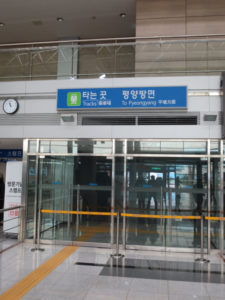
The tracks roll northward towards the Kaesong Industrial Area – a joint commercial venture in North Korea. North Korean employees would manufacture South Korean products in shared facilities. The site provided valuable income for the North and cheap labor for the South. According to the agreement, the workers would receive wages based on their work. Yet the wages went directly to the North Korean government so the final distribution of funds is less than clear.
The factories have been shuttered for a few years due to tensions between the two sides. After the closure, the North Koreans allegedly removed all of the valuable equipment from the area and transferred it for their own use. Warehouses and major improved roads populate the area around the Dorasan station – silent in anticipation of future opportunities.
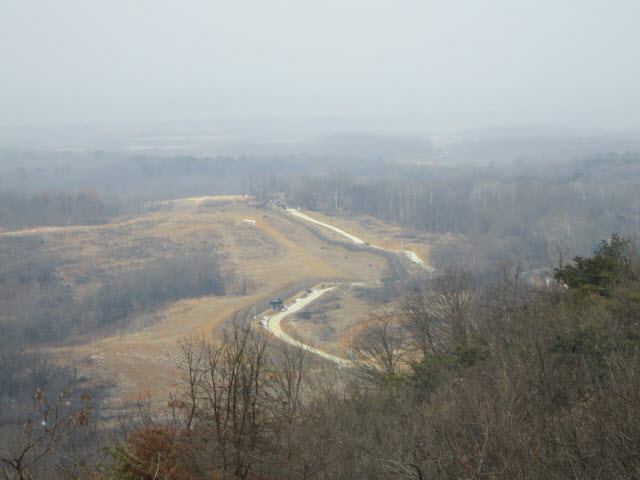
Just up the hill from Dorasan was the Dora Observatory which overlooked the DMZ and provided glimpses into North Korea. Each side had its public address systems blaring programming towards the other. Our guides told us that most North Korean military deploy well out of earshot of the South Korean speakers. In fact, no signs of the North Korean military were visible. The story is that the areas just beyond the hills and mountains visible in the North bristled with North Korean weaponry.
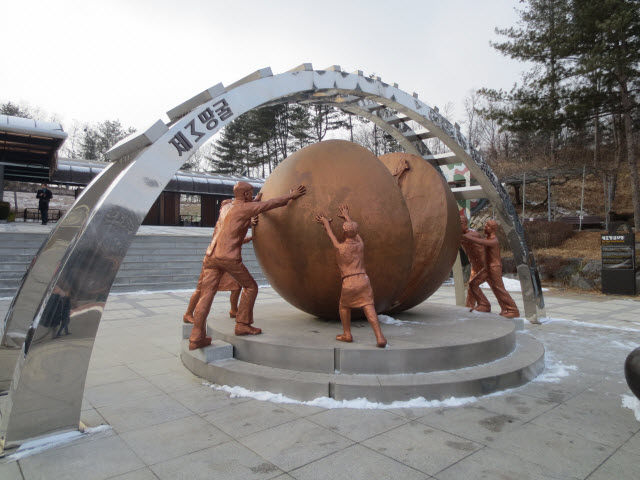
Last stop was an infiltration tunnel built by the North Koreans. This tunnel was purportedly to funnel thousands of troops under the DMZ for an invasion of the South. The North insisted the tunnels were for mining coal and rubbed coal dust on the tunnel walls as proof. Visiting the area involved descending a long, steep shaft, followed by navigating a series of progressively narrower passageways. From there, you could look through a window at a concrete wall sealing the tunnel. Details of this nondescript concrete wall are so sensitive that no photos are allowed. Hard pass.
Leave a Reply