The city of Shanghai has changed a lot since my first visit in 2001. This visit I divided my time between seeing some of the brand new, flashy things and revisiting locales from when we went around the world.
The elevation of the terrace at the Peace Hotel mutes most of the sounds of the traffic below. There is the requisite car horn and the fluttering of the Chinese flag propelled by the occasional gust of wind. Bodies meander on the promenade along the Bund, pausing to take photograph the same backdrop I am admiring. The odd cargo ship sluggishly traverses the Huangpu river as if trying to sneak back home after curfew. Major river traffic is closing down for the night. The light show in the Pudong is about to begin.
The transition from afternoon to twilight to evening is abrupt. The lighting of the Oriental Pearl Tower seems gratuitous and indulgent when it is not properly dark. Then the peals of a hidden carillon somewhere along the Bund begin. It felt like dusk raced in while my attention was elsewhere – the city is suddenly dim and murky after the hasty escape of the sun. On cue with the final chime of the bells, the lights erupt from the Bank of Shanghai building. The rest of the Bund come aglow soon after with much of the Pudong side following suit.
Although I have been fortunate to travel back to Shanghai several times in the last few years, I did not have much time to spend in the city. I was usually flying in and heading somewhere else. In January of 2019, I carved out a couple days to revisit the city I last saw while going around the world in 2001.
Suffice to say Shanghai has changed a bit.
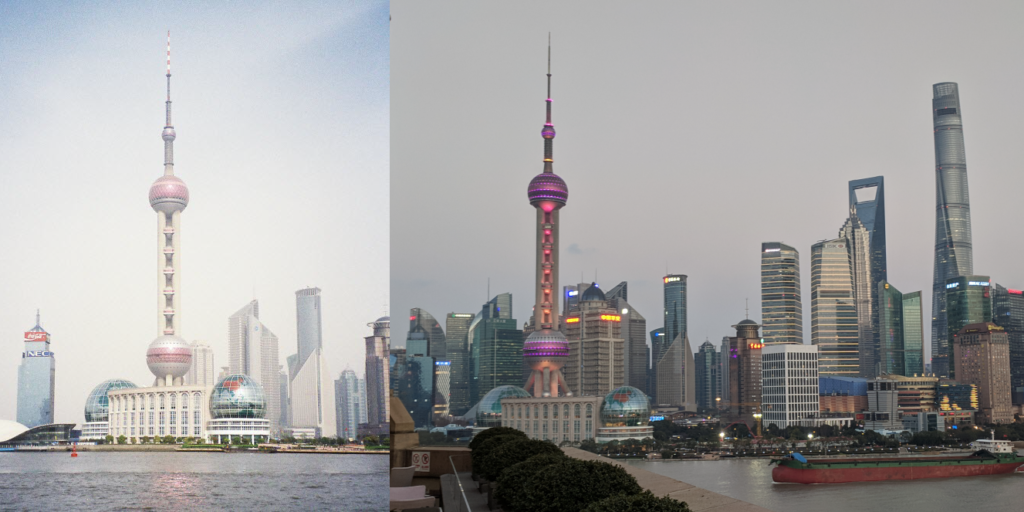
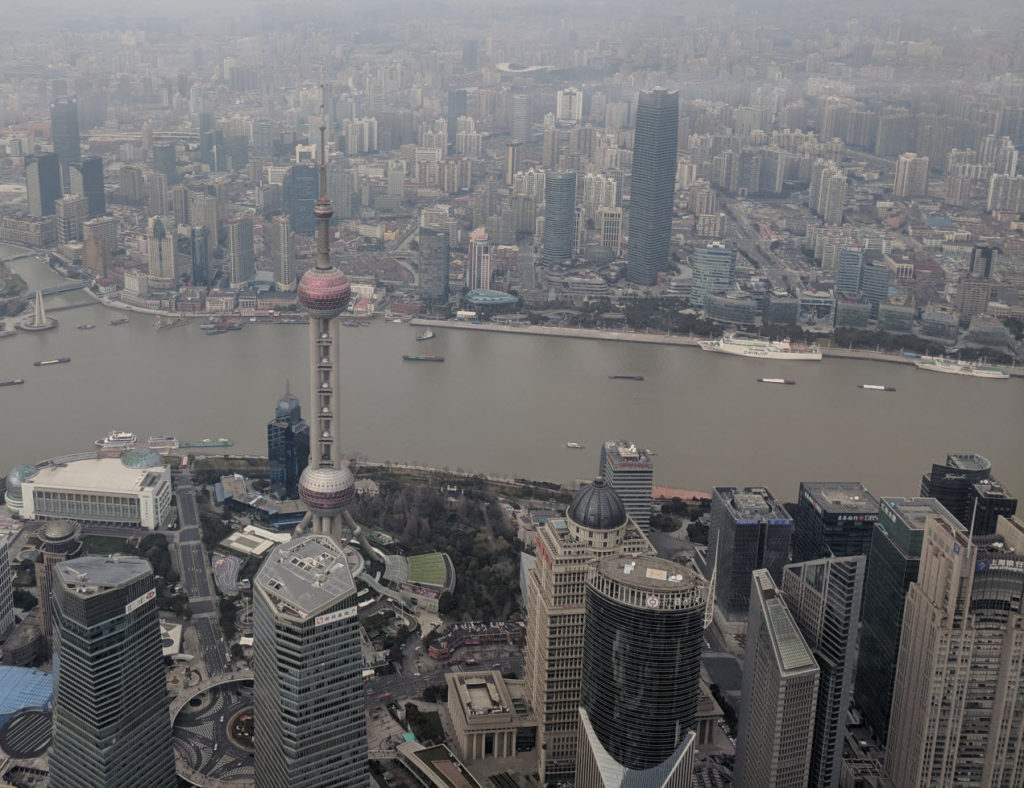
The hints were there in 2001. The entire Pudong region – the area west of the Huangpu river – was one large construction zone. The distinctive Oriental Pearl Tower was there but the glass and steel skyline that defines modern Shanghai was still only on paper. Multi-block shopping malls have replaced the numerous shops. Any hint of that old Pudong has largely evaporated.
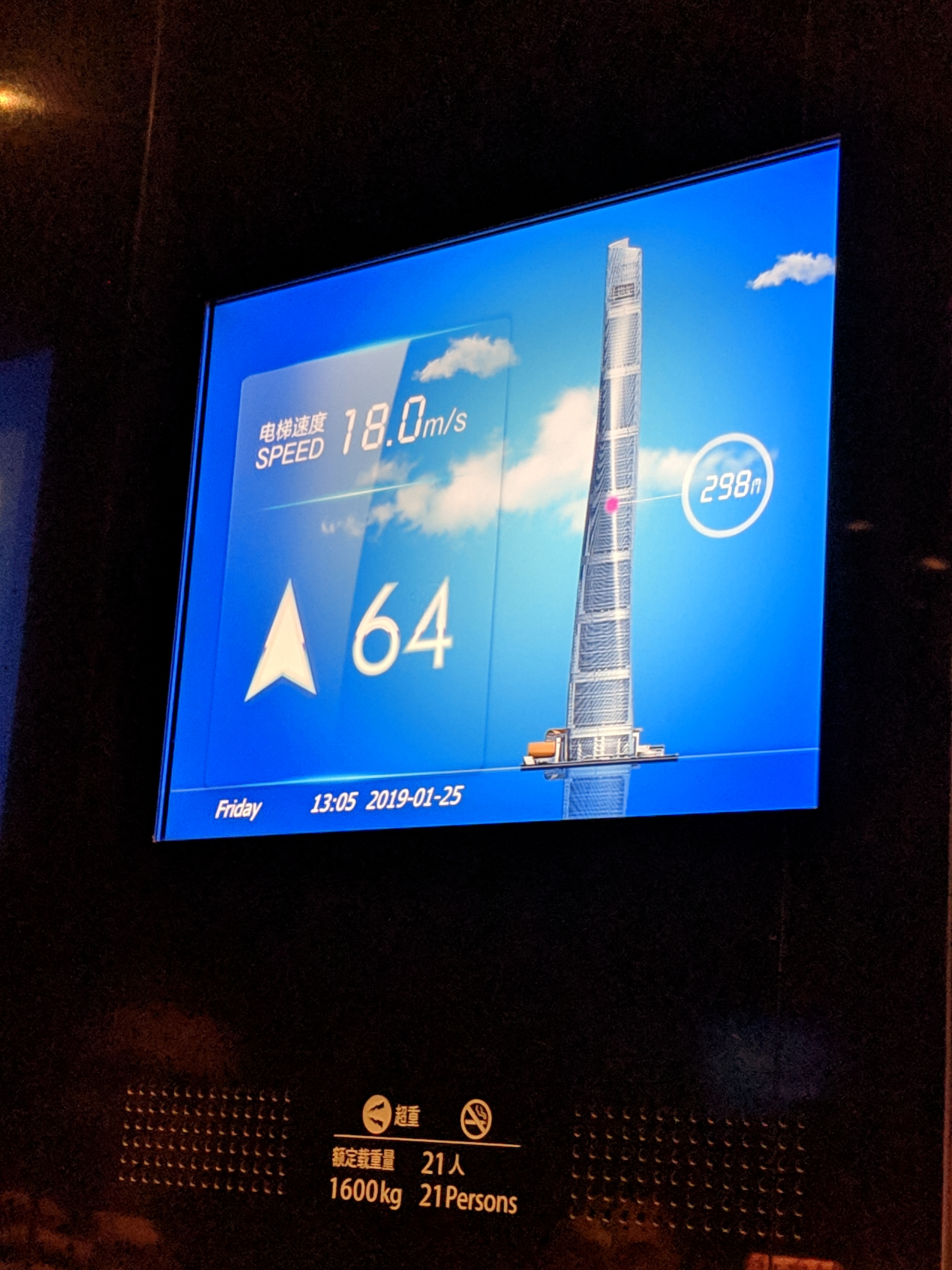
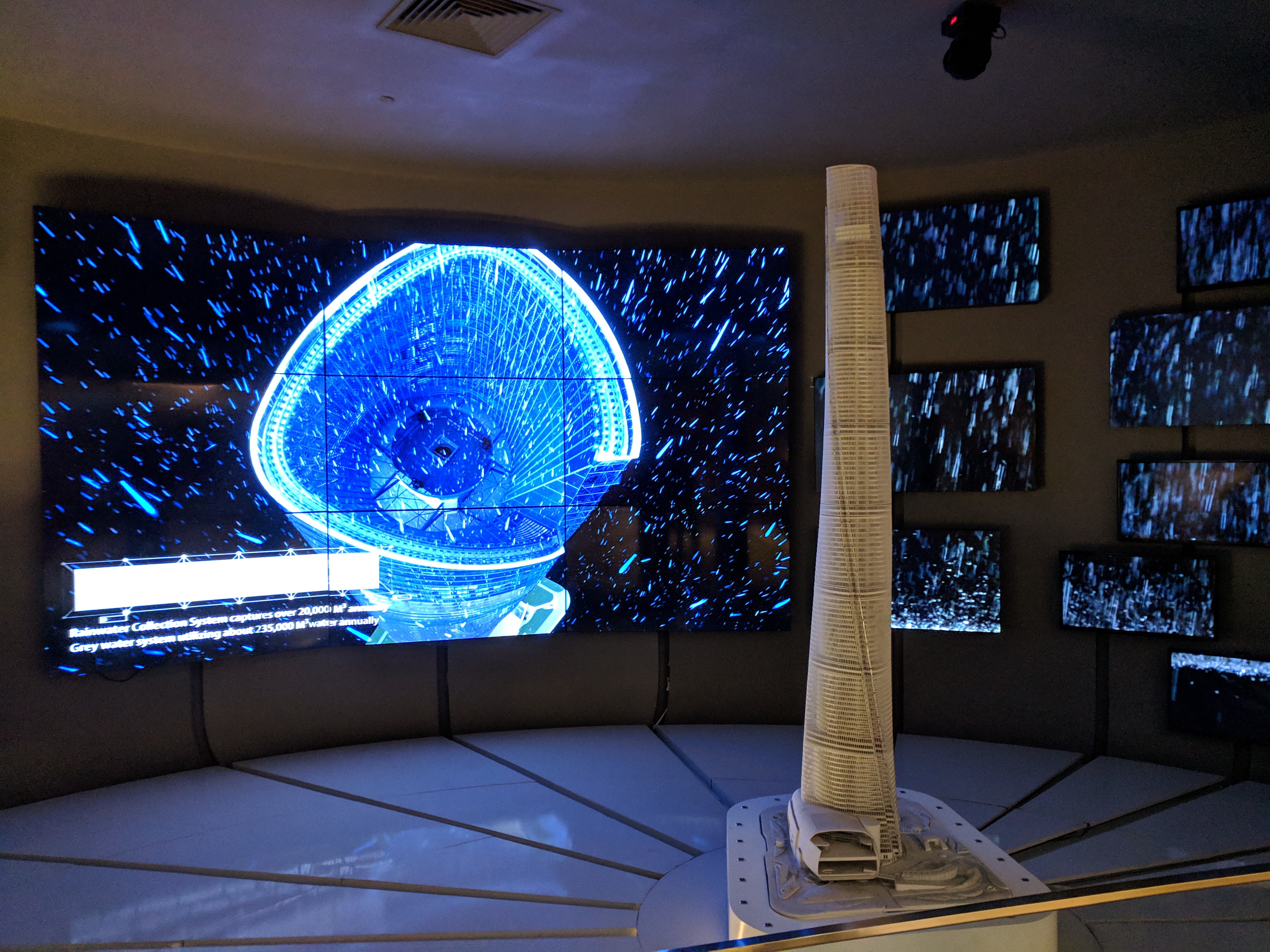
The crowds at the Shanghai Tower were light on a Friday afternoon – an added bonus since the sun played peek-a-boo with the clouds and rain appeared to be off the menu. I cruised down the lengthy hallways with flashy designs and interactive displays meant to keep the multitudes entertained while waiting to ascend. Minutes later I was on the world’s fastest elevator hurtling upwards at 67 feet per second (20.5 m/s) towards the world’s highest observation deck at 1,841 ft (561.25 m). I checked off a few superlatives that day.
In the past decade, skyscrapers have taken root all across Asia. Of the ten tallest buildings in the world, nine of them were built since 2010, nine are in Asia, and five are in China. The Pudong area contains the 2nd and 11th tallest buildings in the world: the Shanghai Tower and the Shanghai World Financial Center, respectively. Visiting observation decks during APAC visits can be a full-on hobby.
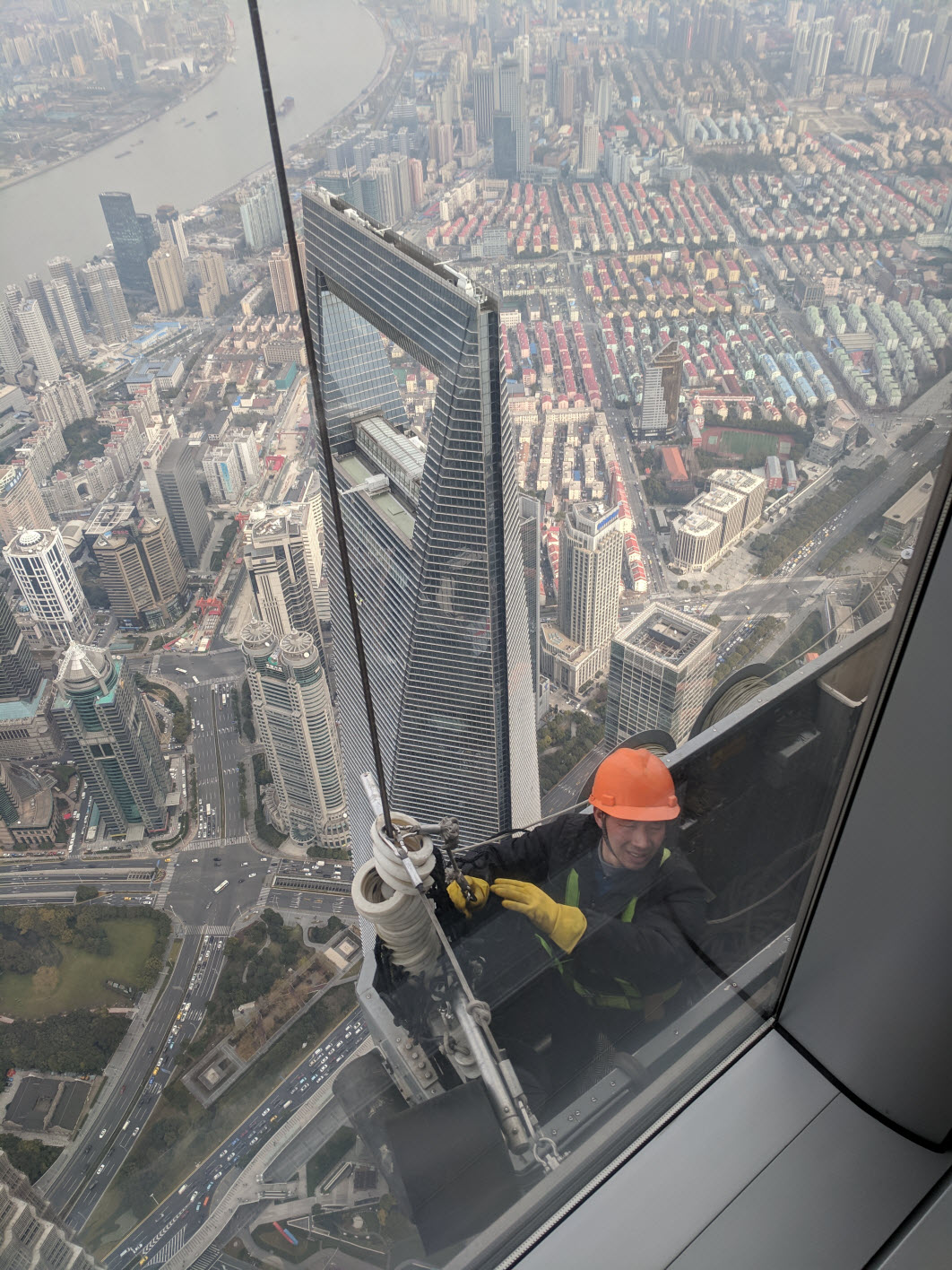
The observation deck was stuffy from the heat of the late afternoon sun. Groups clustered to look at the highlights of the city through glass smeared with the prints of tiny excited hands. Keeping the interior tidy was regular work for the maintenance crew. I wondered how the dust and dirt was removed from the exterior. I did not have to ponder long. The window washers appeared, answering the question on the minds of many visitors. Watching them inch across the building in their gondola was as exciting as the views of the city – and a reminder that one’s chosen profession was perhaps easier than theirs. Or at least with much literal “downside”.
Platform 4 at Longyang Road station has the familiar modern look of shiny exposed metal and glass with teal accents. The walls and ceiling are part of a continuous arch like the landing bay on a spaceship from a 1970s era film. The sleek shape of the Shanghai Transrapid look right at home.
Equal parts rocket and train, the Transrapid is the world’s first commercial high-speed maglev train. Instead of riding along an iron rail, the cars levitate atop “like” polar magnetic fields. The cars are propelled forward by “opposite” polar magnetic fields (thank you, US Energy Department). The ride is smooth and comfortable as it races the 19 miles (30km) to the Shanghai airport. With speeds about 270 mph (430km/h), a one-way trip takes about nine minutes.
It is freaking amazing.
For the princely sum of US$7.50, you can purchase a one-way ticket on the Transrapid. I bought a round trip ticket. Giddily exiting the train, I bounded up the stairs, presented my return ticket and re-entered the platform for the ride back. I debated purchasing a first-class fare but it did not seem worth it for a nine-minute journey.
I’m not crying. You’re crying…
Leave a Reply