
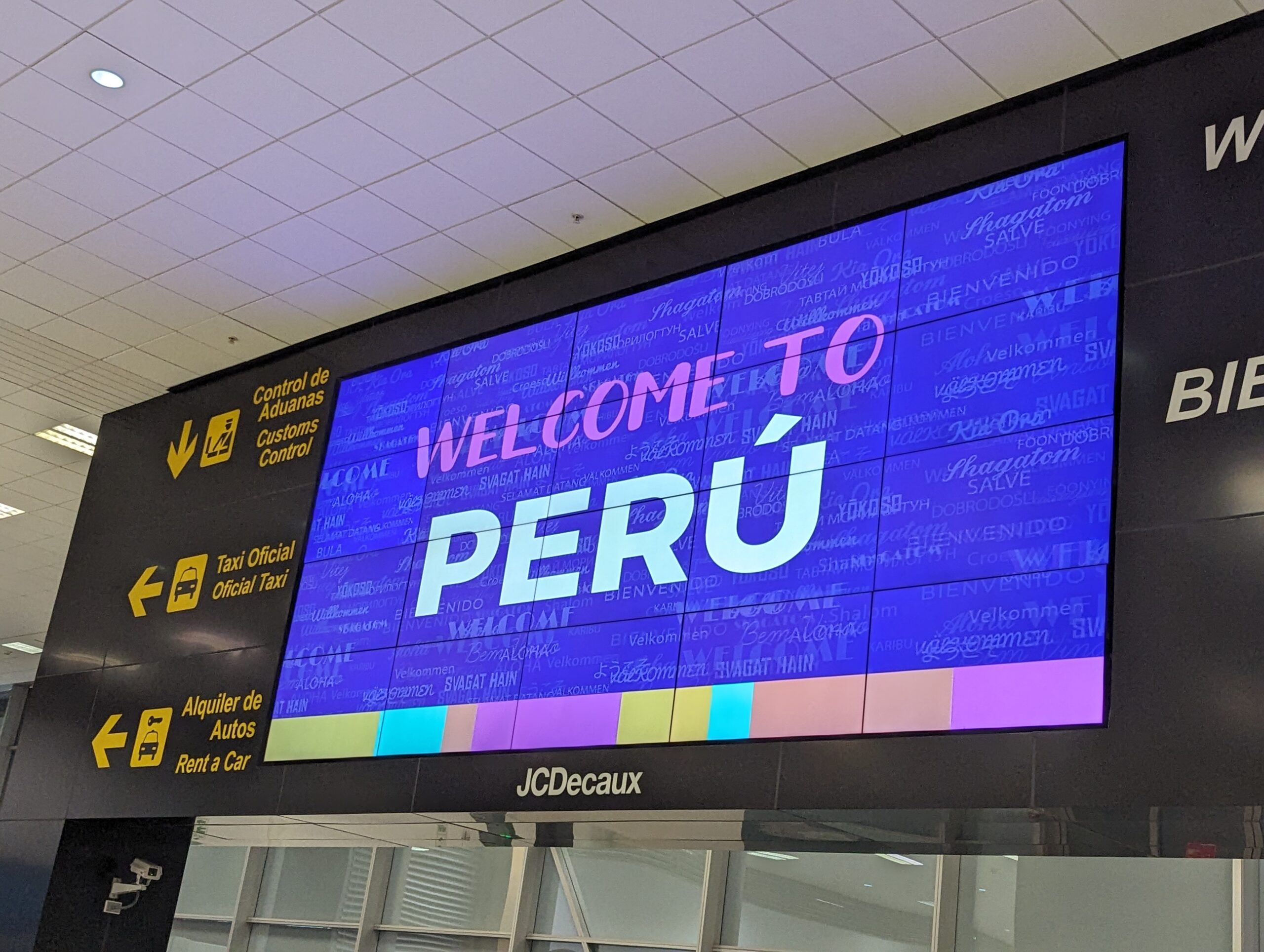
Originally part of our visit to the Galapagos, we returned to South America in 2024 to visit Peru and the fabled “Lost City” of Machu Picchu.
Again we used the travel company, Orbridge, to arrange the trip. And once again, Peru was offered as an extension of their tour to the Galapagos. Since we were unable to visit Peru last year, we were able to book just the Machu Picchu extension. The drawback for us is that our fellow travelers had already bonded as part of their time in Ecuador – for better or for worse. It was not a major issue, but we were the newcomers / outsiders. Fair enough.
The best part was that our guide had a Minnesota connection: her aunt teaches at a school embarrassingly close to where we live.
Yucay
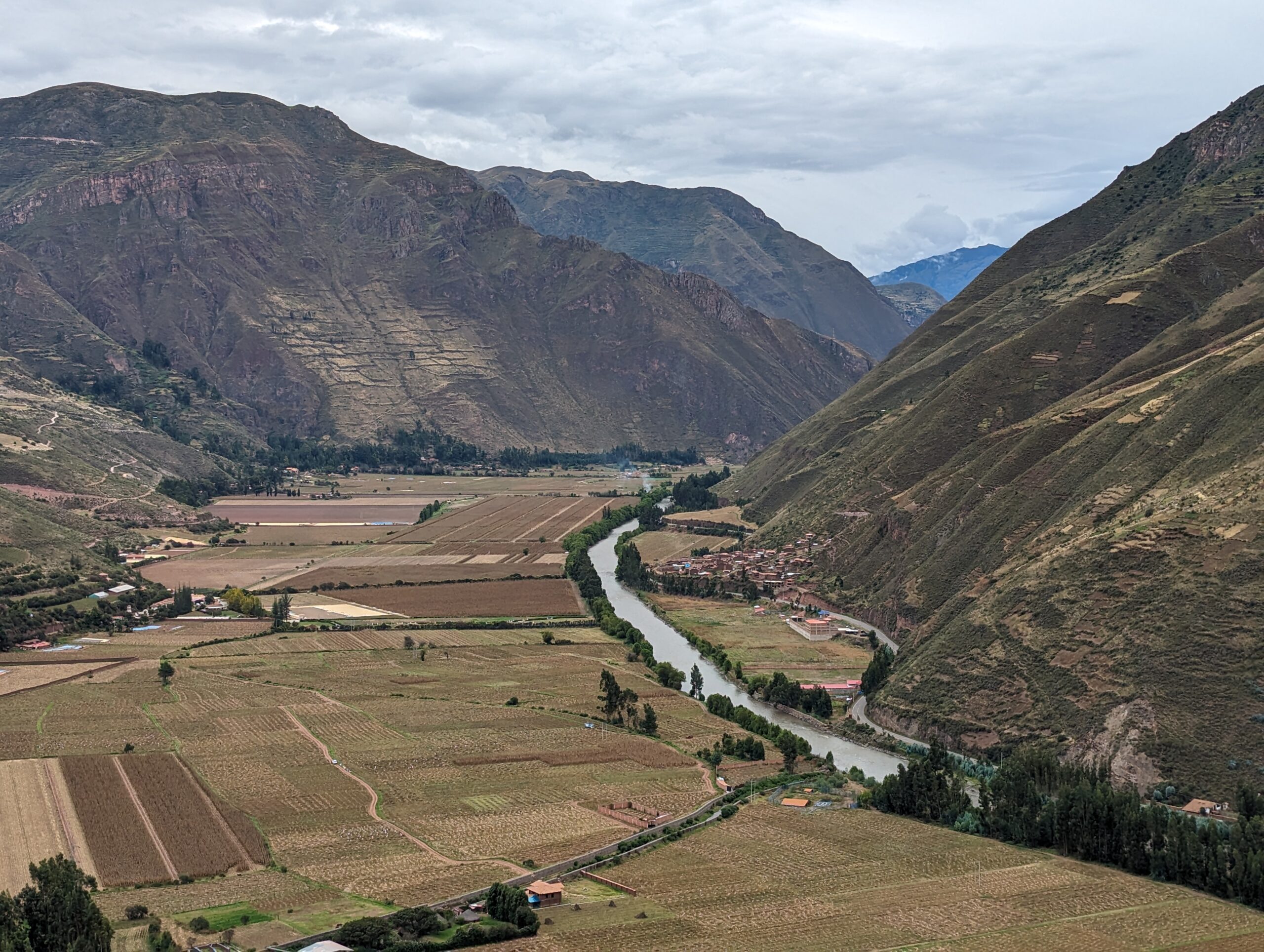
After an overnight in Lima, we caught an internal flight to Cuzco then boarded a bus for our tour of the Sacred Valley. Our route is a big loop: down along the Urubamba river to Machu Picchu and then back to Cuzco. Literally, “down” the Urubamba: the elevation of Cuzco is 3400m (11,150ft) – higher than Quito, Ecuador – where Machu Picchu is a mere 2400m (7900ft).
The story goes that the Incans looked into the night sky and saw the Milky Way believing it to be the reflection of the Urubamba.
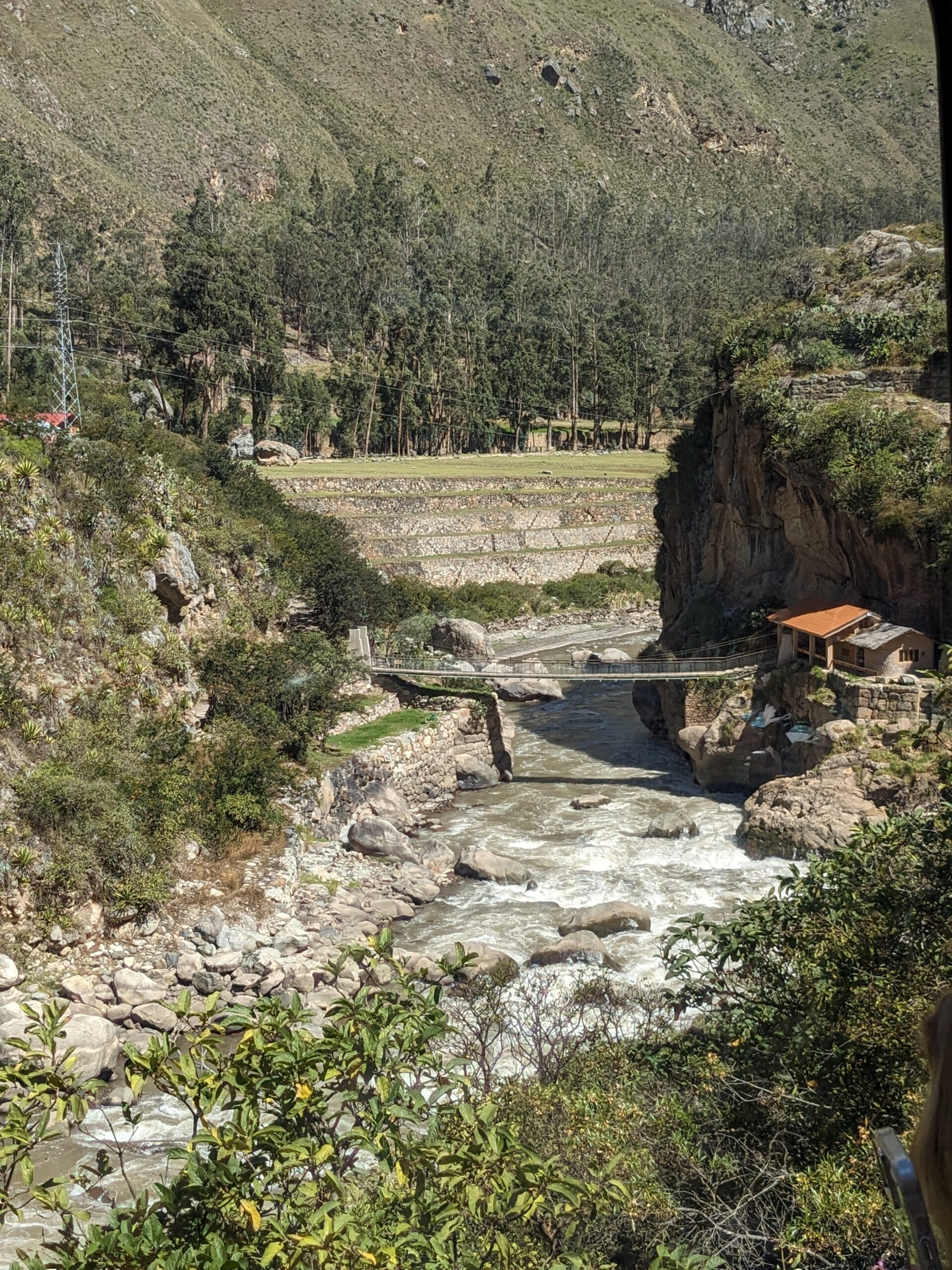
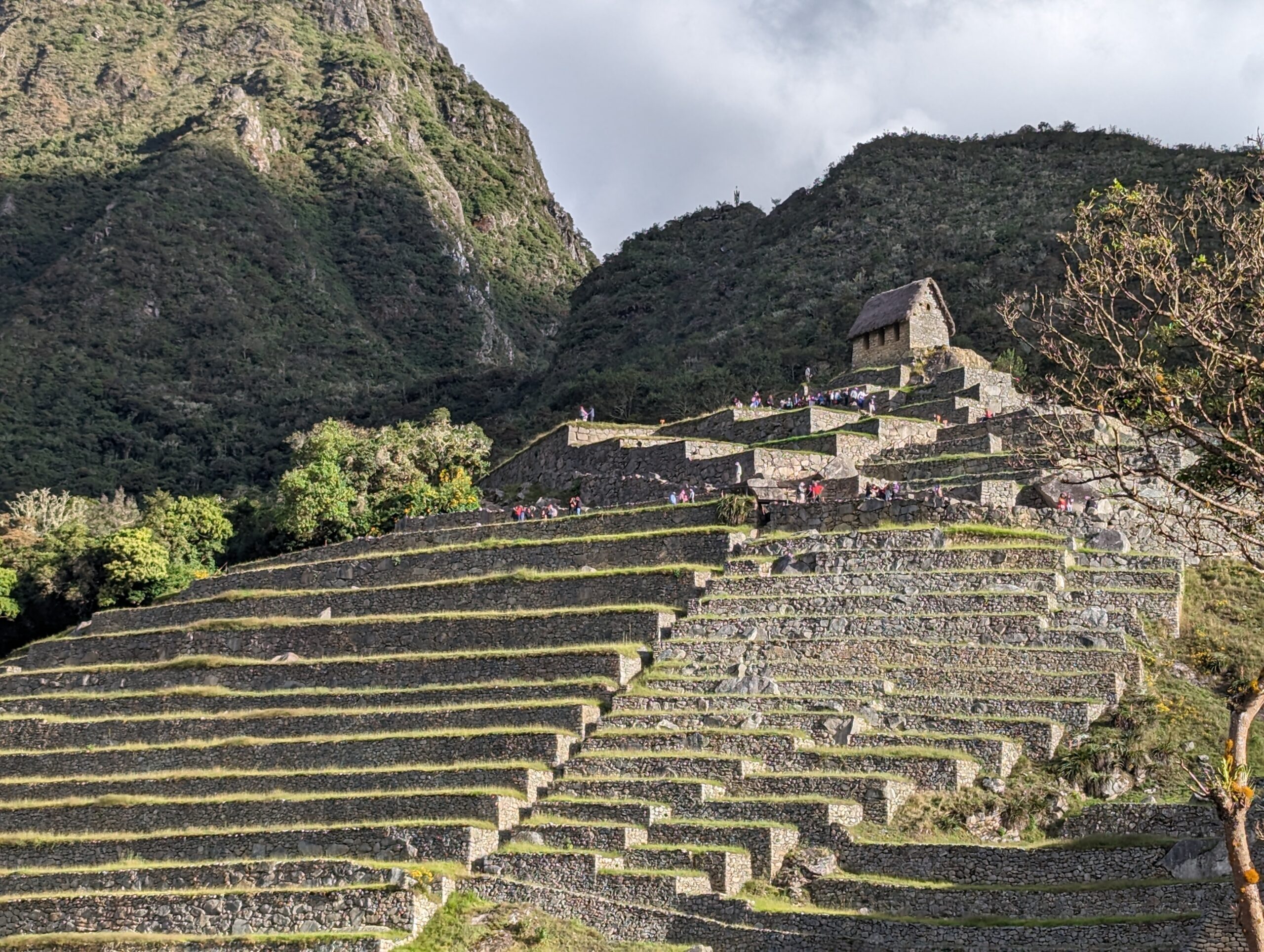
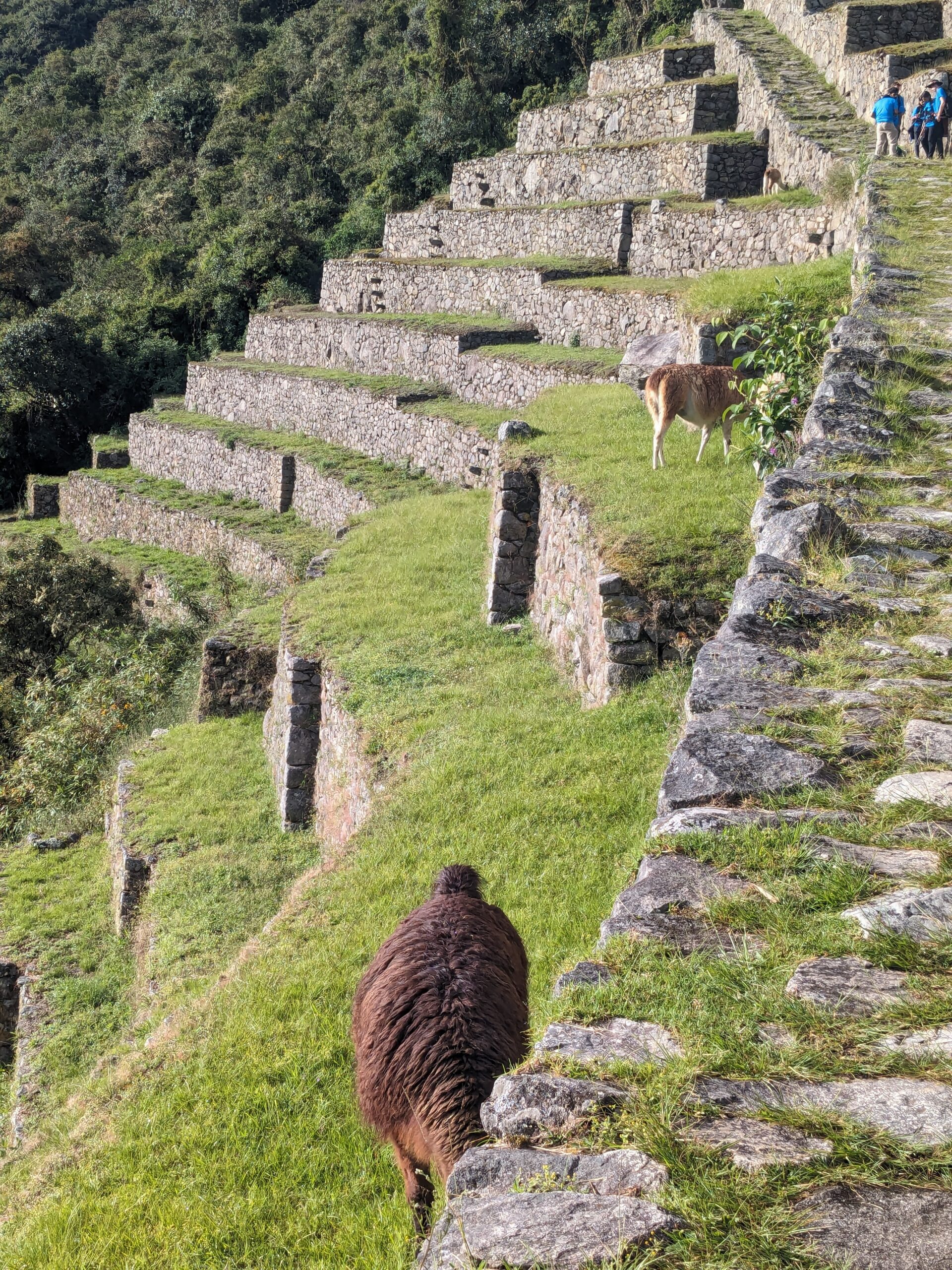
Areas settled by the Incans can be identified by the terraces. In such mountainous terrain, flat land was a commodity – especially for the large scale agriculture necessary to feed the population. It felt blindingly obvious when pointed out to me, but I had not considered it.
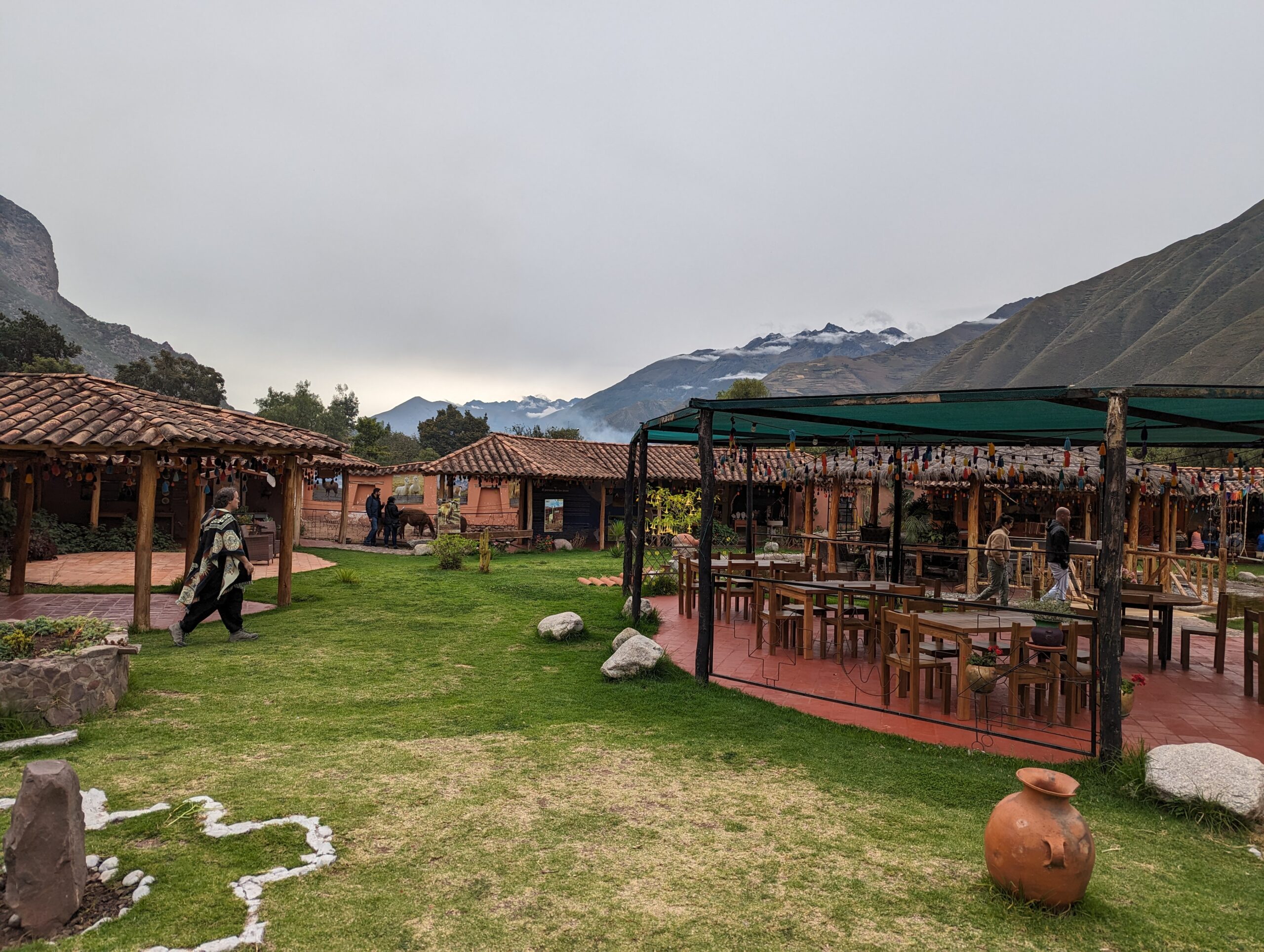
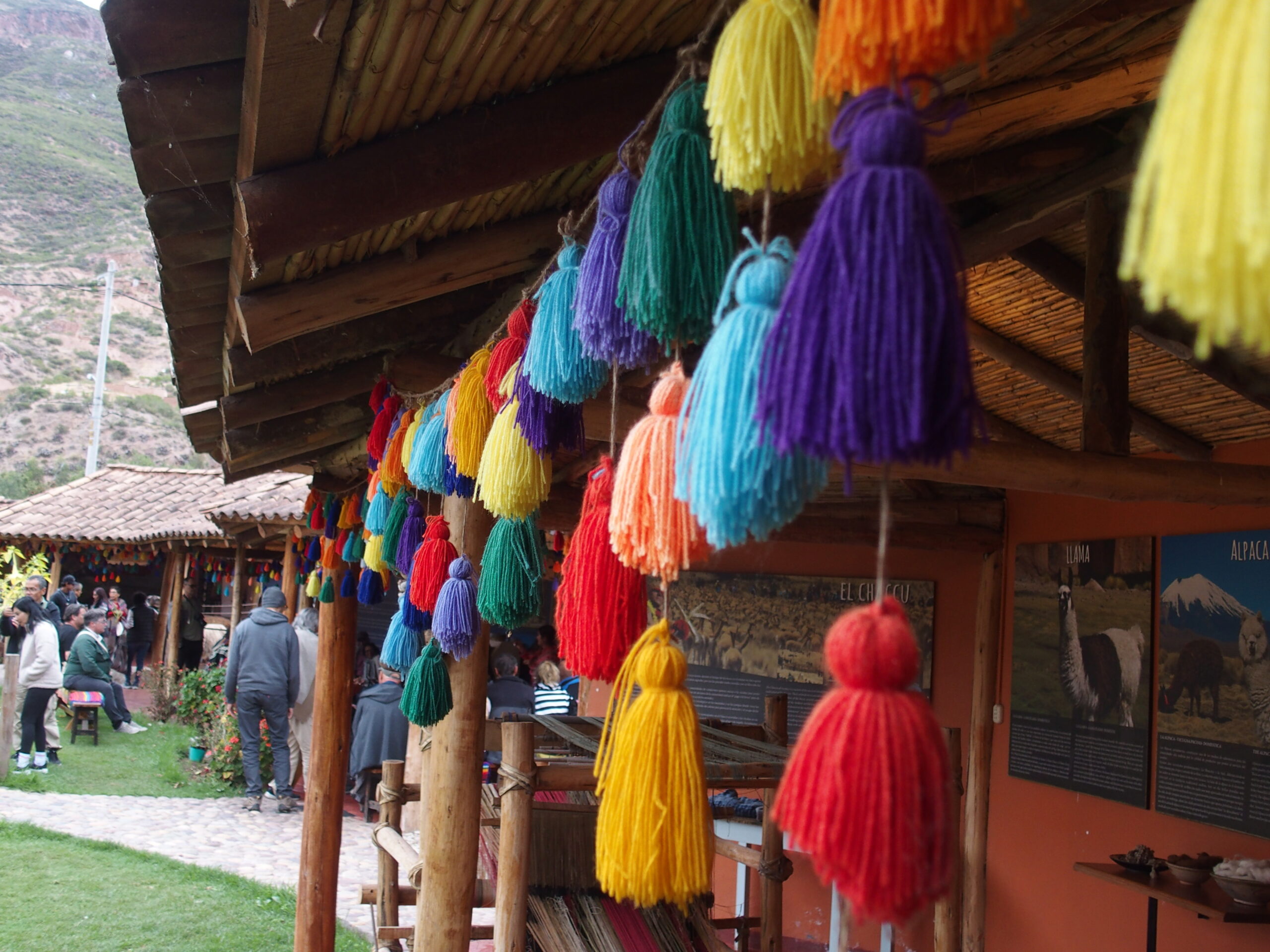
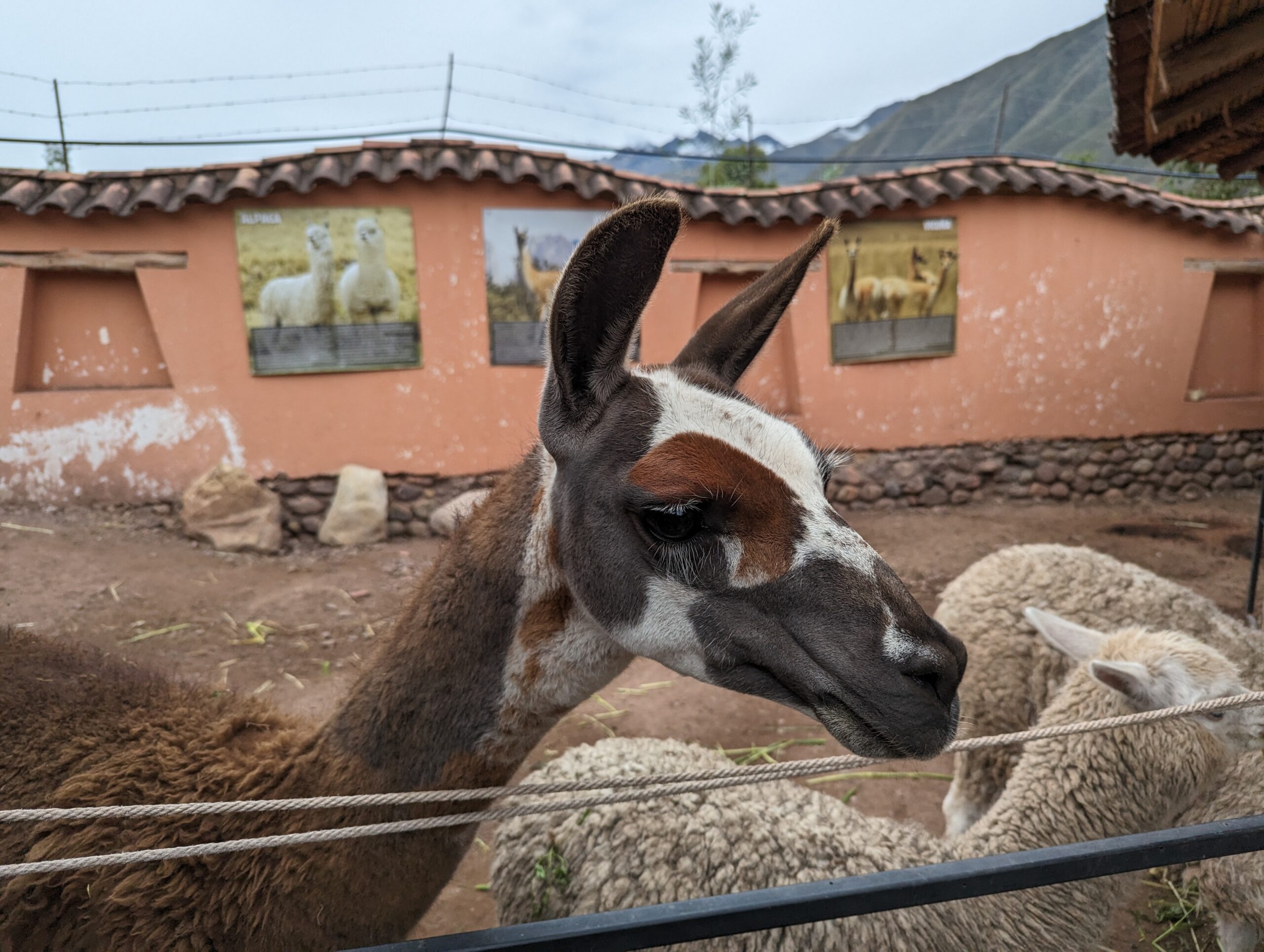
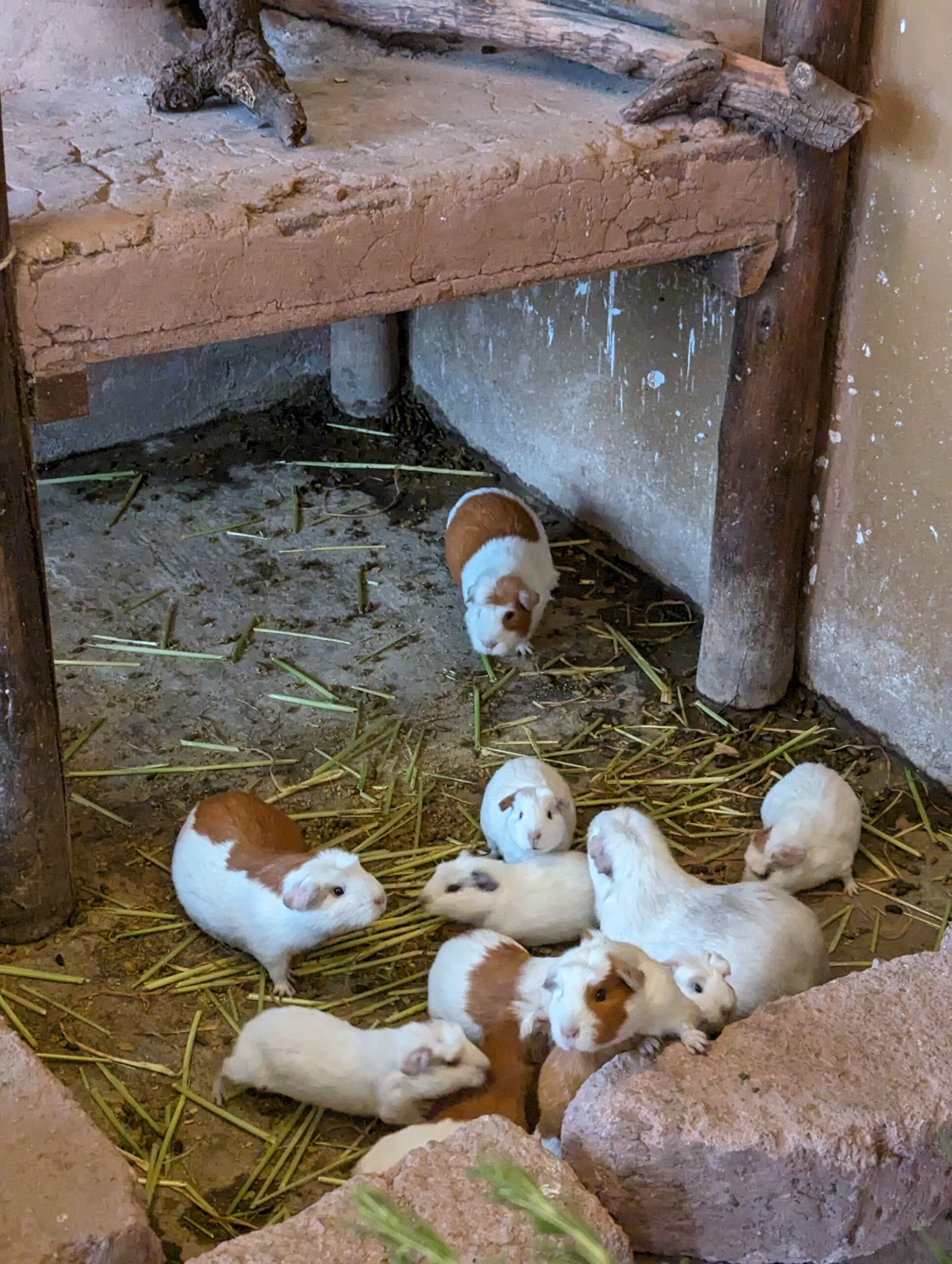
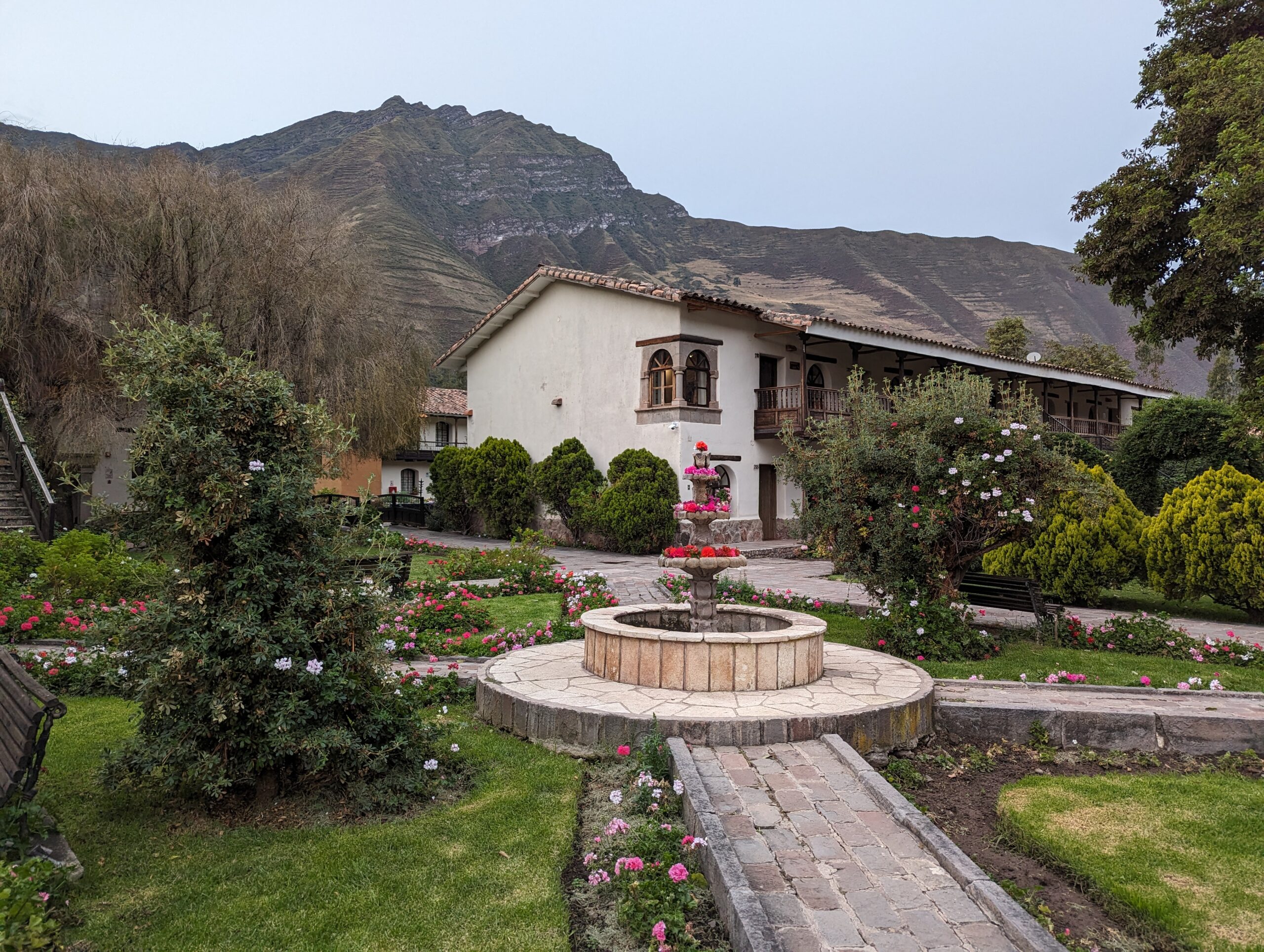
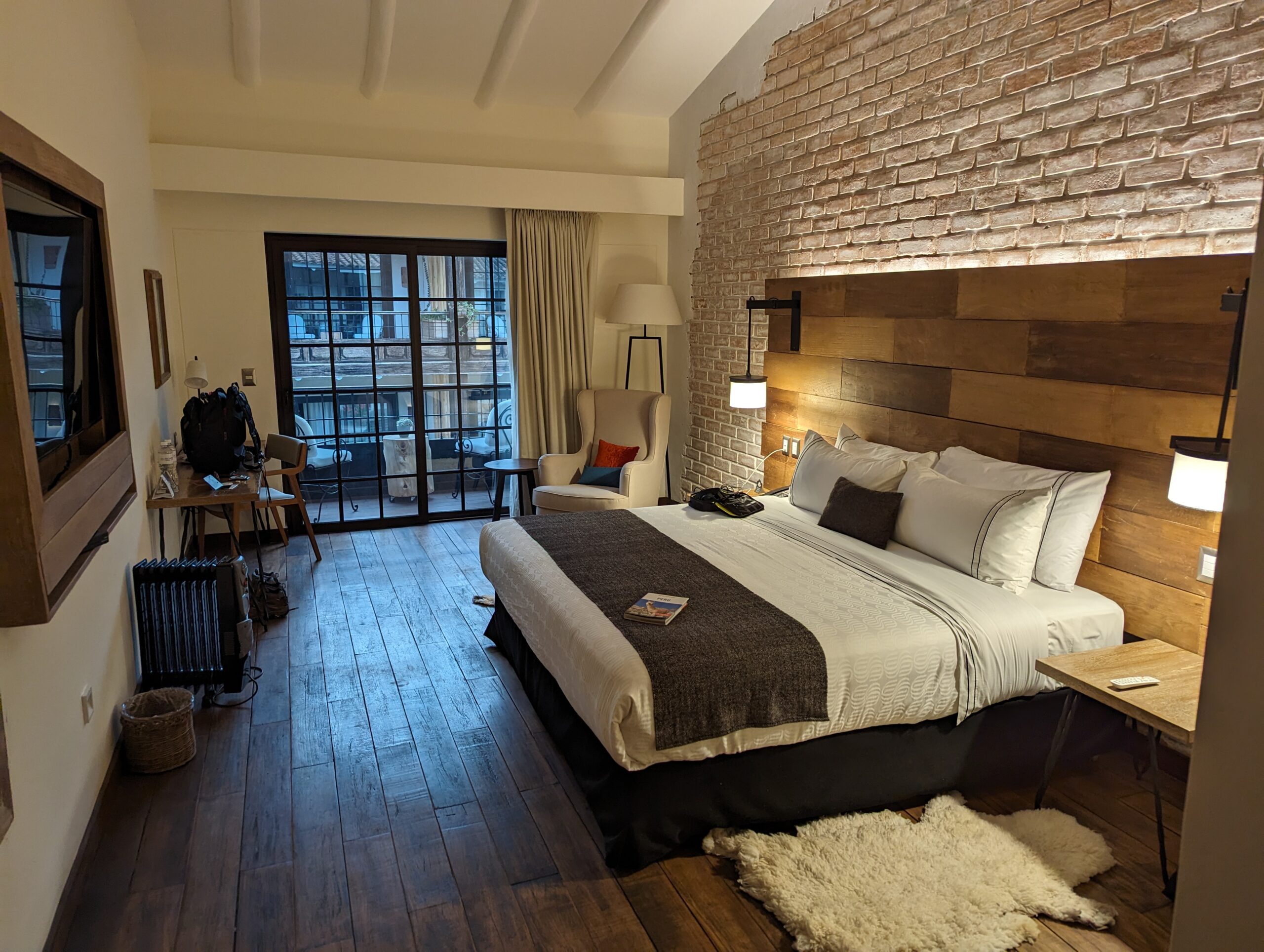
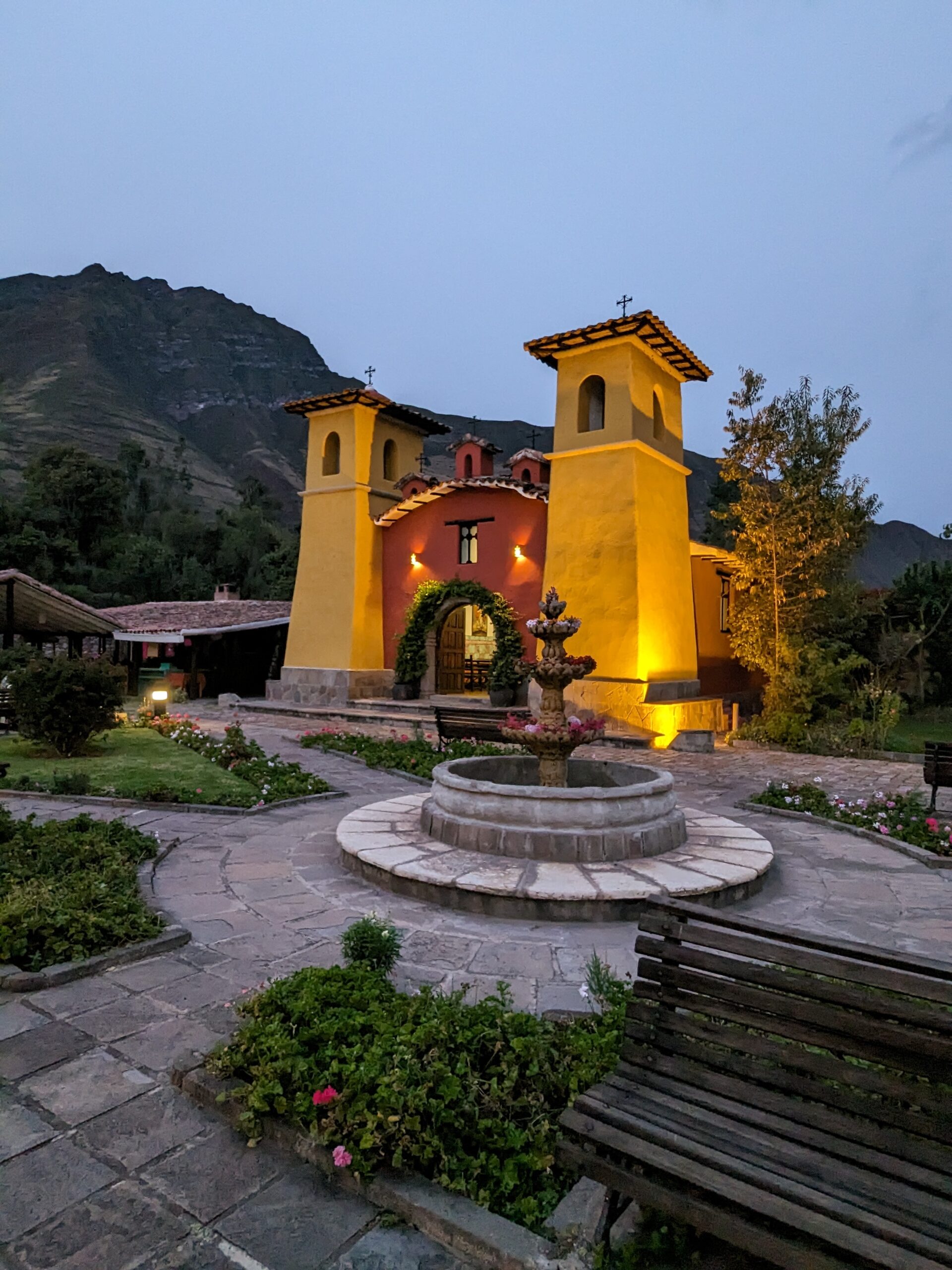
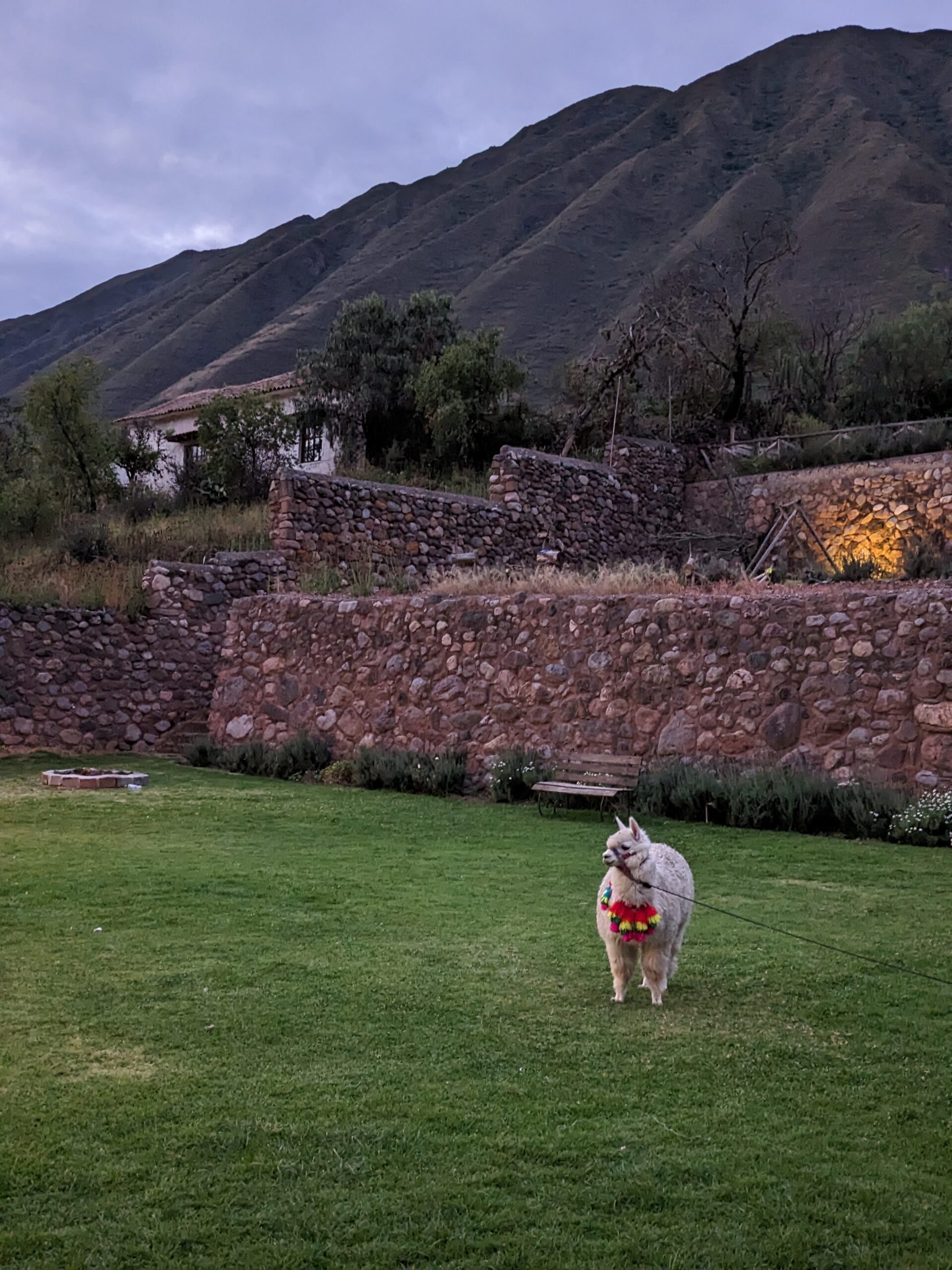
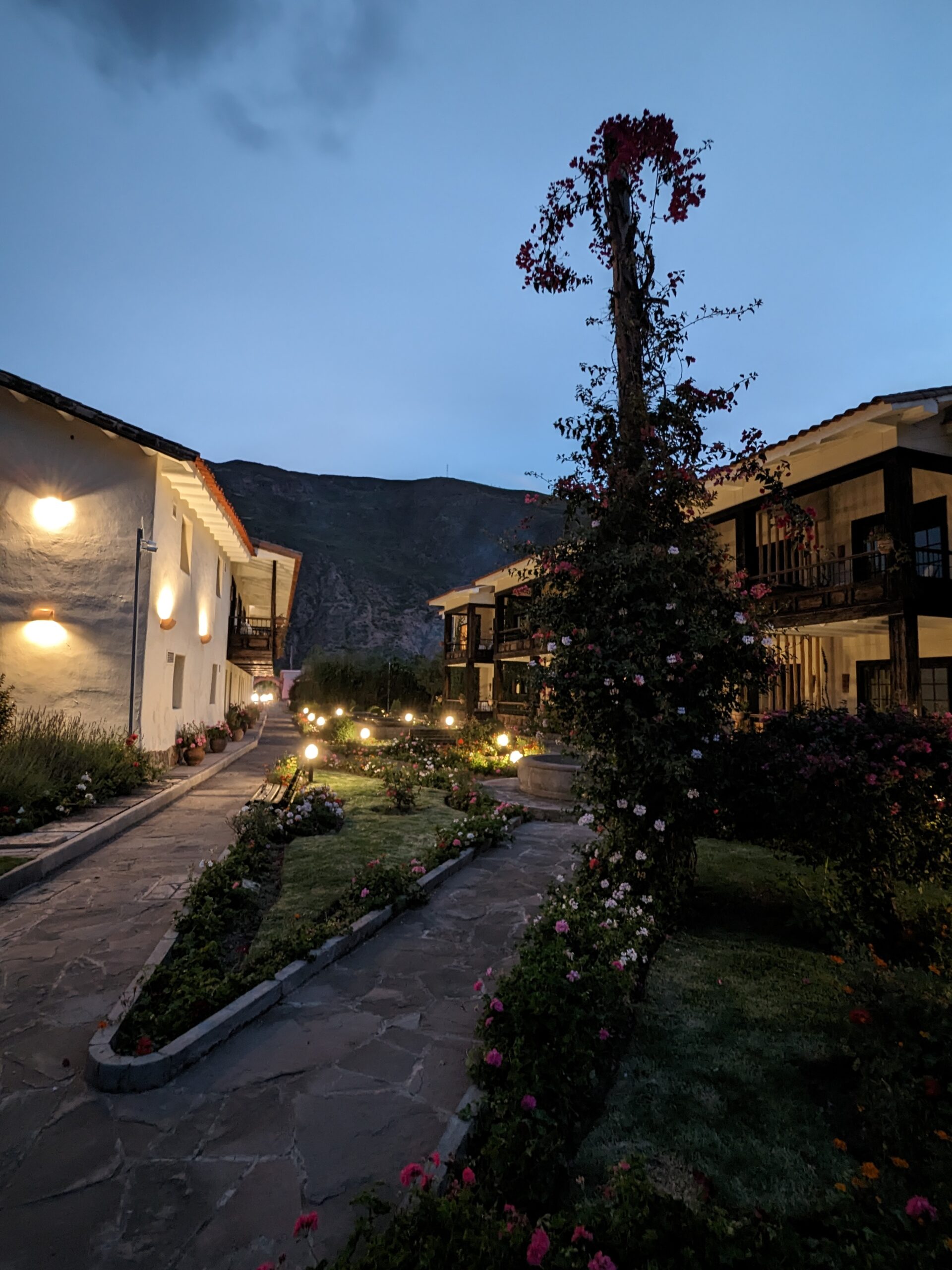
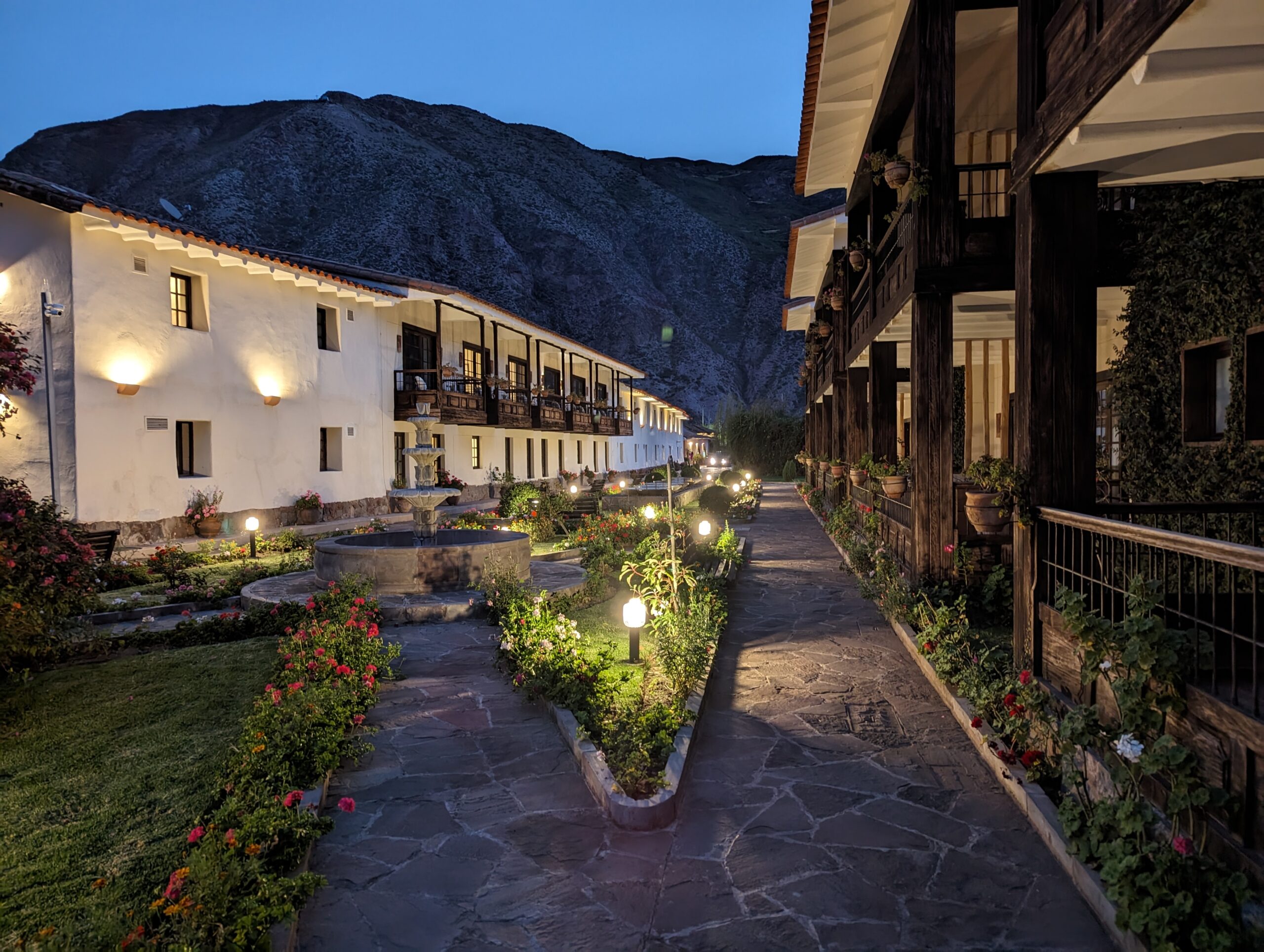
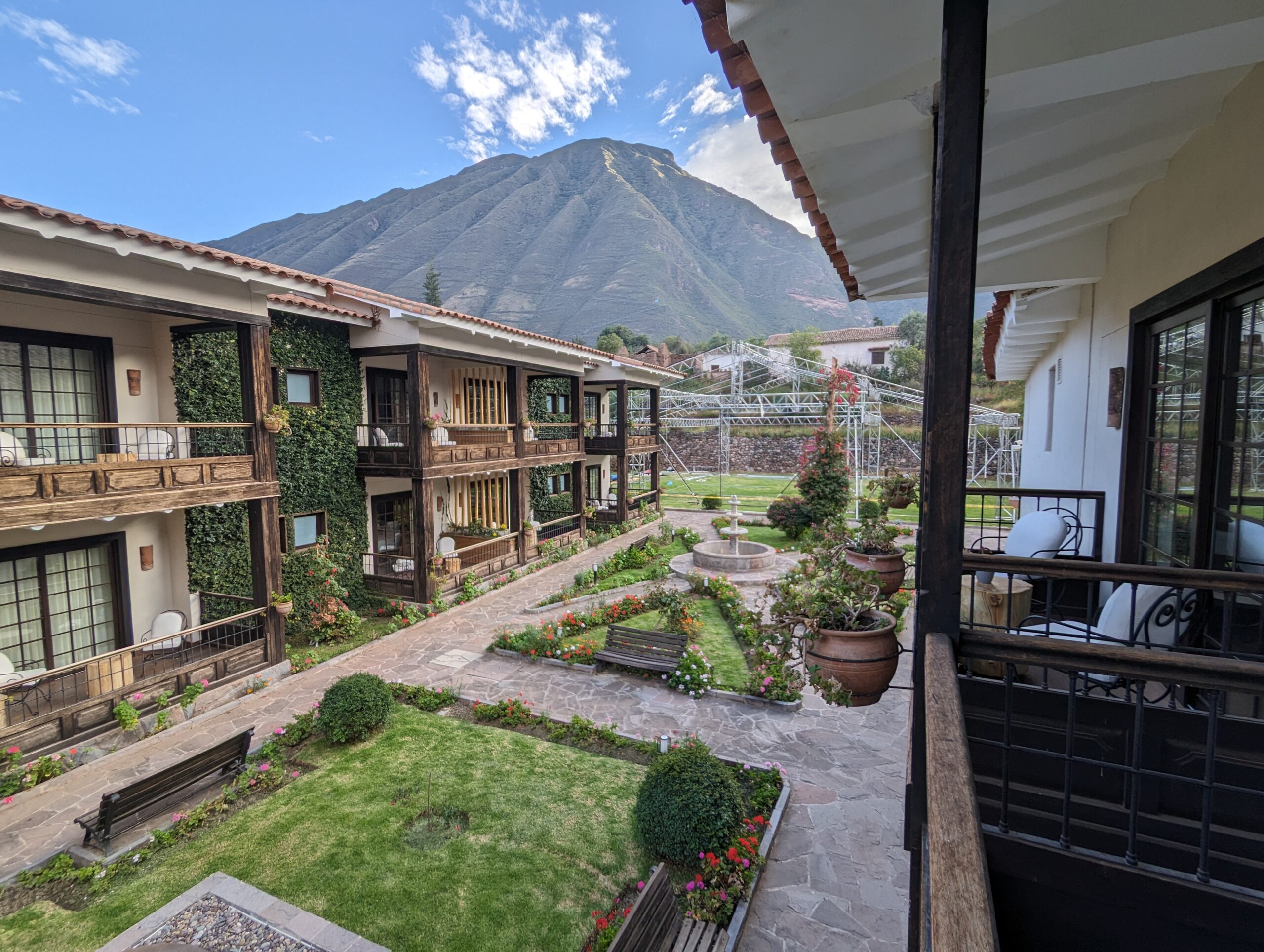
First overnight was in Yucay at the Sonesta Posadas del Inca Yucay on the grounds of a former monastery. It provides a quiet escape from the world with its lovely gardens. And a llama or two. Despite being a markedly lower elevation than Cuzco (2850m / 9300ft), it was a comfortable way to adapt to the altitude.
Our guides told us the next morning that the former monastery is rather famously haunted. Nothing troubled my sleep.
Ollantaytambo – Aguas Calientes
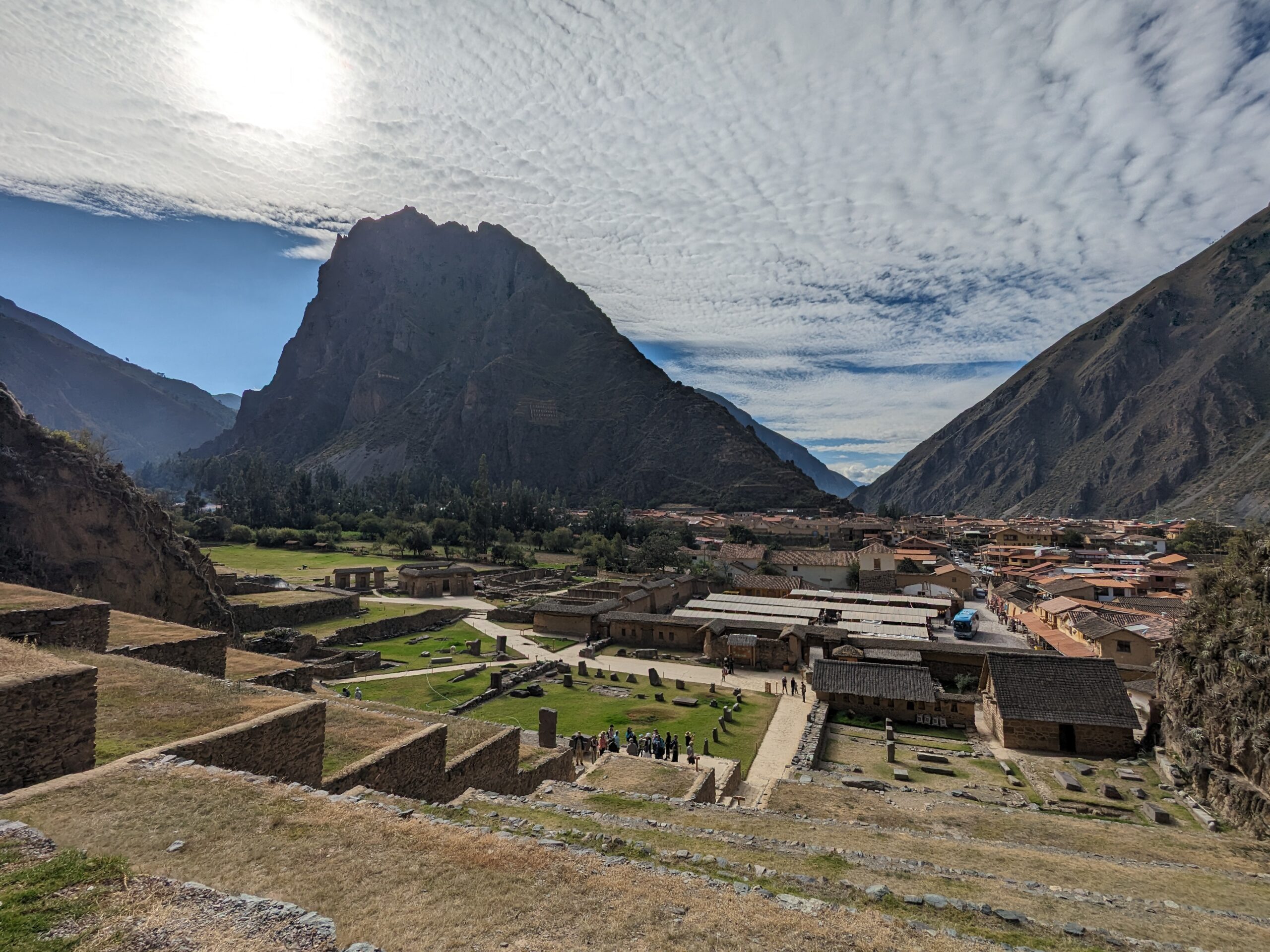
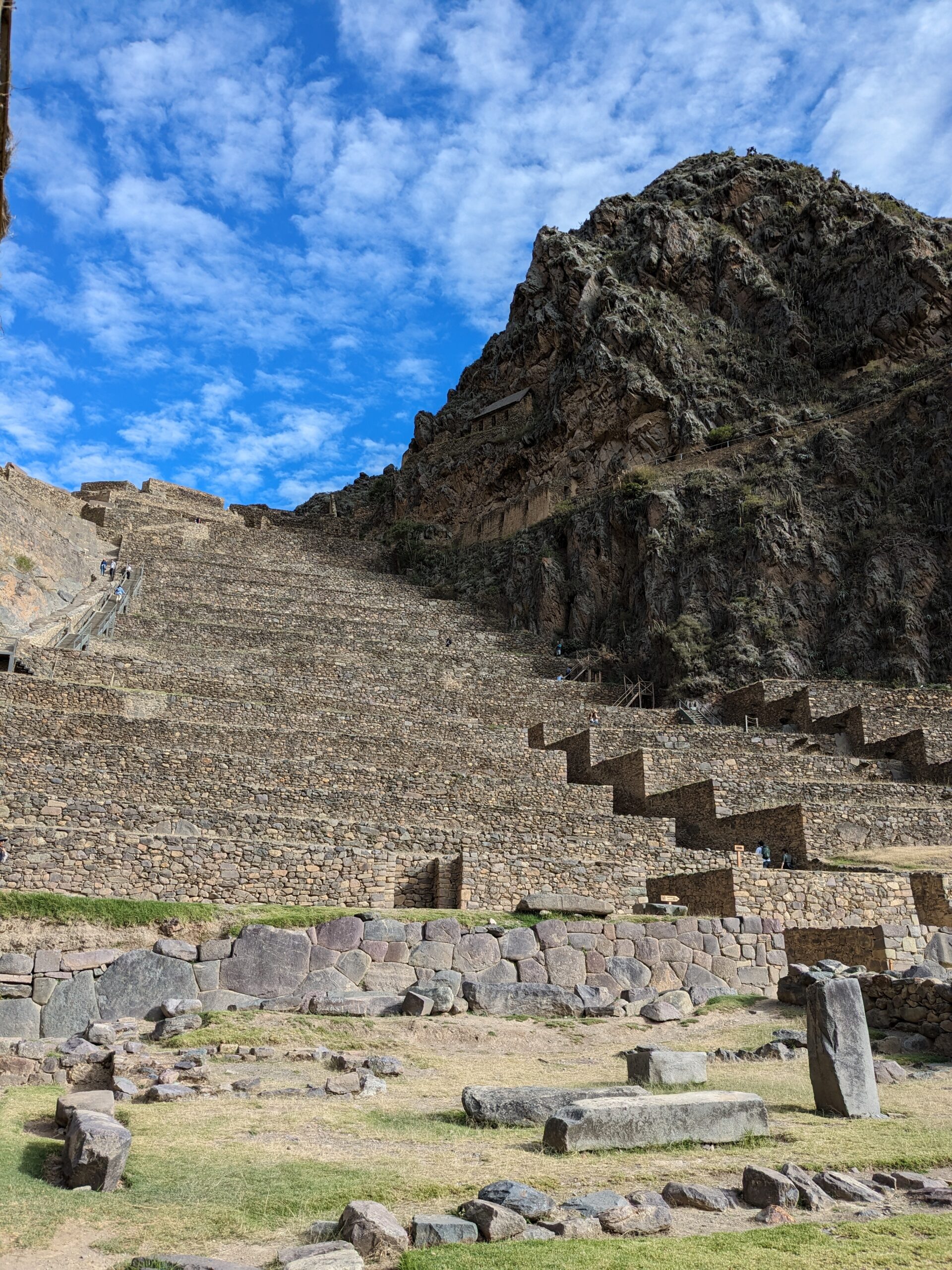
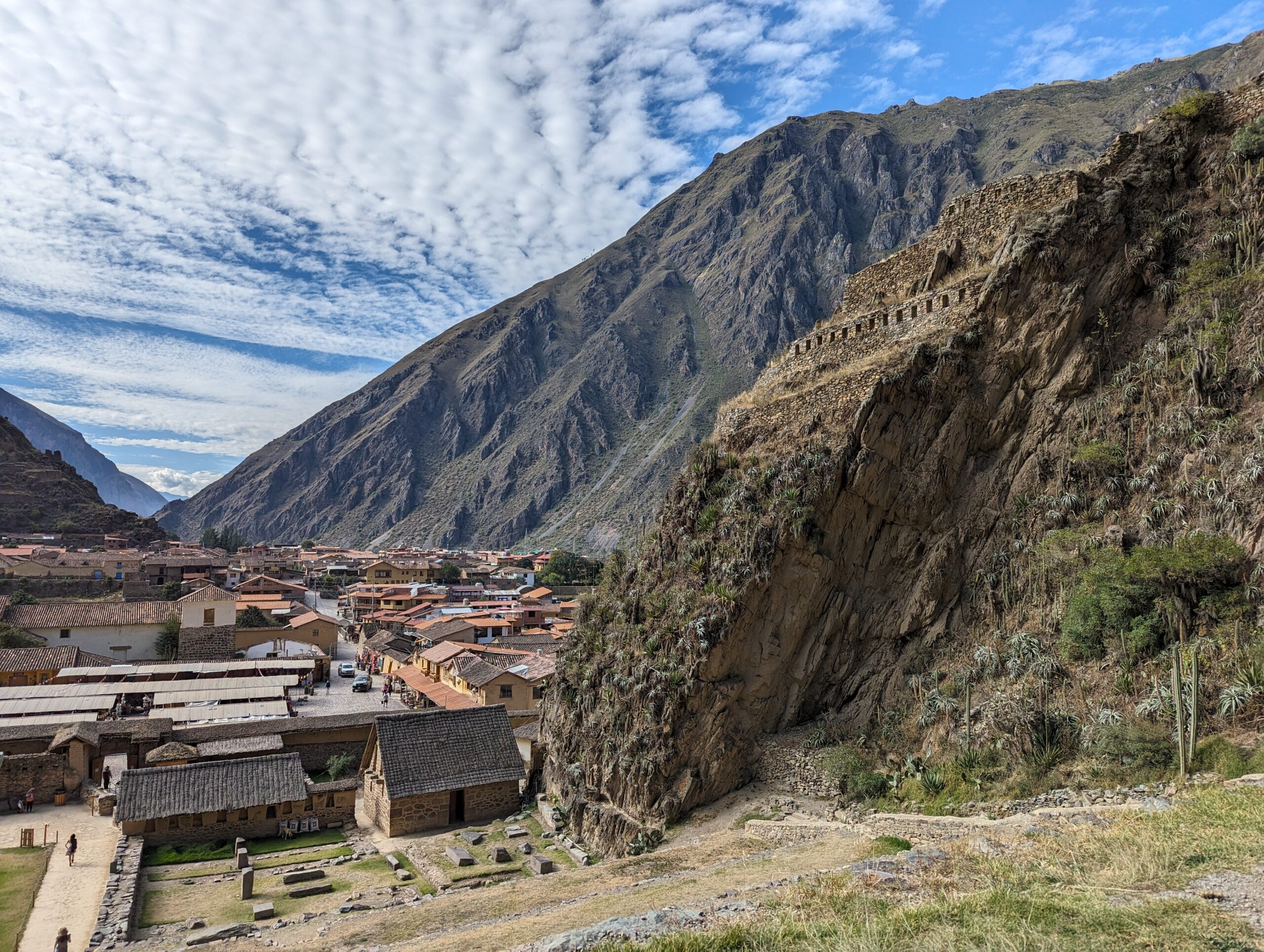
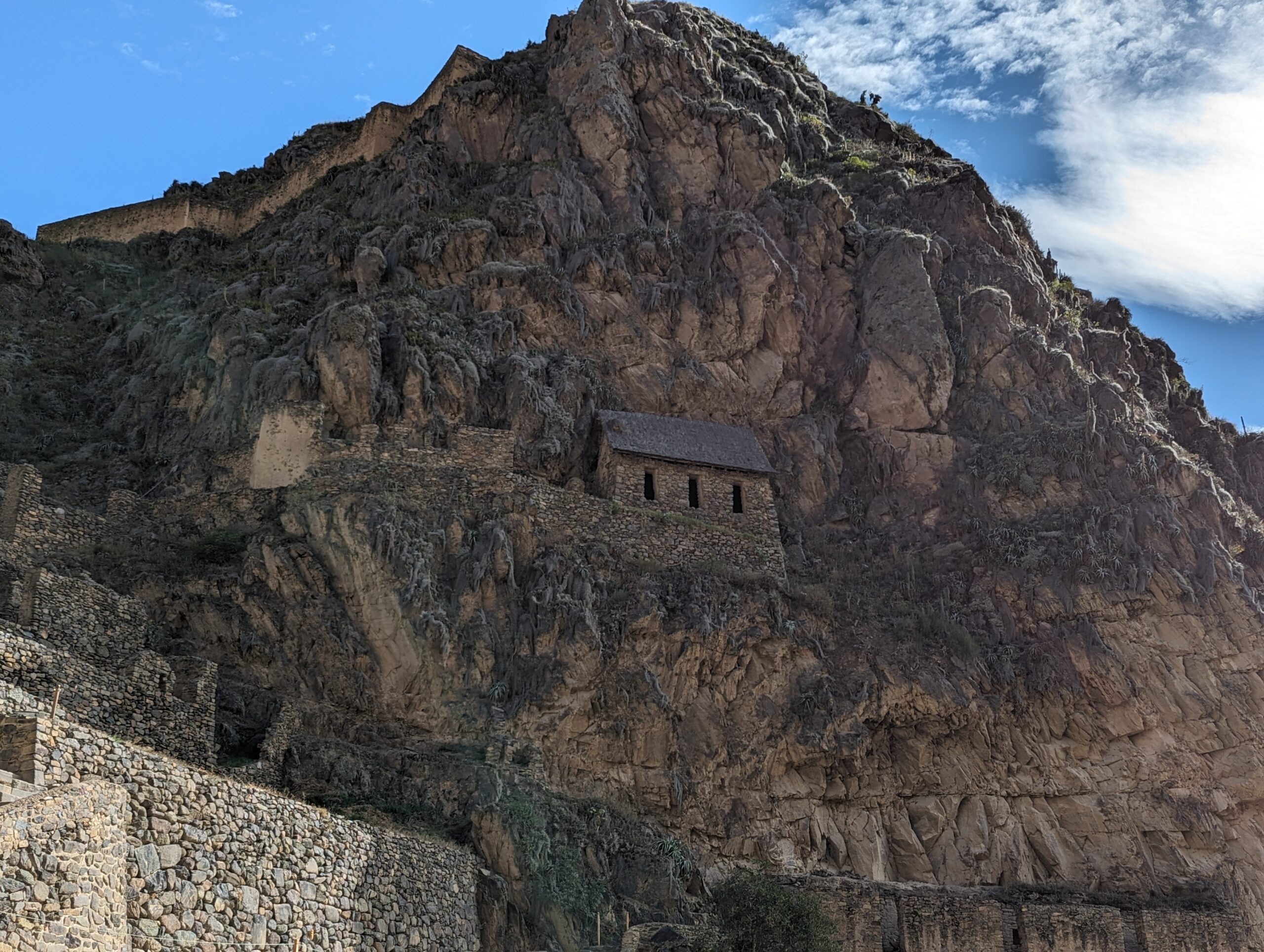
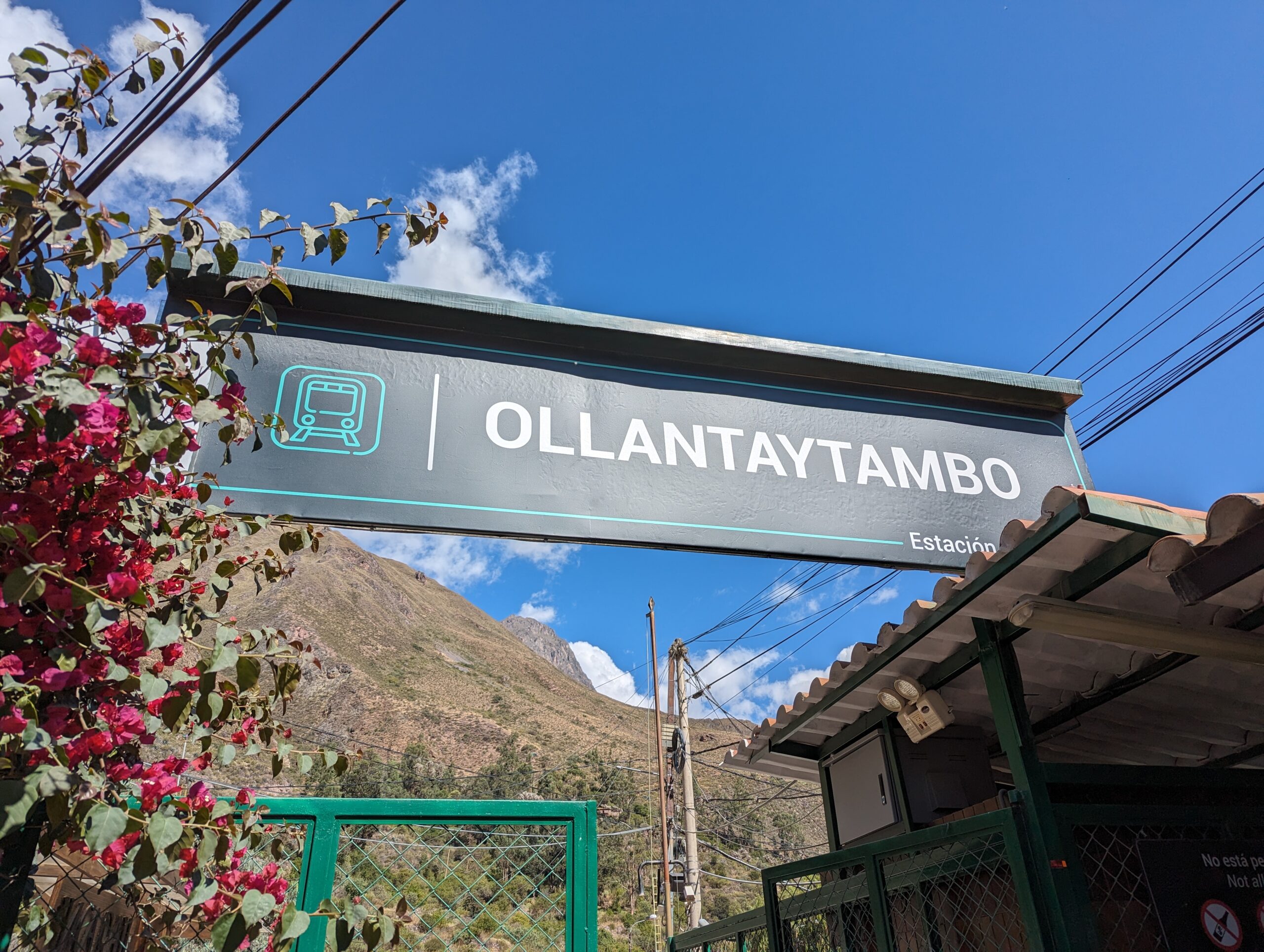
A brief visit to the town of Ollantaytambo before boarding our train to Aguas Calientes1 and Machu Picchu itself. Ollantaytambo is one of the big jumping off points for hiking the Inca Trail. The backpacker crowd is well represented. Our experience was less arduous.
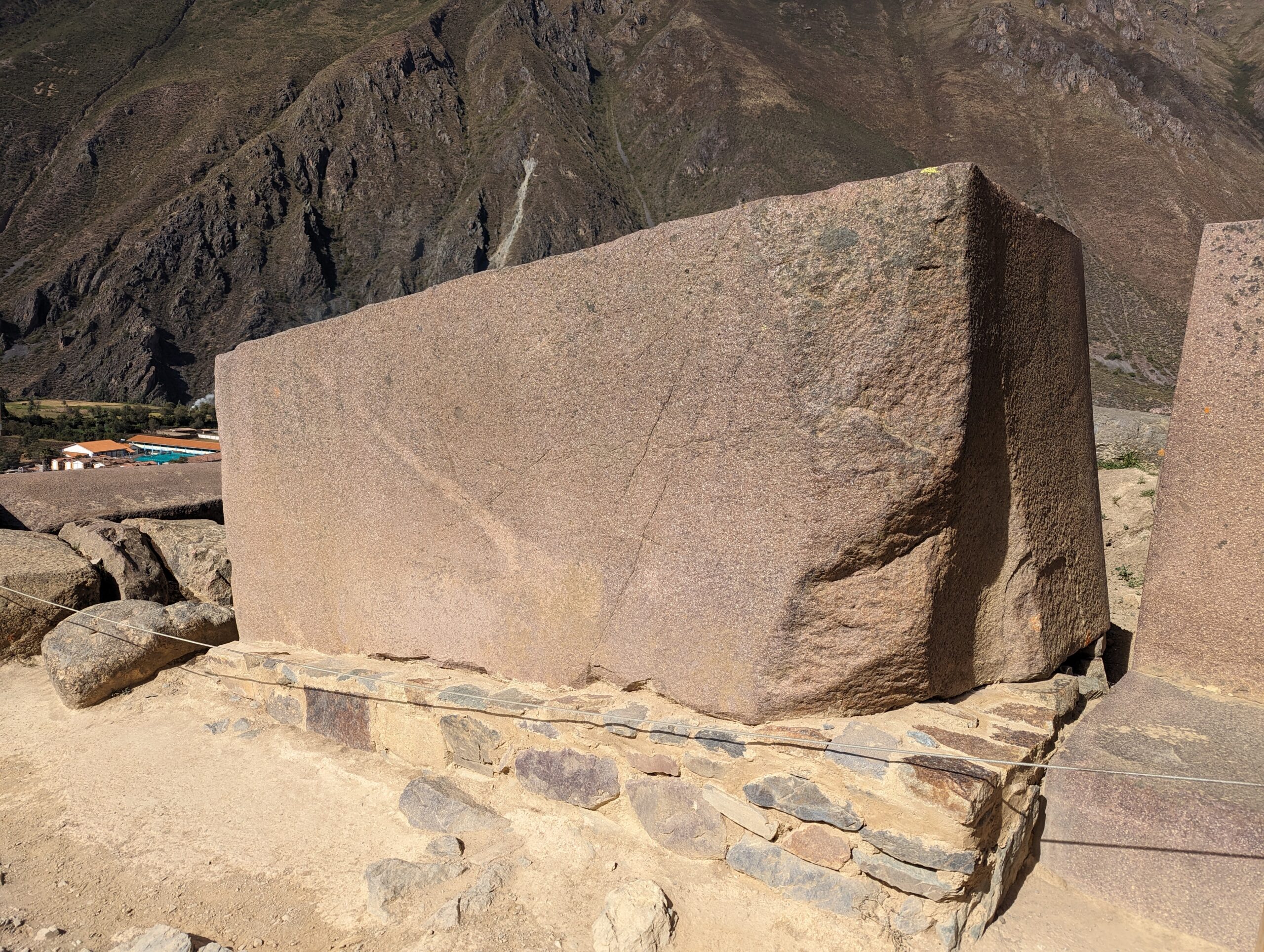
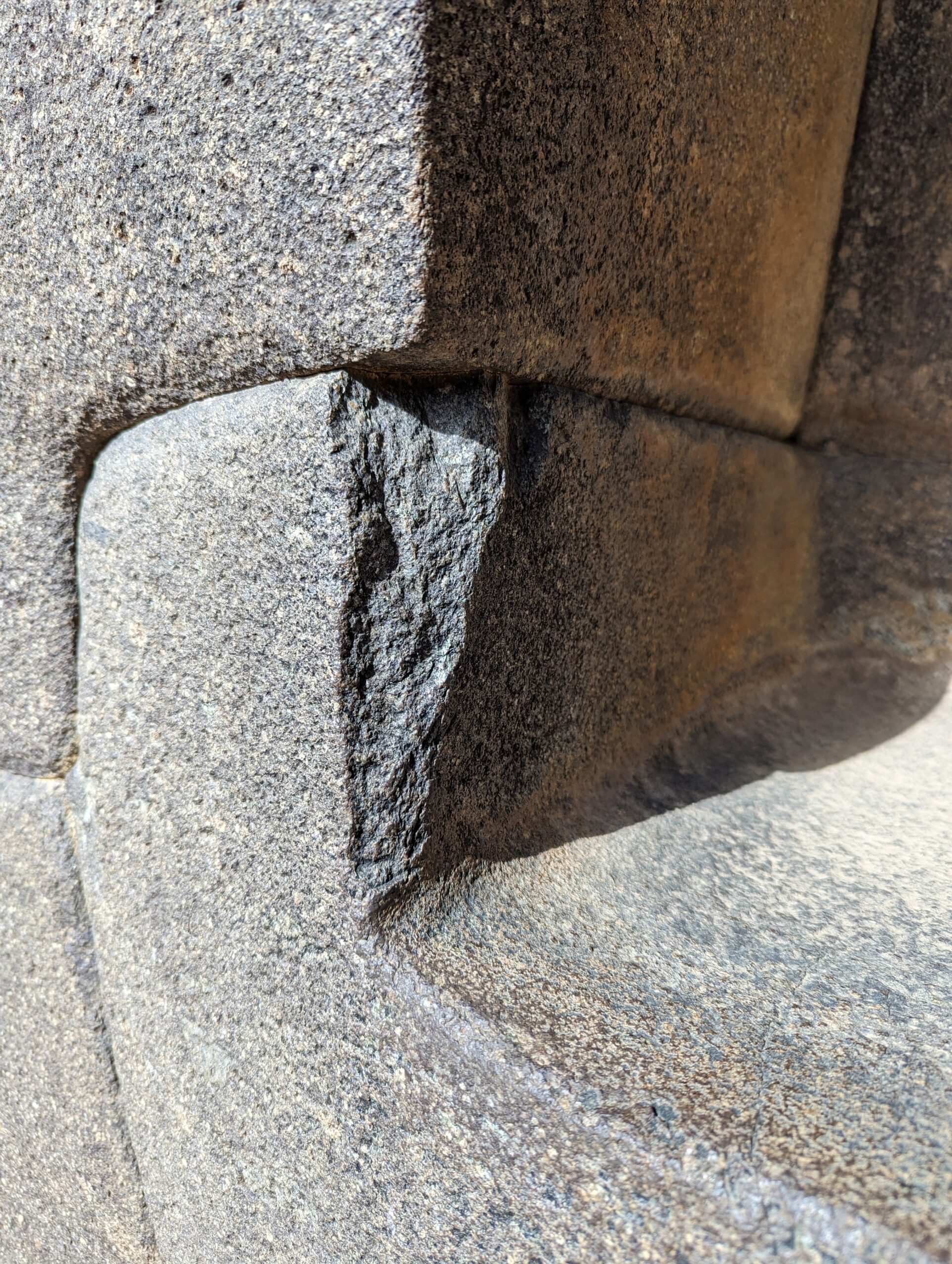
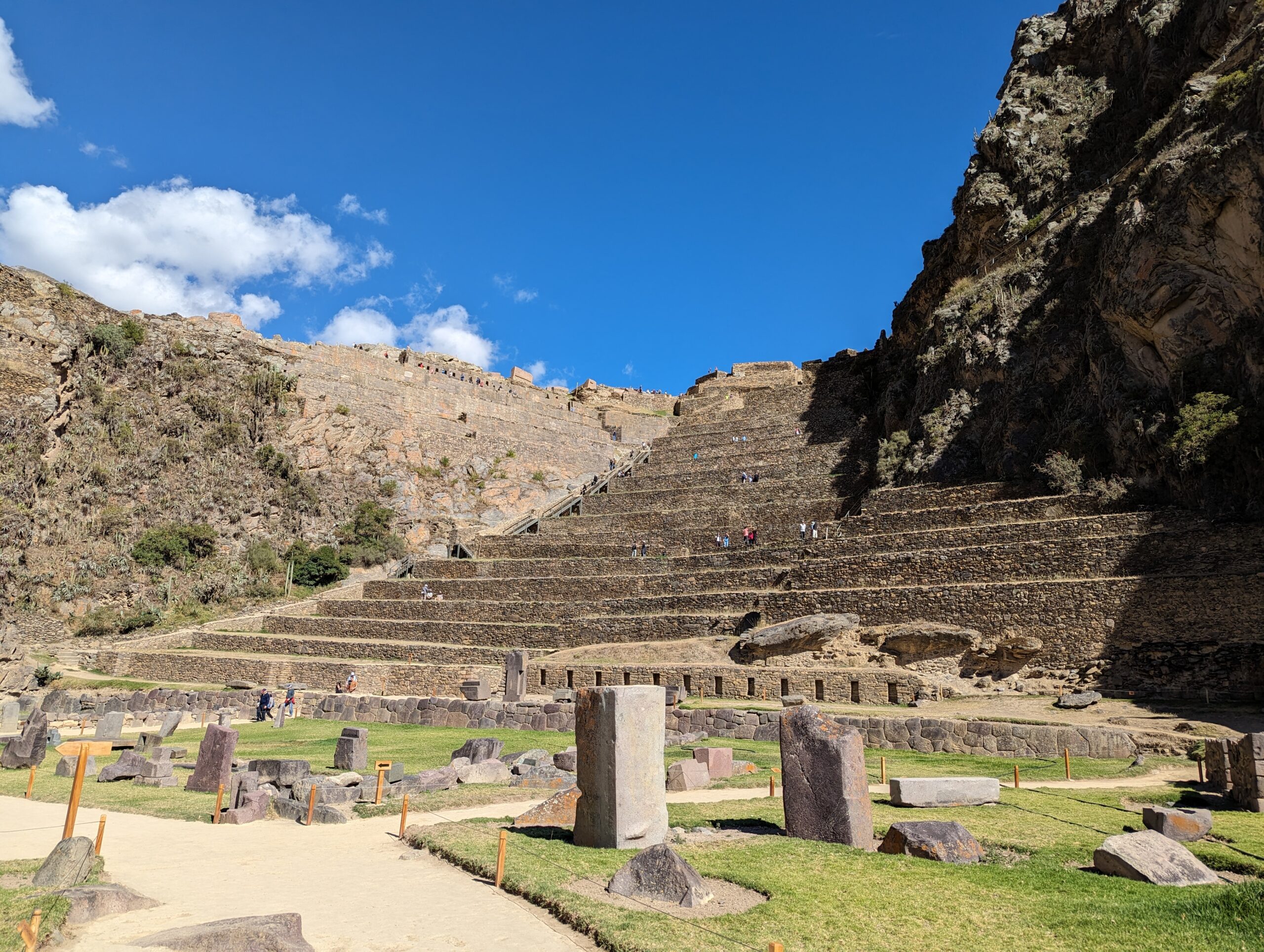
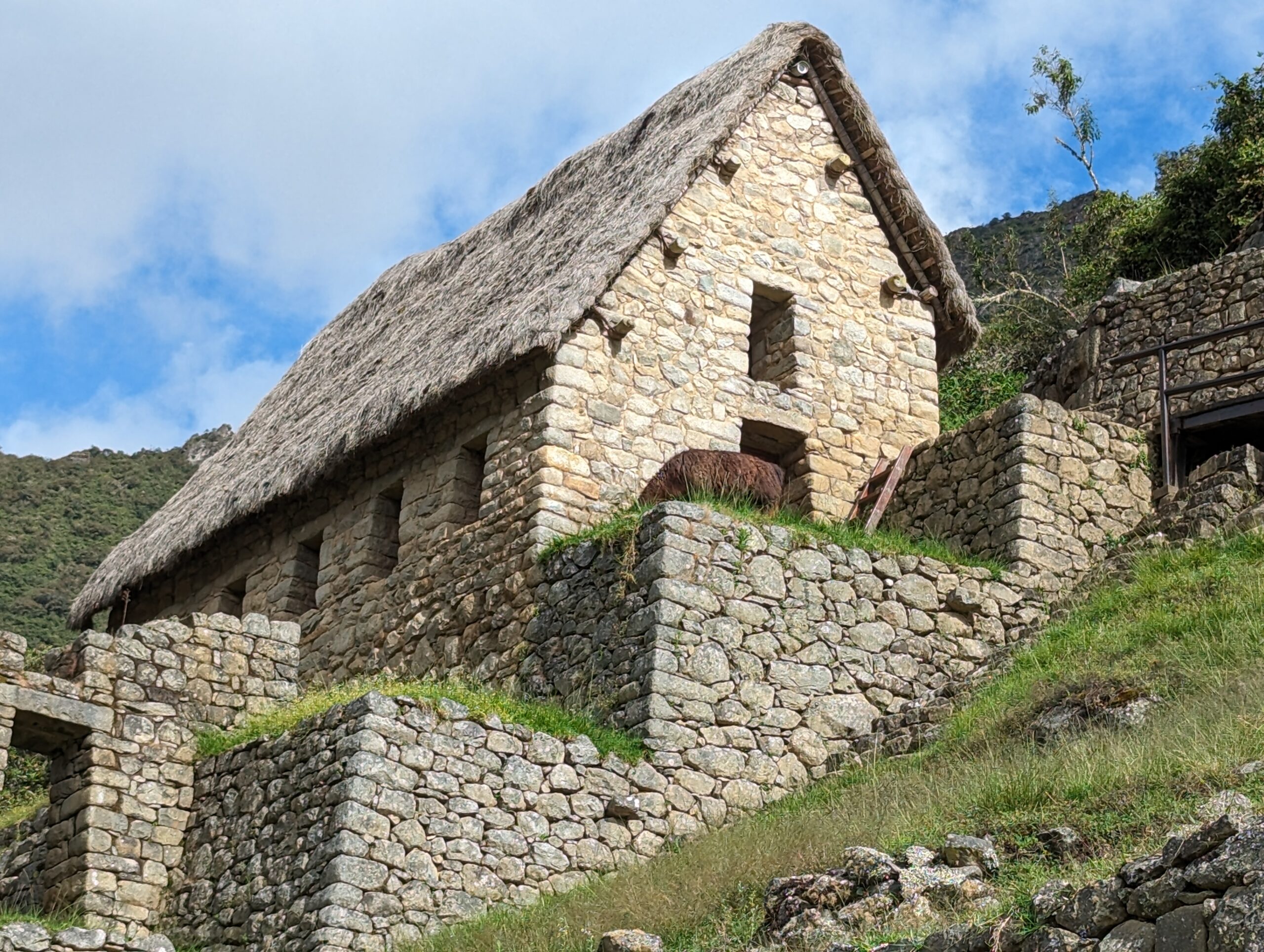
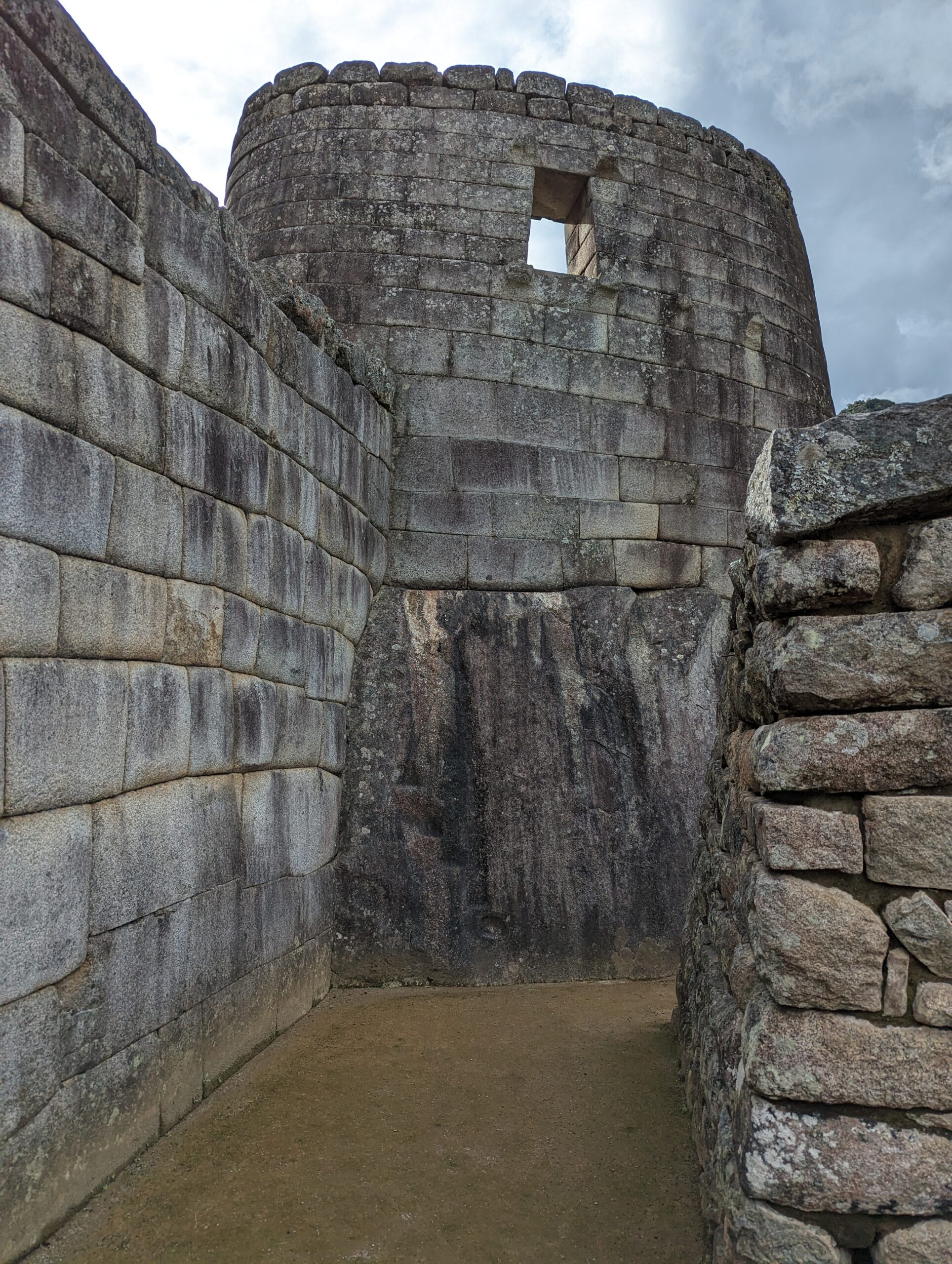
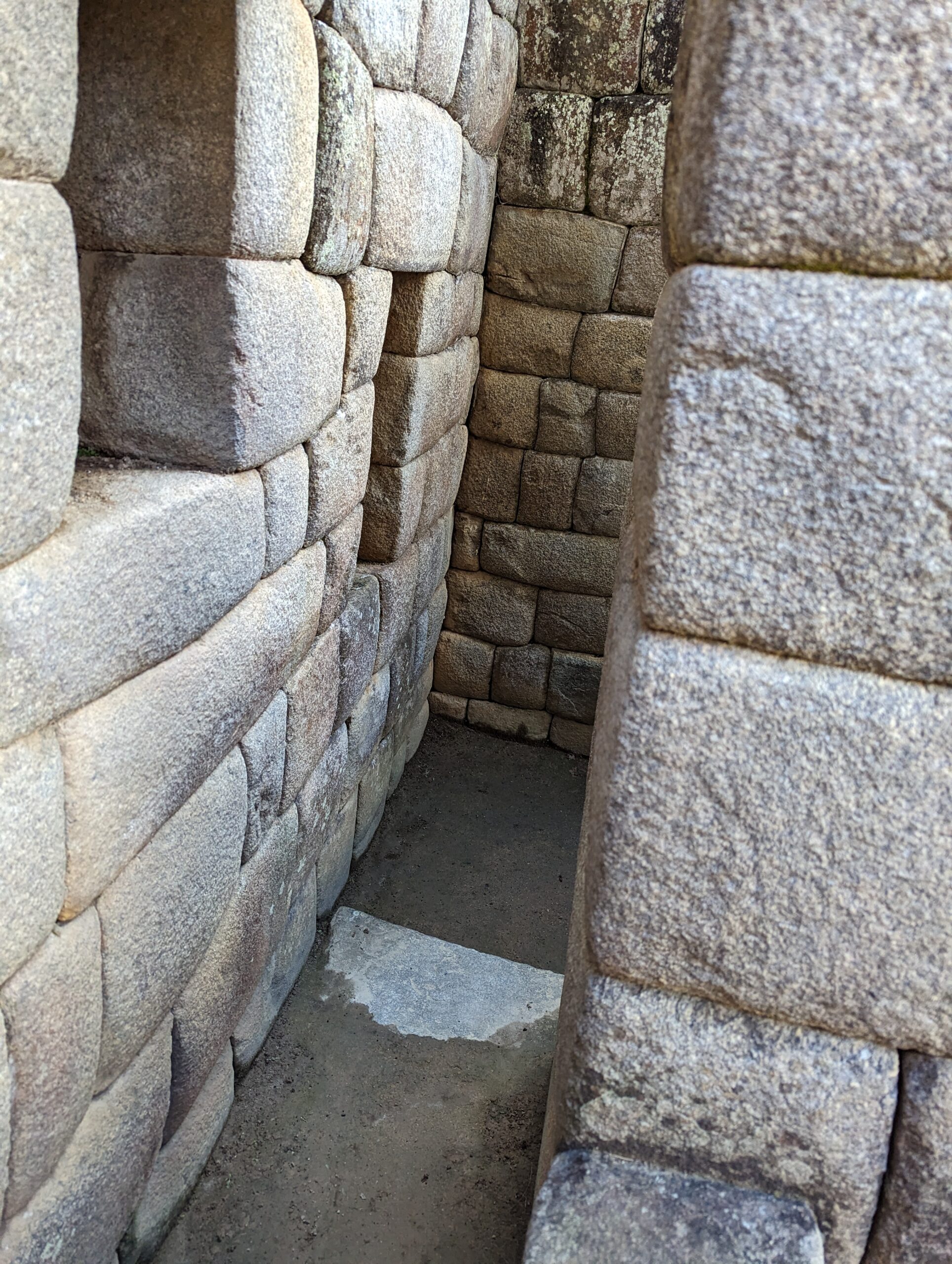
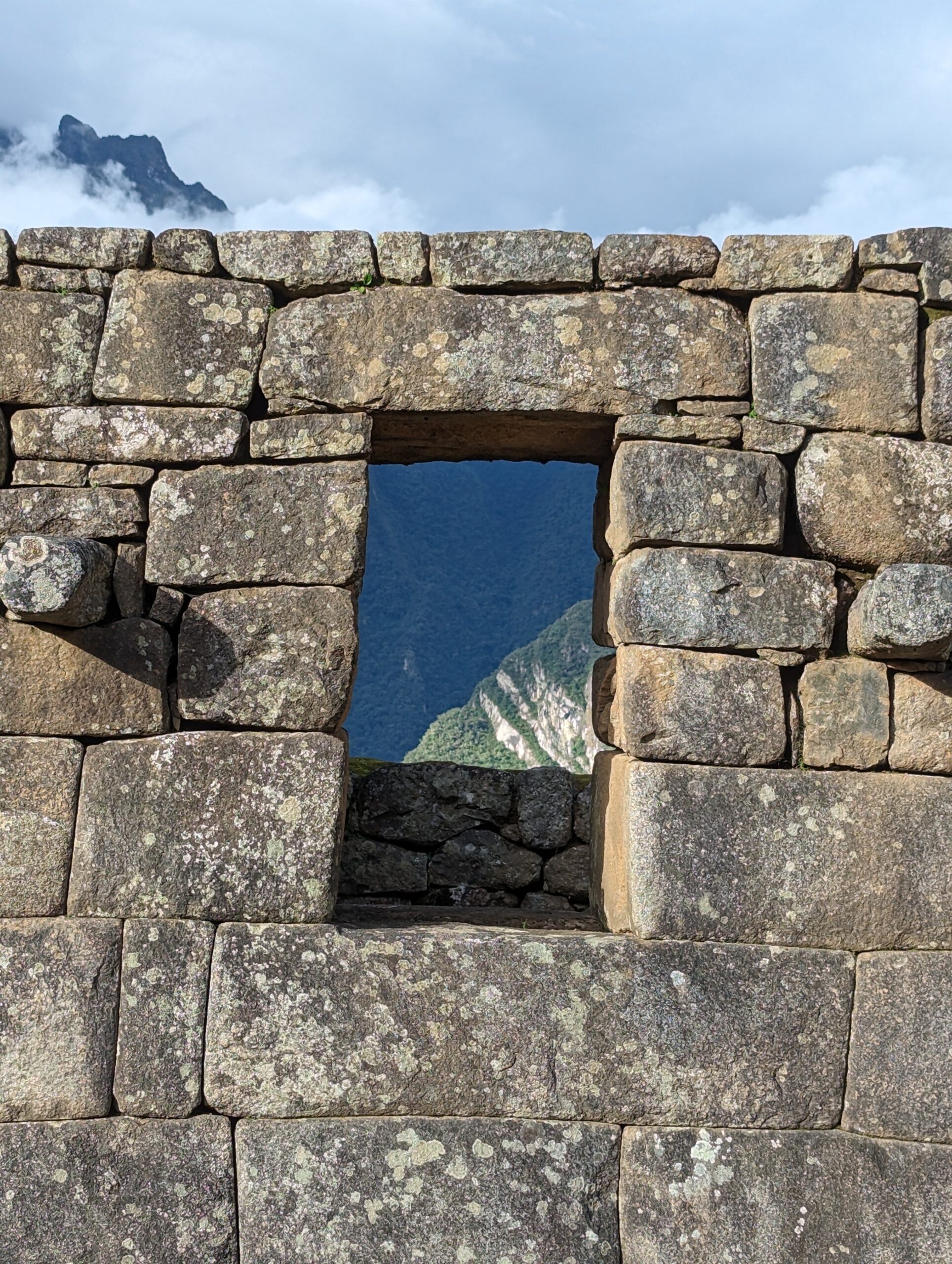
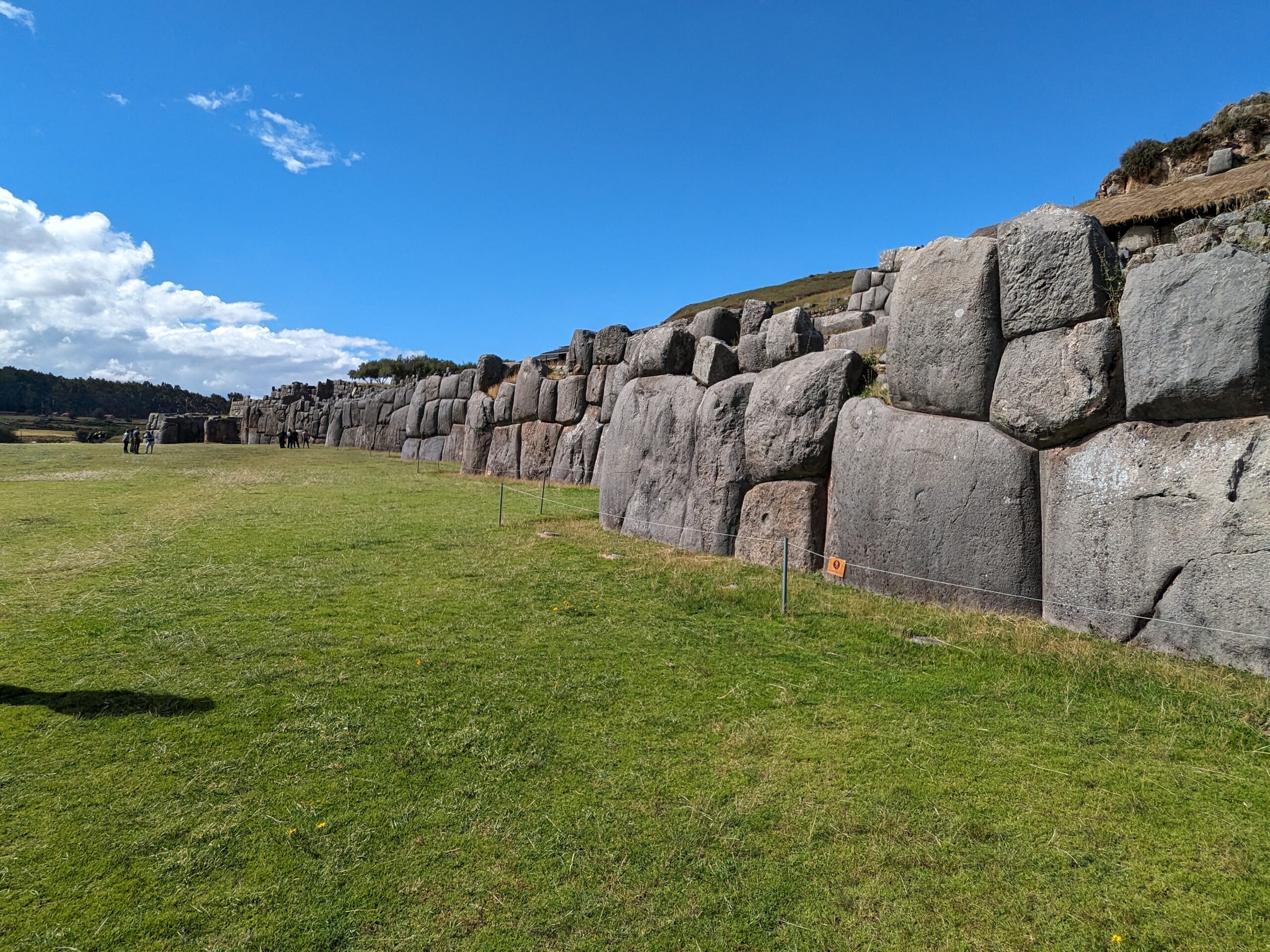
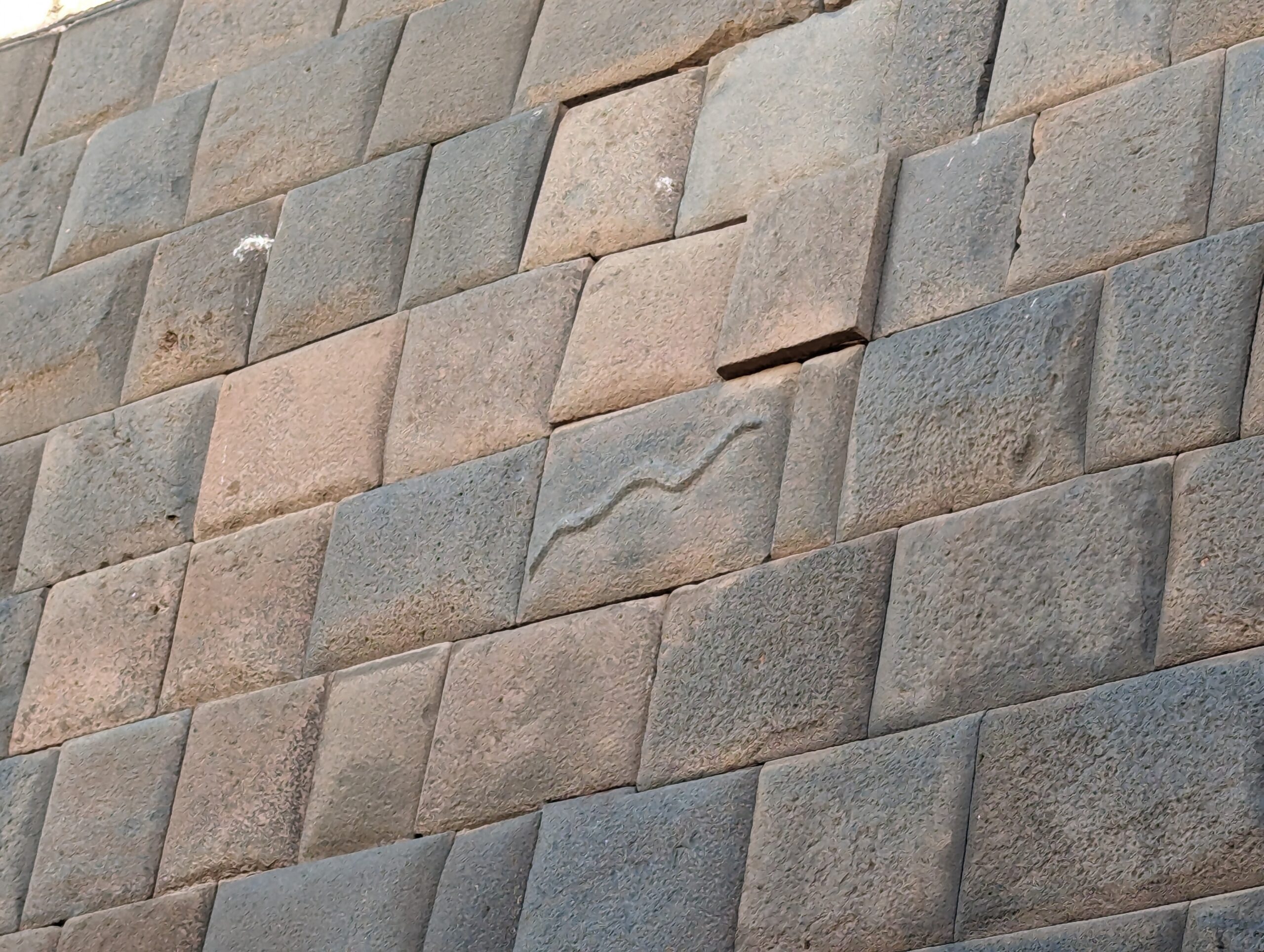
Central to Ollantaytambo are the terraces. They were a work in progress when abandoned during the Spanish conquest. Incan architecture is famous for the perfect fitting of the stones without the use of mortar. Some of these structures withstand seismic activity better than modern constructions. Some questioned how a civilization without widespread use of the wheel could fit stones together so perfectly.
The terraces provide answers that question. Since the terraces were under construction when abandoned, there are some stones in the process of completion. The solution isn’t really that complicated: the Incans used mud and clay to create a mold in the shape of the already-set stone. Workers carved stones to match the features of the stones already-set; hence they fit perfectly when dropped into place. Making good use of gravity, the workshops carving the blocks were located on higher terrace levels, allowing finished blocks to be dropped down rather than lifted up.
As for the limited use of wheels, they are less practical in steep environs. The best description was it was not that the Incans never discovered wheels as much as they never developed brakes. Cobblestone pathways allowed the blocks to be slid or pushed along.
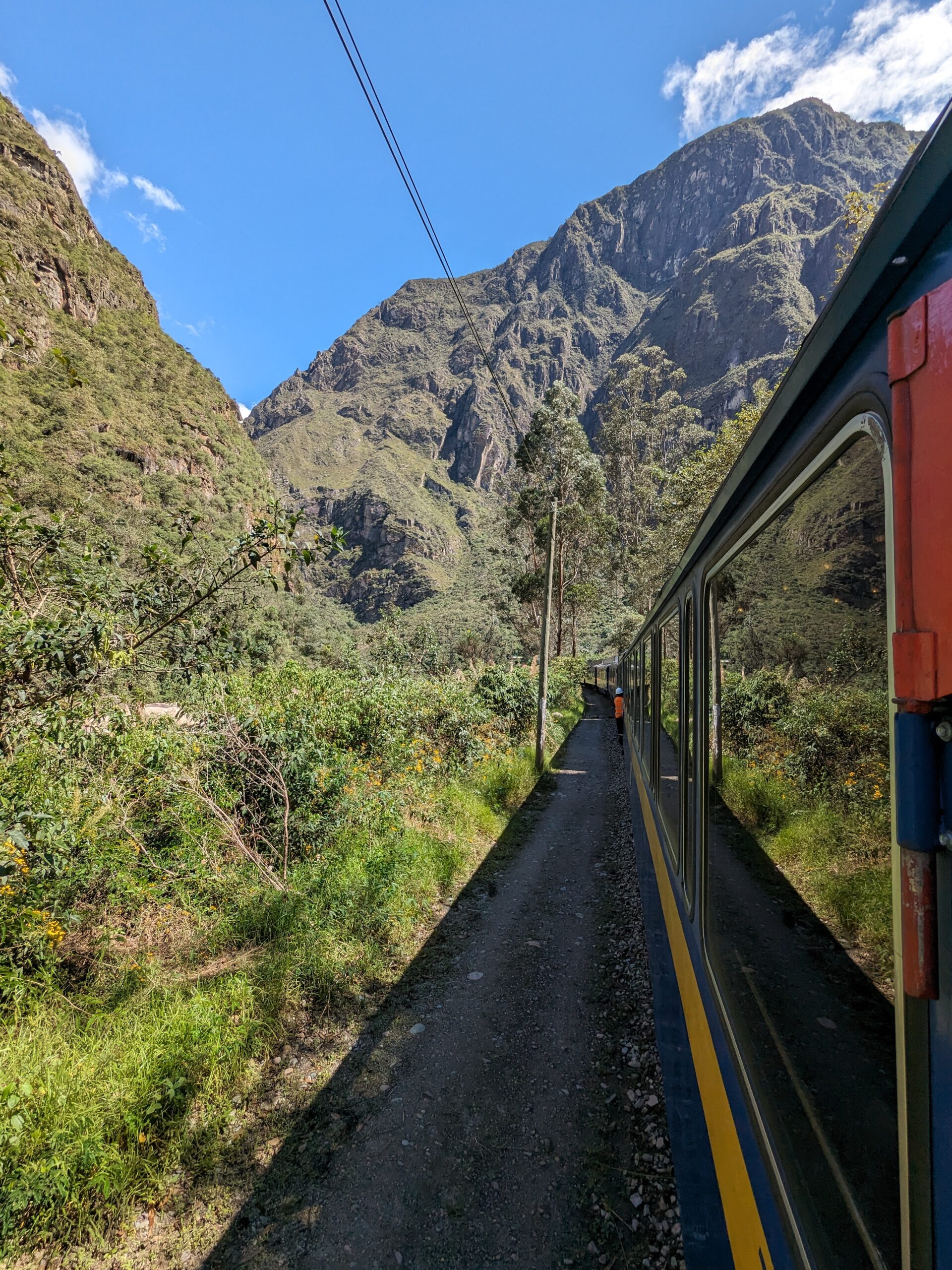
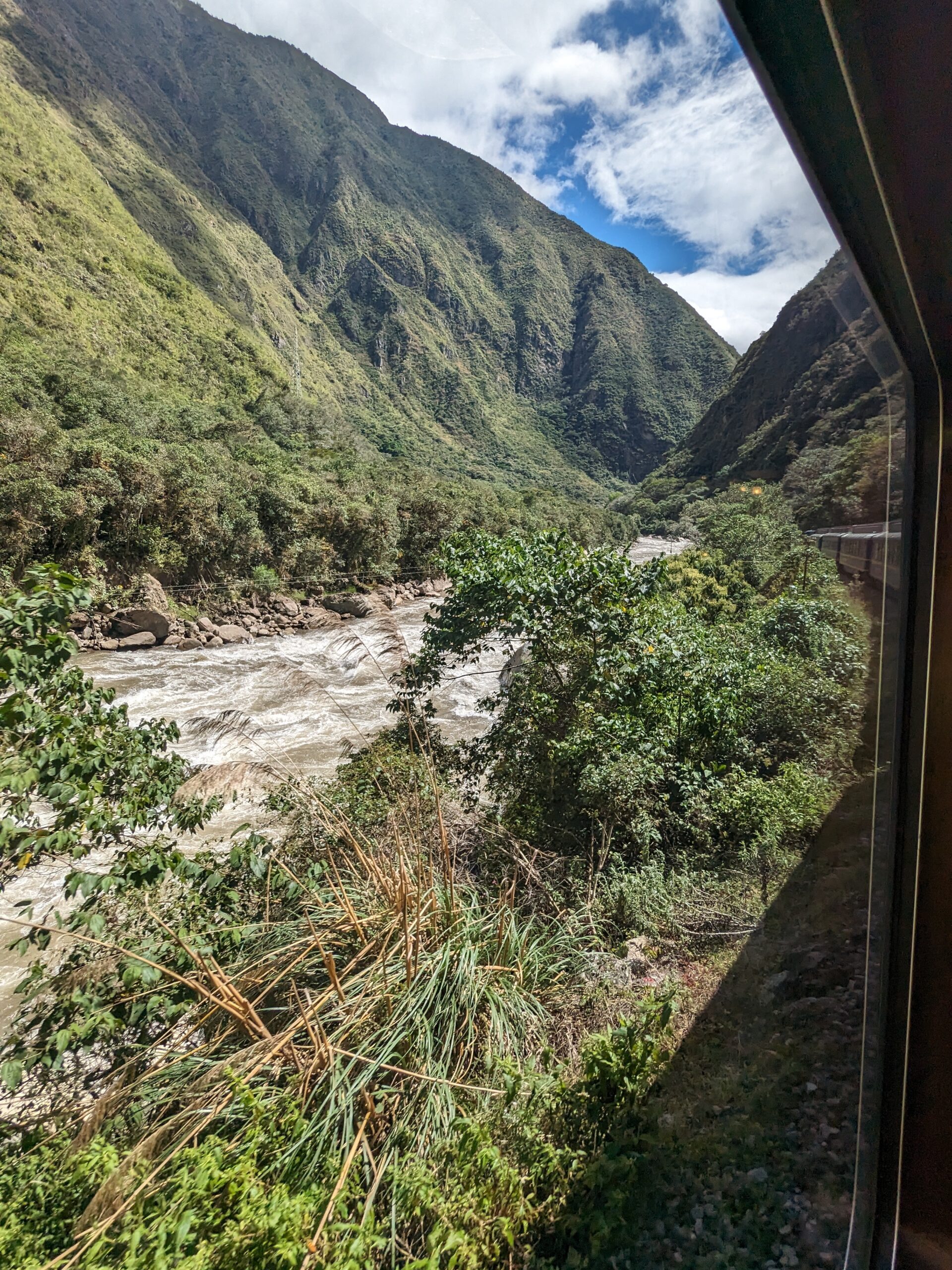
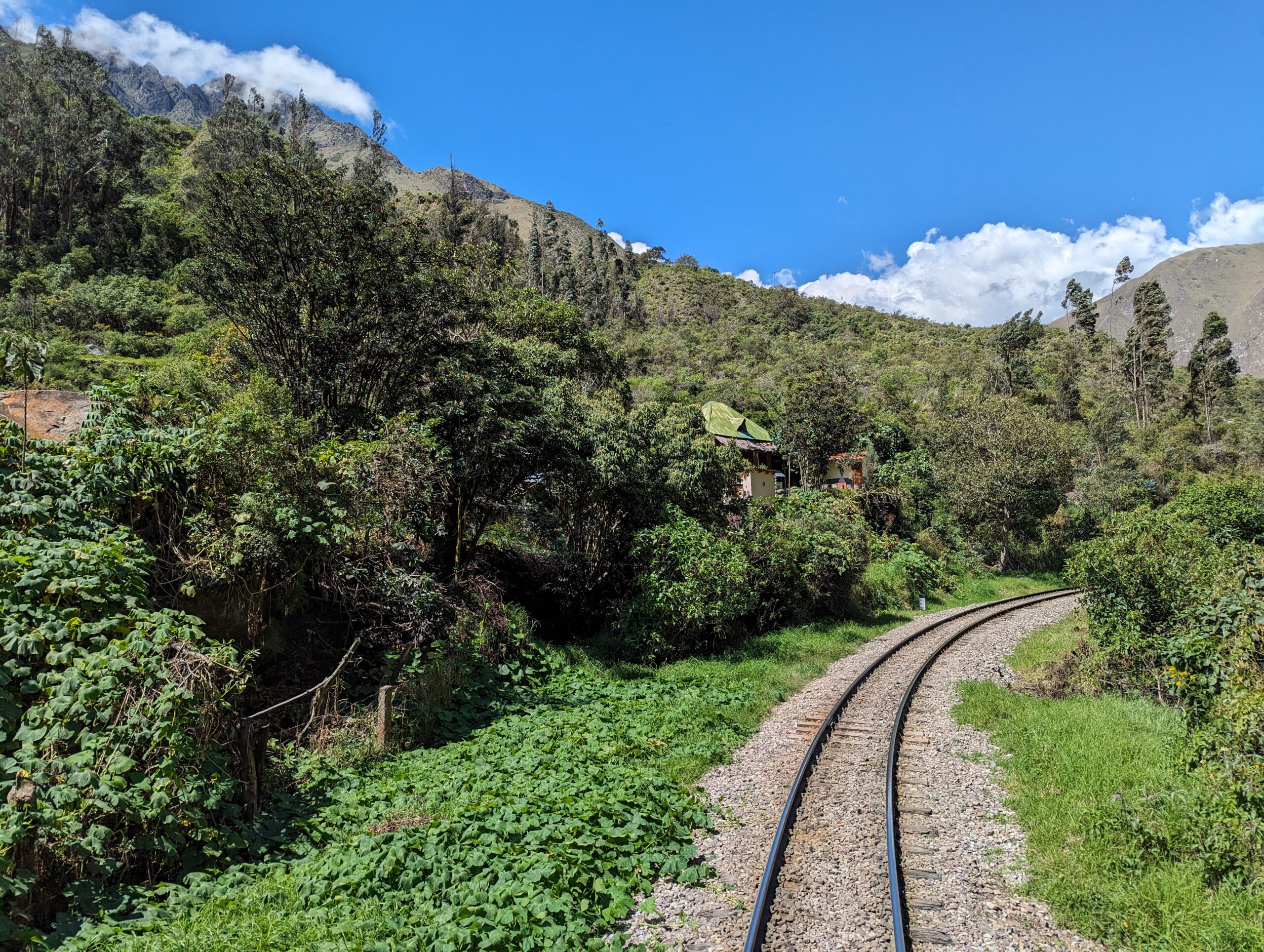
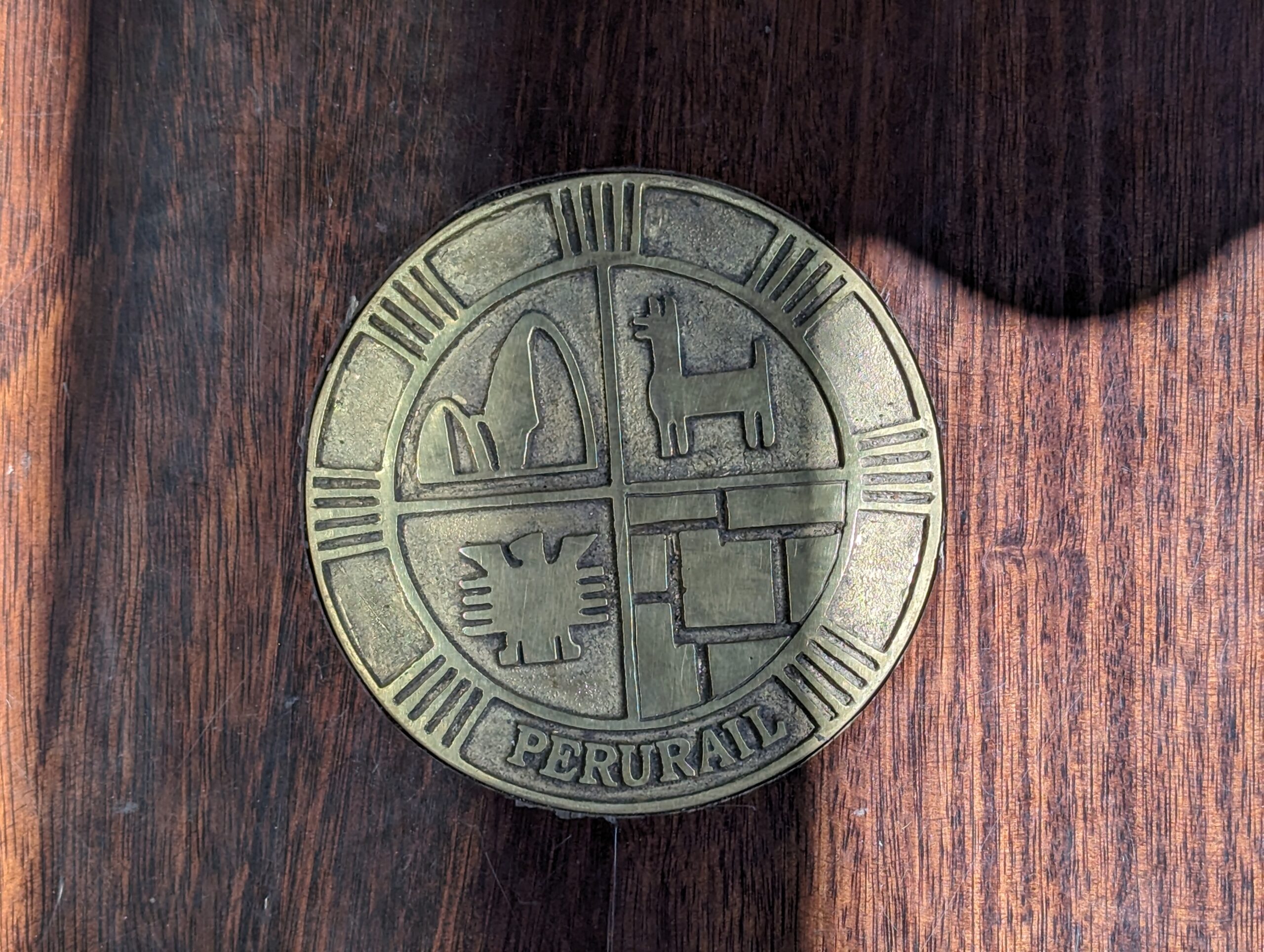
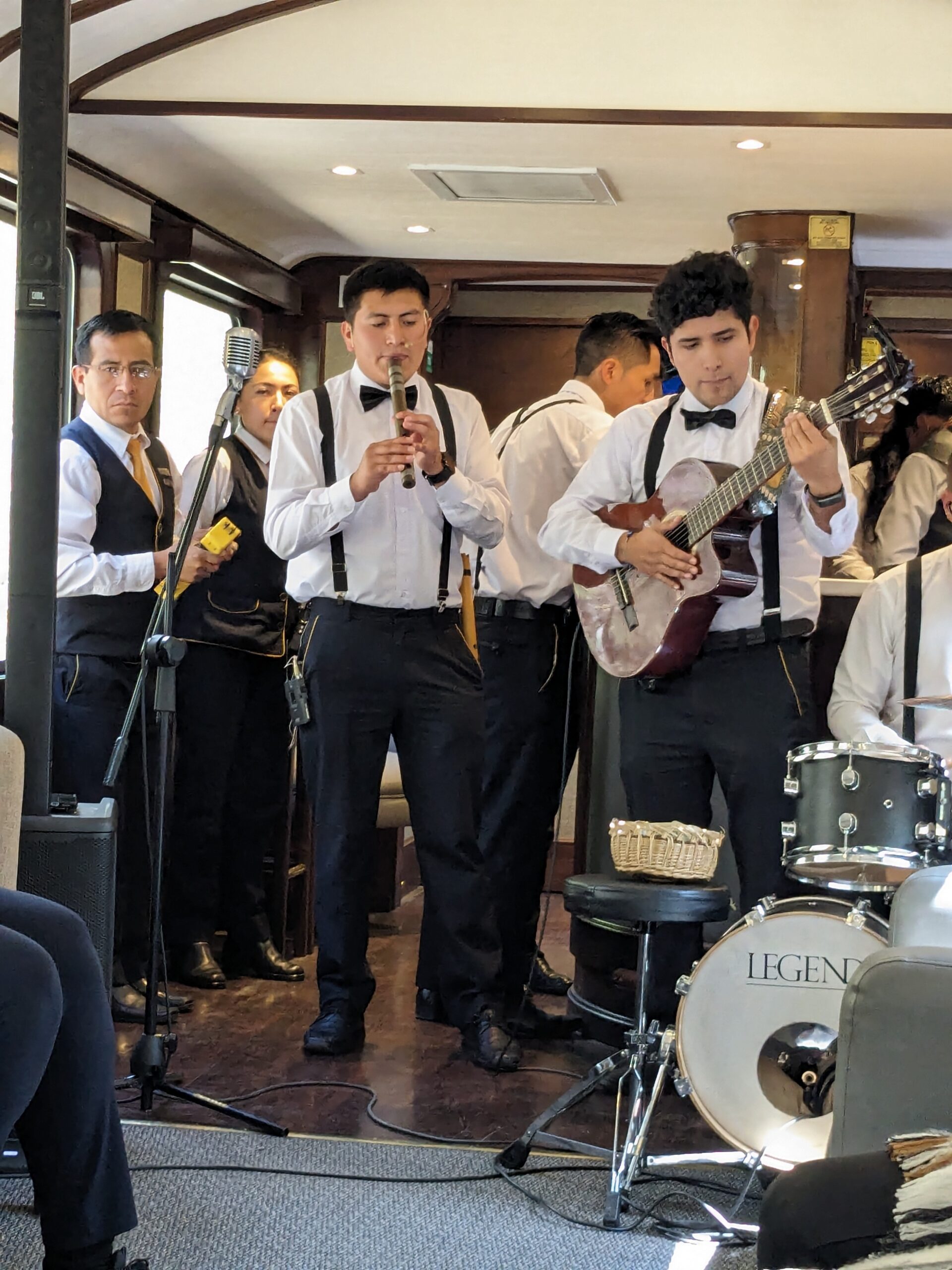
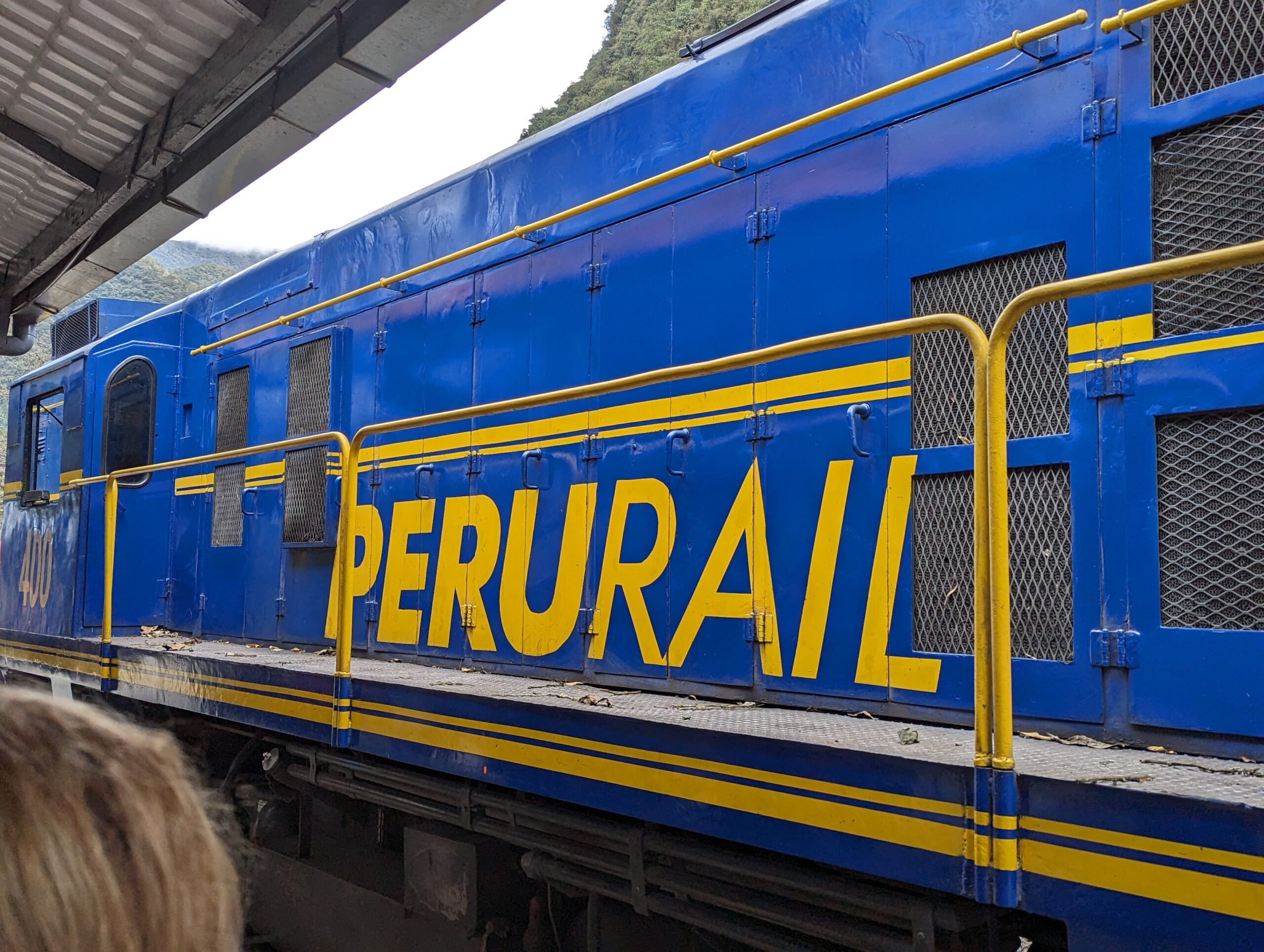
Afterwards, we boarded the train for Aguas Calientes2. From the posh car, the house band serenaded us while we chugged along the Urumbaba. Every so often a backpacker came into view. I did not envy their journey.
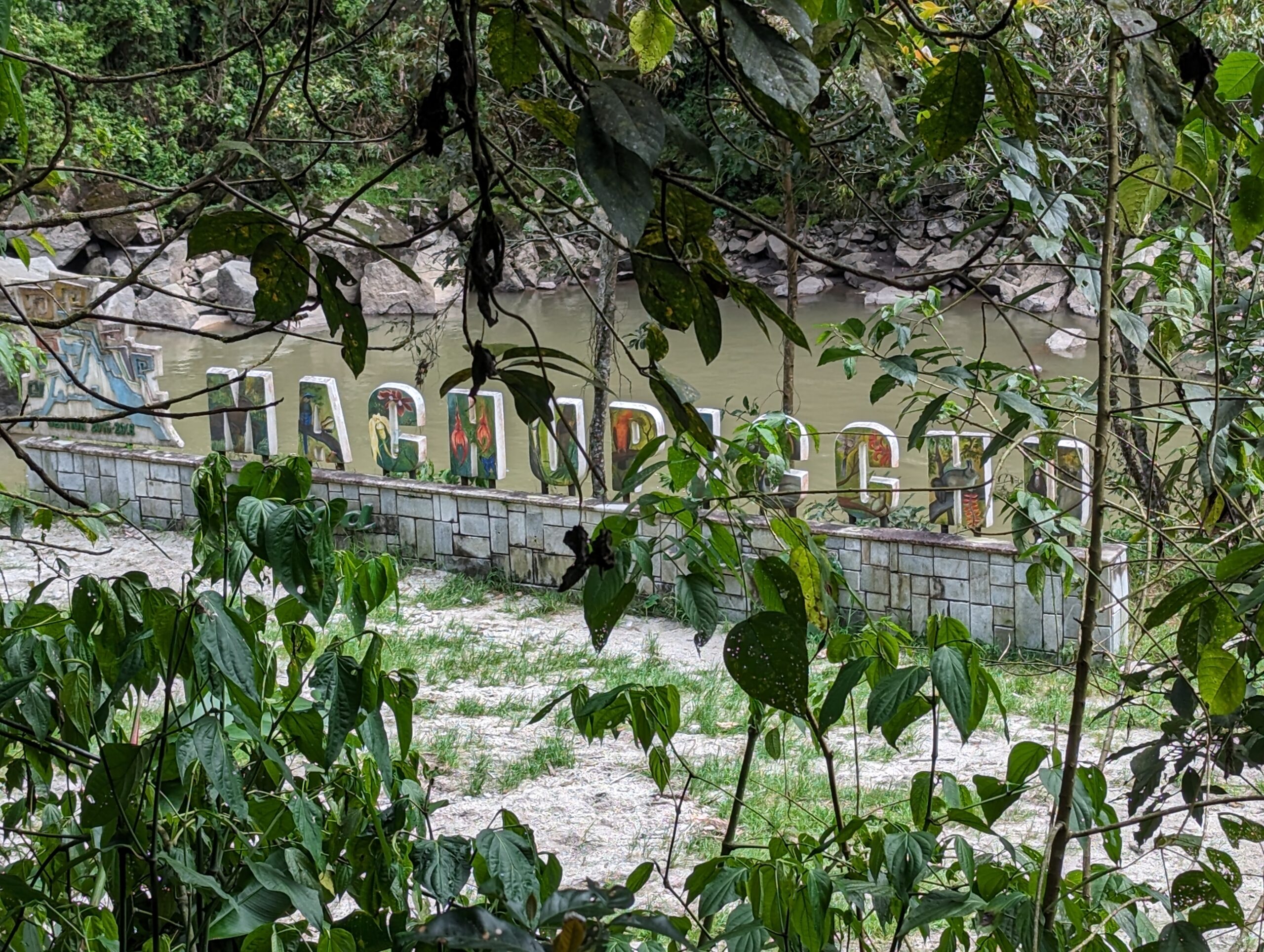
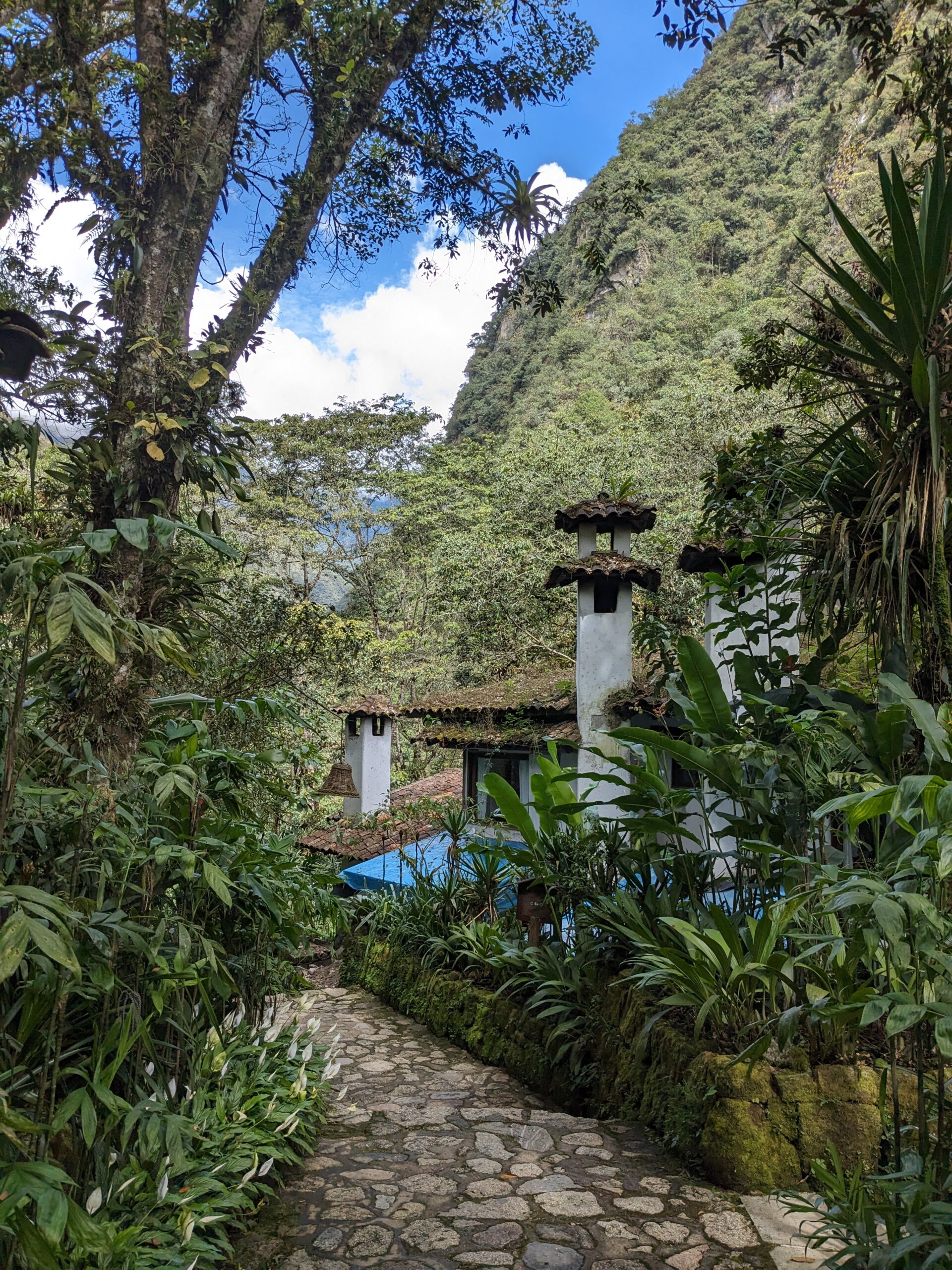
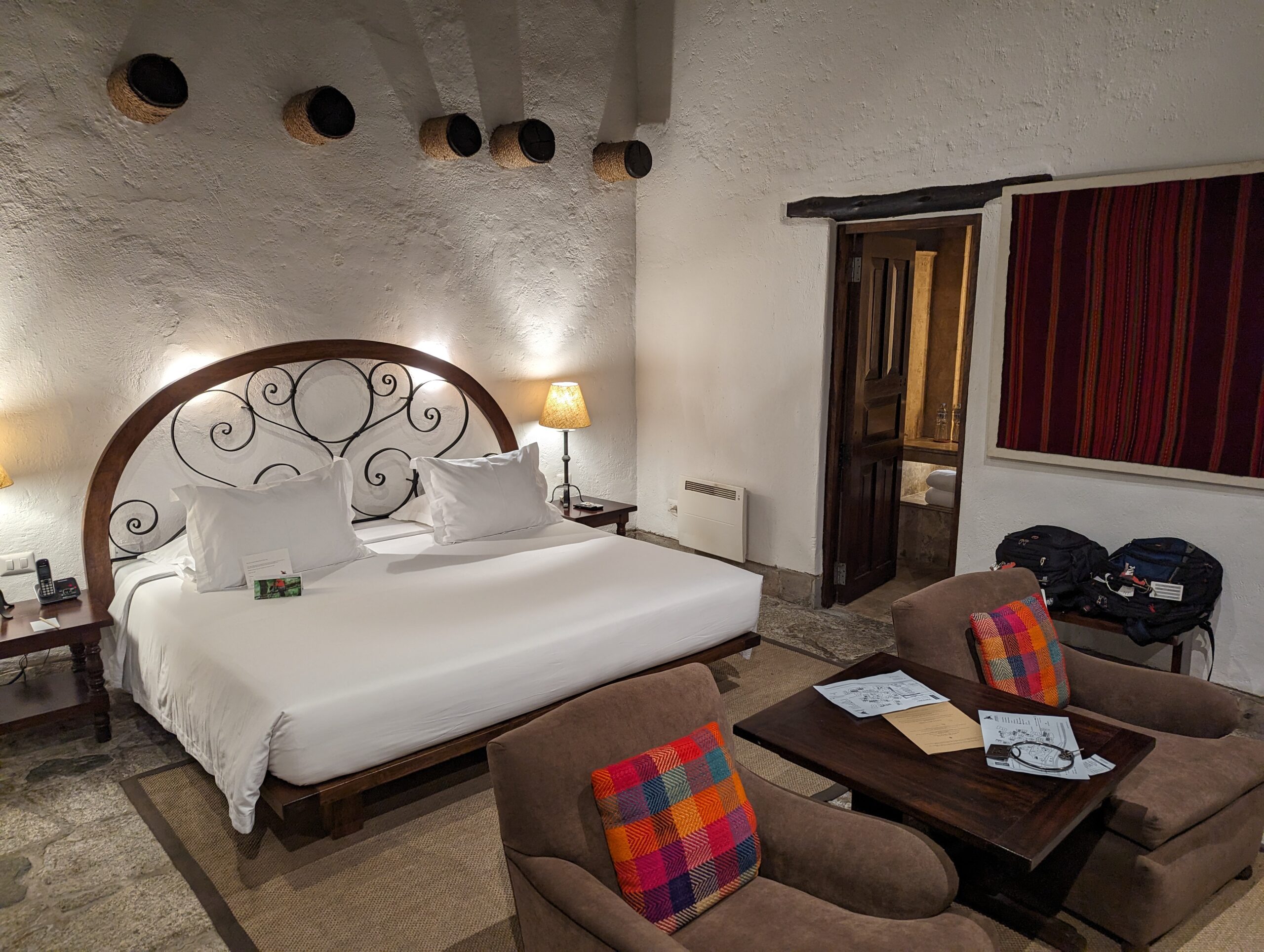
We stayed at the Inkaterra in Aguas Calientes. The hotel was on a large preserve with some lovely hiking trails. Guests had their own little cottages – ours was great except for the bat that we chose not to cohabitate with.
Machu Picchu
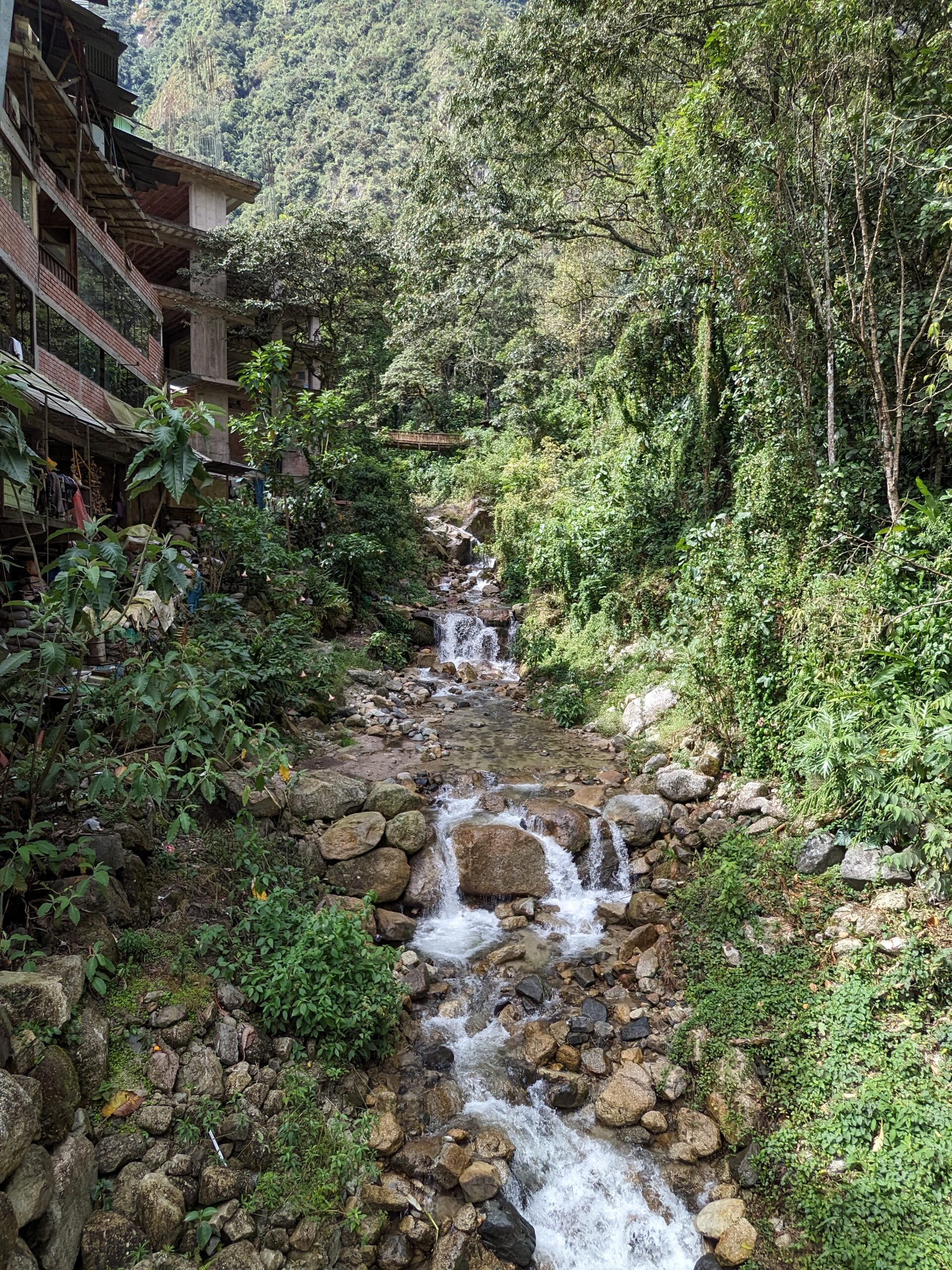
Aguas Calientes sits in the valley below Machu Picchu. All trips to the site depart from there on buses racing impossibly fast up winding roads. Yesterday, there was talk of heavy rains at the site. We packed an emergency poncho and mentally prepared for the worst.
Our luck held.
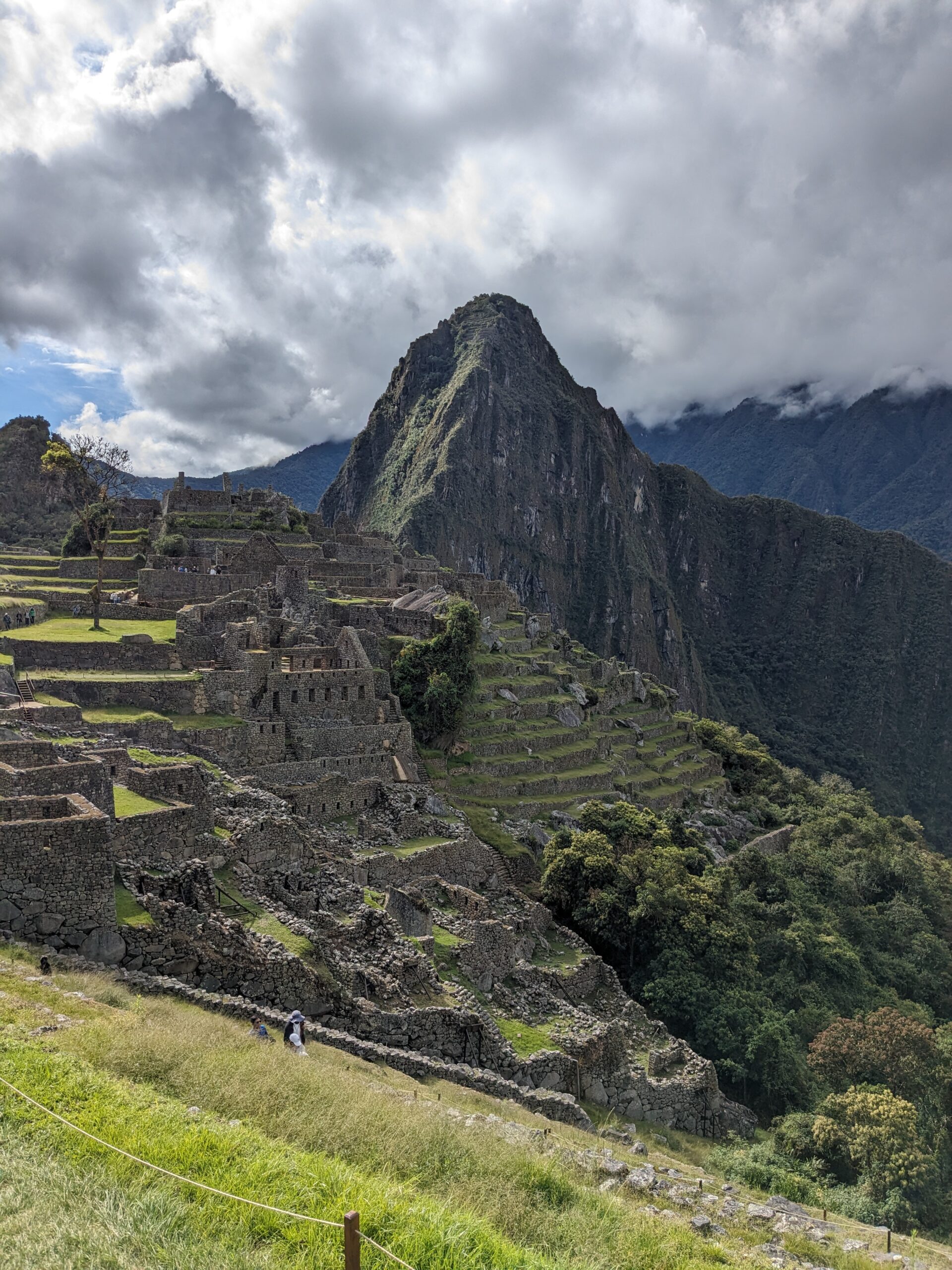
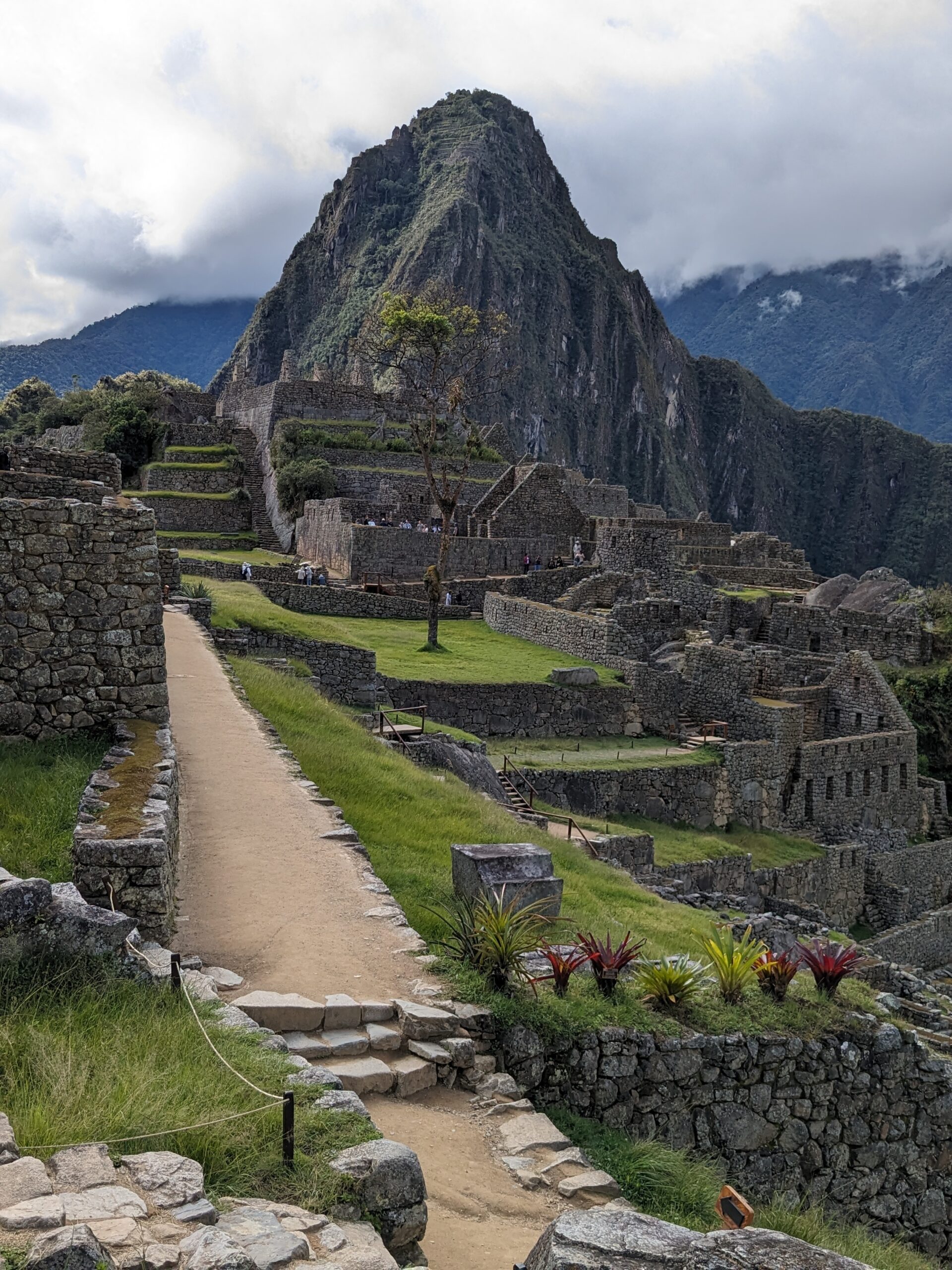
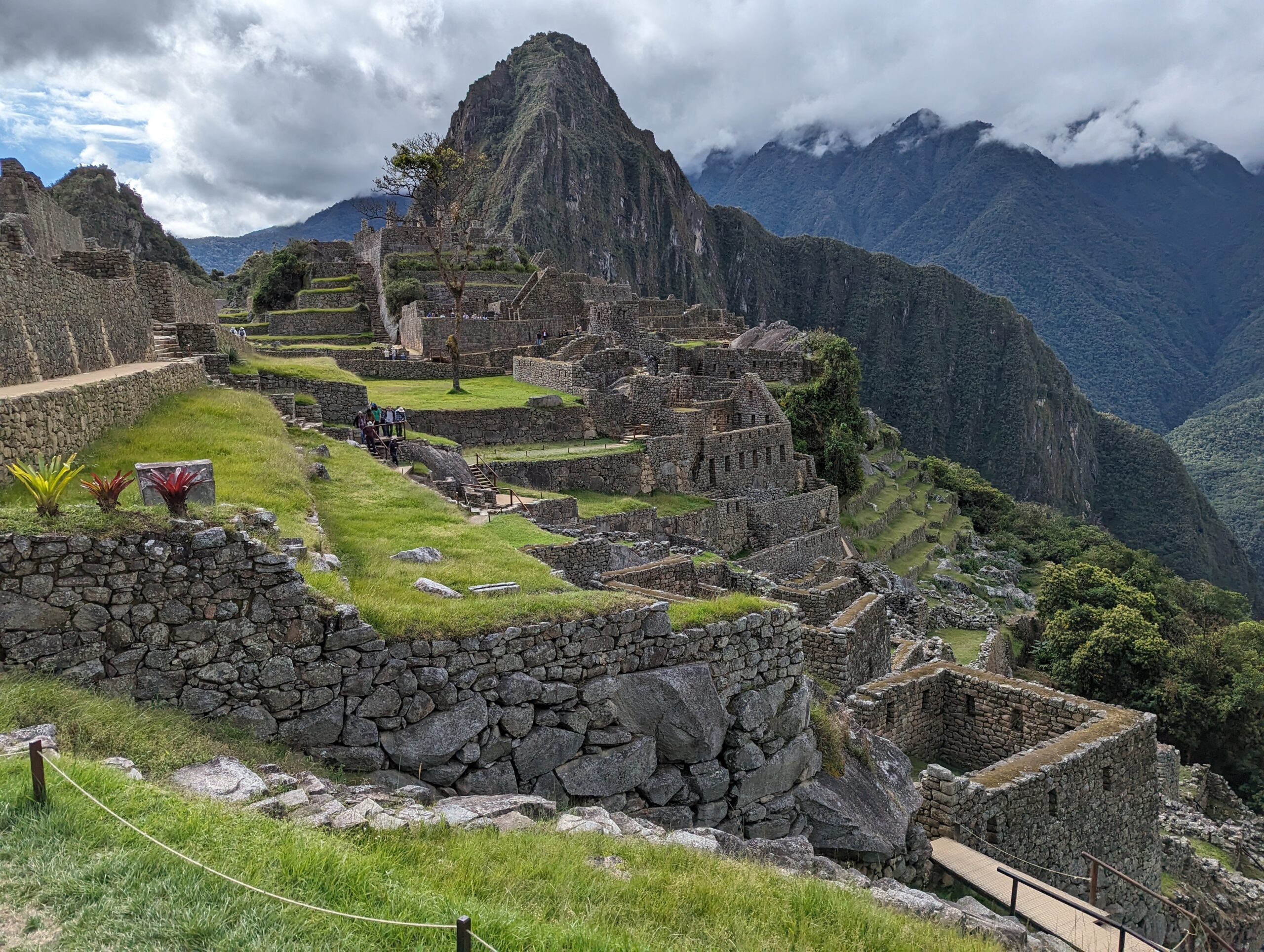
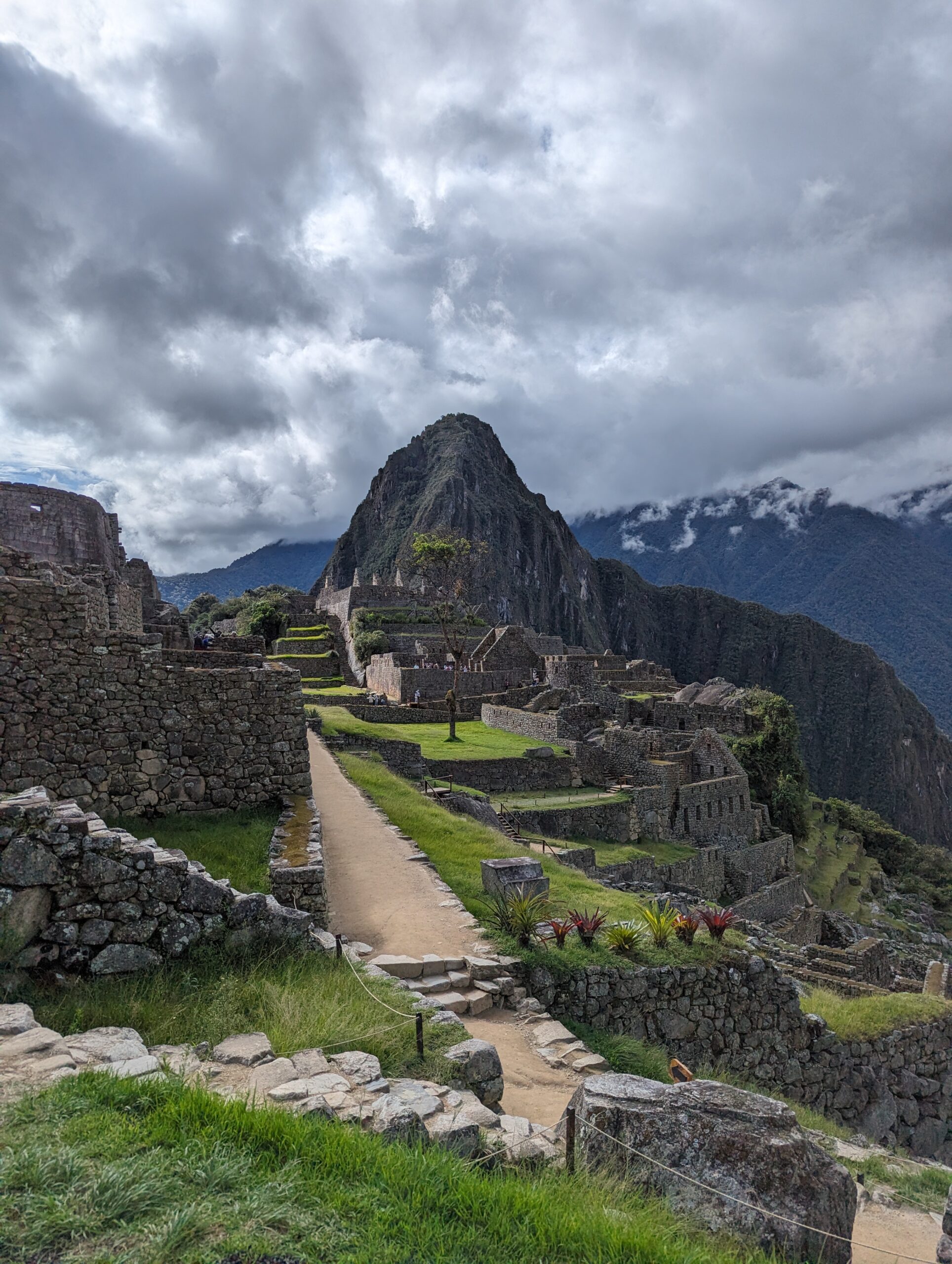
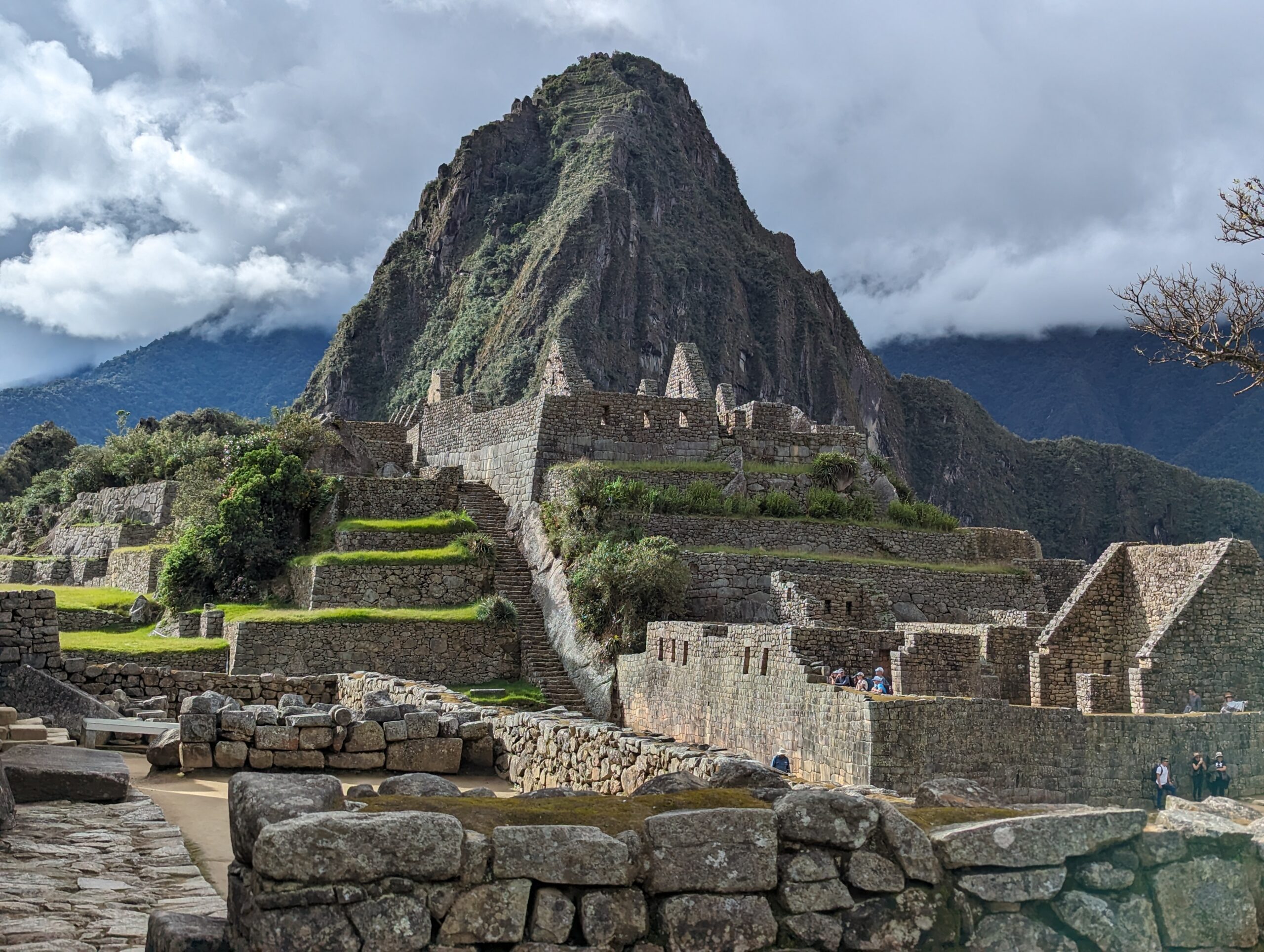
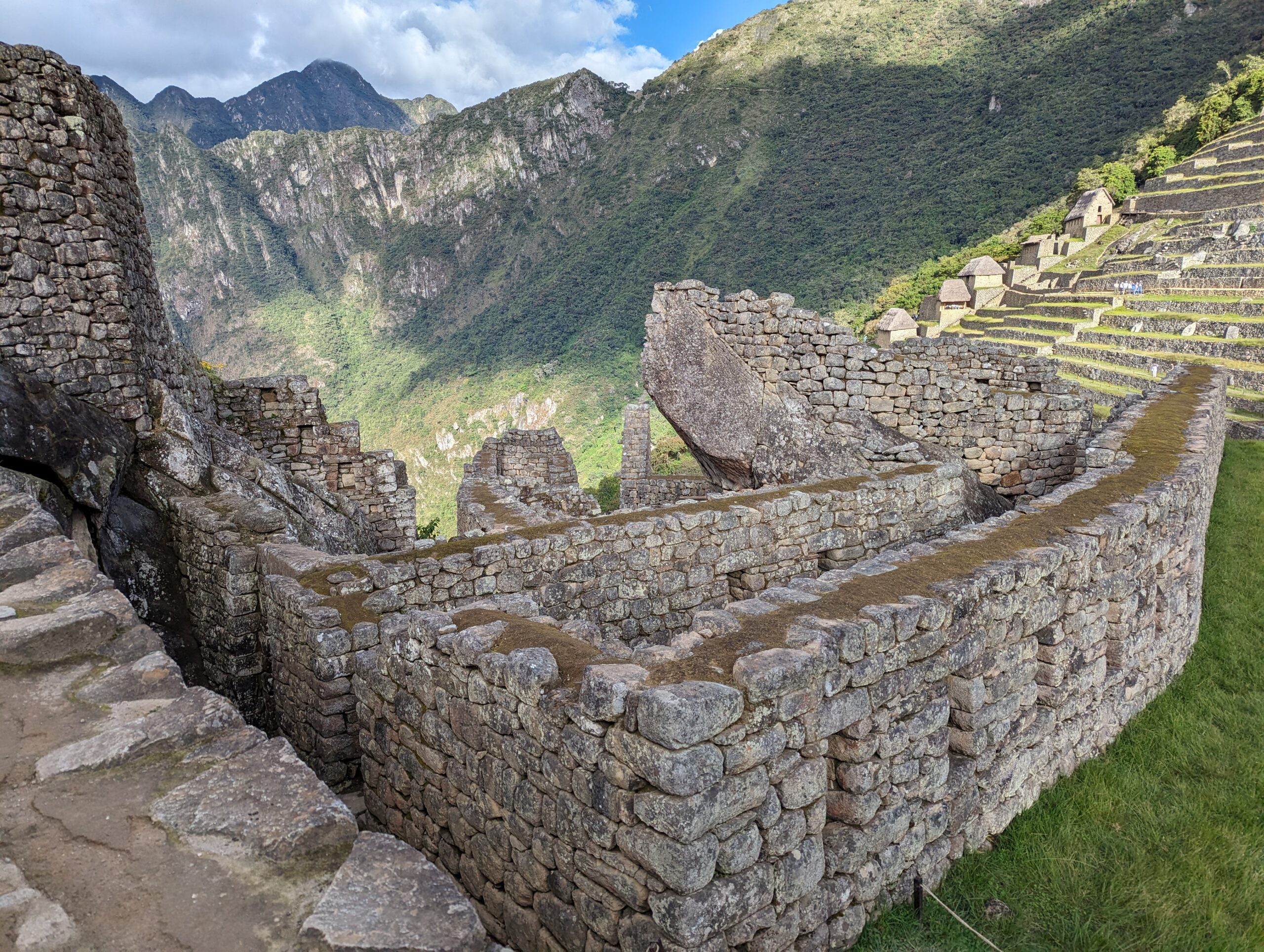
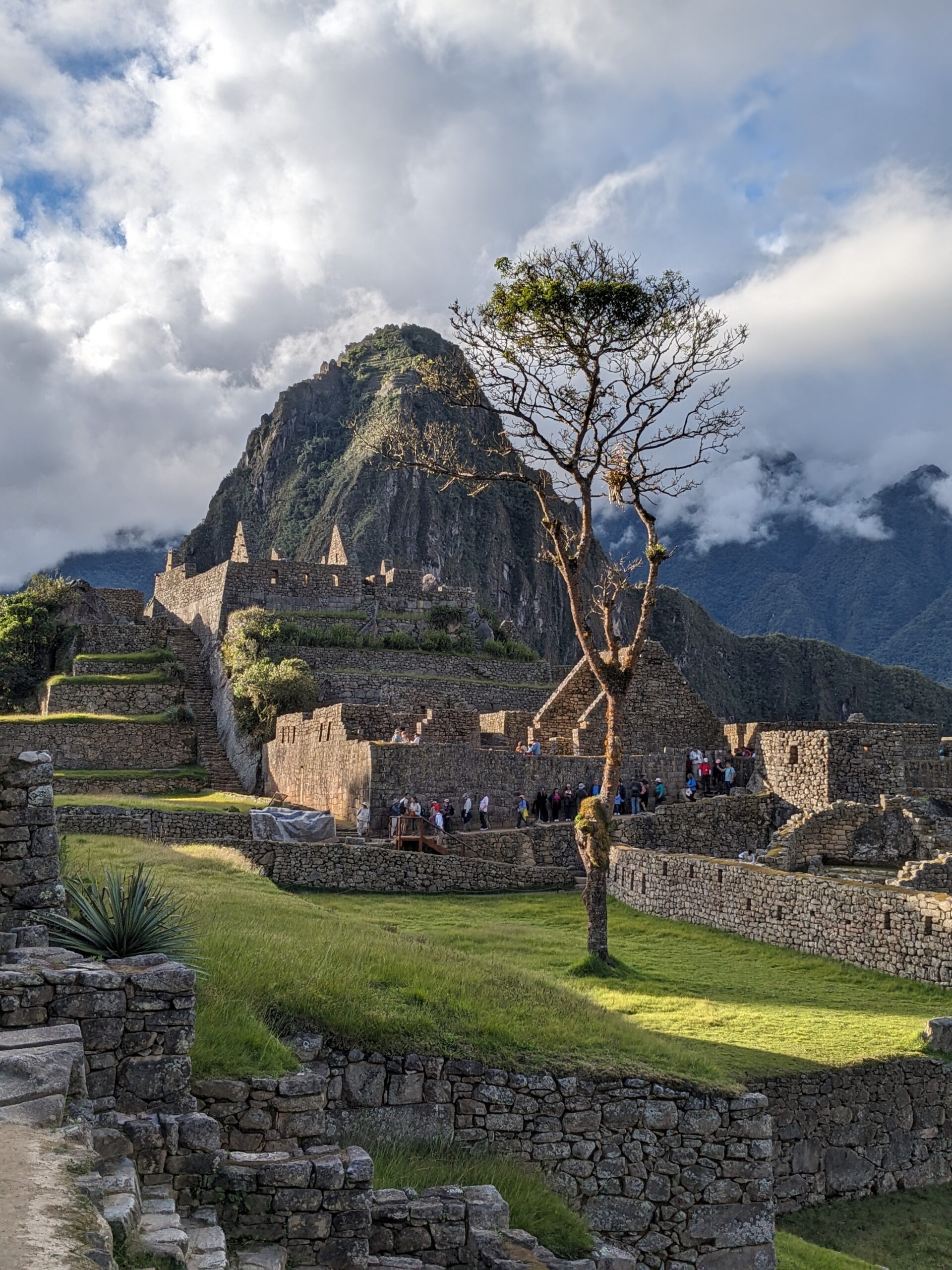
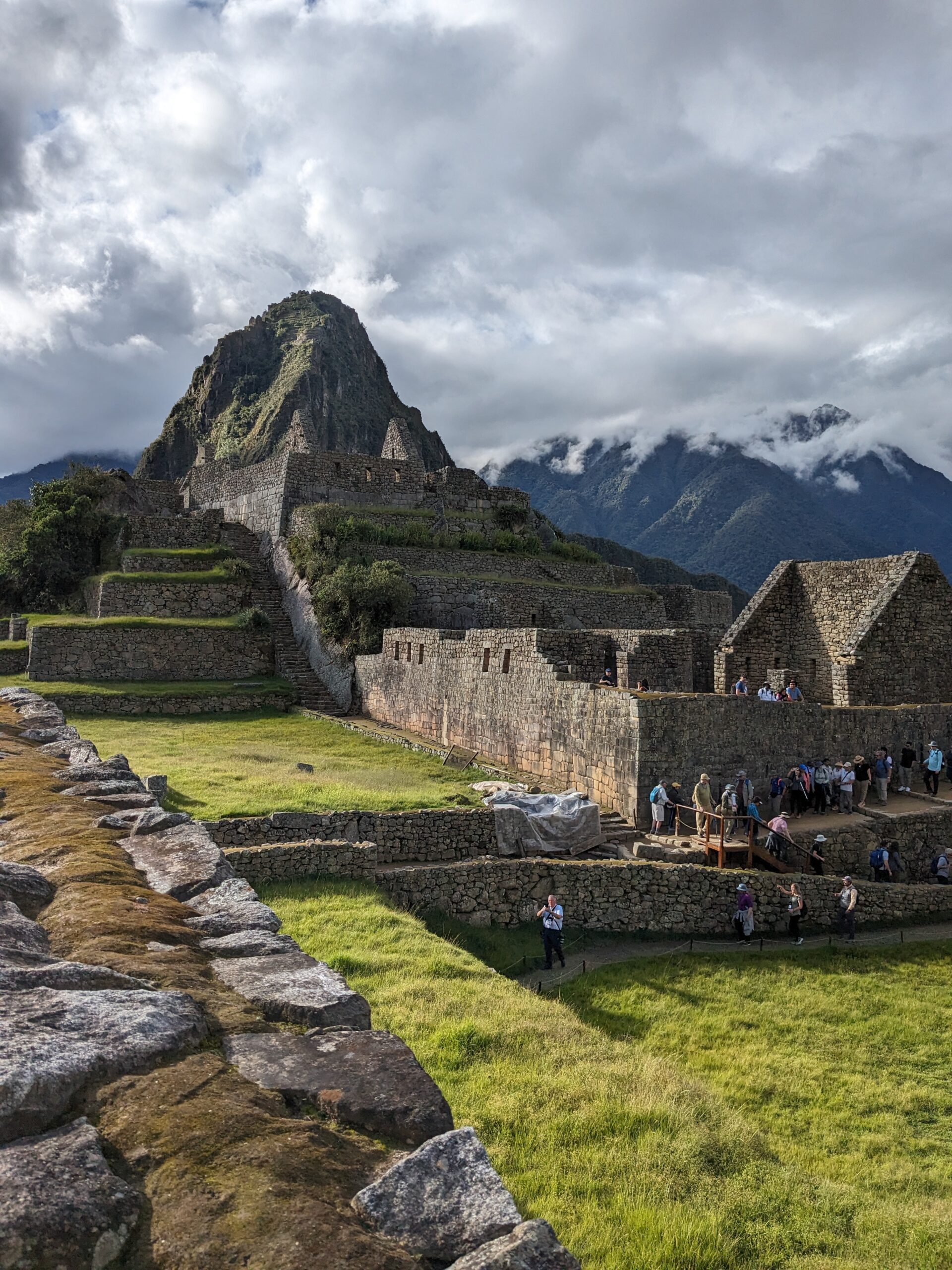
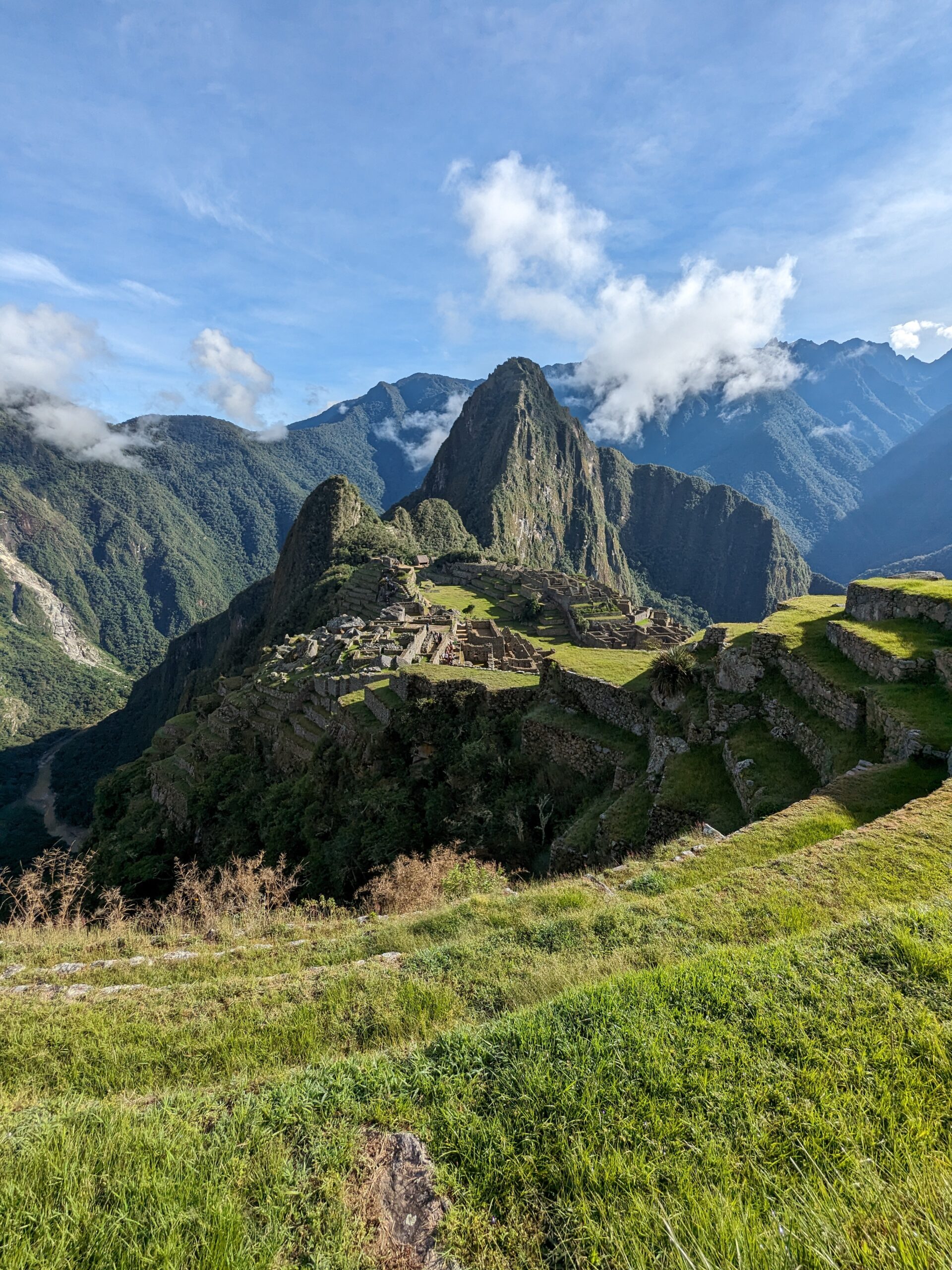
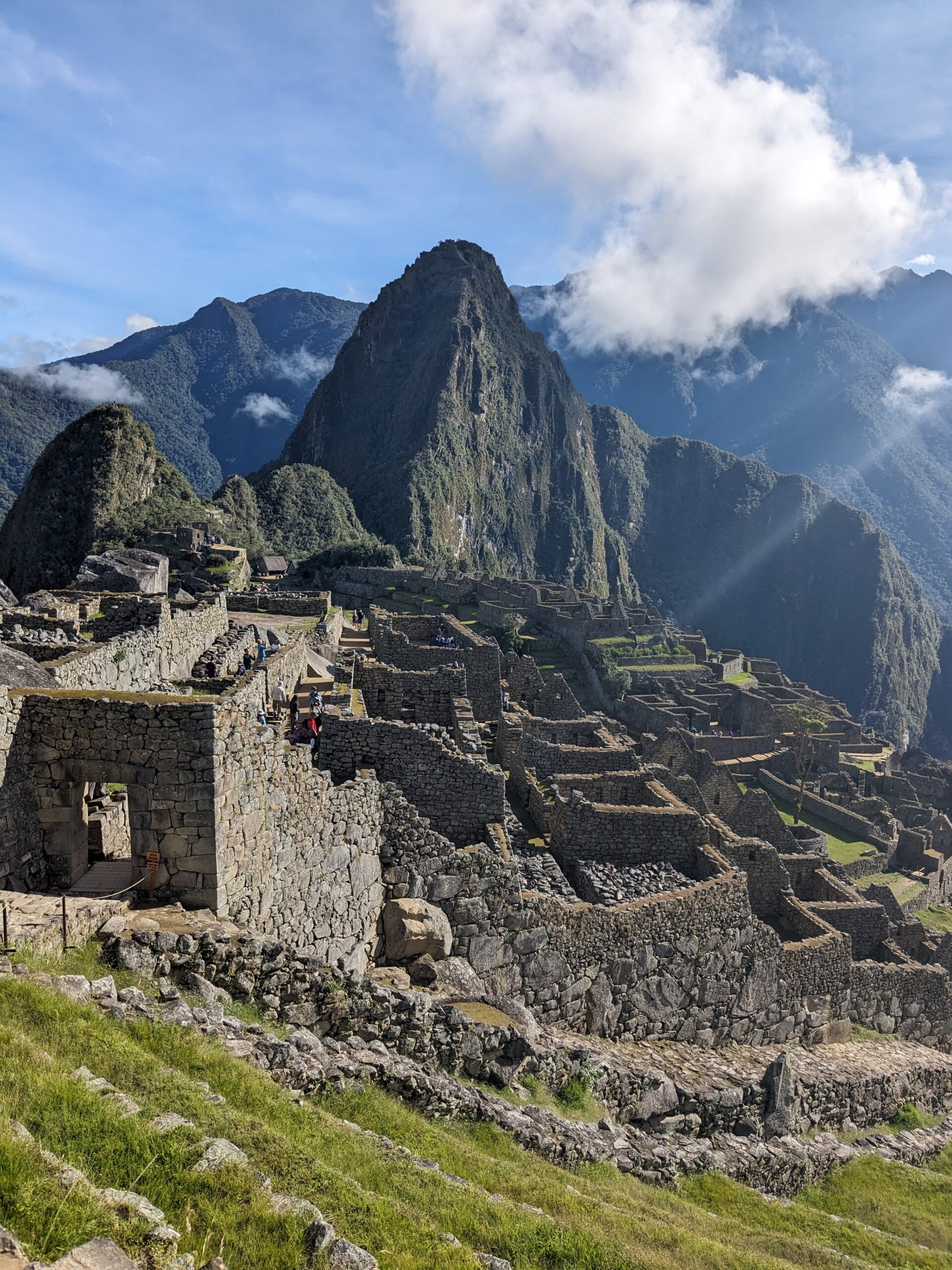
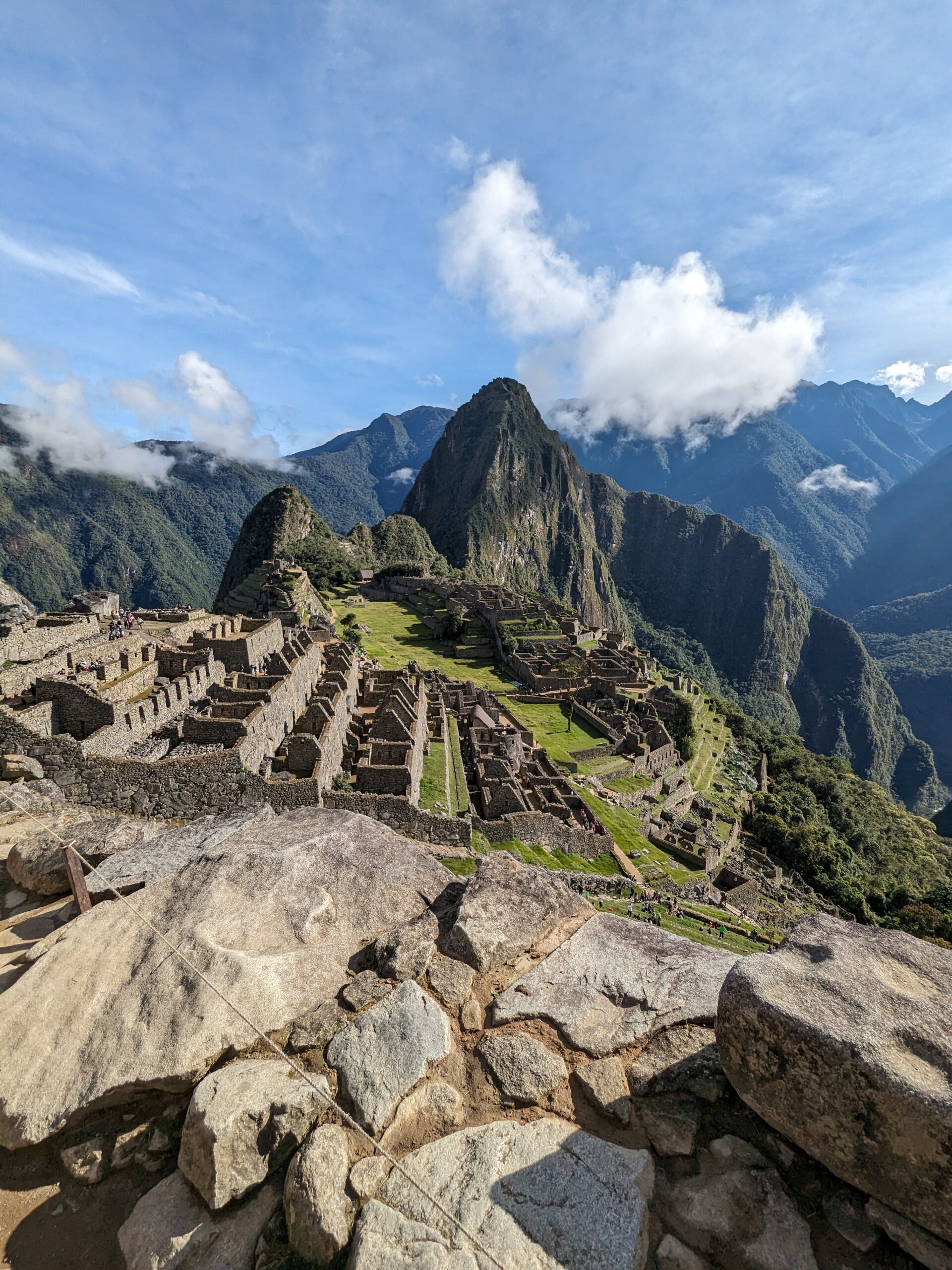
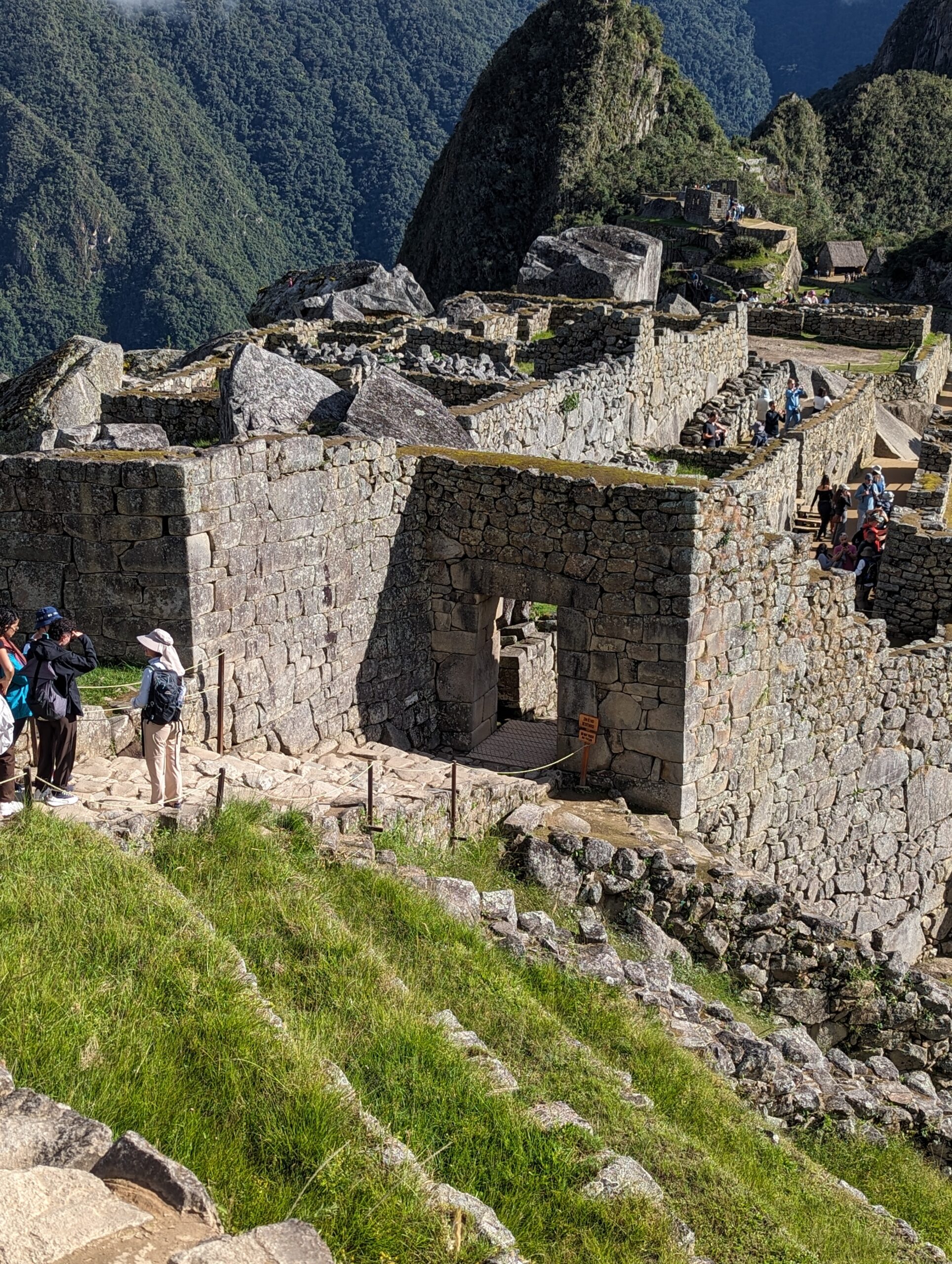
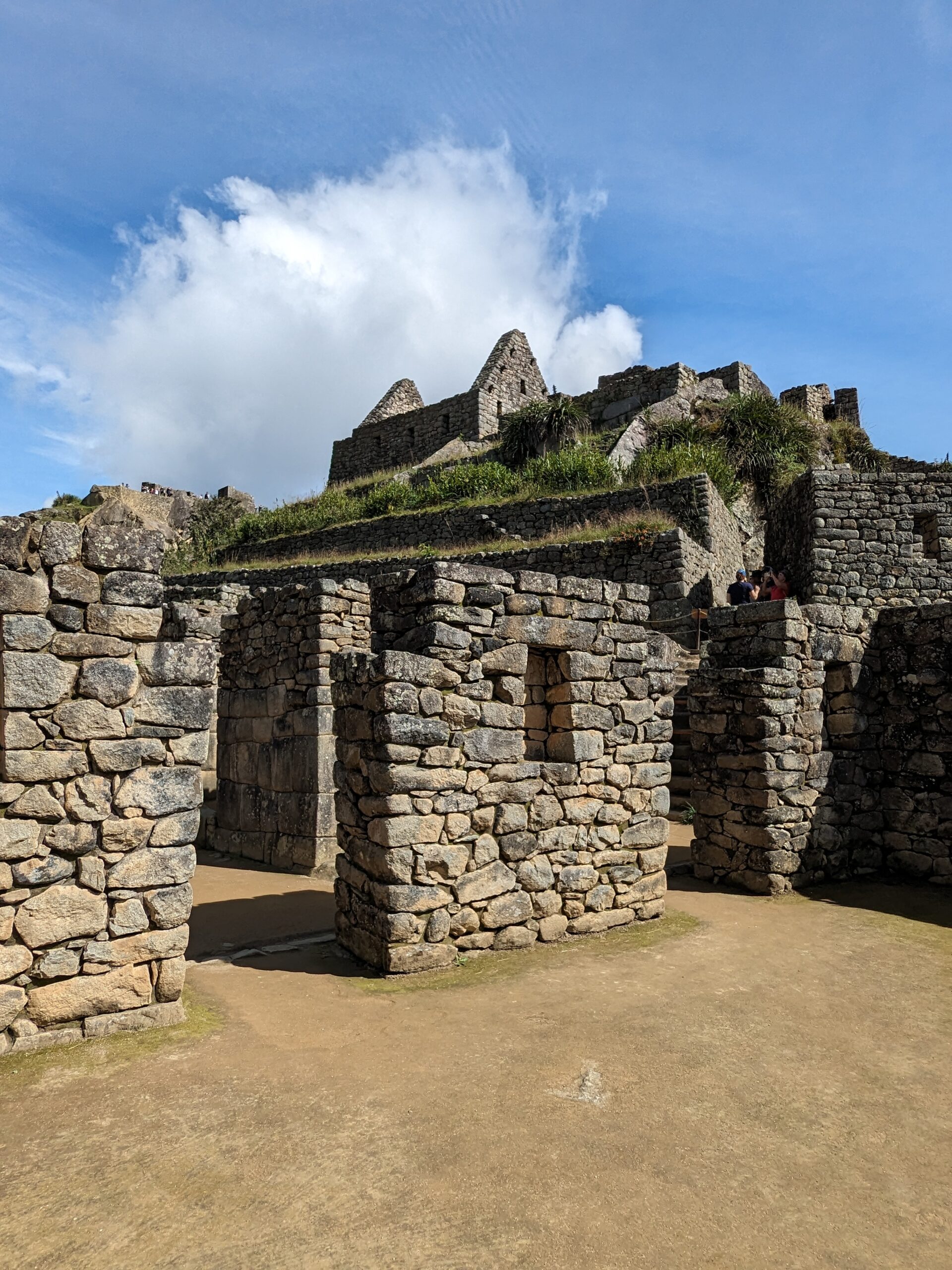
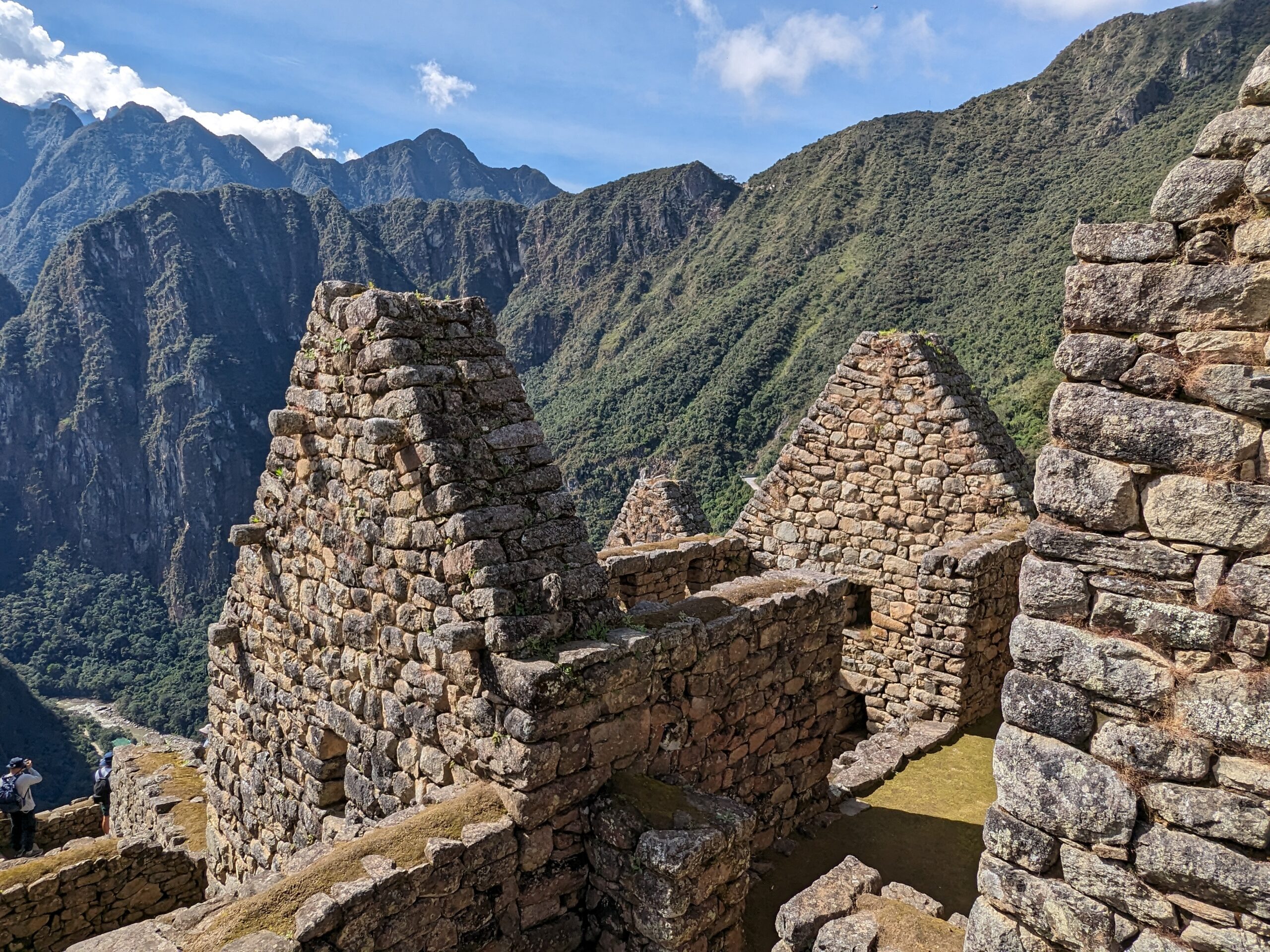
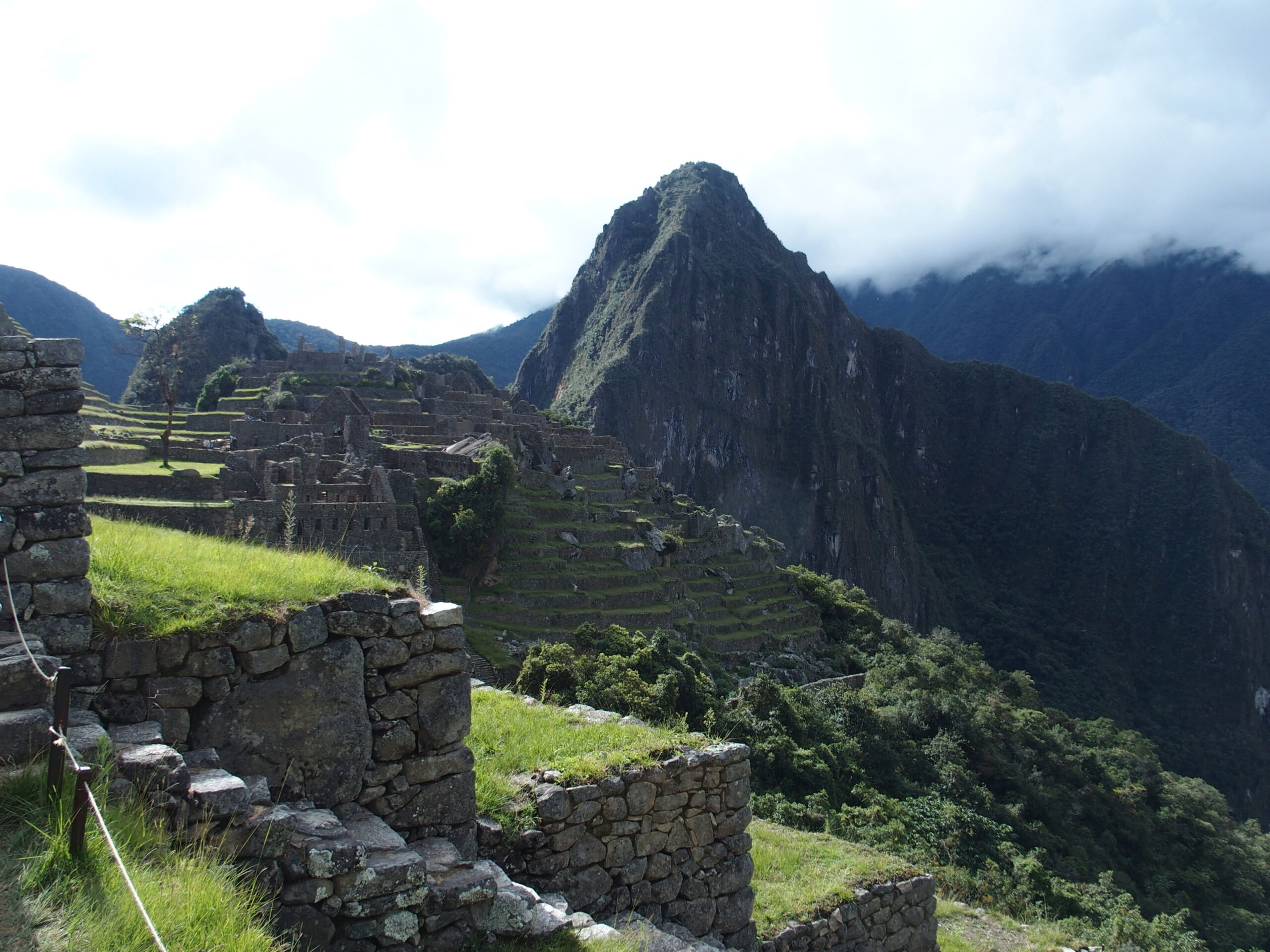
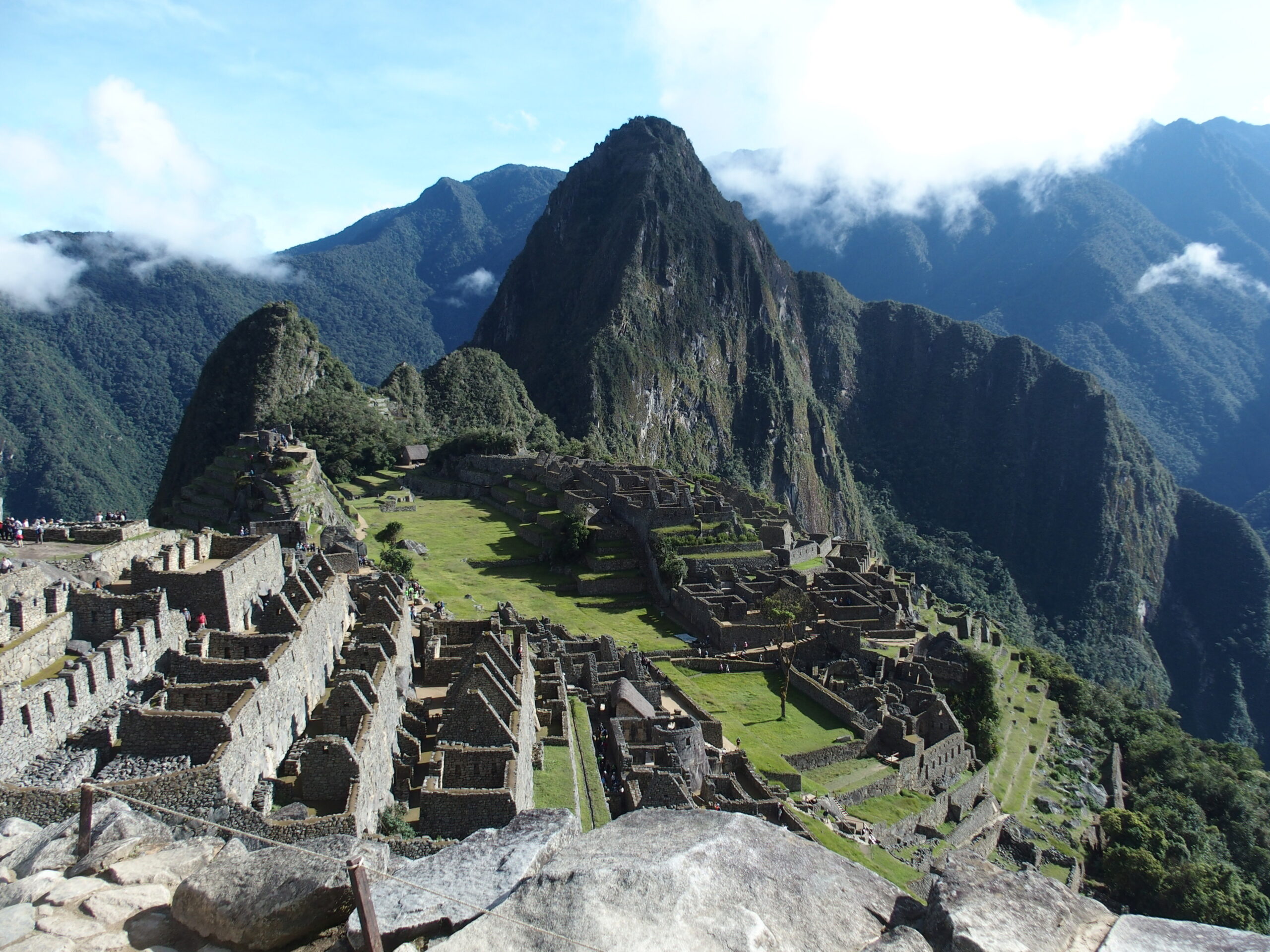
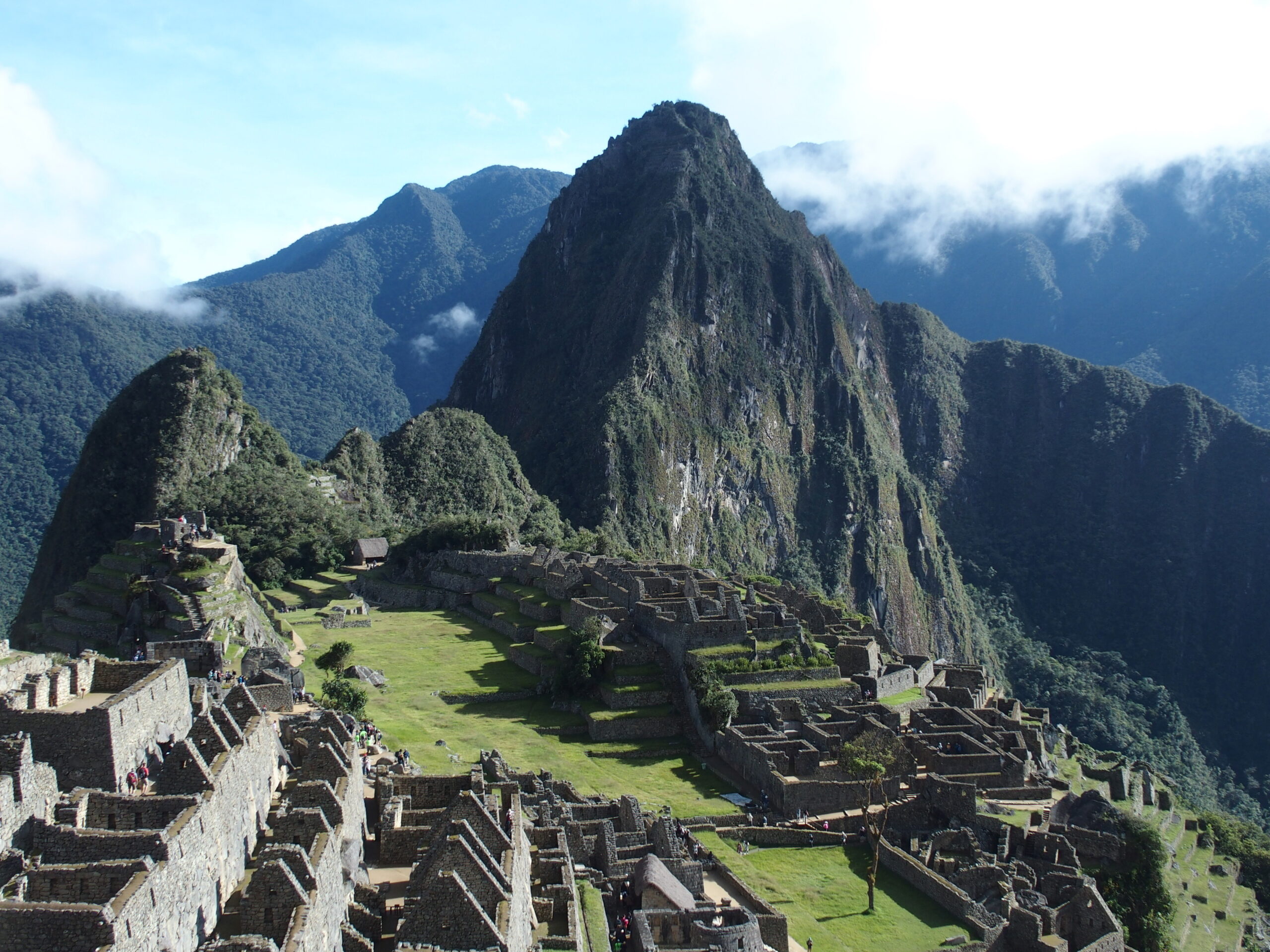
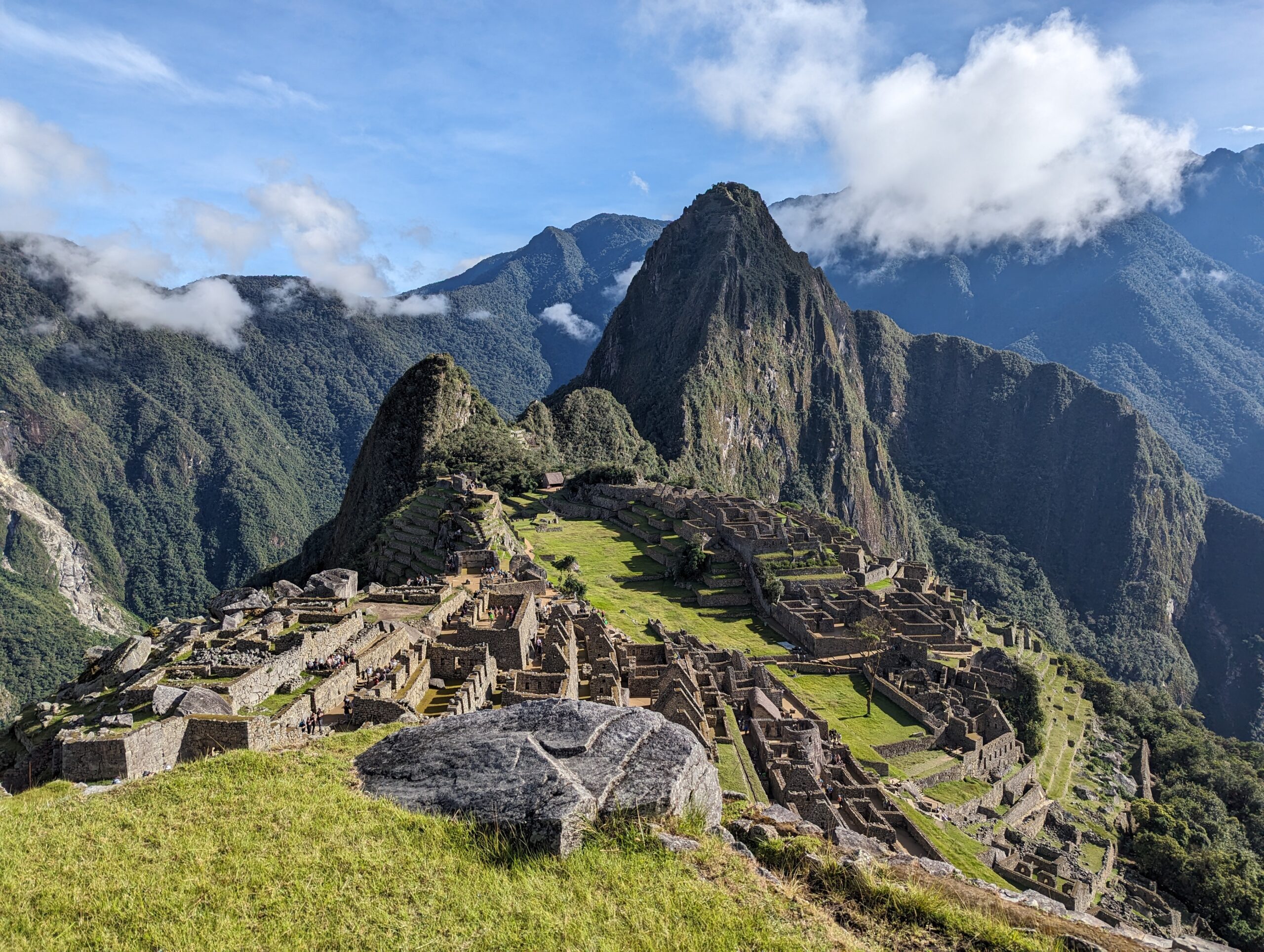
The weather was postcard-perfect. Impossibly blue skies with an artistic hint of clouds. It could not have been better.
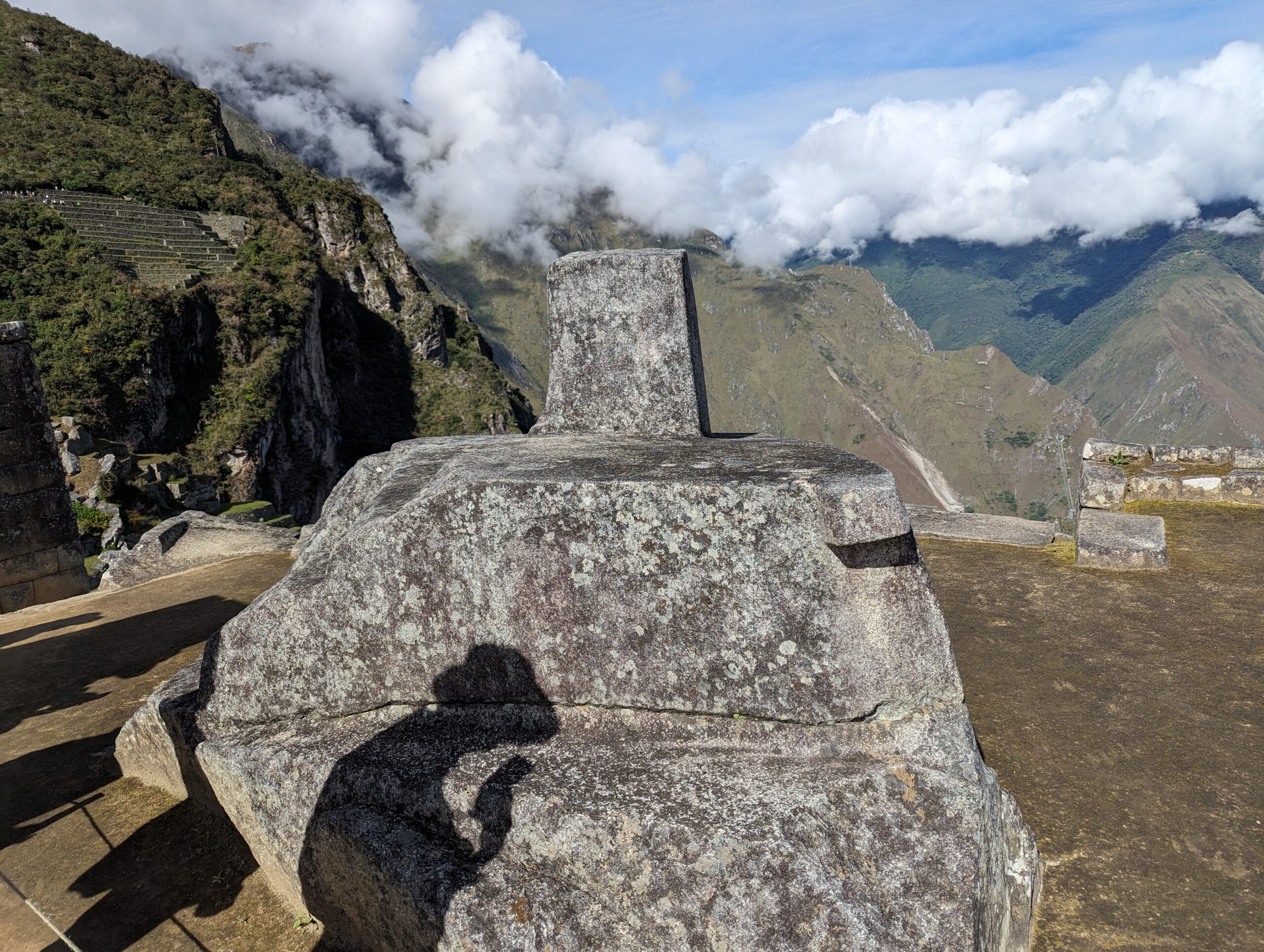
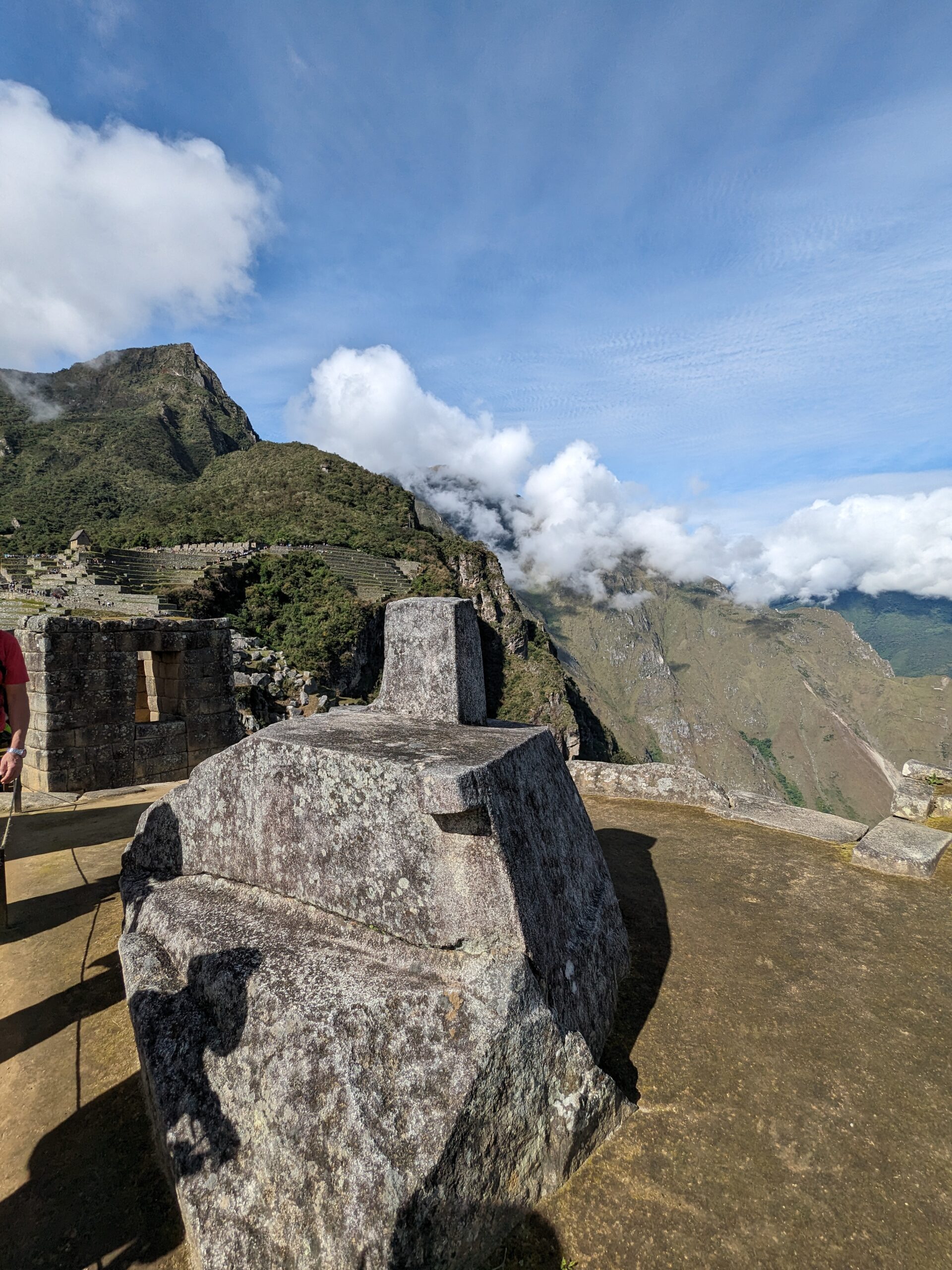
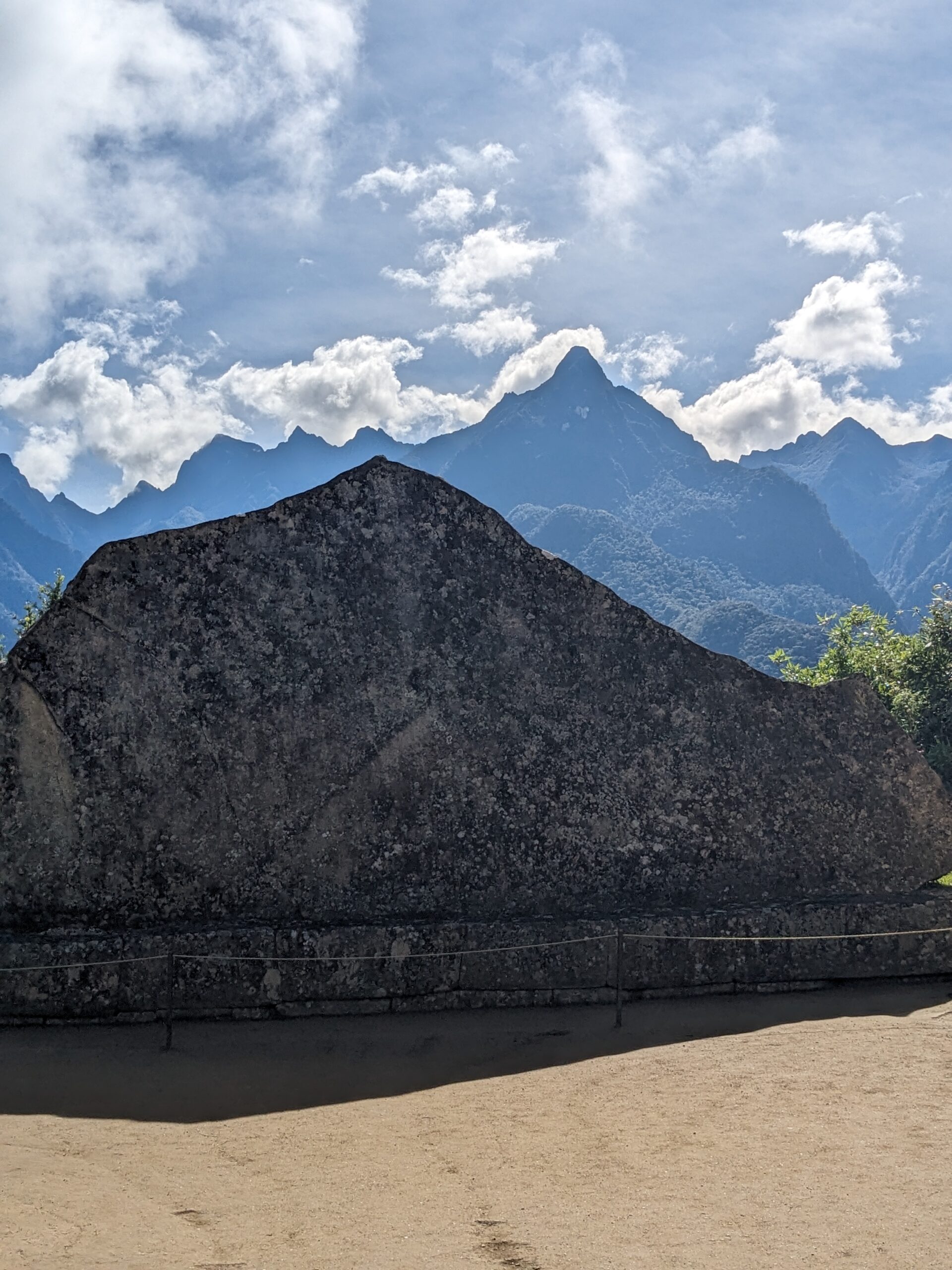
We were fortunate to have two visits to the site: the afternoon we arrived we toured the lower citadel; the next morning we saw the upper citadel. On the second day, our group had fewer people so we had more freedom to roam. Visiting the site involves a lot of stairs and walking so I guess some folks felt one day was enough. Curiously, the iconic views of Machu Picchu are from the upper citadel.
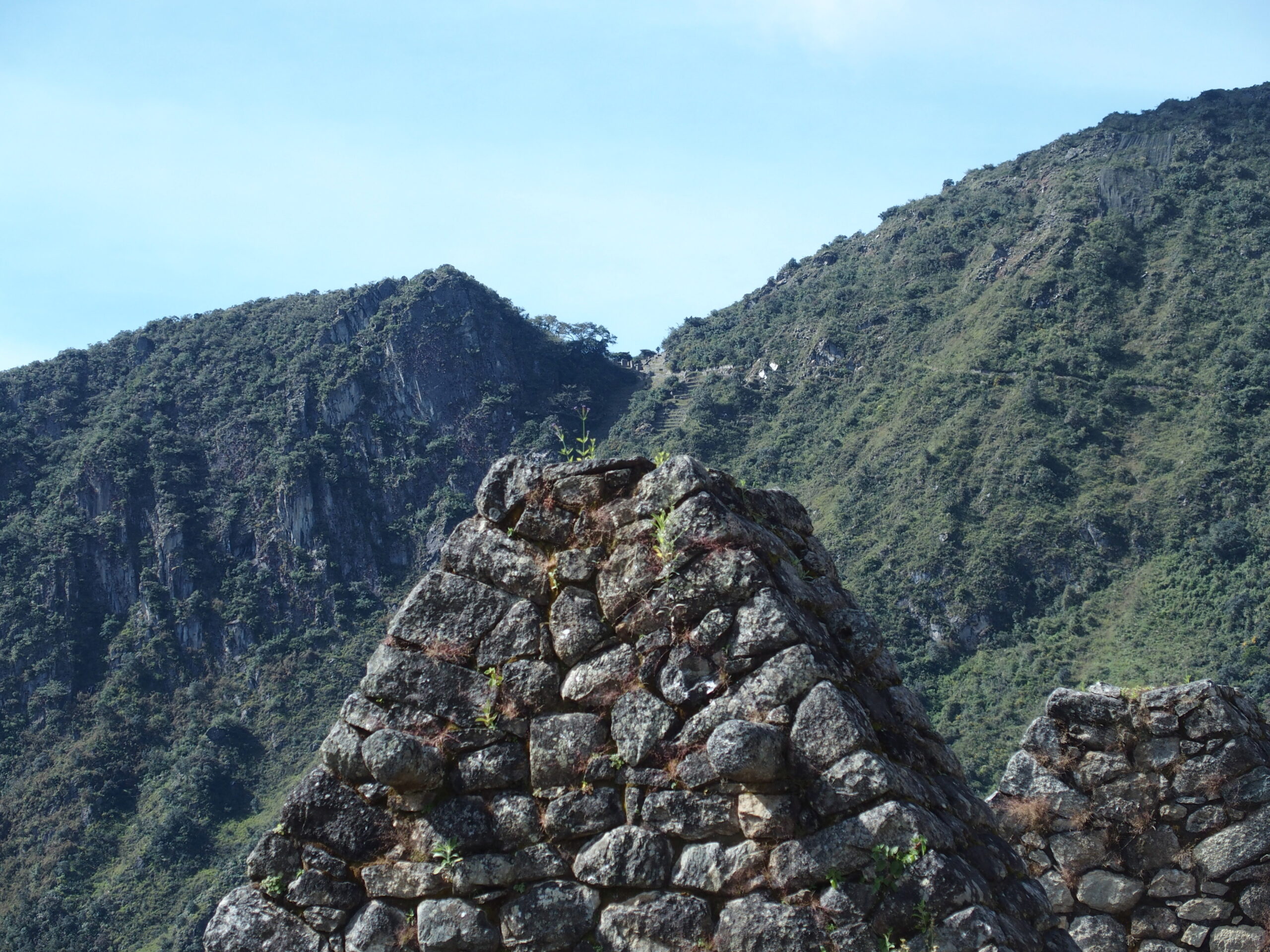
At the upper citadel, we were joined by hikers finishing their trek on the Inca Trail. Far above, we could see the Gate of the Sun where hikers get their first view of Machu Picchu – weather permitting, of course. I heard that they may close the upper citadel to casual tourists in the near future3, reserving it for hikers on the Inca Trail.
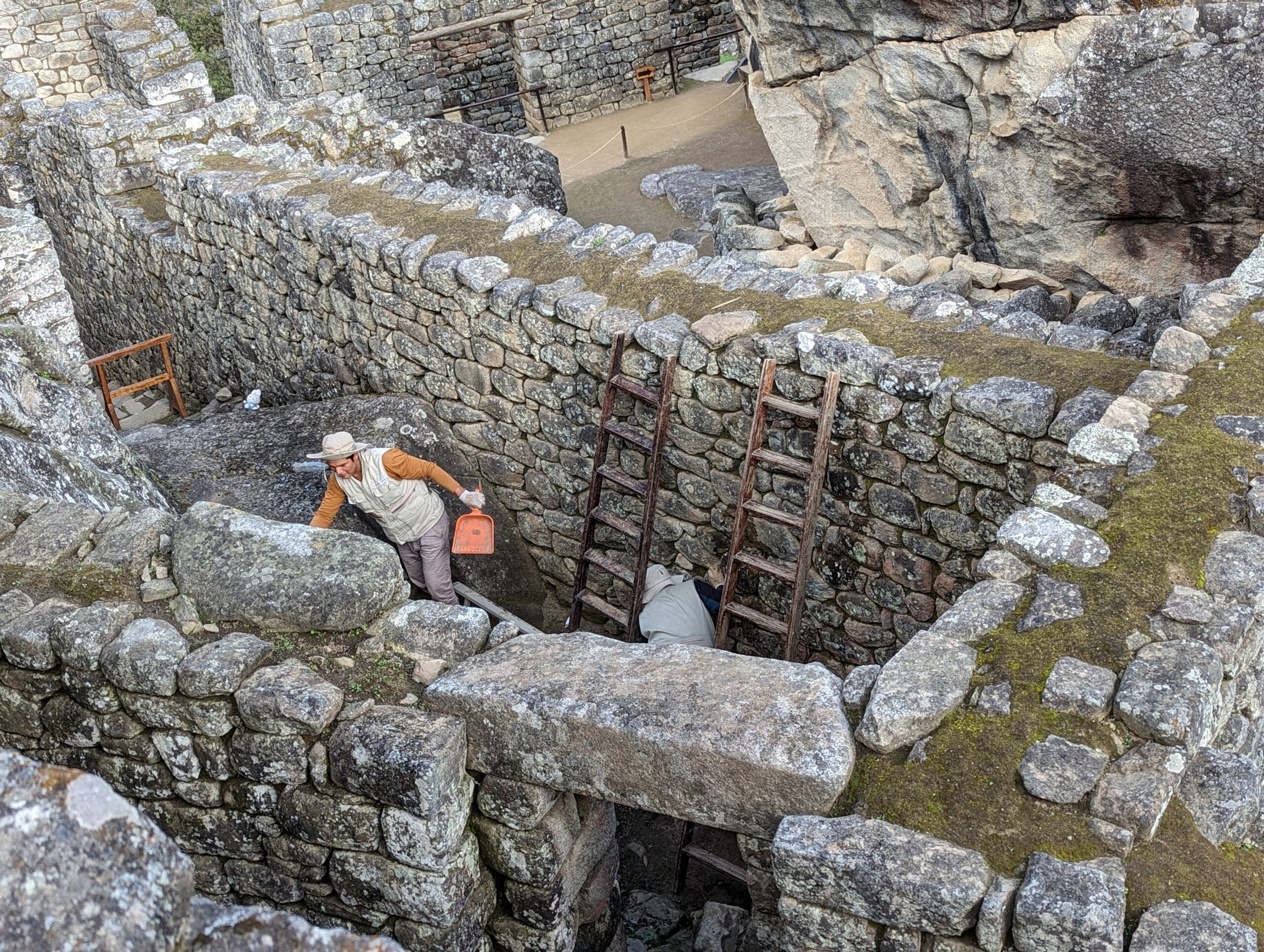
Amongst the crowd of tourists, there is constant work at the site. Maintenance teams attempting to minimize all of the visitor foot traffic. The odd scholar wandering among the ruins. We heard that another terraced area had been discovered nearby, and experts will soon begin working there in earnest.
The upper citadel was worth the return visit. I had to put the camera down and absorb how stunning every view was. Not being an expert in the history or the architecture (despite the best efforts of our guides), the two visits were perfect. And we had amazing weather – one hates to push one’s luck.
Cuzco
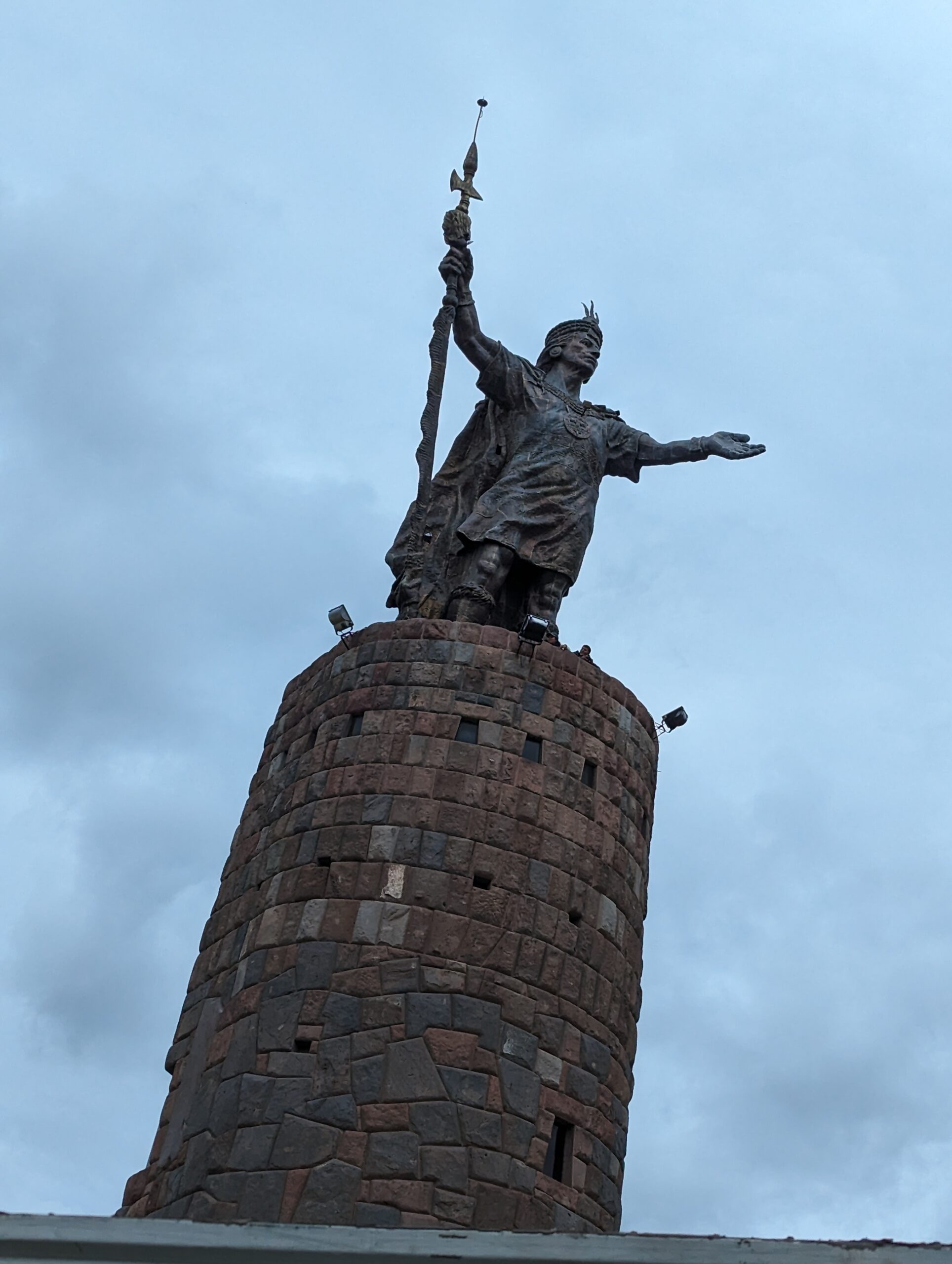
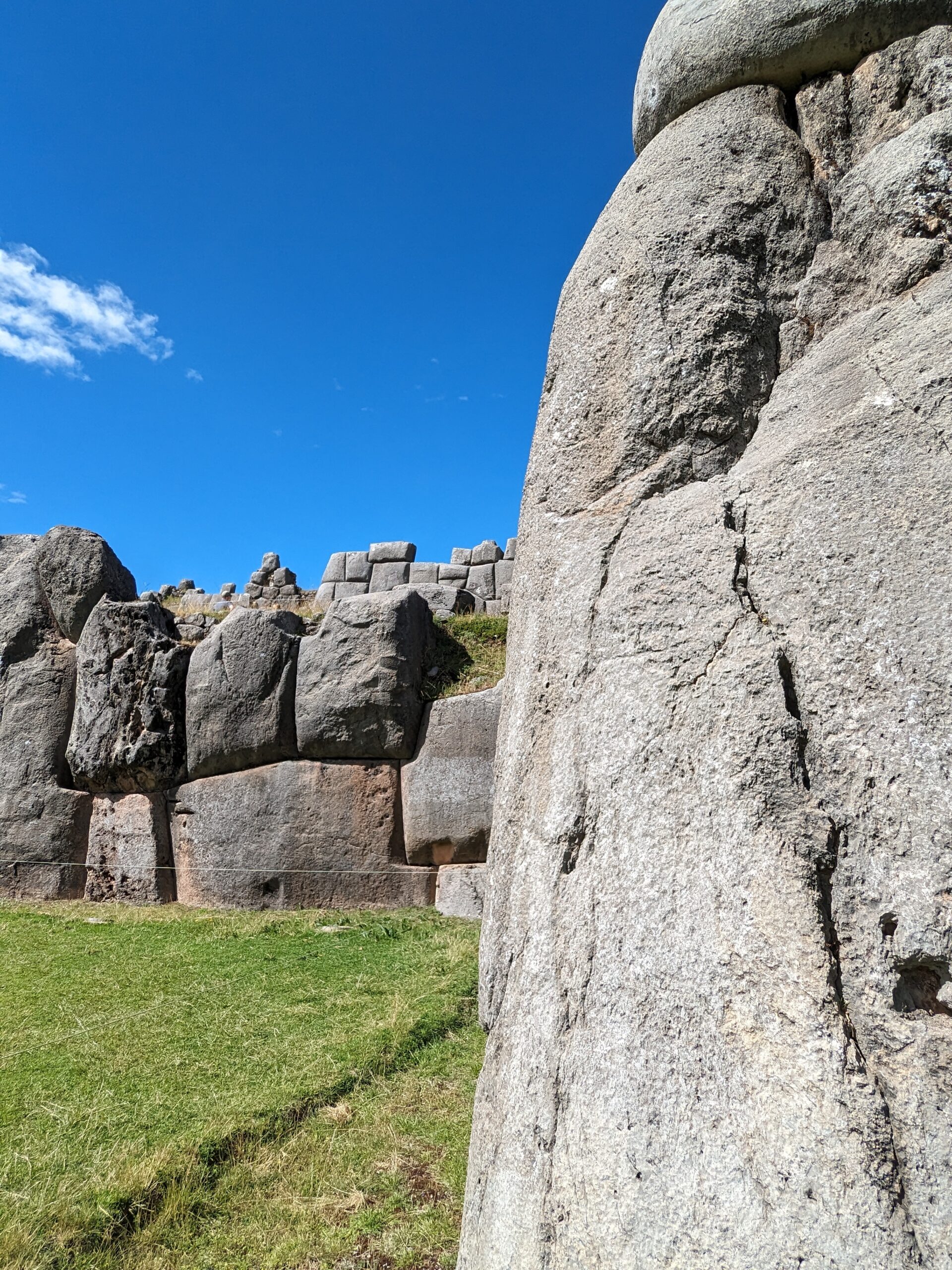
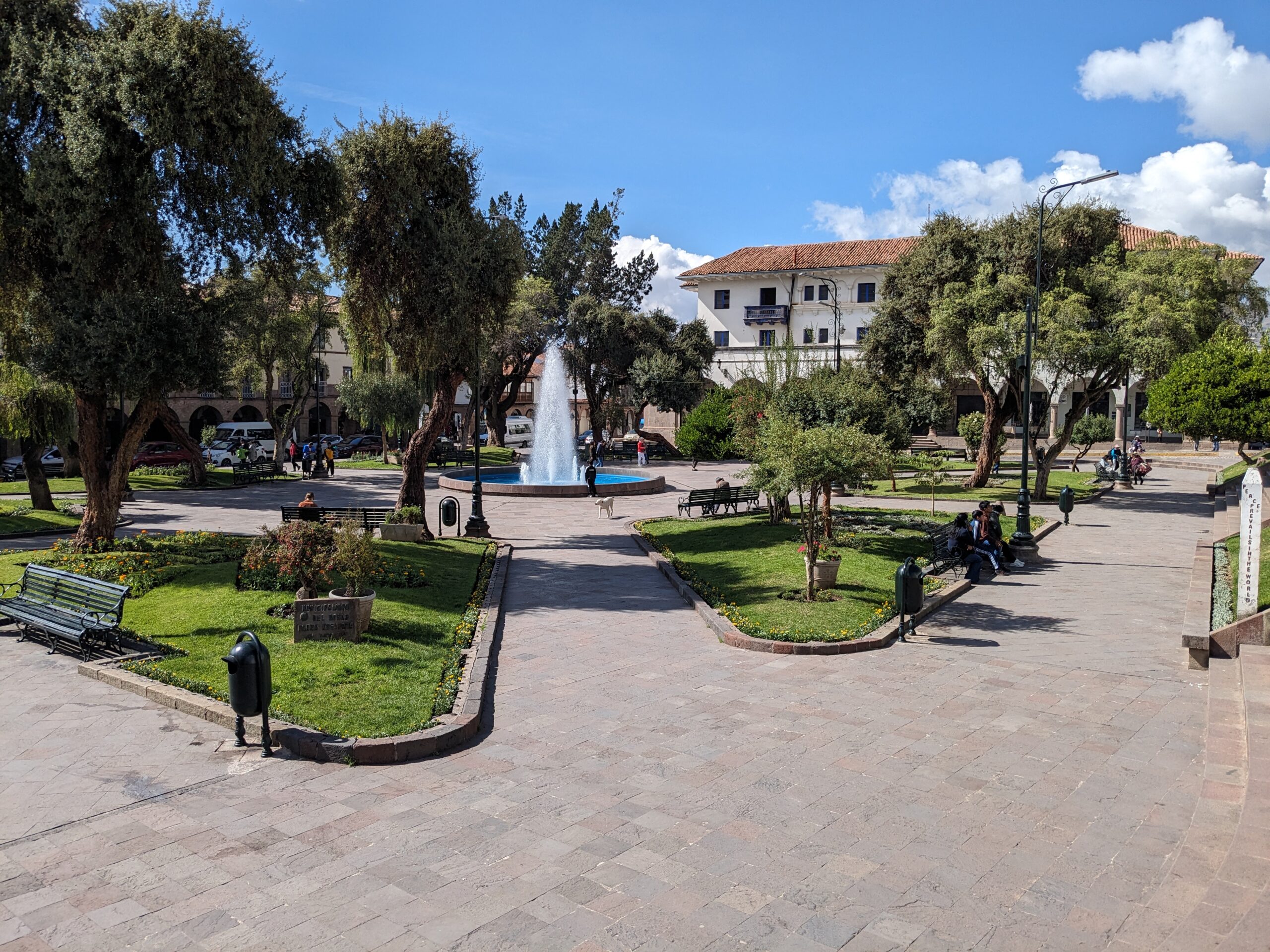
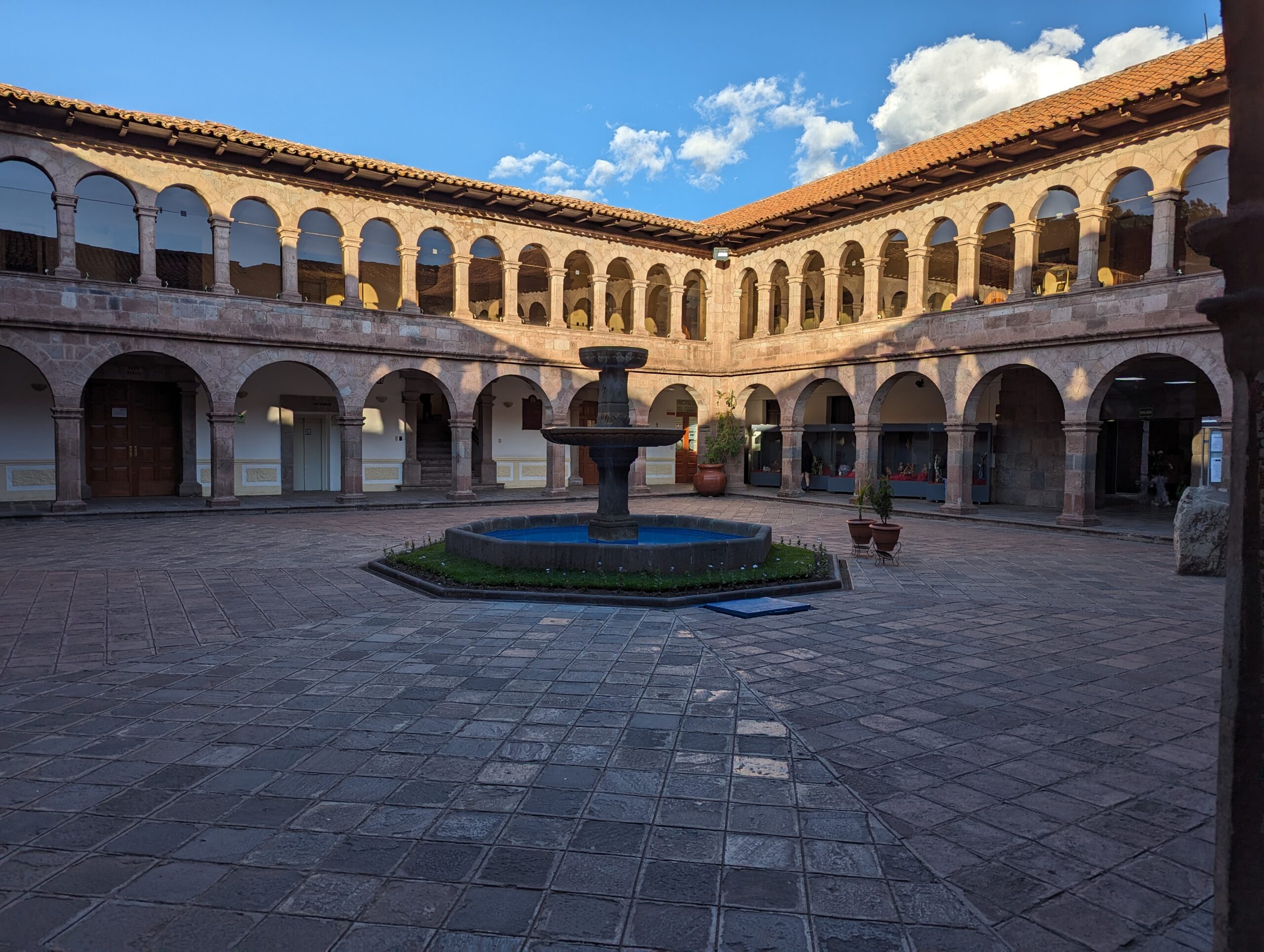
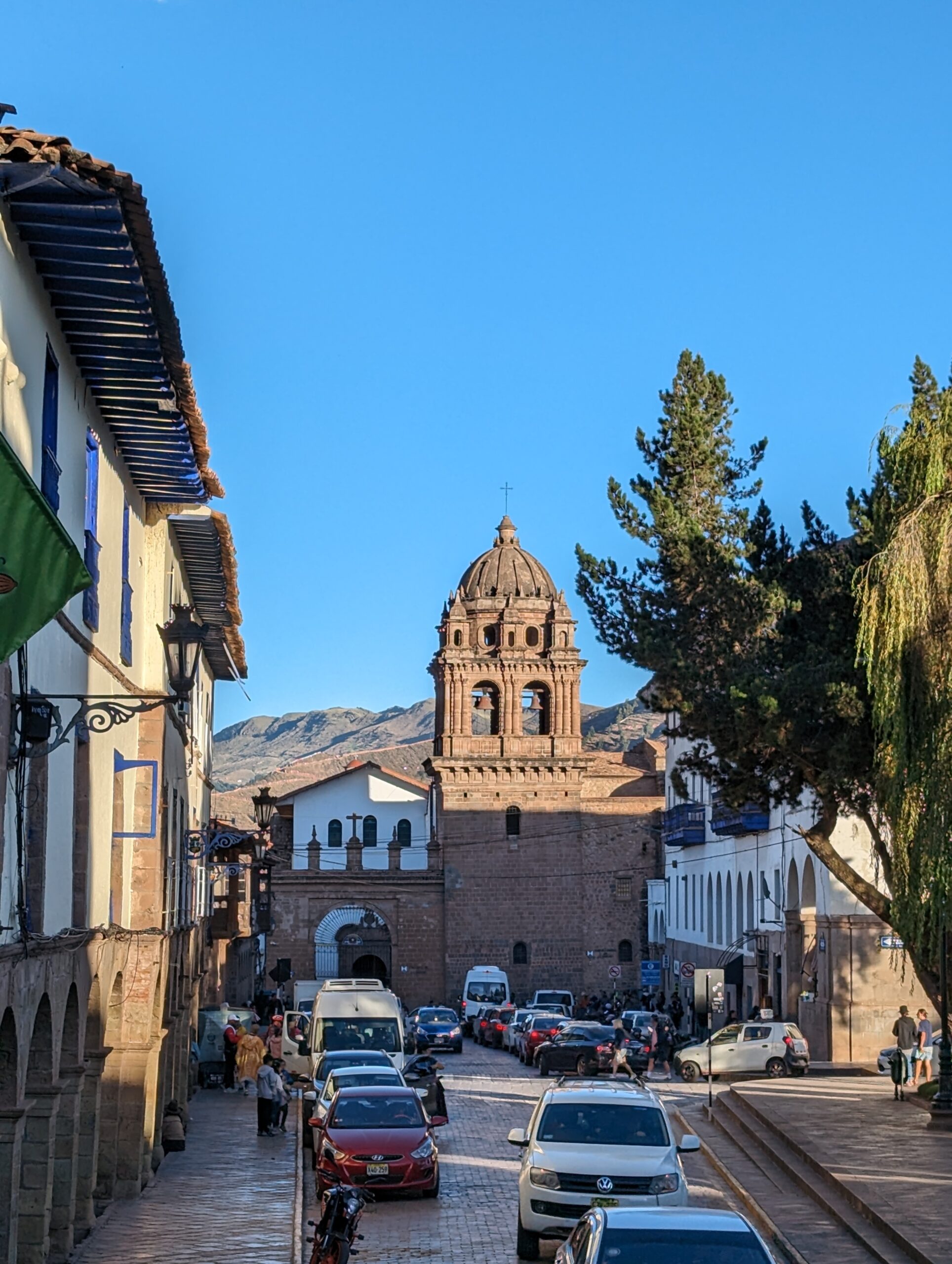
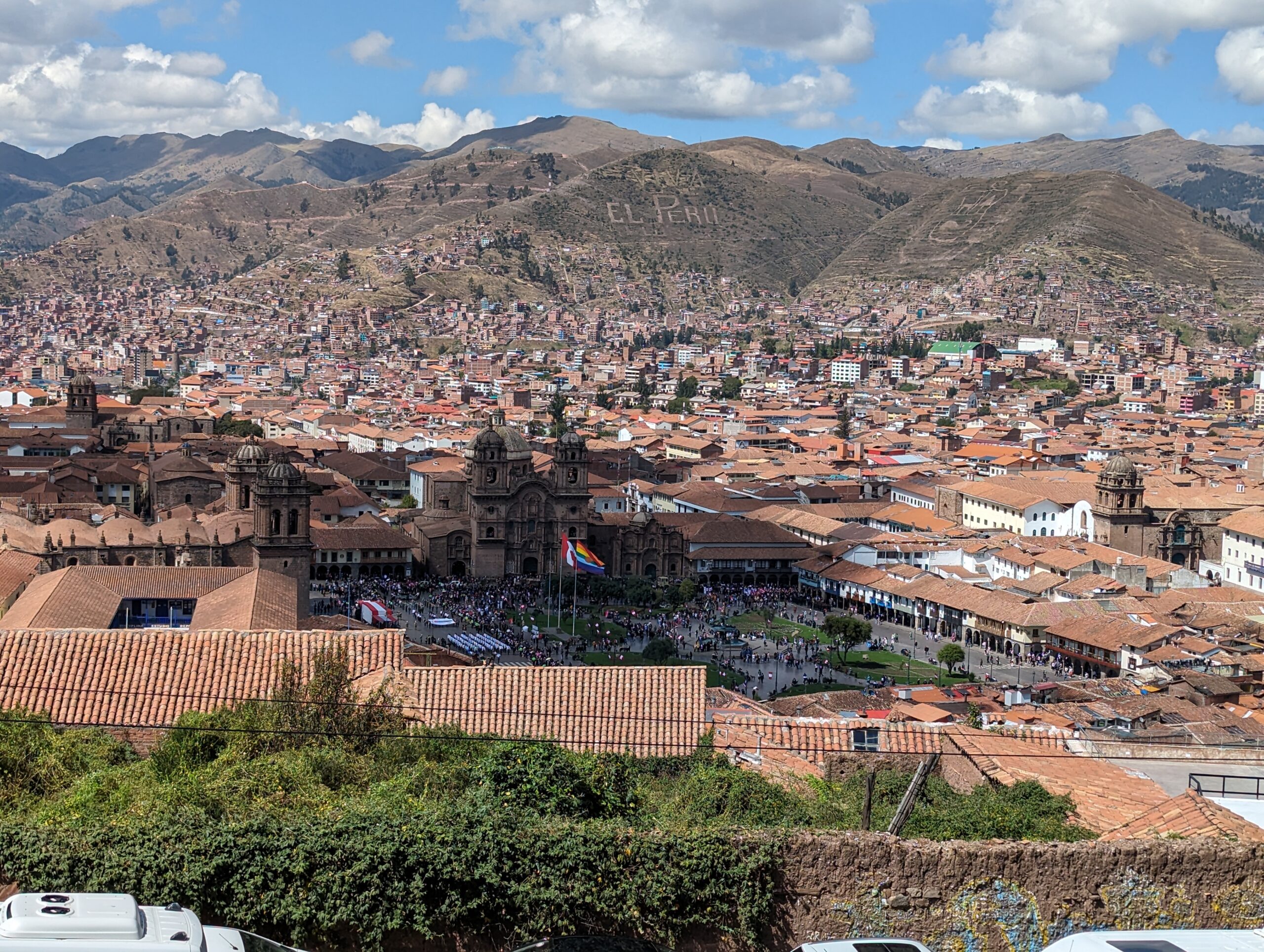
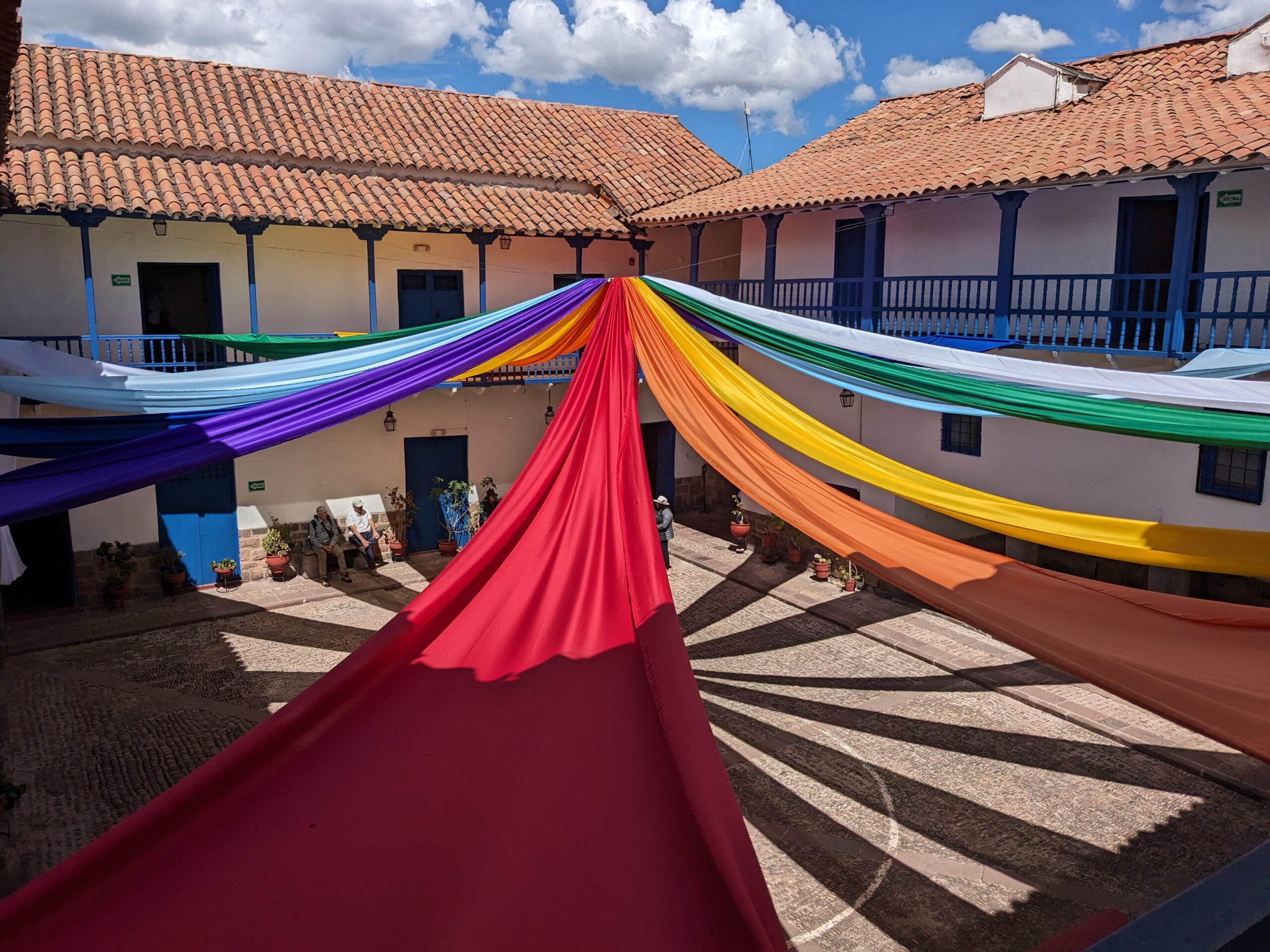
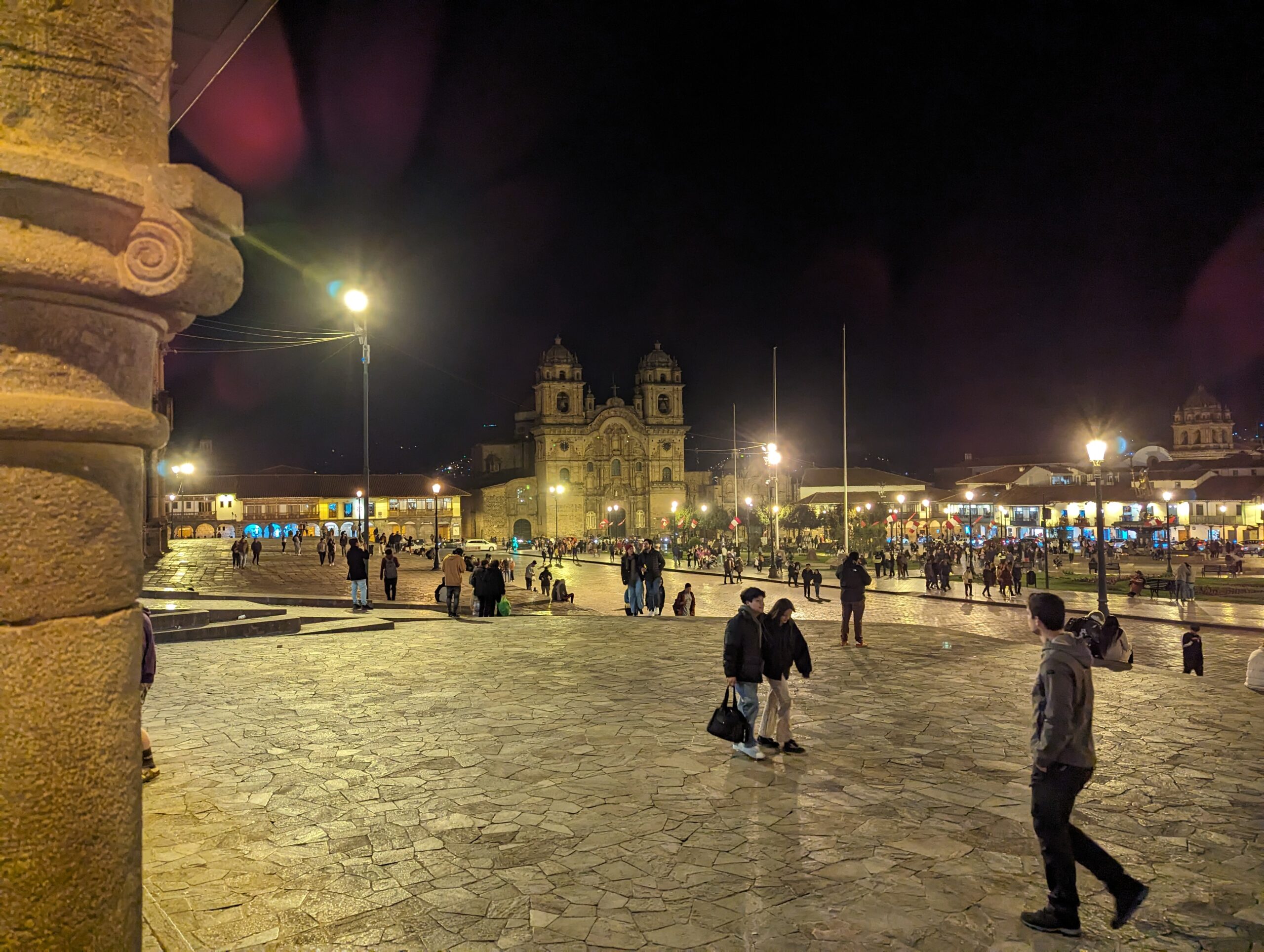
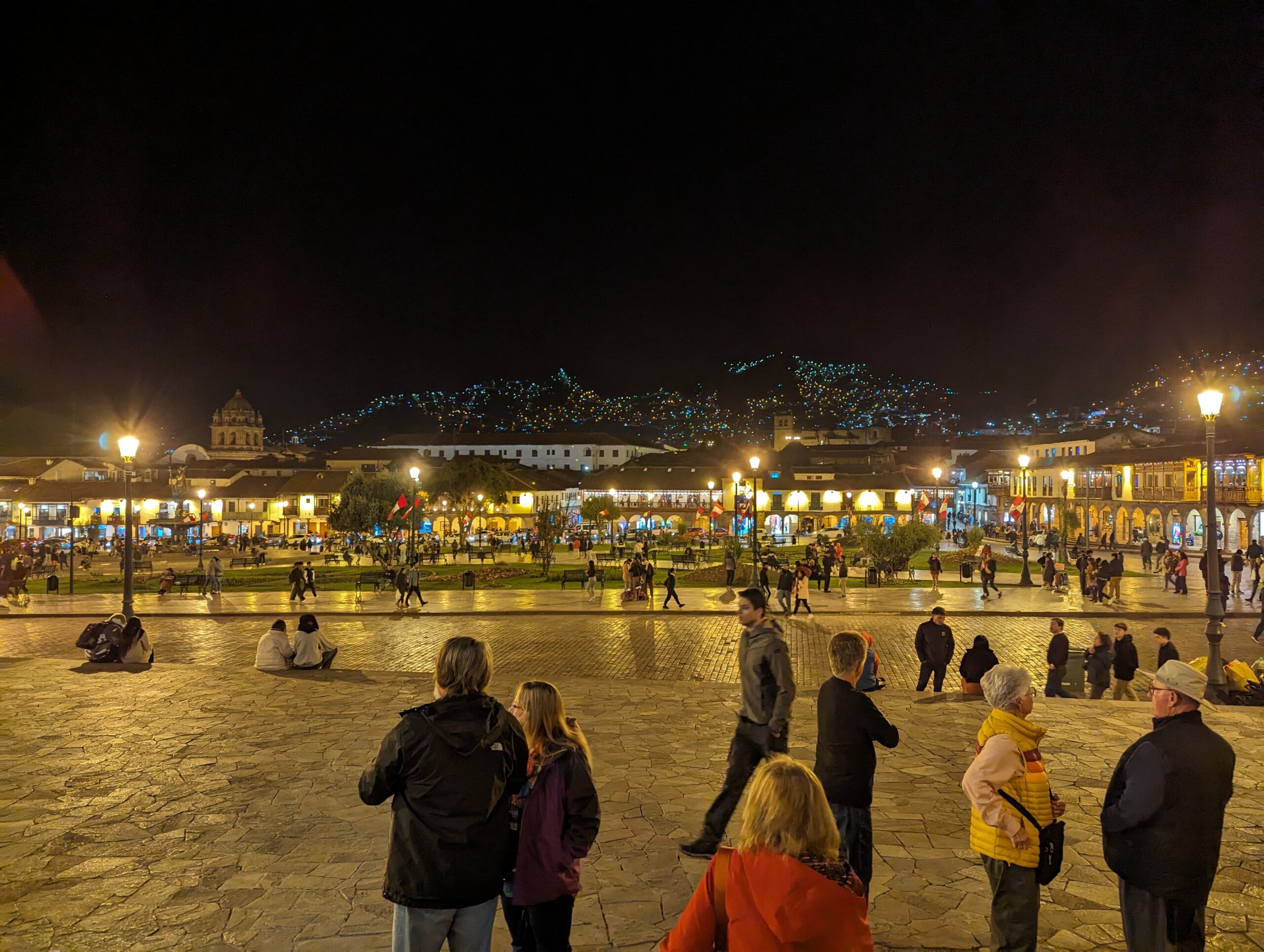
Our trip ended with a couple of low-key days in Cuzco. I was genuinely surprised by the number of things to do in the city. We had the advantage of staying close to the Plaza Mayor in another boutique hotel so many things were in walking distance. Apart from an excursion to the old fortress of Saksaywaman (which is just fun to say), we did the city by foot.
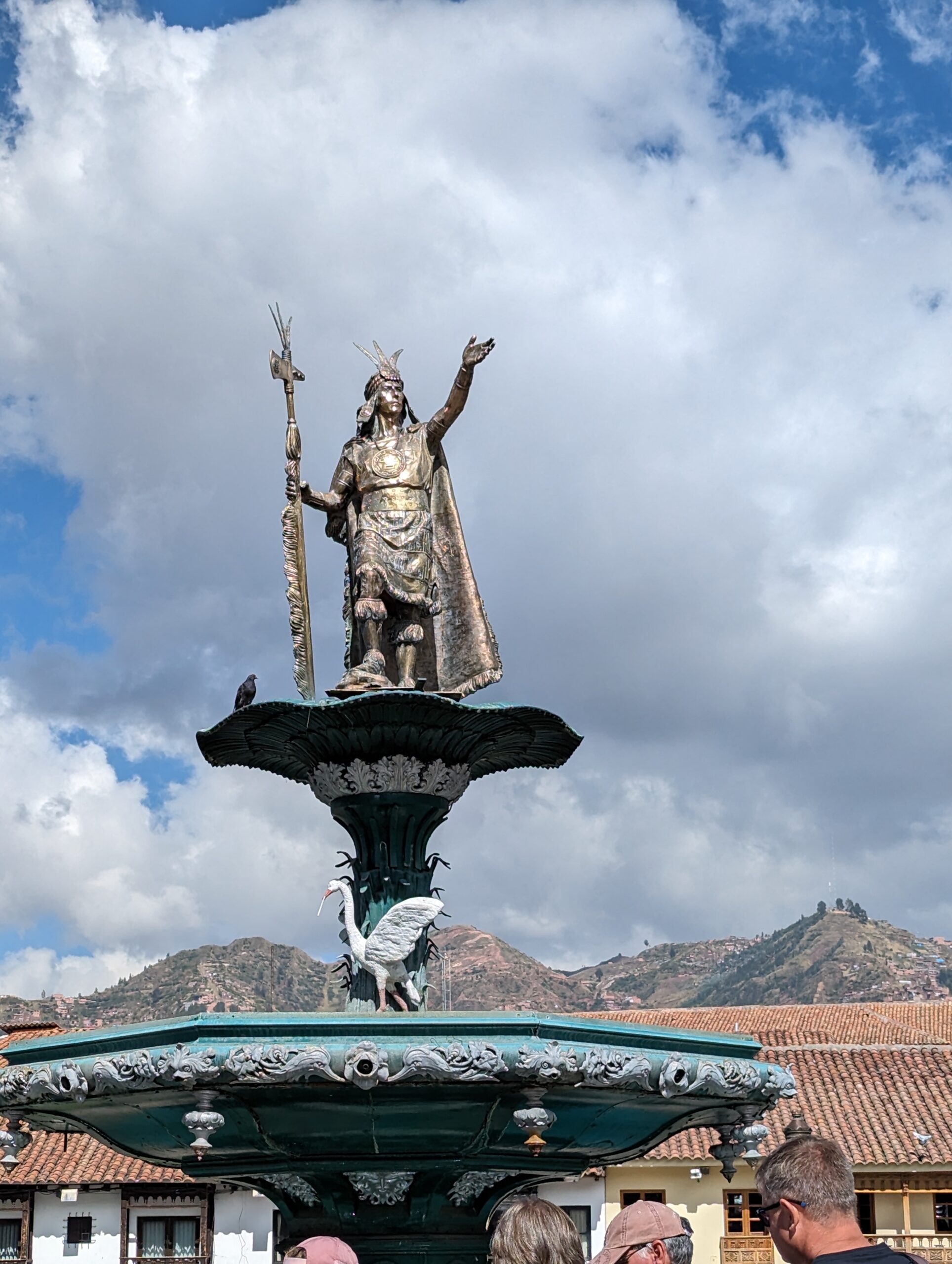
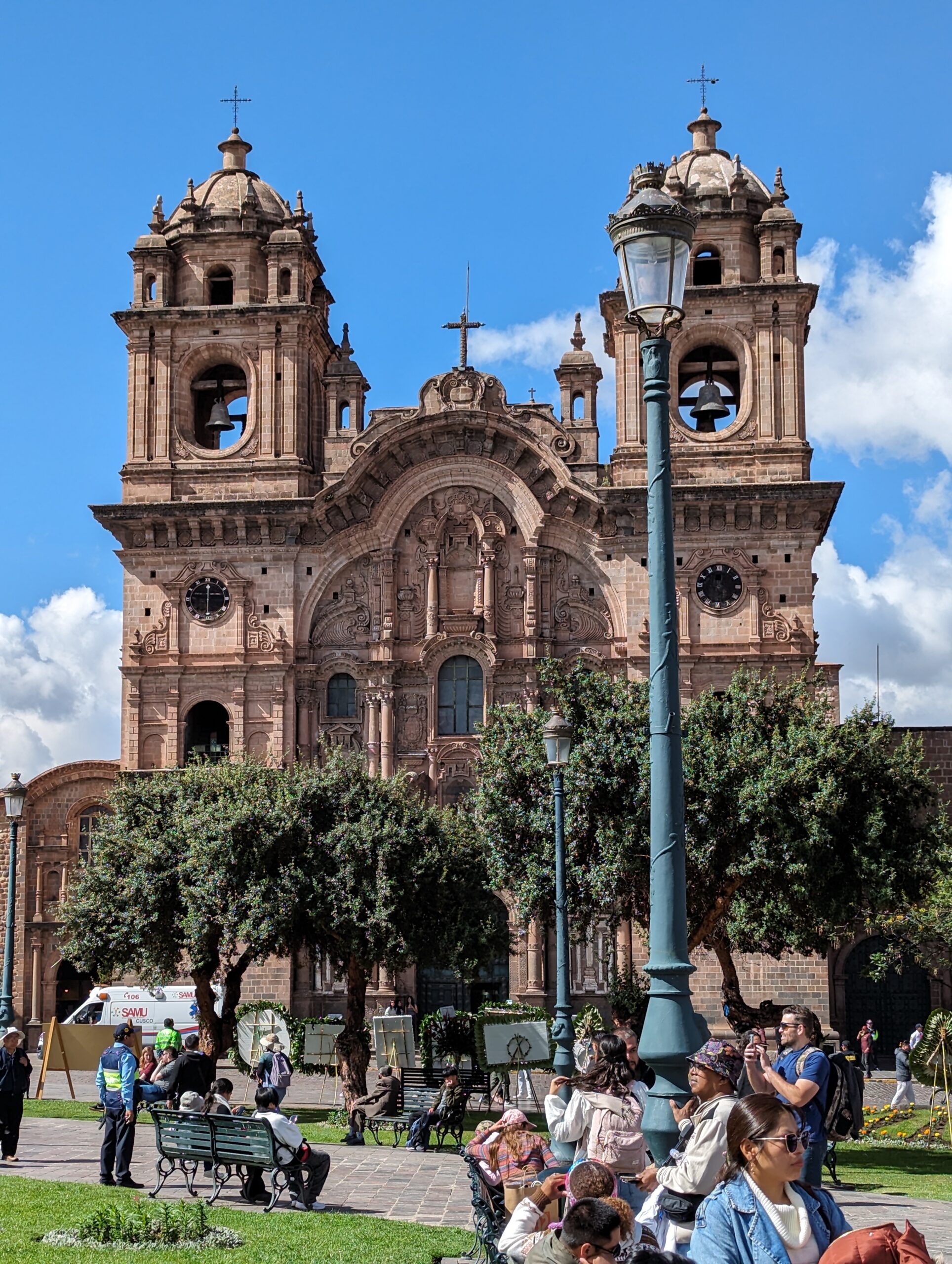
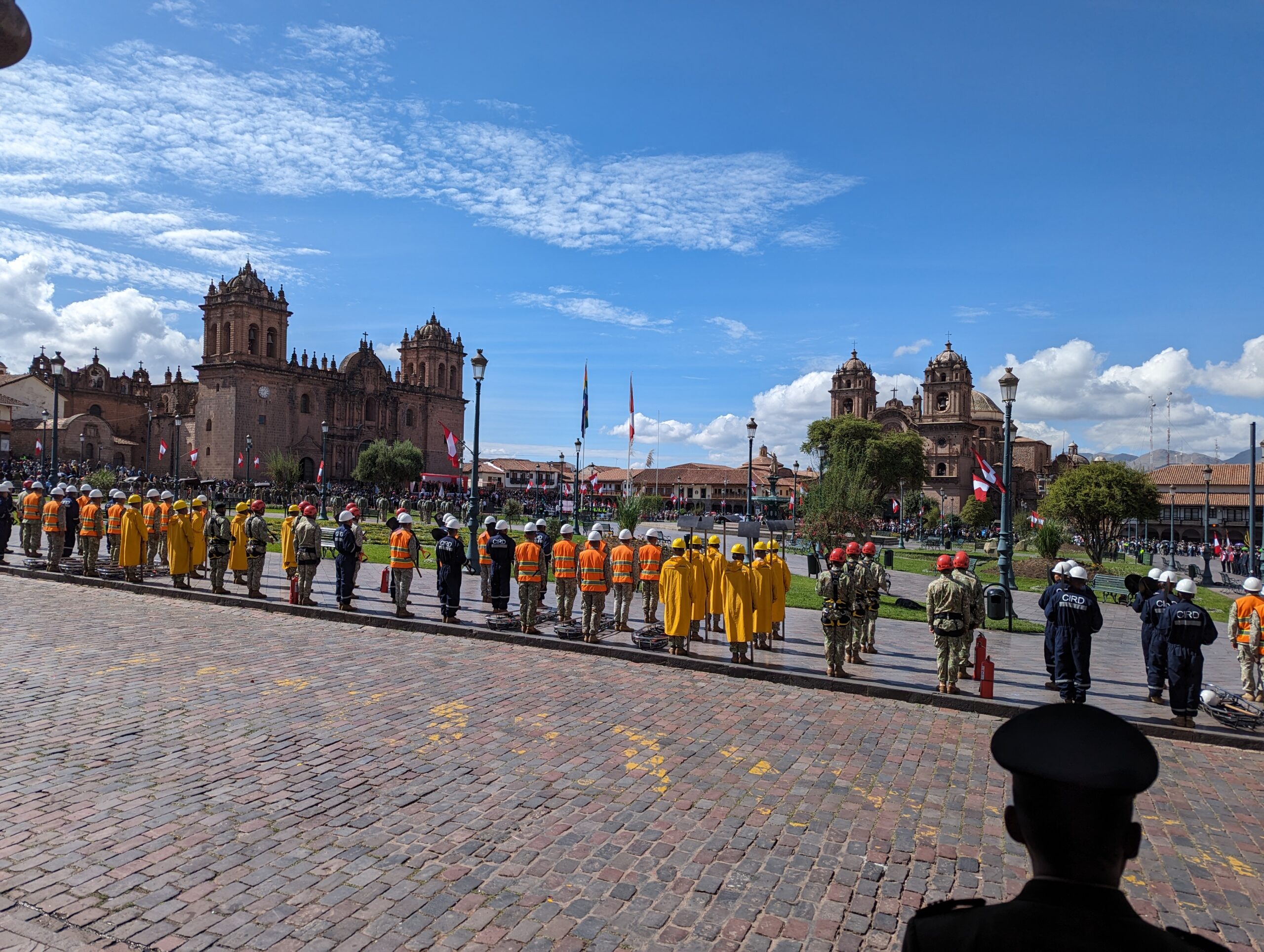
Quite by accident, we were in the city on the anniversary of a major event. This was the day in 1781 when Tupac Amaru II and his wife and son were executed in the Plaza de Armas in Cuzco. Every year, there is a reenactment. There was nothing dainty about these executions – I will leave this to the reader to learn on their own – and the restaging plays up the violence. After weathering a Jacobean level of shrieking, we sought solace in a church because nothing bad ever happens in churches.
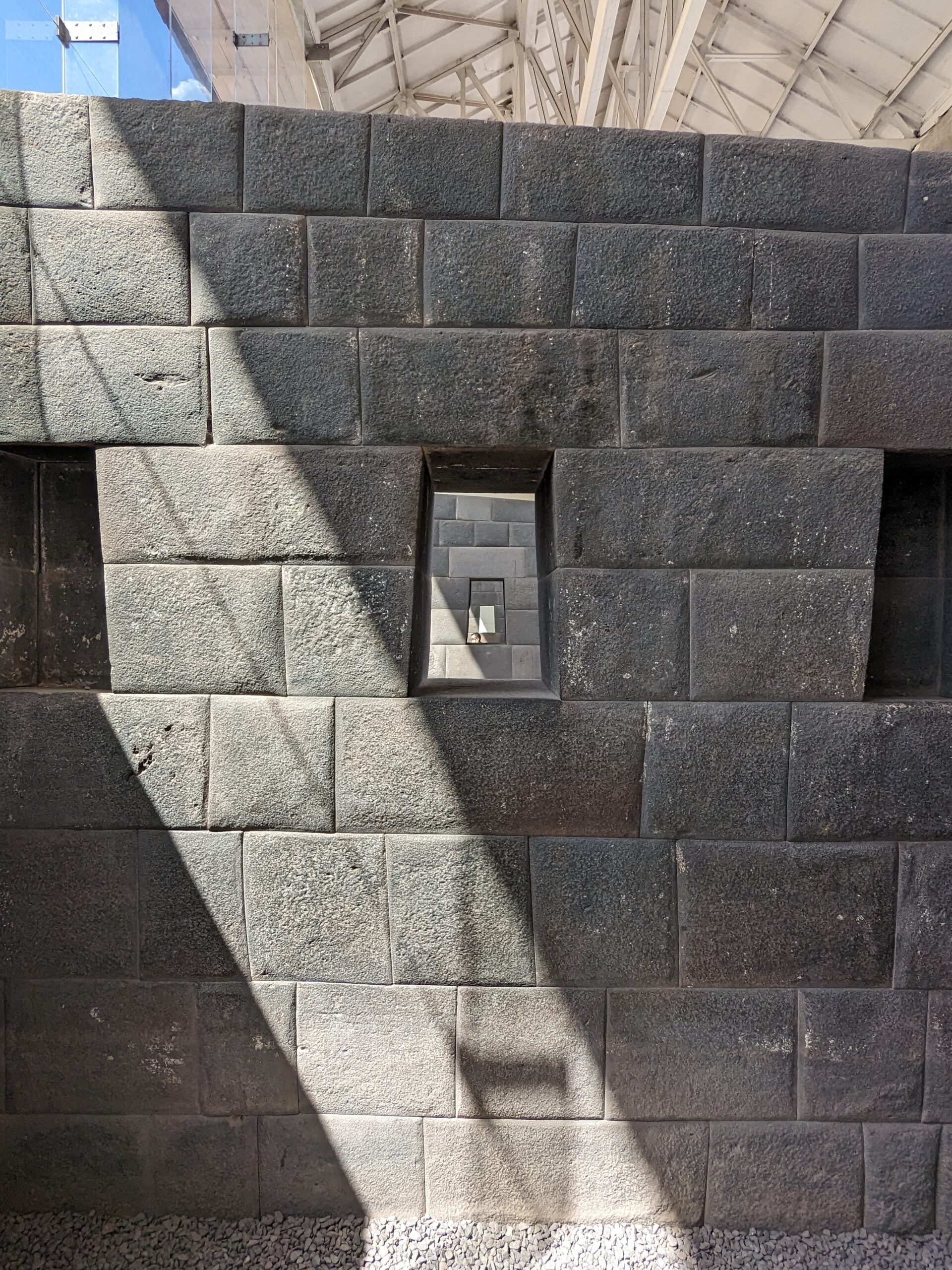
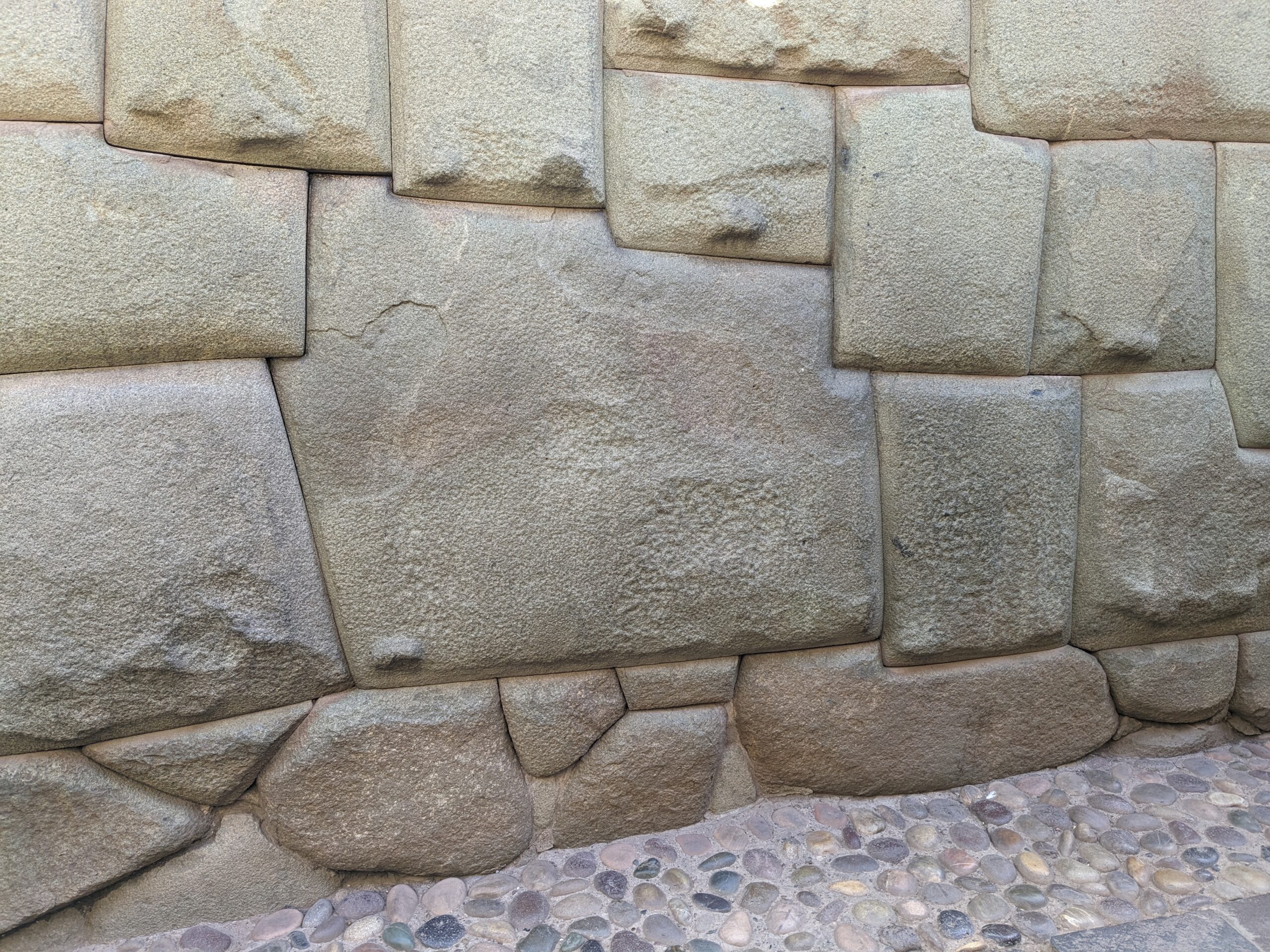
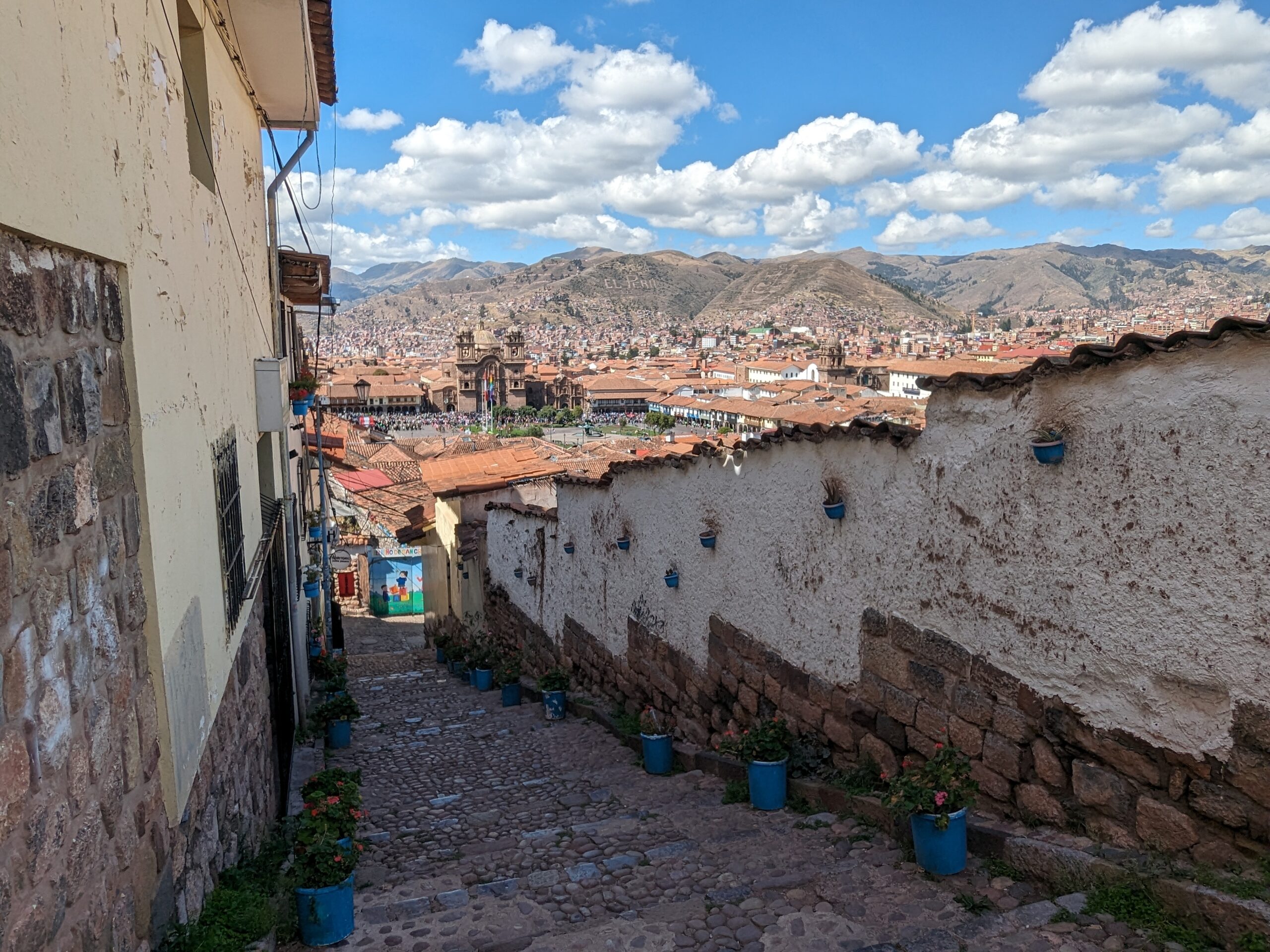
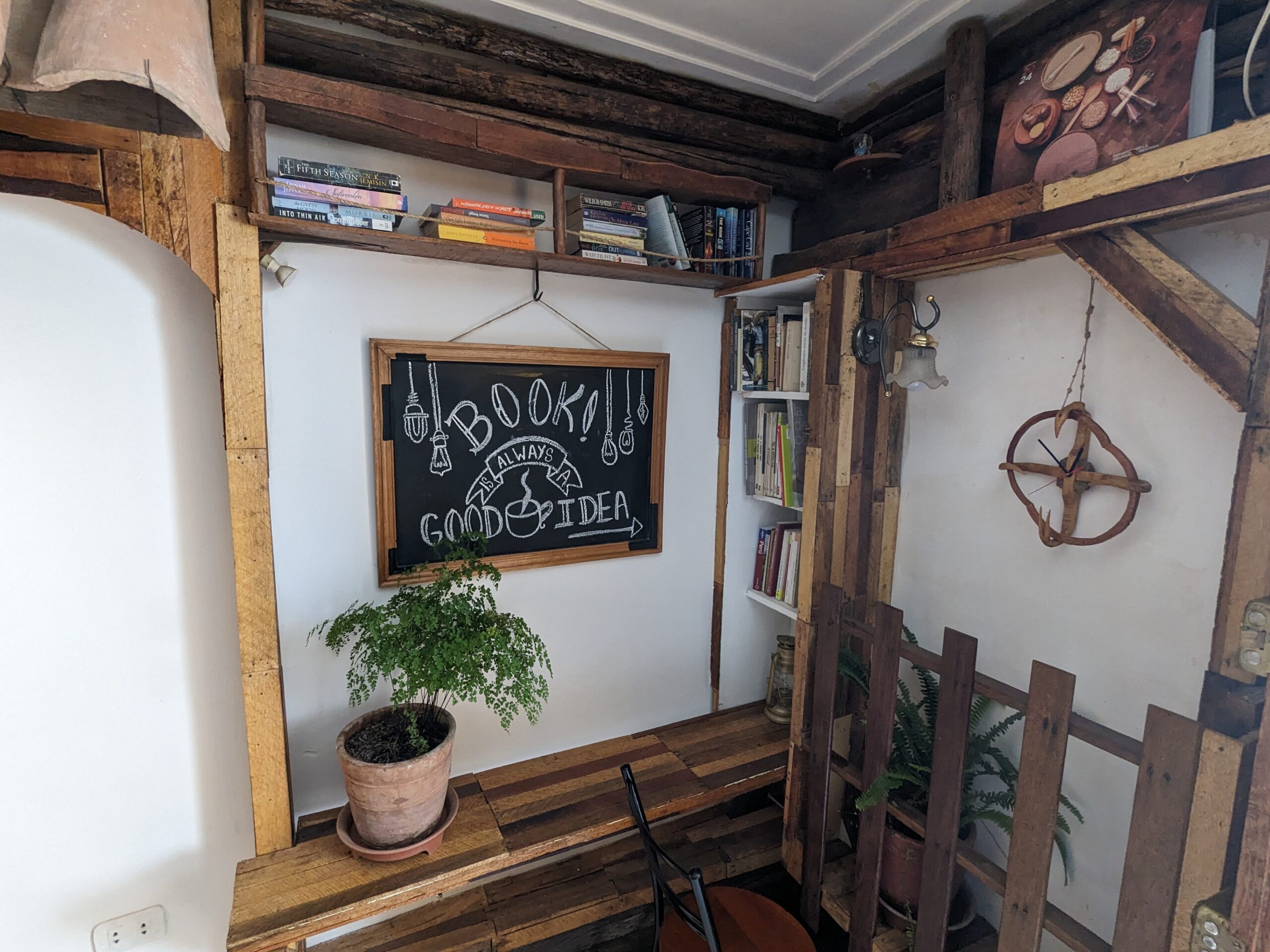
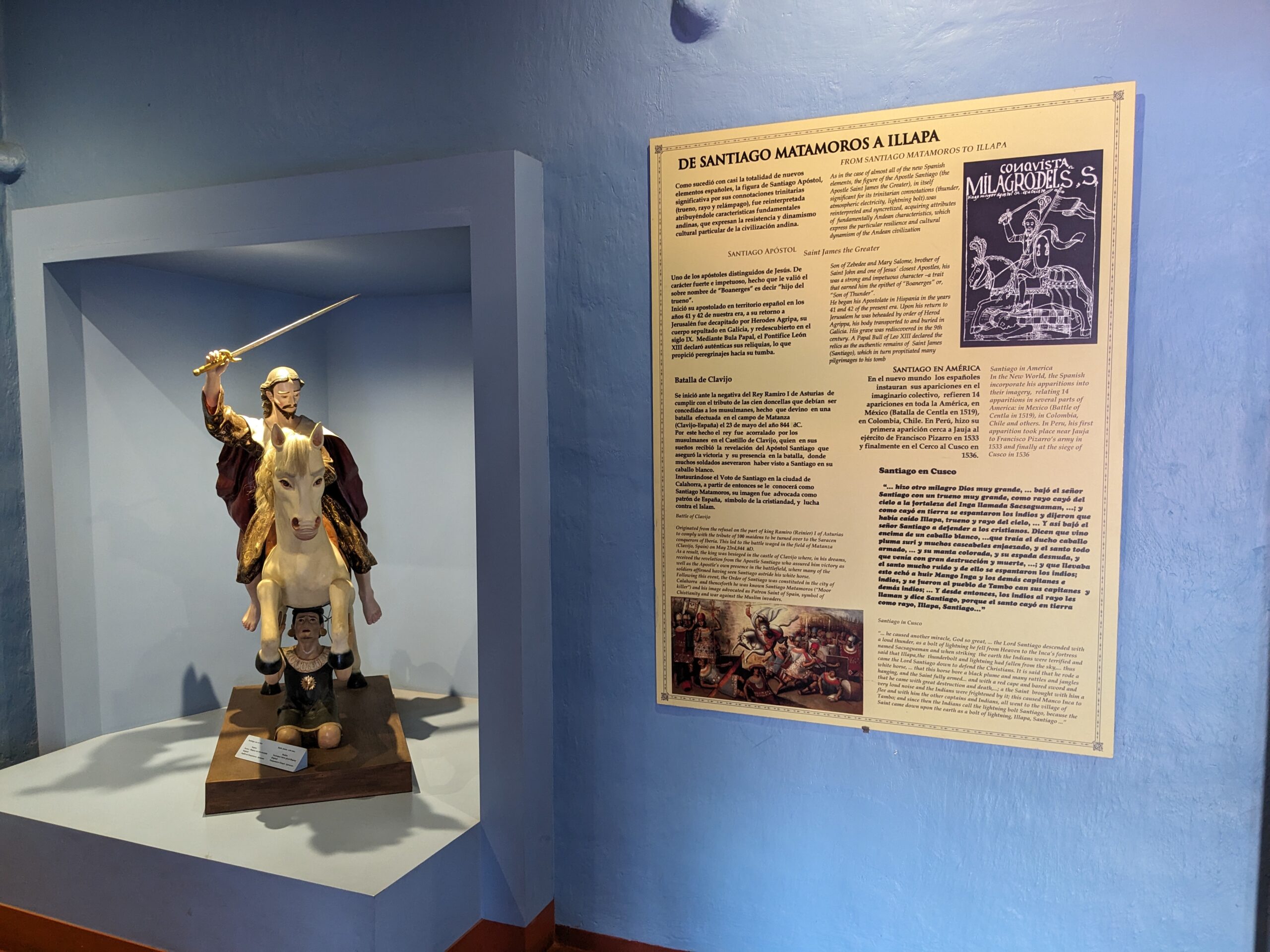
There were many great things in walking distance. We marveled at Incan architecture at the Qorikancha (Temple of the Sun) museum and the 12-Angled stone4 . There was a good regional history museum and a few small art galleries. Of course, there was the obligatory hike up a ridiculously steep street, but we found a cute coffee shop along the way (I swear every bean was ground individually).
While I enjoyed the visit to Machu Picchu, I feel there is more to see in Cusco and would gladly return. Although maybe not on the day they reenact someone’s violent execution.
- Aguas Calientes has apparently been renamed “Machu Picchu Pueblo” ↩︎
- Because of limited space on the train, we had to pack down to an overnight bag for our stay in Aguas Calientes. The rest of our luggage was sent ahead to Cuzco. ↩︎
- New one-way routes were introduced in mid 2024 after we visited. ↩︎
- Wikipedia tells me some idiot damaged this stone in 2025. ↩︎
Leave a Reply