Oviedo is where it all began. Mostly.
So the story goes… Saint James (a.k.a. Santiago, San Diego, Saint James the Greater, Cousin Jimmy) was one of the Twelve Apostles of Jesus Christ, brother of John the Evangelist. Legend has it that following the death of Jesus, James traveled to the Roman province of Hispania (modern-ish day Spain) to spread the word. His travels to Hispania are not documented anywhere (e.g. Acts of the Apostles or TripAdvisor), so Saint James’ connection with Iberia is a faith tradition. Curiously, if the story of this travels are true, he only converted about seven people in his time there.
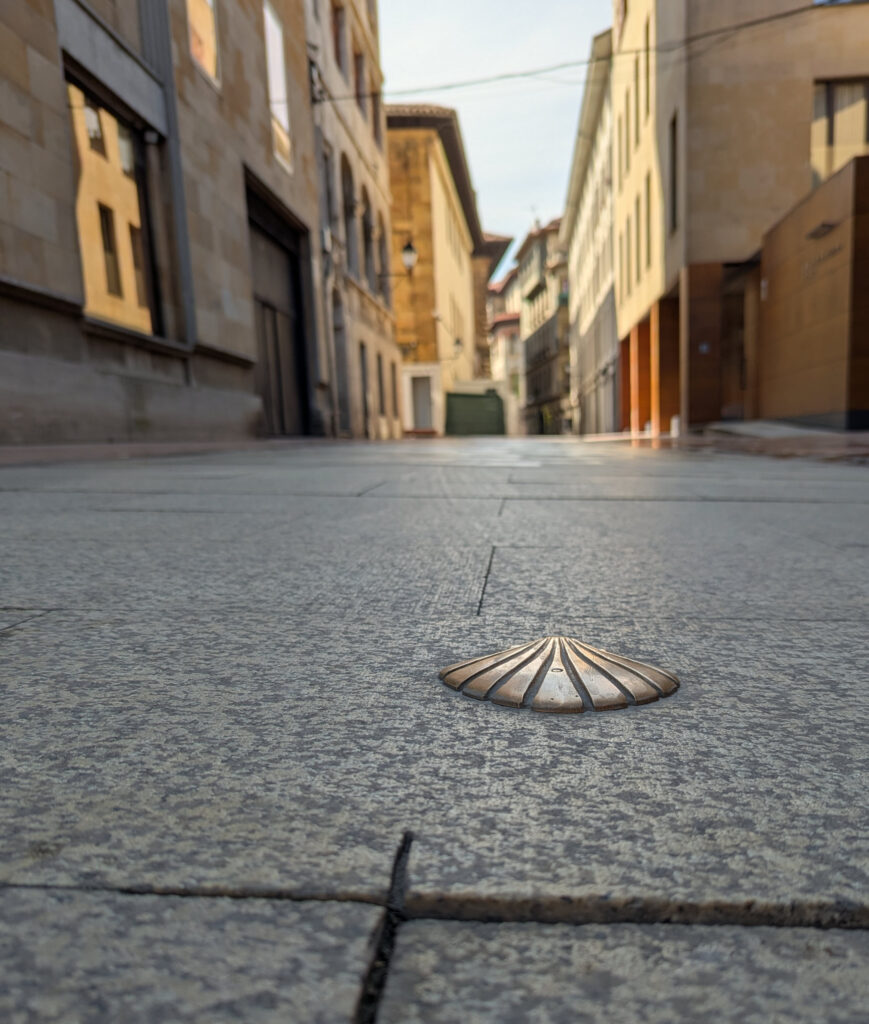
Regardless of whether or not he was in Spain, James was martyred in Palestine by one of the King Herods circa 44AD. The tradition says his followers exhumed his body and spirited it away to Hispania on a ship without oars or sails …where it remained undetected for about 800 years. The discovery of his bones is certainly unrelated to anything else happening on the Iberian Peninsula in the 9th Century. Nope. Not at all.
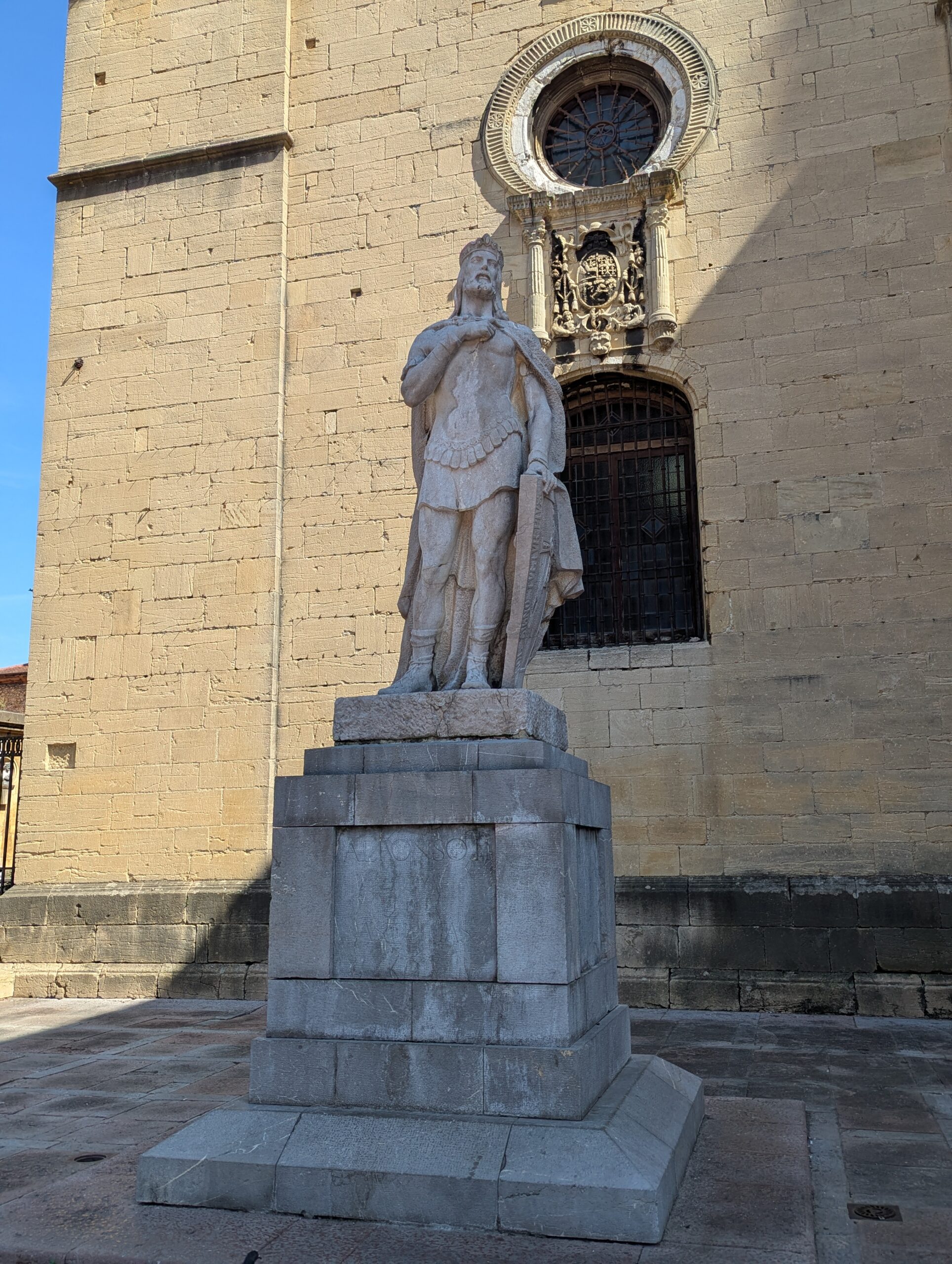
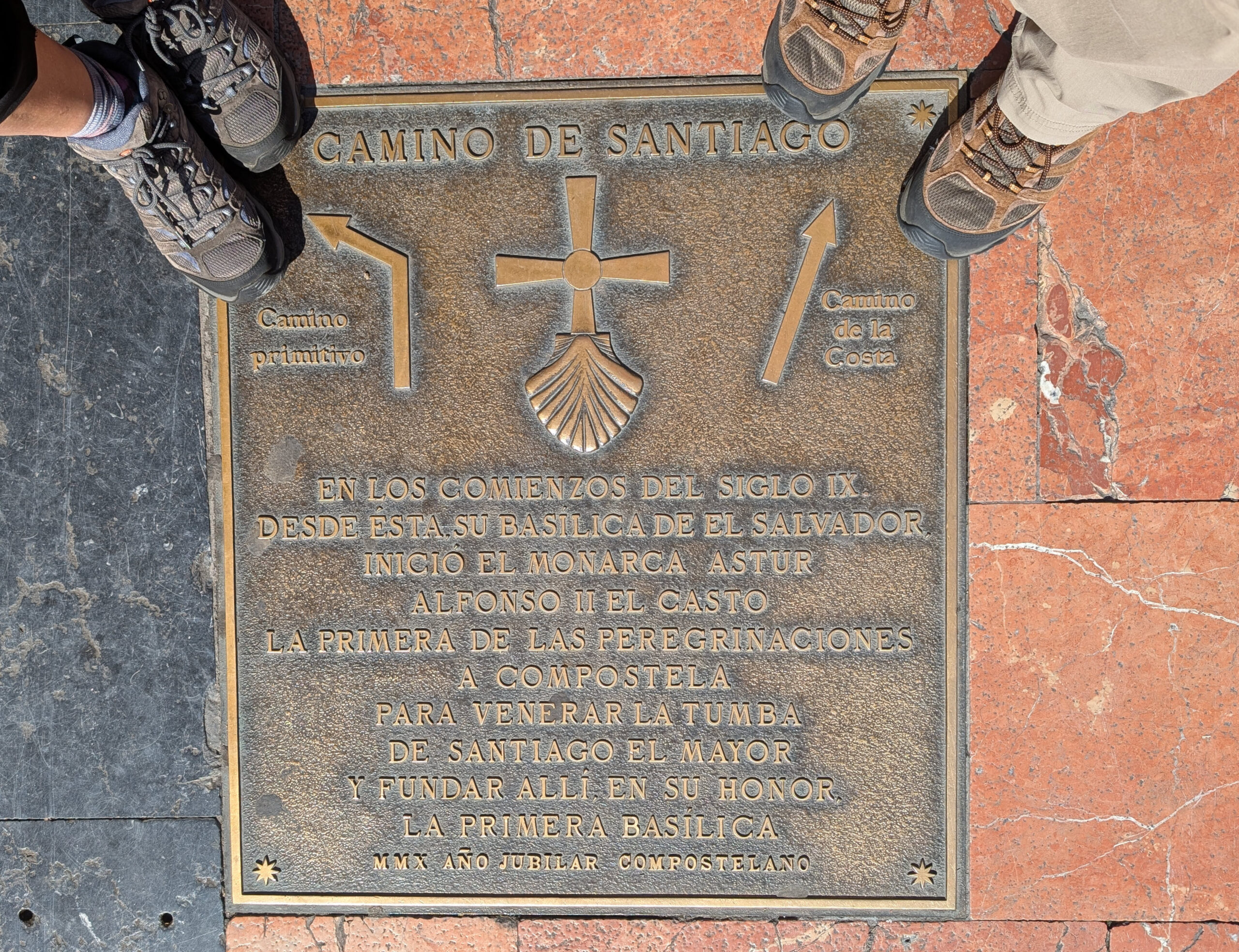
Word of the discovery reaches the ears of the King of Asturias, Alfonso II at his home in, wait for it, …Oviedo. Alfonso collects his team of experts from CSI Oviedo and they hike over the mountains on a journey to confirm the authenticity of the relics. I don’t know what methods determined the bones belonged to Saint James (and not Priscillian) but they did. They built a shrine to house the bones then upgraded it and upgraded it some more. Eventually the shrine grew into the current Cathedral in Santiago de Compostela. Visits to the Cathedral in Santiago became a major Christian pilgrimage – the “Way of St. James,” or “Camino de Santiago”.
(Side note: the bones disappeared again for another few centuries, but that is another story)
Fast forward to the present day. A few years back, we attended a seminar on the Camino sponsored by the local branch of American Pilgrims on the Camino. At this seminar we learned that there were multiple Camino routes to Santiago – including one called the “Primitivo” (or “Original”) route. This “Primitivo” route reflects the journey Alfonso and his entourage took on what became the first pilgrimage.
“If we do a Camino,” I say to my Beloved, “we should do the original one, the Primitivo.”
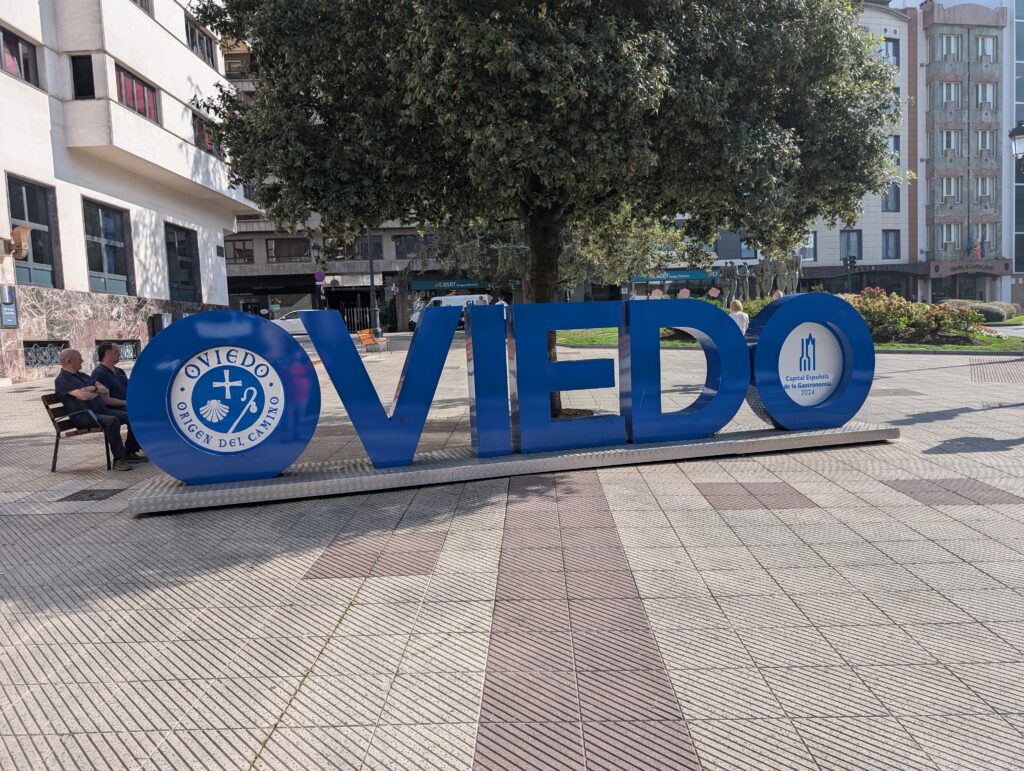
Which brings us to now
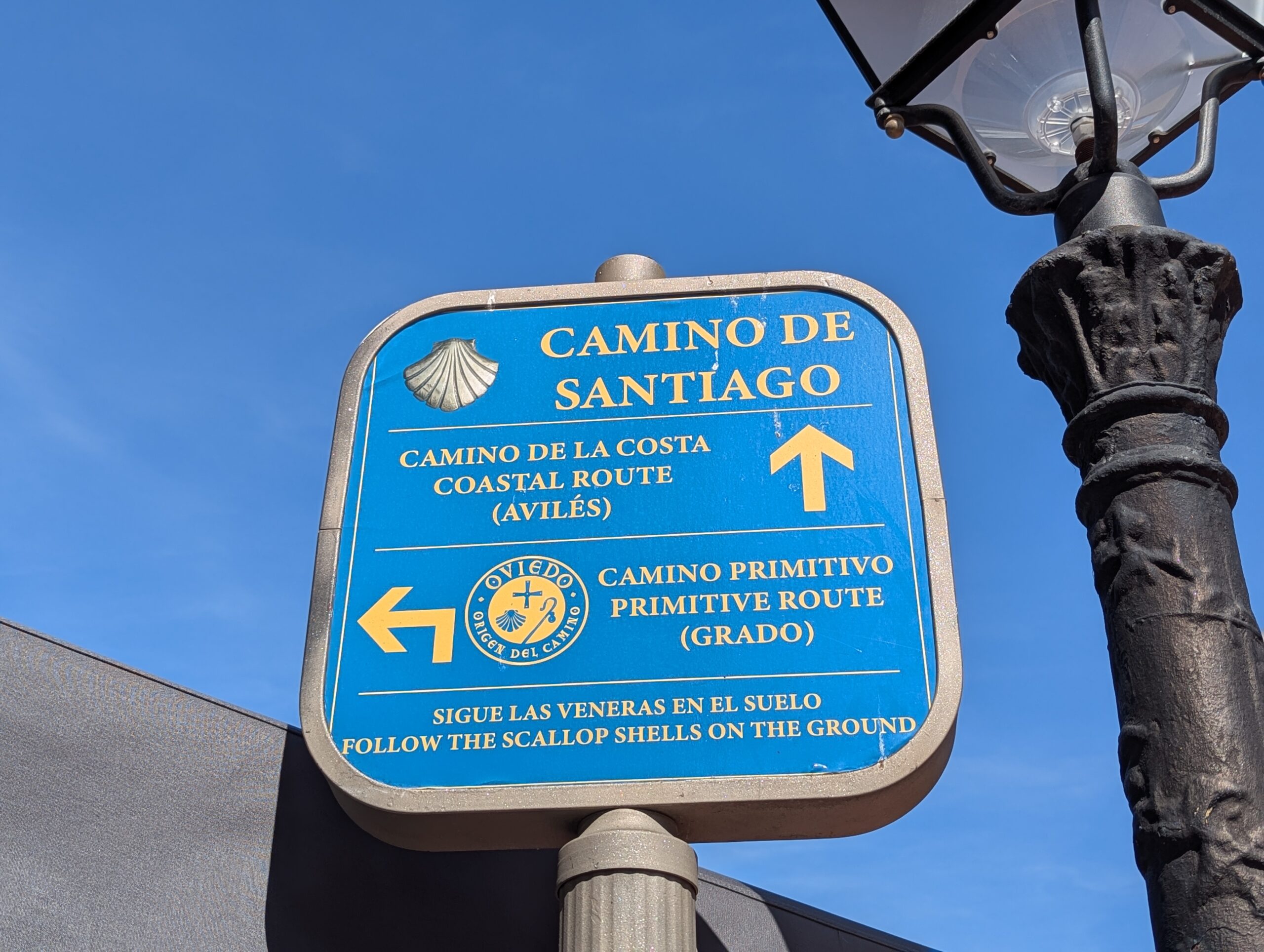
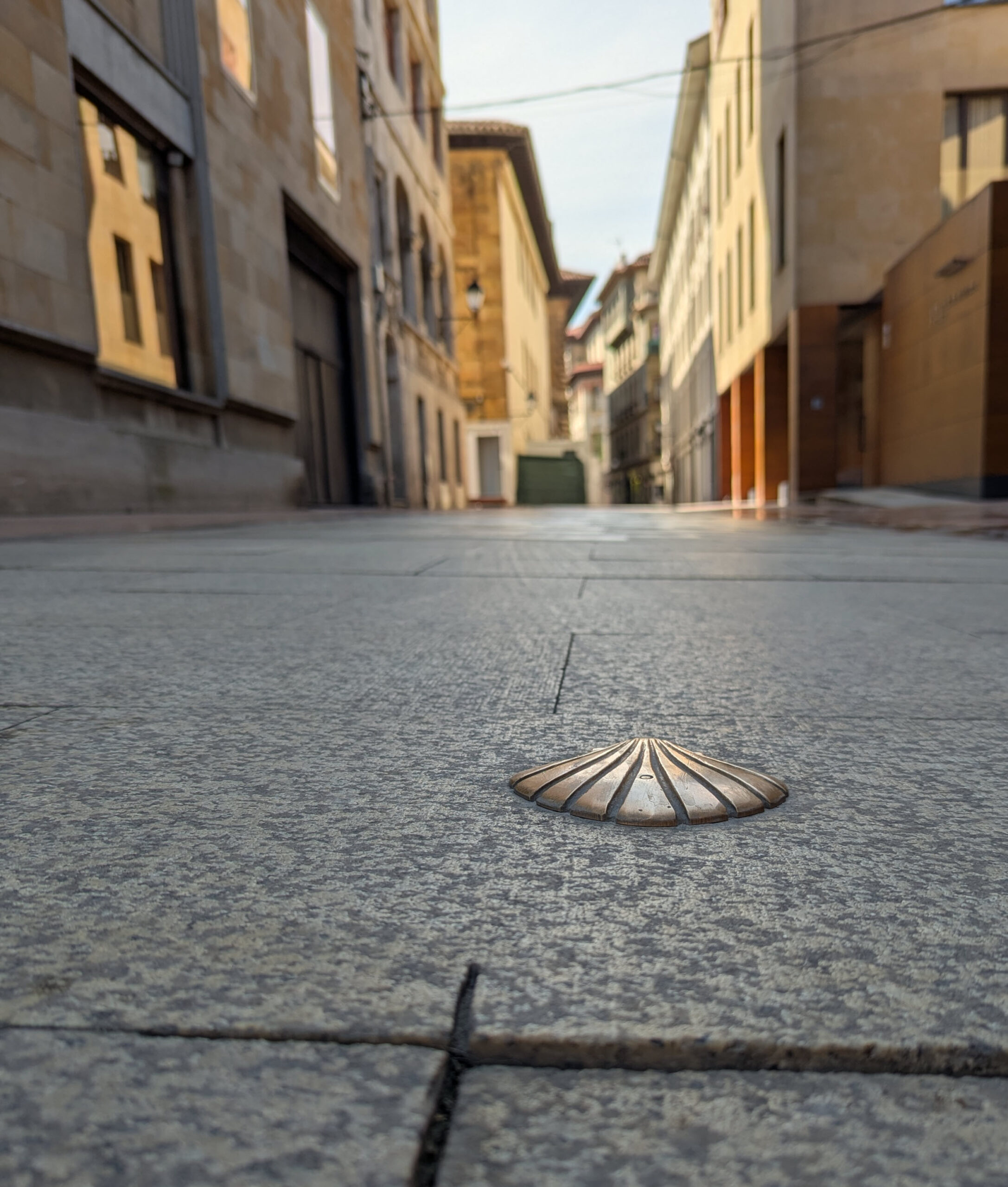
Oviedo – The Origin of the Camino. Just like the sign says.
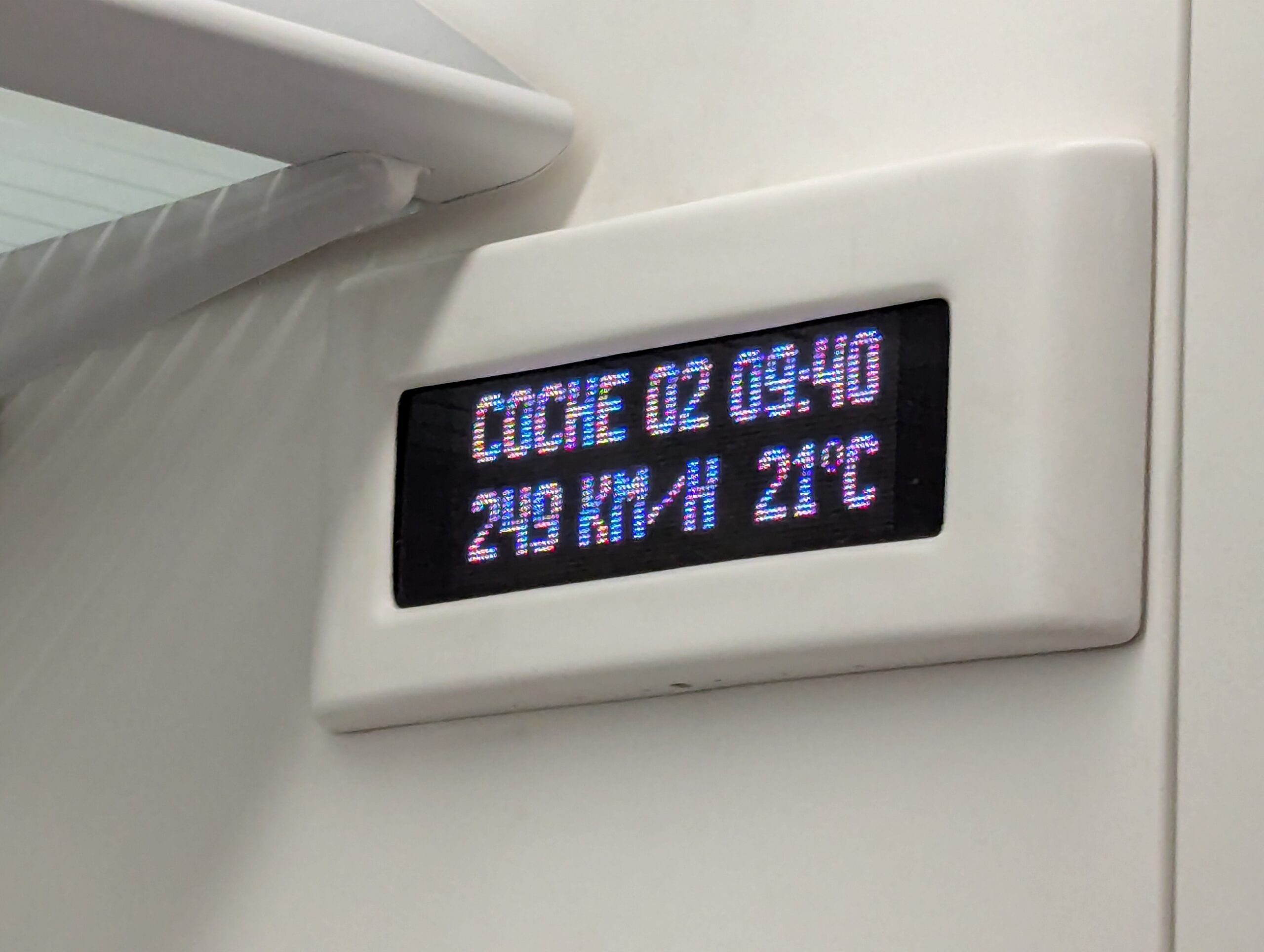
We left Madrid this morning on the Alvia, speeding toward Oviedo at 250 km/h. Brown grassy hills undulated like the blanket on an unmade bed. Scrub brush peppered the landscape.
And it is warm. By 9.30am it was already 22C (about 74F). The heat and dust underscores the ongoing drought in Spain, causing recent wildfires. My understanding is that most of our route escaped the worst of the fires, but I suspect we may see some evidence probably from the train as it passes through Leon.
First hints of doubt arise from the weather. Tomorrow – our first day on the road – has an anticipated high temperature of 26C (89F). Slight chance of rain. I am envisioning a sauna and fear I packed for the autumn. While the temperature is due to drop about 5C (10F) each day, the possibility of rain increases. Based on the current forecast, the rain lets up on the day we plan to cross over the mountains. So that is advantageous, at least.
And it is dark. Because of Spain’s northern latitude, the sun did not rise until 7.30am. Since we will need to be out of our albergues by 8am, this probably means a lot of walking in the dark.
“Albergues” are a system of pilgrim hostels specific to the Camino. These hostels allow pilgrims to sleep in dormitory-style accommodations for a reasonable price. Albergues can be Municipal (run by the local government), Parochial (run by a religious order), or privately run. During our Camino, we only stayed in private albergues – some of which had private rooms available.
Details from Camino Guidebook
Packing
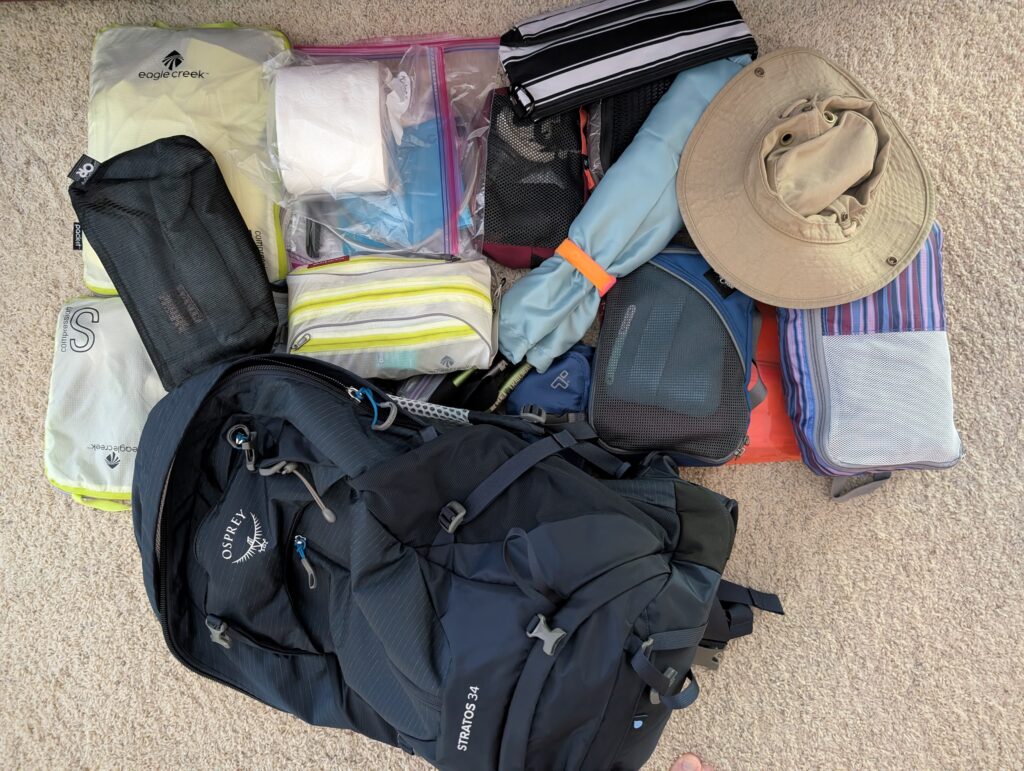
Tonight is the reckoning when we decide what we will carry versus send ahead. Considering how rough it felt lugging our gear around yesterday, it could be a long three weeks. In our defense, we had our backpacks stored within other carrier so it was not the most conducive way to be hauling our junk.
We chose to use the Paq Mochila transfer service from Correos – the Spanish postal service. We filled out our yellow Correos labels. If I understand correctly, we just need to drop them off at the magic spot at our hotel by 8am and little elves will ensure they get delivered. Considering all of the non-functioning things I witnessed in but a few hours in Madrid (elevators, escalators, ticket kiosks, air conditioning, …) I have concerns.
But the Camino is a journey of faith, right?
I draw comfort in knowing that the heaviest single thing I will carry will be water – and that, presumably, the load will lighten during the day. We chose to get packs with built-in space to carry water bladders. I almost didn’t use this feature. Considering the heat in the forecast, I am glad I reconsidered.
Oviedo
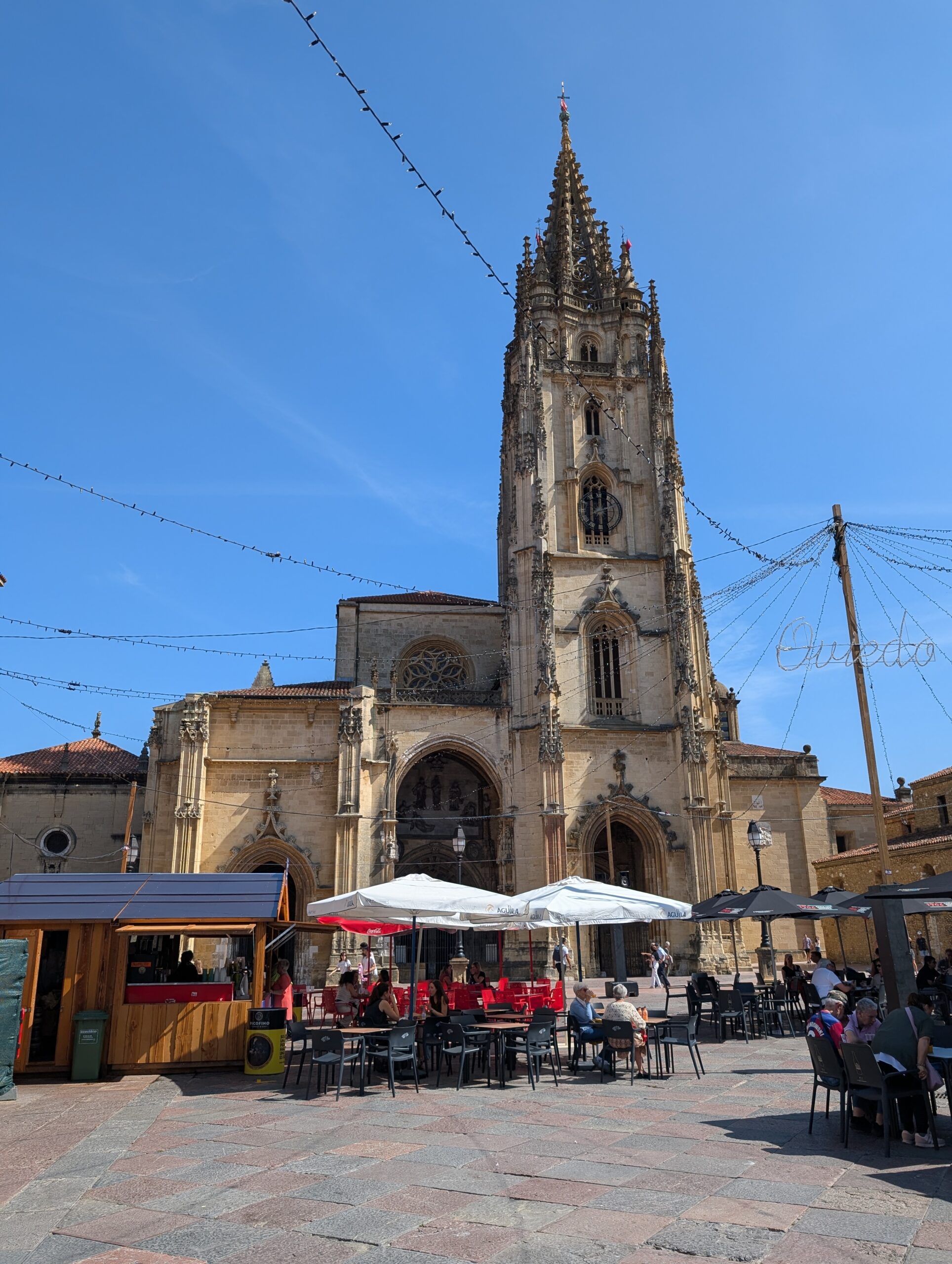
The city is decked out for the Feast of San Mateo: food stands, band stages, beer. We would consider participating if we weren’t too unsettled about tomorrow. Rumor is there may be fireworks tonight.
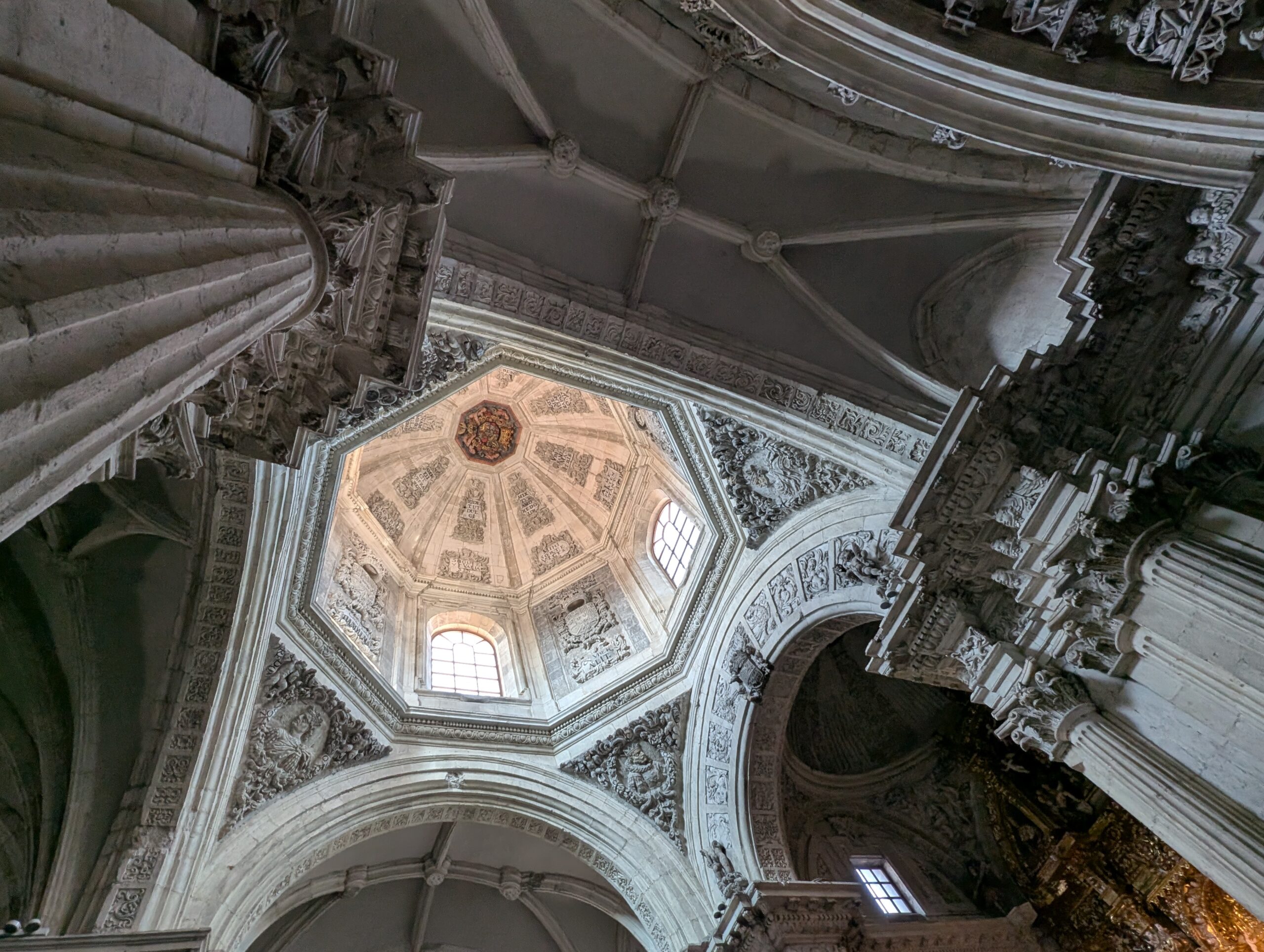
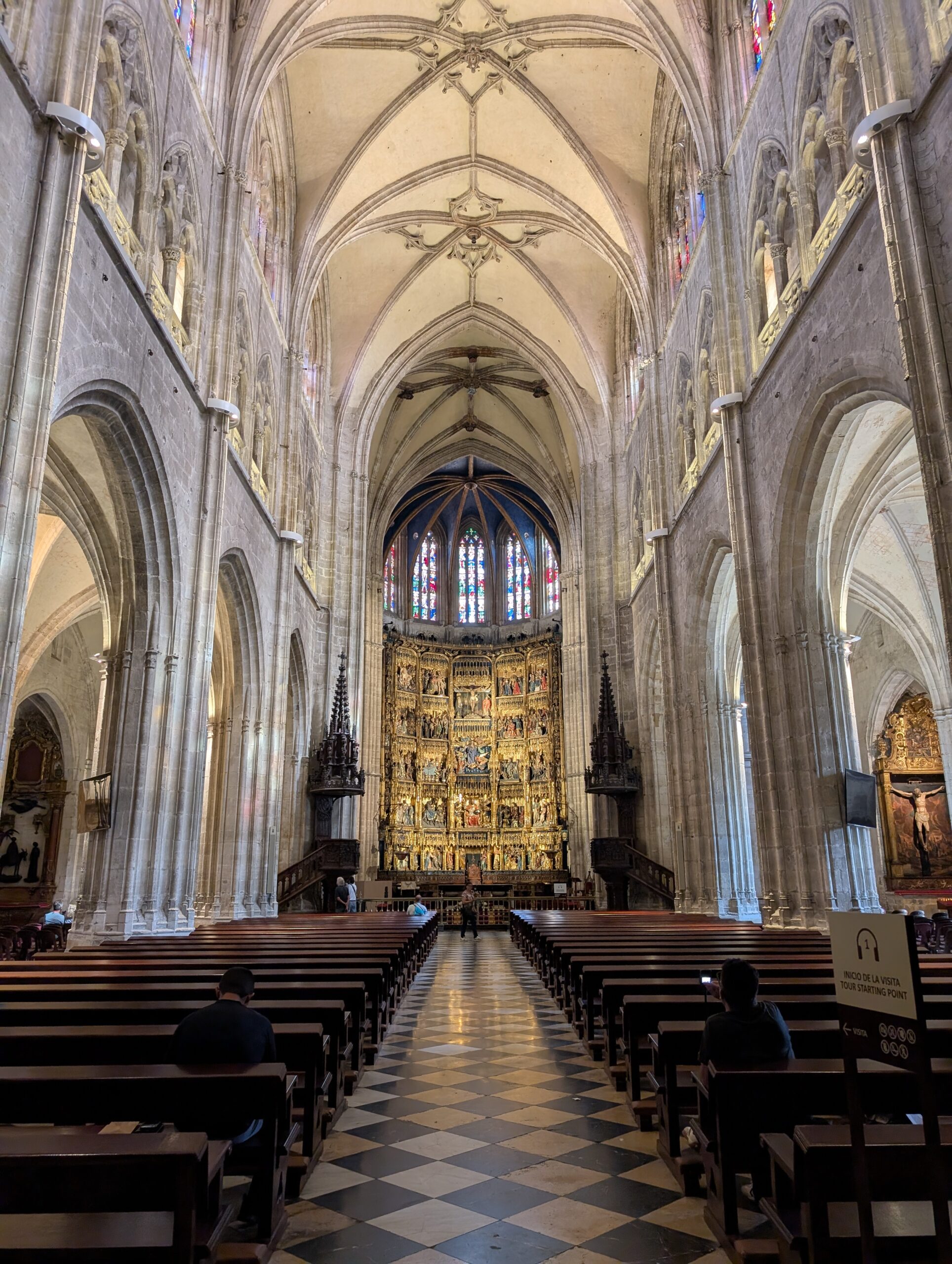
Oviedo is quite walkable and full of a mix of sand-colored stone buildings. We picked up foodstuff – breakfast bars, water and sandwiches – for tomorrow. The main goal for today was to visit the San Salvador Cathedral, the spiritual starting place of the Primitivo. The saying goes that “He who goes to Santiago and not to El Salvador, visits the servant and forgets the Lord.”
It was also a chance to start the habit of getting our credentials stamped. Each day we are on the road, we need to collect one stamp (“sello”) to document our journey. The last 100km (starting at Lugo for us), we need to collect two sellos each day. Churches, restaurants, hotels, and albergues – as well as other tourist stops – provide them. San Salvador was the ideal place to start.
Leave a Reply