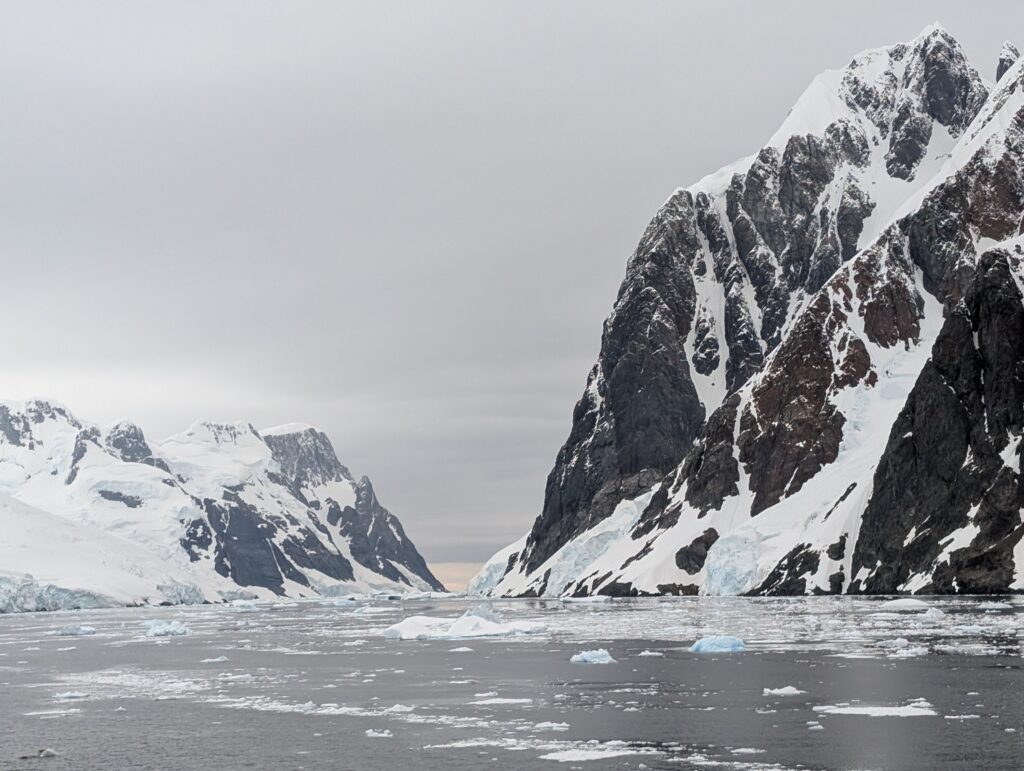
Our good fortune had to run out sometime. All in all, it was a minor inconvenience and not without charm …and whales.
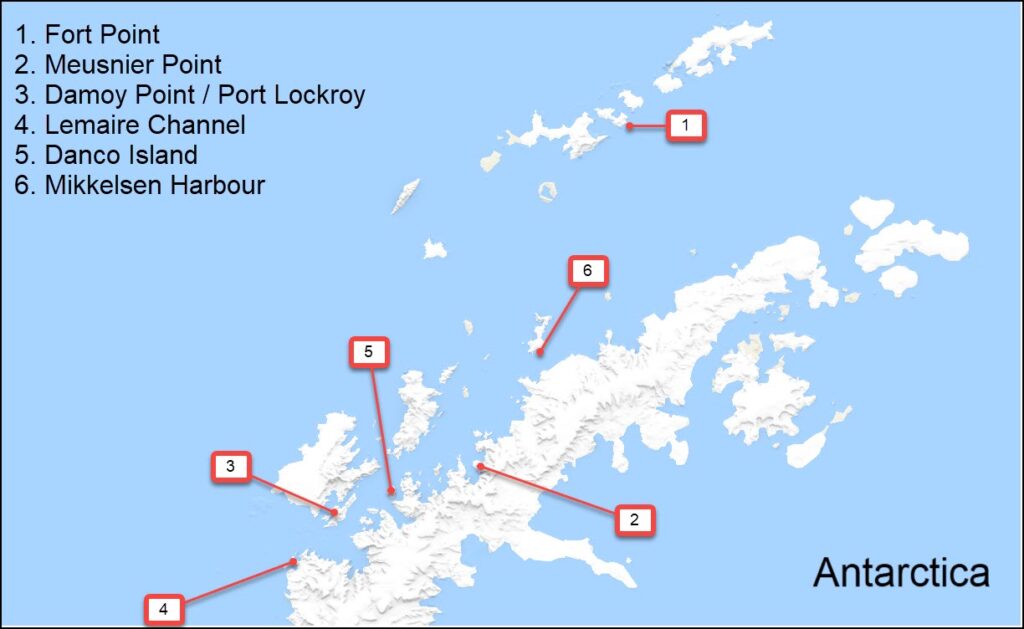
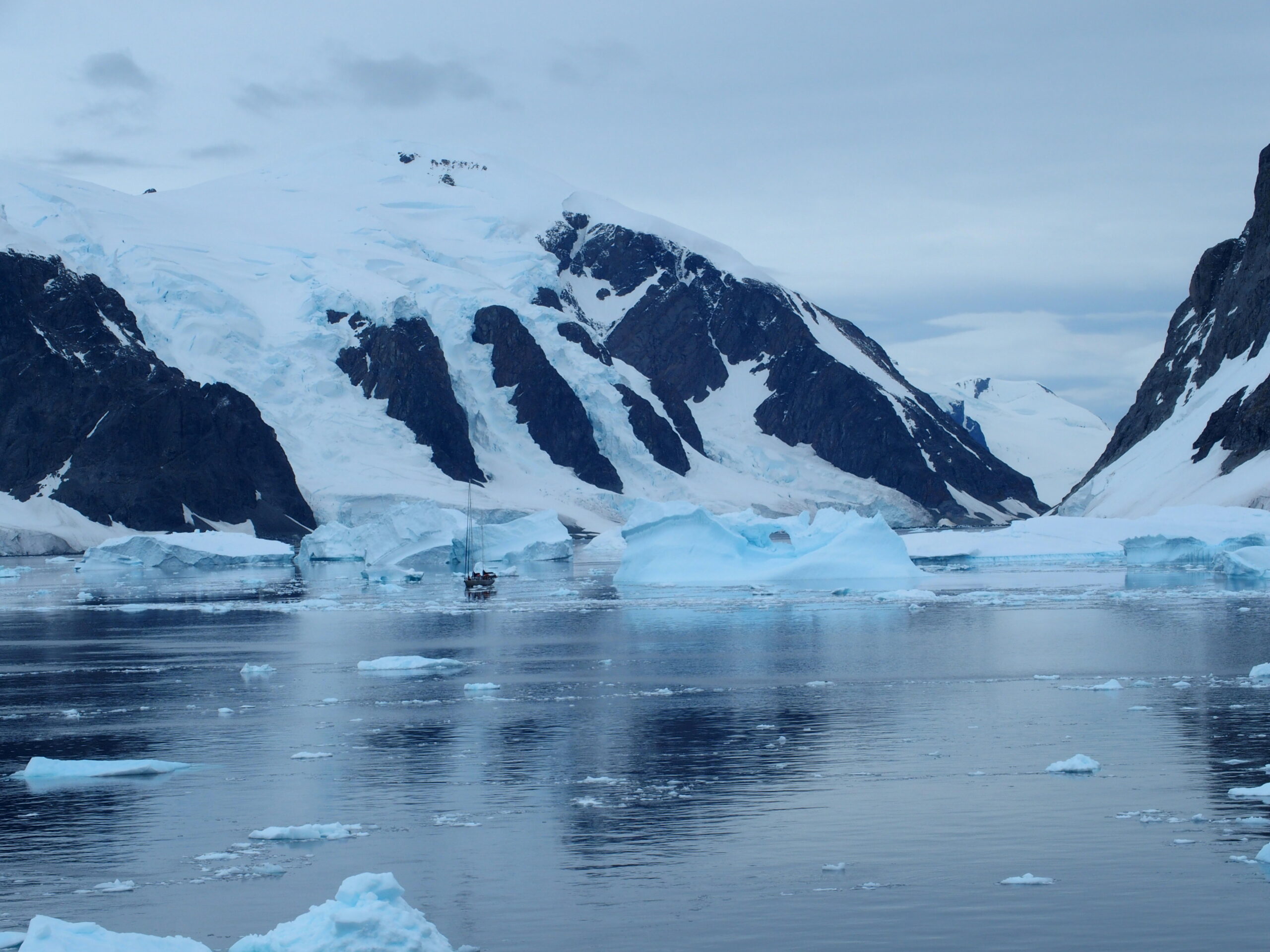
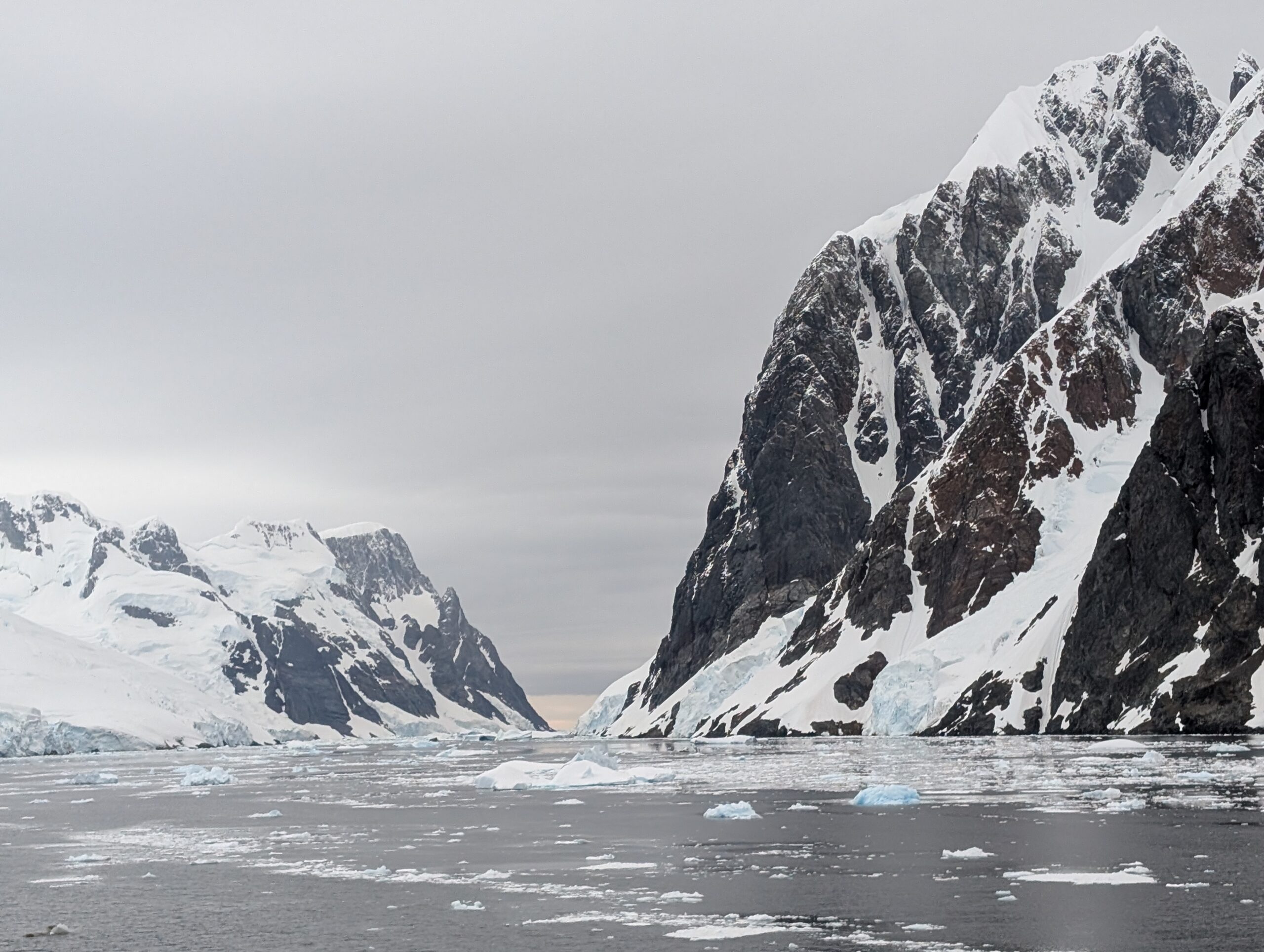
The plan tonight was to transit the Lemaire Channel. This channel is a popular site in Antarctic cruises. It threads between the mainland and a neighboring island. The scenery and unusually calm waters are important parts of its popularity. It can also fill with icebergs – which was our challenge this evening.
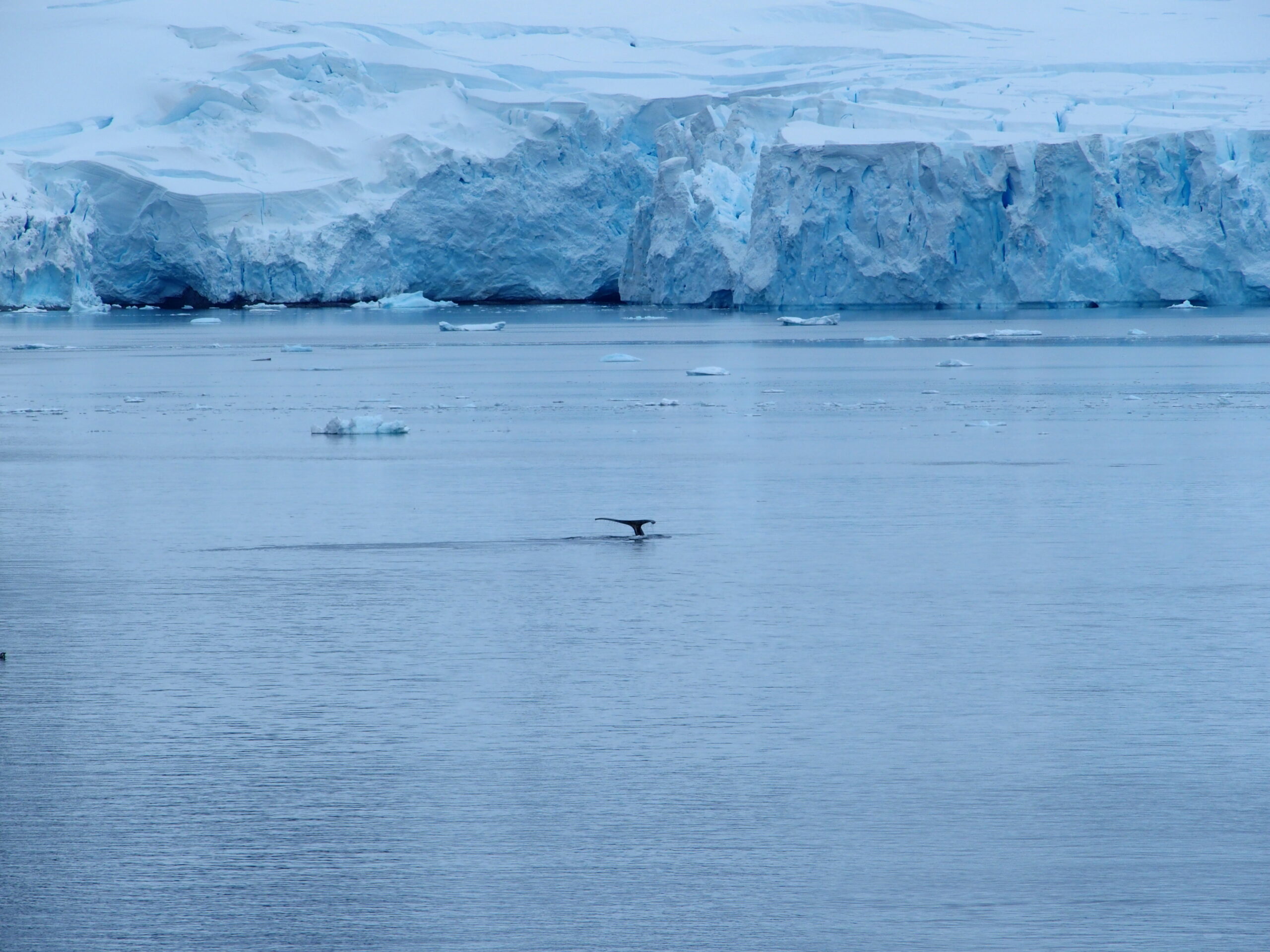
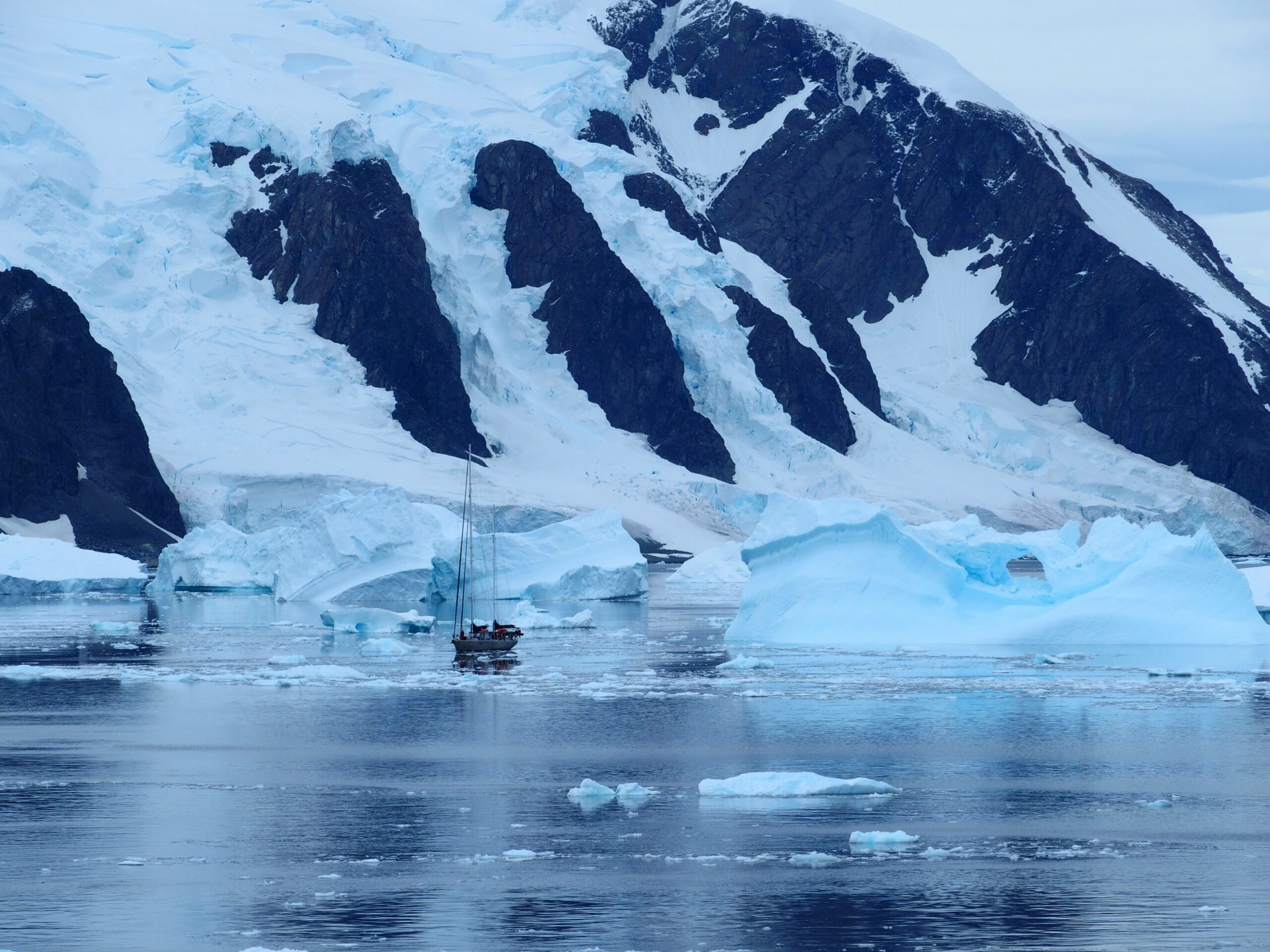
We paused at the mouth of the passage while the captain evaluated the options. Since we are traveling rather late in the Antarctic summer, ice is more of a factor. Eventually, the captain determined it was not wise to proceed and we turned around. Although we did not get to traverse the Lemaire Channel, it was not a complete loss. We passed the time watching the many humpback whales lazily patrolling the bay. There was also a much smaller ship weaving between the icebergs – almost like a sailing ship – that transited the Channel from the south.
That stuff in the water
Part of our shipboard education was learning about icebergs. Naturally, there’s an entire vocabulary around their classification. Why wouldn’t there be?
The first set of terms has to do with their size:
| Term | Height (m) | Length (m) |
|---|---|---|
| Growler | <1 | <5 |
| Bergy Bit | 1–5 | 5–15 |
| Small Iceberg | 5–15 | 15–60 |
| Medium Iceberg | 15–45 | 60–122 |
| Large Iceberg | 45–75 | 122–213 |
| Very Large Iceberg | >75 | >213 |
I am particularly fond of the classification of “bergy bit” as it sounds very much like a term I would come up with. In fact, I was fairly certain that this was a joke the crew was playing on us until I looked it up.
Then there is the shape of the iceberg. Most of them classify as “tabular” because of their flat, mesa-like appearance. But there are also loads of others like “domes” and “pinnacle” all referencing how they look. Personal favorite is “drydock” since part of the berg has eroded allowing a channel of water to flow in between.
And… if you are a REALLY big iceberg (greater than 20 square nautical miles), you get a name. The world’s largest ever iceberg A23a is currently en route to South Georgia, just like us. The naming convention is
| Region where the berg was first discovered | A = 0-90W (Bellingshausen/Weddell Sea) B = 90W-180 (Amundsen/Eastern Ross Sea) C = 180-90E (Western Ross/Wilkesland Sea) D = 90E-0 (Amery/Eastern Weddell Sea) |
| Sequential number | For example, the 4th iceberg from a particular region would be number 4 |
| Calving value (where applicable) | If an iceberg calves from another iceberg and the resulting calved berg meets the size qualifications, it is assigned a letter |
So “A23a” was the 23rd ginormous iceberg spotted in the Weddell Sea area. It is the remaining calf from an even larger berg.
The more you know…
Whales
Another part of our education was learning how to identify whales out in the ocean. While whales quite obviously look different – e.g. each species has a distinguishing dorsal fin – they also have a distinctive blow – the plume of air and mist when they exhale. The lecture provided us with a diagram to help us identify them. The majority of what I have seen is humpbacks – their blow has a “bushy” look to it. Right whales actually have two plumes.
The fluke – or tail – of a humpback is uniquely distinctive, like a fingerprint. If we took a clear enough picture of a fluke we could submit it to a website called Happywhale. Happywhale is a project that tracks whales (originally, only humpbacks) based on crowdsourced data. People submit their whale pictures – including the date and location – and the tool builds a database on the history and migration of that specific creature. If you are the first one to see a specific whale – one that is “new to science” – you can name it. For a fee, naturally.
Postscript: Our fellow passengers managed to capture a couple “new to science” humpbacks on this trip.
Leave a Reply