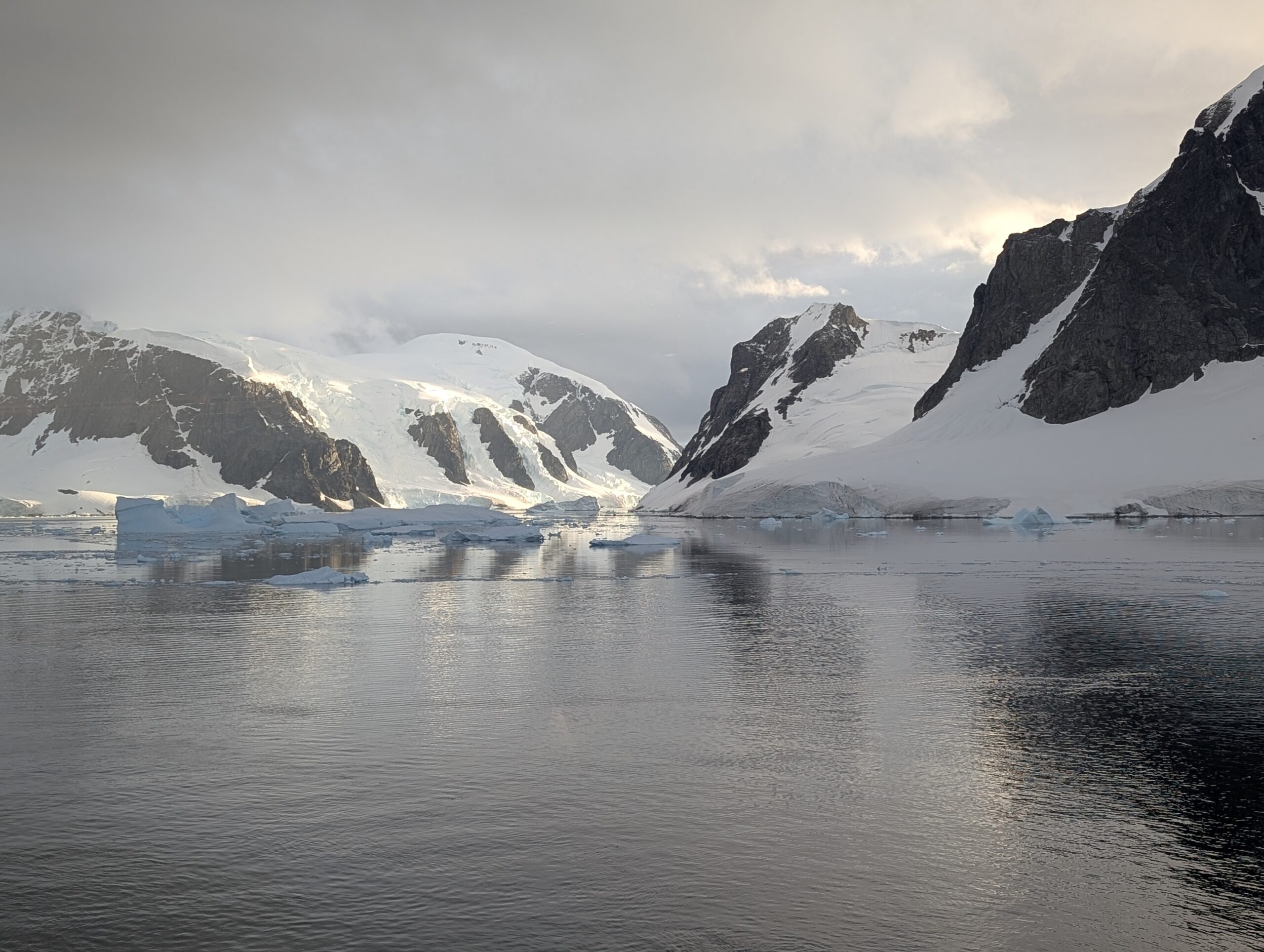
Sometimes the most fascinating thing to do is look out the window. It may all just be rock, water, and ice, but it is still amazing to find ourselves here.
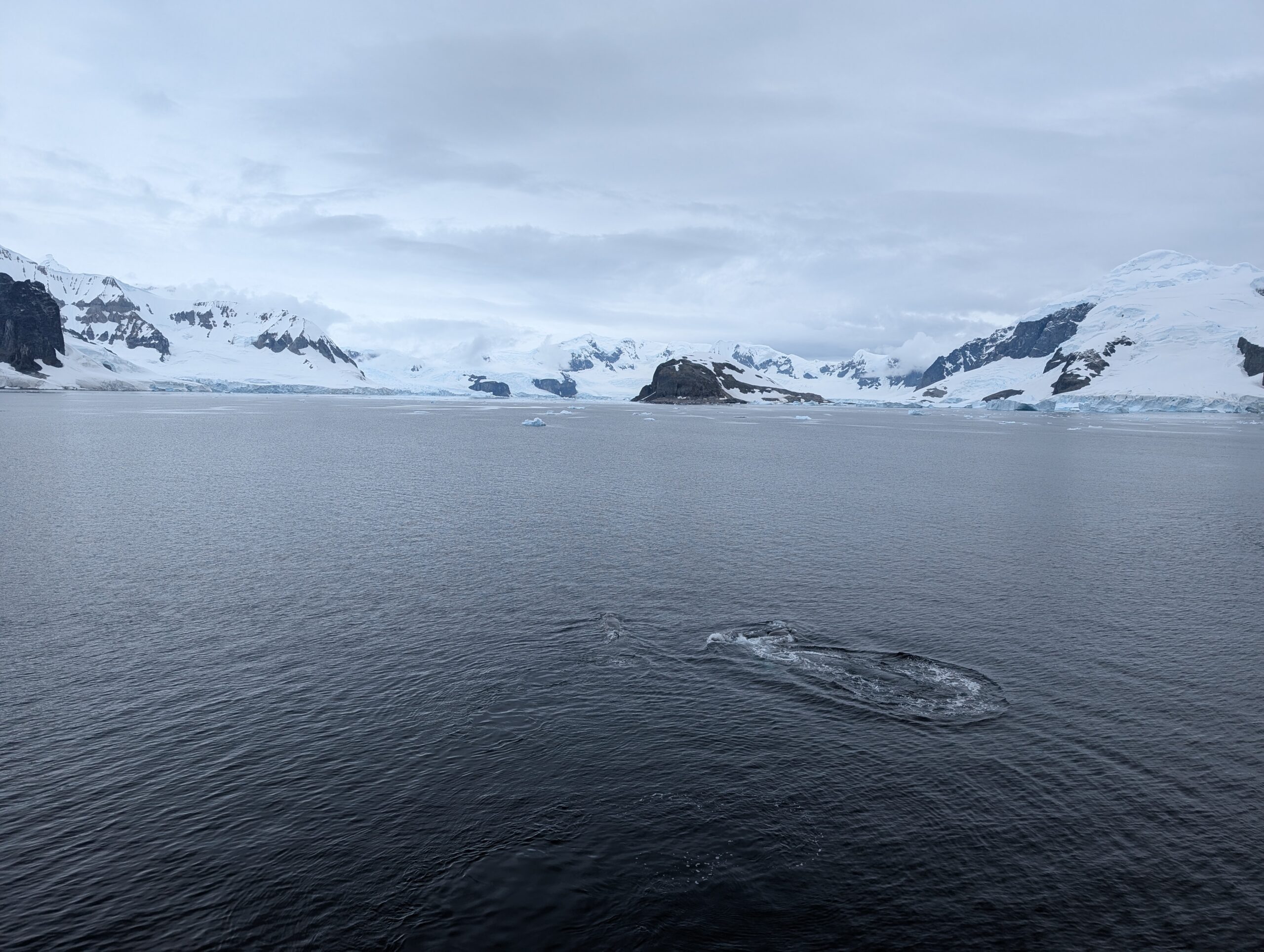
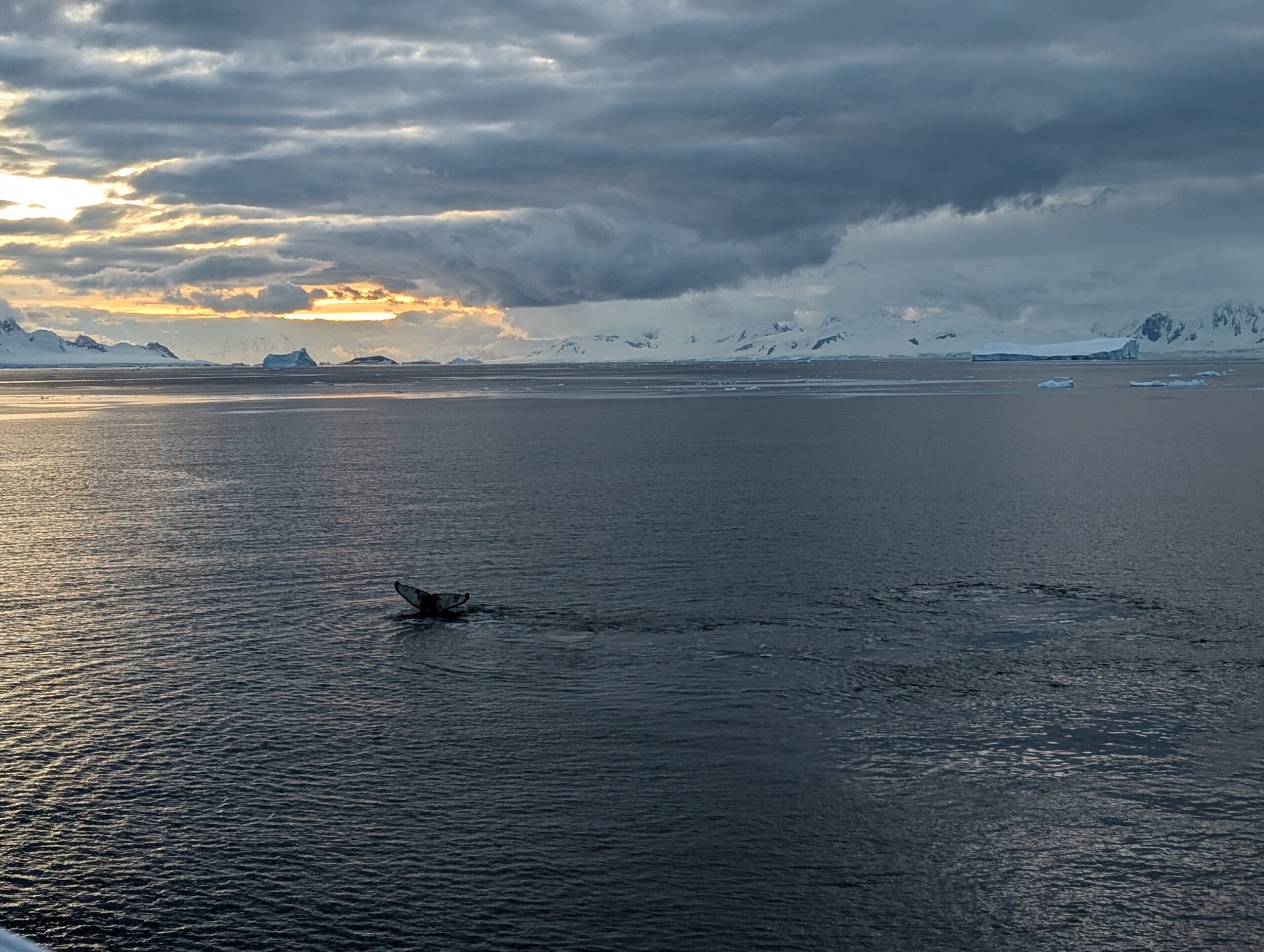
Since we had an earlier event today, we chose to have breakfast in the room. As one of the crew came to collect our stuff, we stood transfixed at the three humpback whales “logging” outside our window. Even though we have experienced this already on this trip, it is no less fascinating each time. We insisted she pause and take a look out the window. Her joy and surprise was infectious. Sharing this moment brightened the whole experience exponentially.
It is difficult to imagine growing weary of these sights.
We learned that humpback whales can hunt in a pack using bubbles to corral their prey. The whales in the pack will circle their target exhaling into the water to create a barrier of bubbles. This “net” confuses and confines the prey into a specific area. One whale will then scoop up the fish and krill trapped in the center into its mouth. Rinse and repeat.
We got to see this firsthand at sunset tonight as several packs of humpbacks were feeding alongside the ship. Well over a dozen. While watching them up close was stunning, the best part was the excitement in the voice of our Expedition Leader when she announced the number of whales nearby. It is thrilling for us to see since it is a new experience. I loved that her joy in seeing these amazing sights has not faded.
Editor’s note: By the end of the cruise, the crew reported spotting over 80 humpback whales.
Danco Island
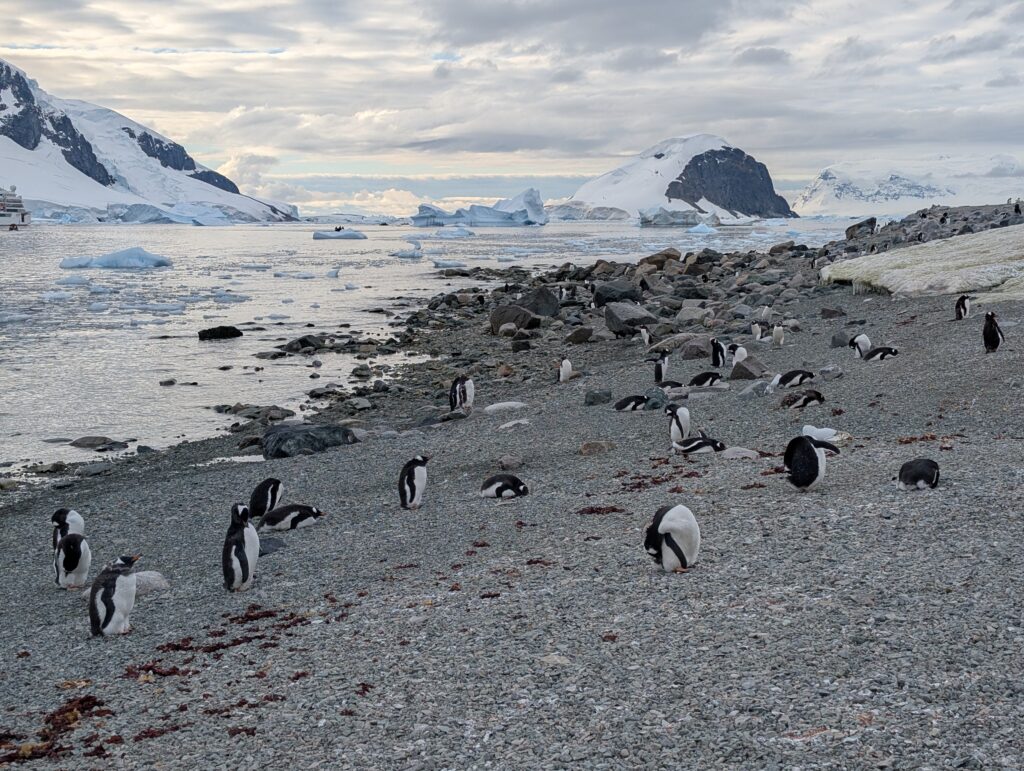
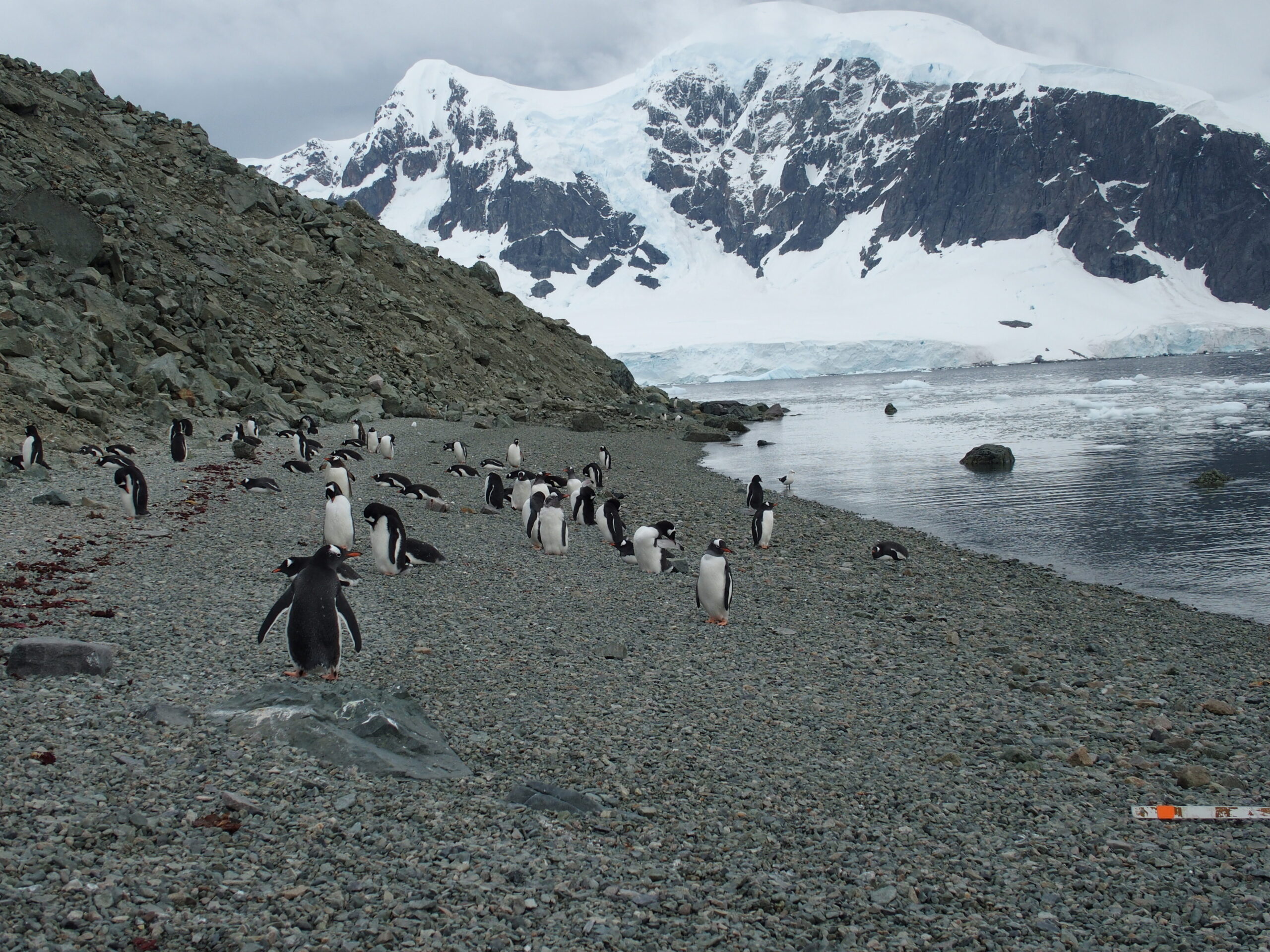
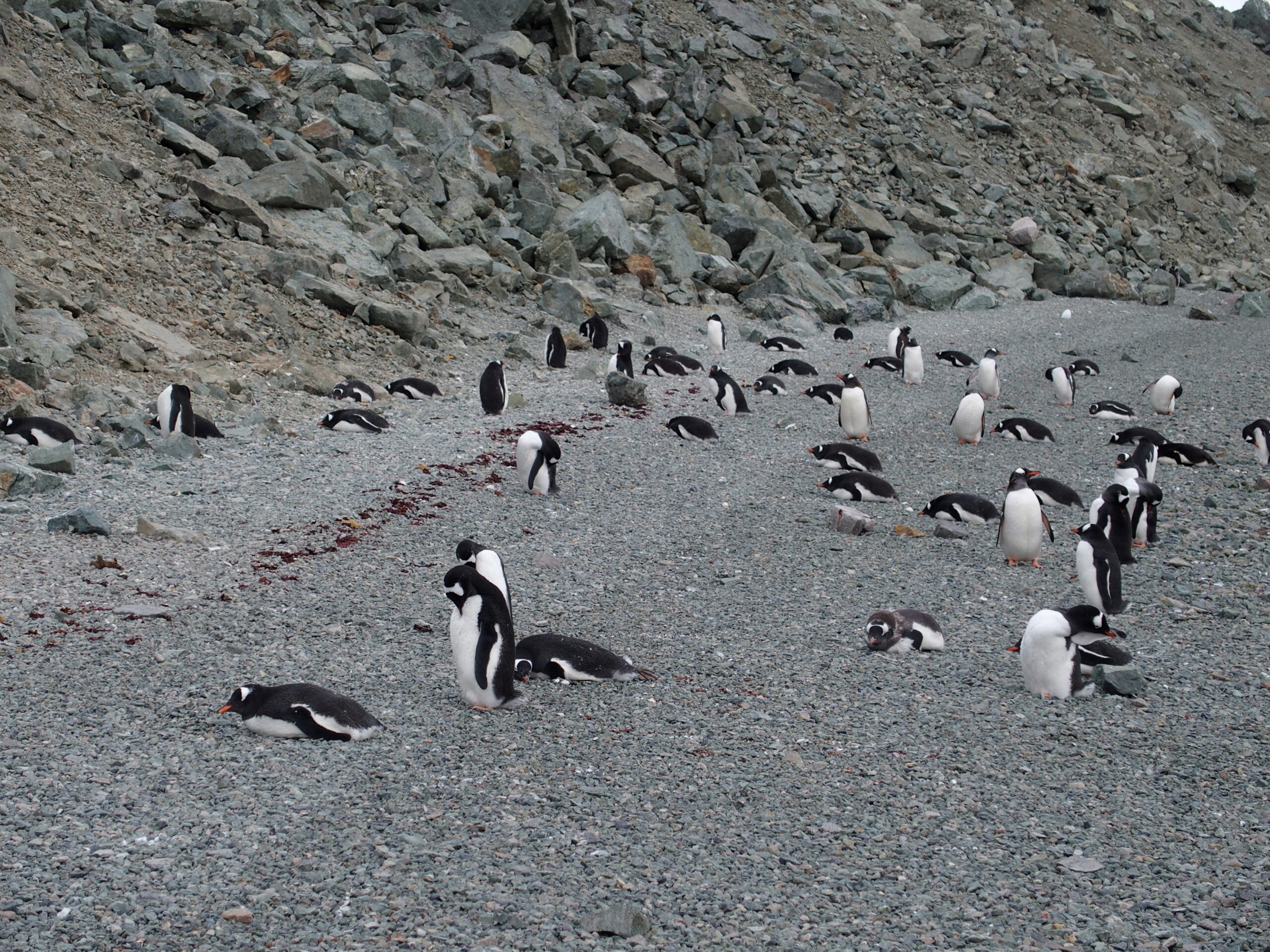
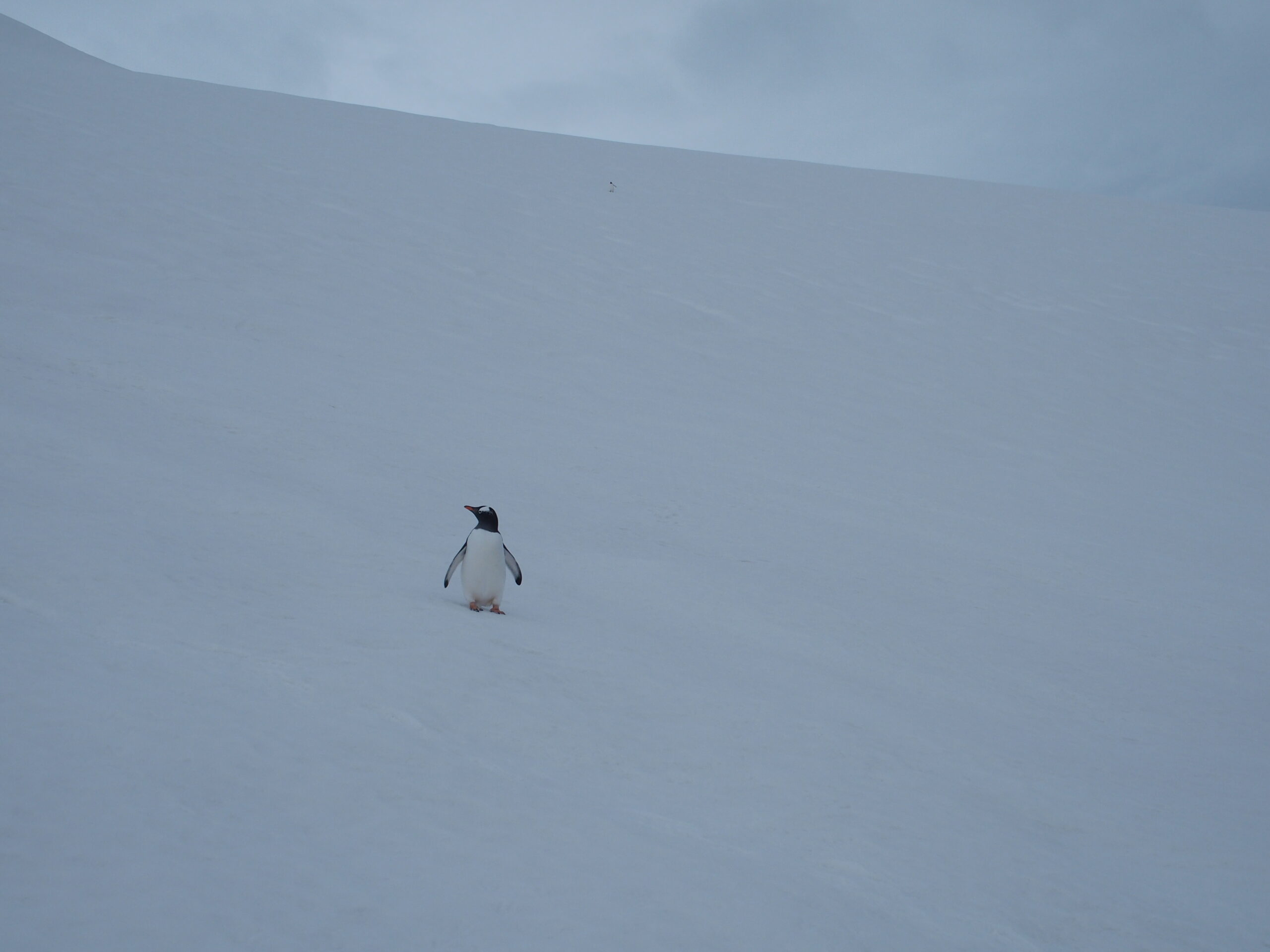
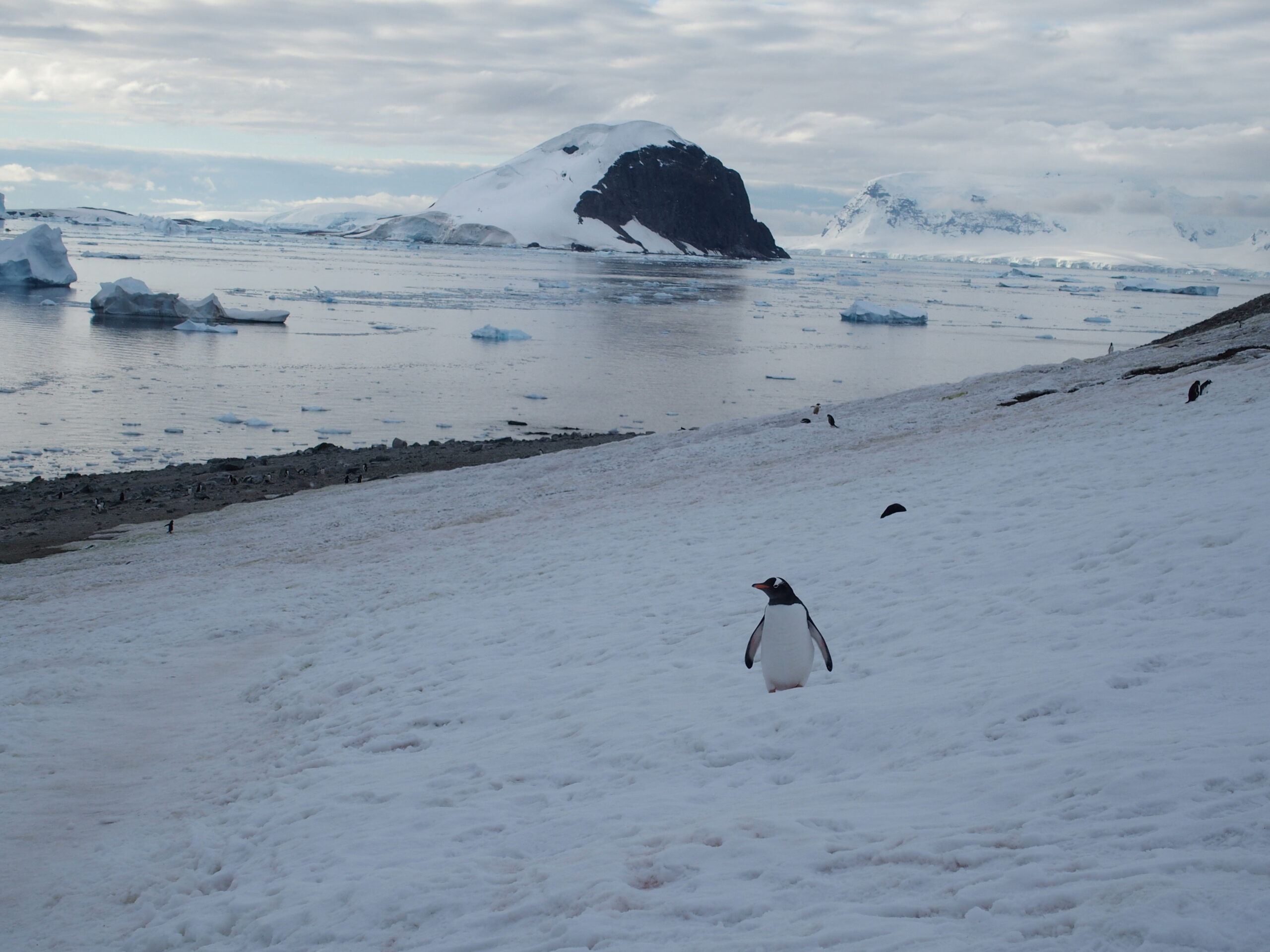
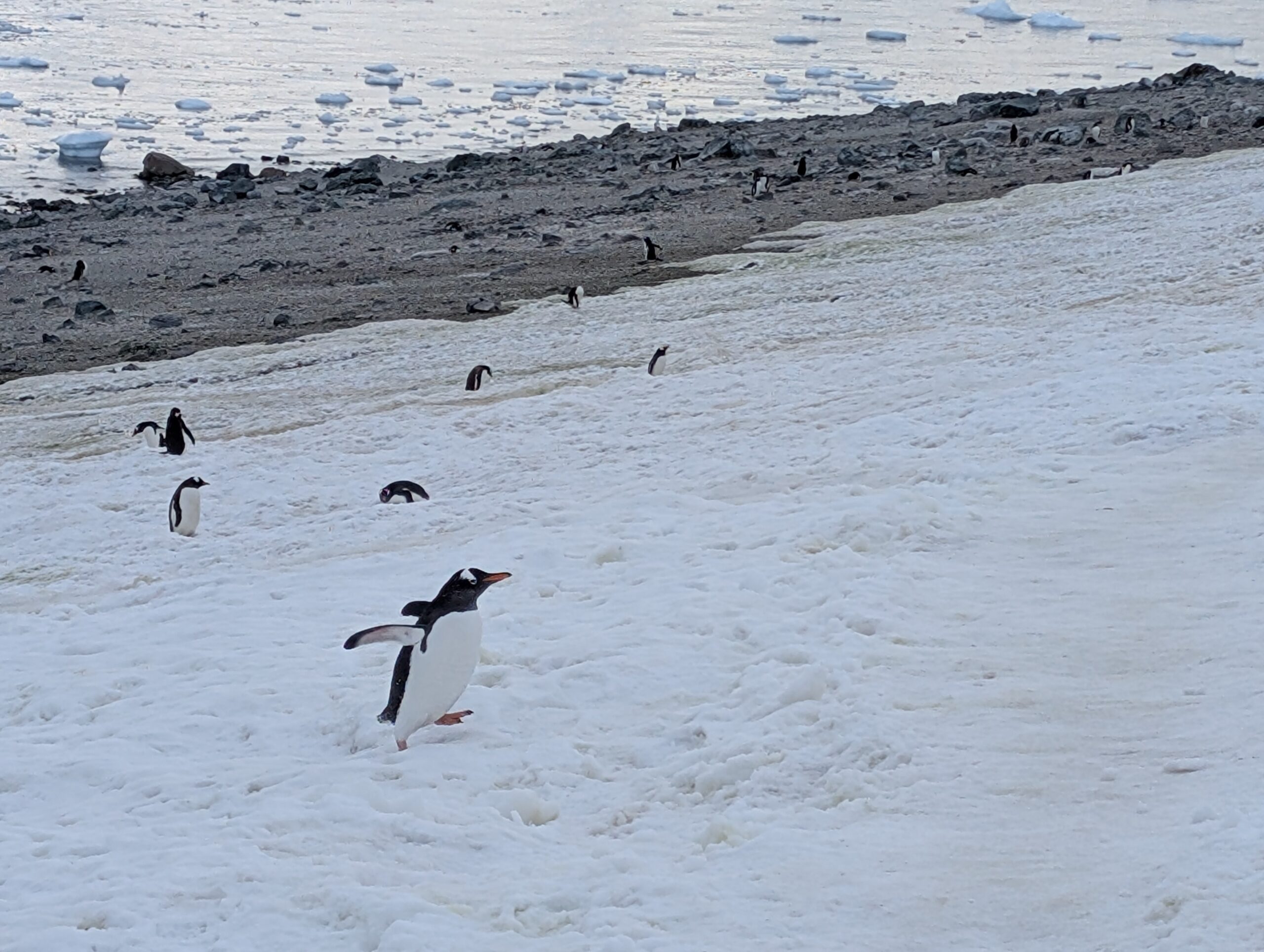
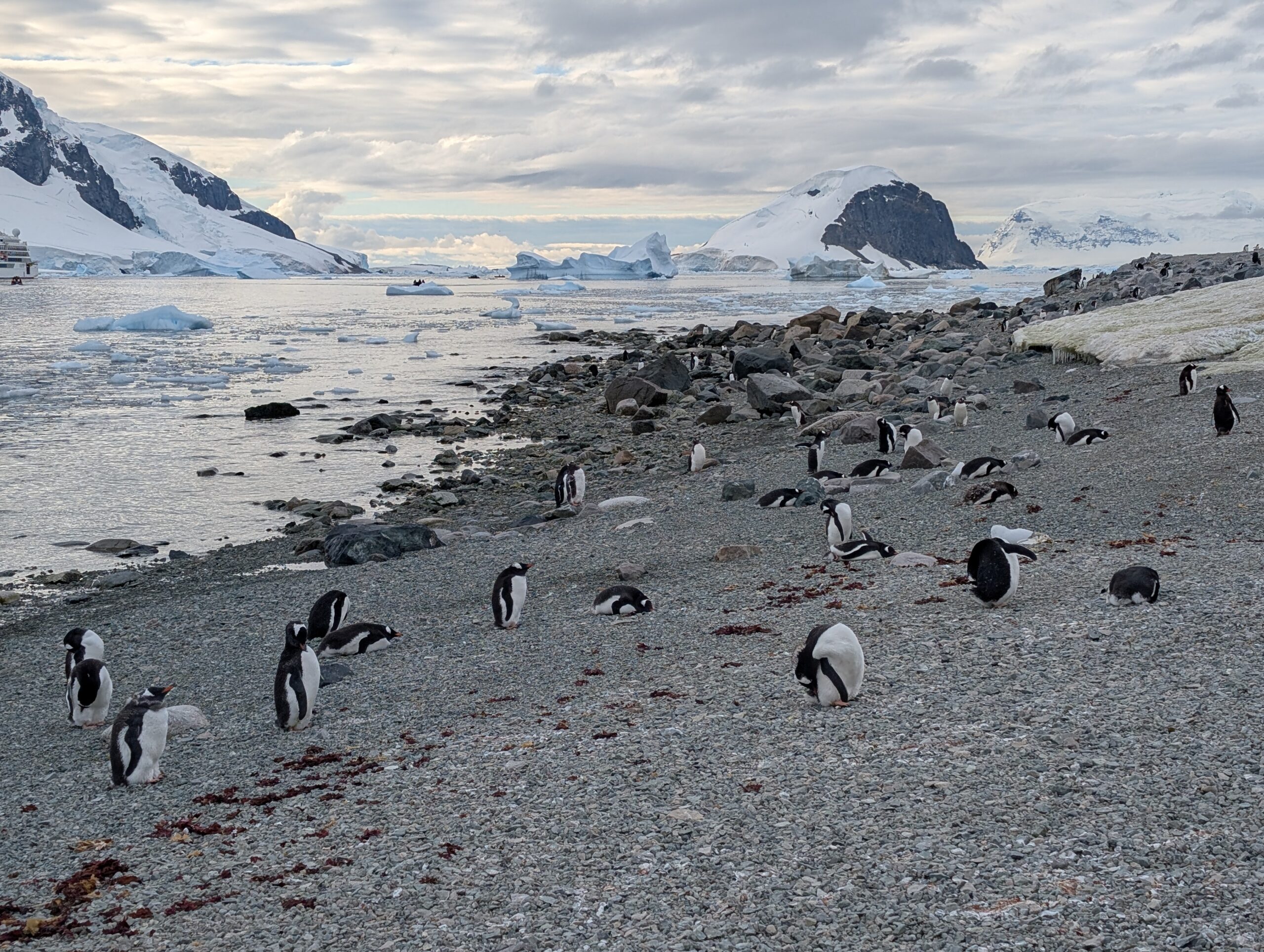
Today’s landing was on Danco Island to see its Gentoo penguin rookery. The amusing part of visiting the wildlife is how disinterested and annoyed they are by our presence.
The Expedition Team makes an initial pass of the landing site, drops off the emergency gear, and defines the area we can explore. The wildlife, of course, has no such restriction. The penguins took little notice of us – one proceeded to lie down and begin a nap along the path we were walking – but seemed quite interested in the metal poles the crew used to determine the off-limits area.
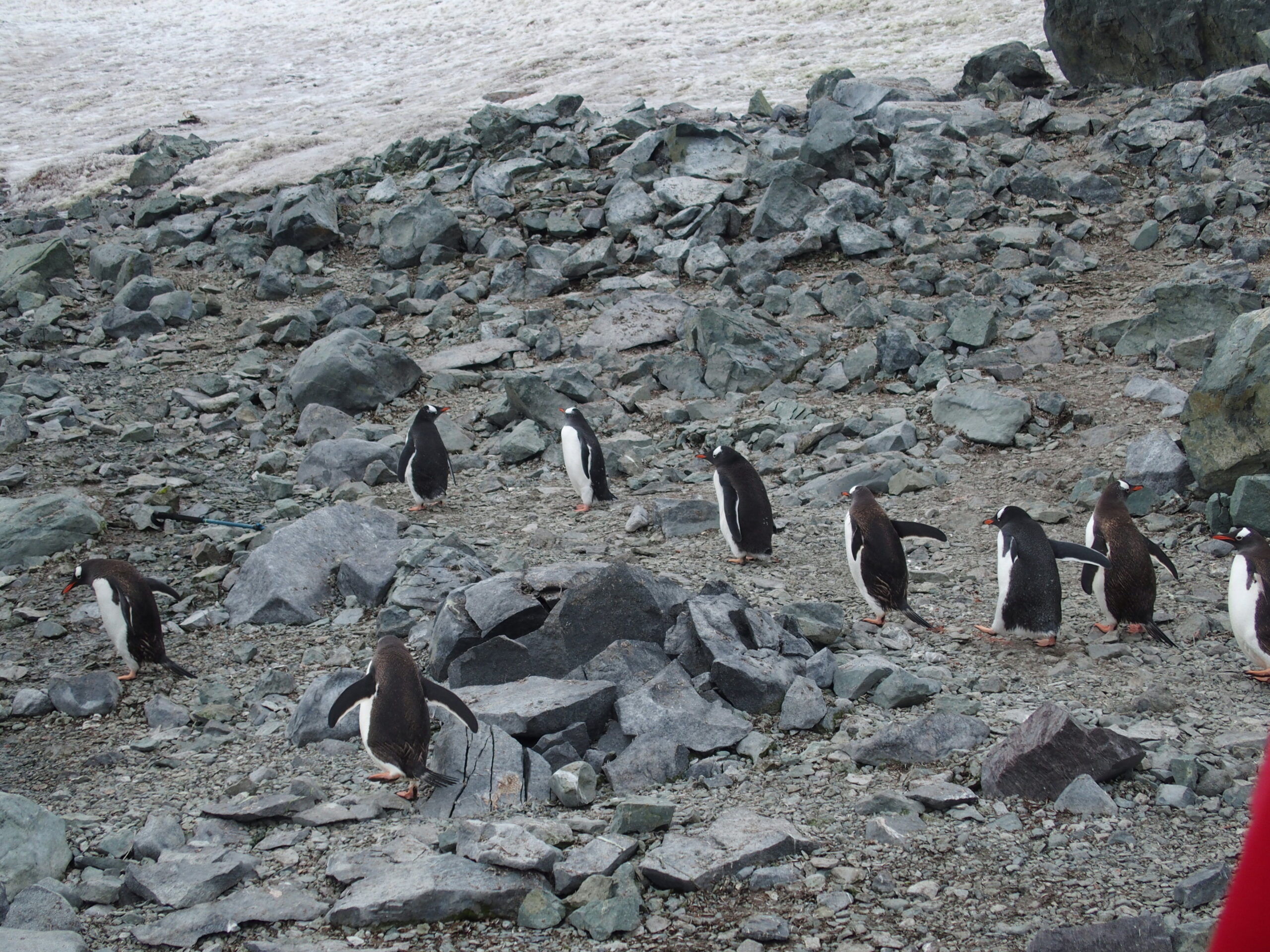
Every so often, a parade formed. All of us trespassers were required to step aside and allow this very focused collection of penguins through.
Weather balloon
This ship was constructed while the world was still in the throes of the COVID-19 pandemic. No one knew what a post-pandemic world would look like. With the expectation of potential passenger testing, the design of the ship included laboratory space. Since mandatory testing did not become a requirement, the space is now used for… well, science. The daily briefings often include science team members describing their projects.
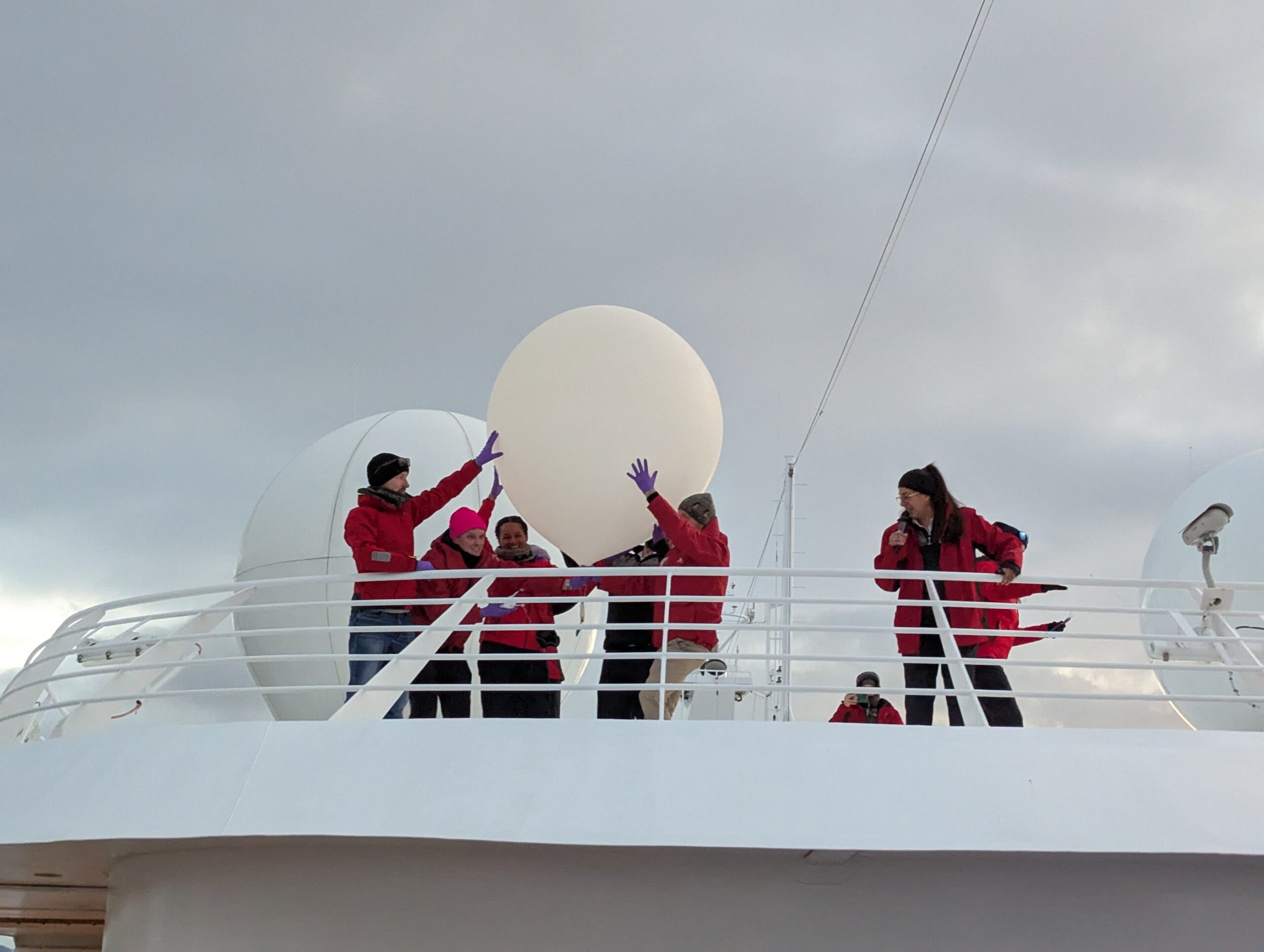
Today’s activity was a weather balloon launch. As in: really collecting actual science data to use in forecasting models. Anna attended the launch. I learned weather balloons had specific launch times – the value of data collected at the same time across different locations is greater.
The current presidential administration in the US puts lower value on science – especially collaborative science between different nations. The science team professionally declined to speculate on long term support for this data collection.
Postscript
When we returned home, I sat down to read Madhouse at the End of the Earth by Julian Sancton (link to book at Amazon) . The book tells about the Belgian Antarctic Expedition at the end of the 19th Century (the First Mate on this crew was none other than Roald Amundsen). The ship, the Belgica, becomes packed in the ice and the crew are forced to over-winter during the long Antarctic night. The crew suffered from scurvy, poor nutrition, a rat infestation, and bouts of madness exacerbated by the excessive darkness and alien environment. Truly a fascinating read. I learned that consuming penguin meat provides trace amounts of Vitamin C. It also cured me of any desire to be a 19th Century polar explorer.
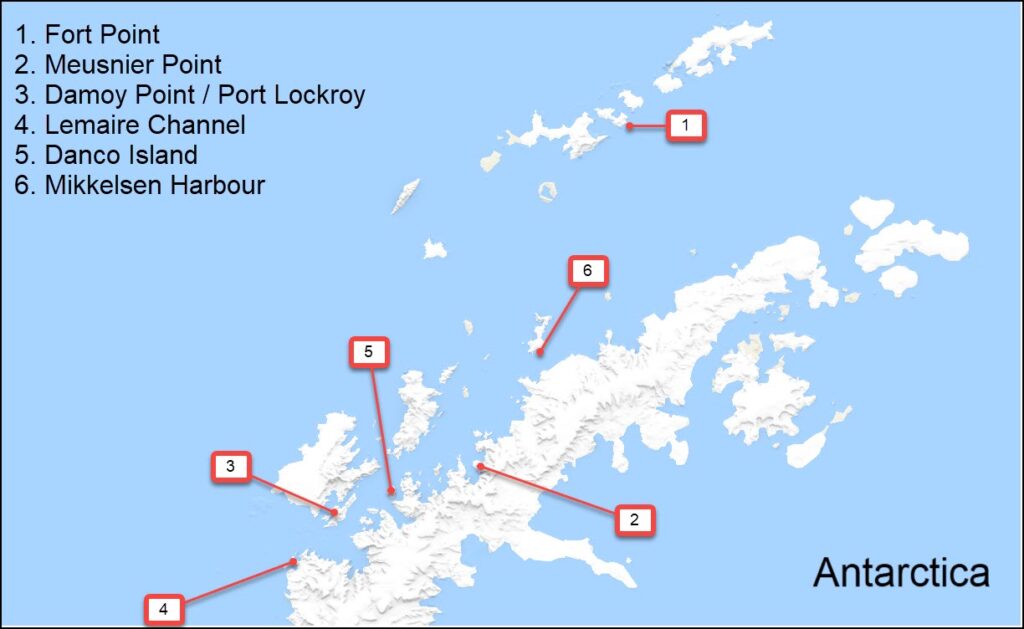
On a happier note, since the ship returned safely with (most of) its crew, they were given priority to name things they discovered. The area we sailed along the Antarctic Peninsula is the Gerlache Strait, named after the captain of the Belgica, Adrien de Gerlache. Wiencke Island, home of Port Lockroy, gets its name from a crewman who washed overboard during the expedition. Danco Island and the Danco Coast were named after another departed crew member, Émile Danco. While not a crewmember, de Gerlache influenced the naming of the Lemaire Channel after another Belgian explorer.
History comes alive.
Leave a Reply