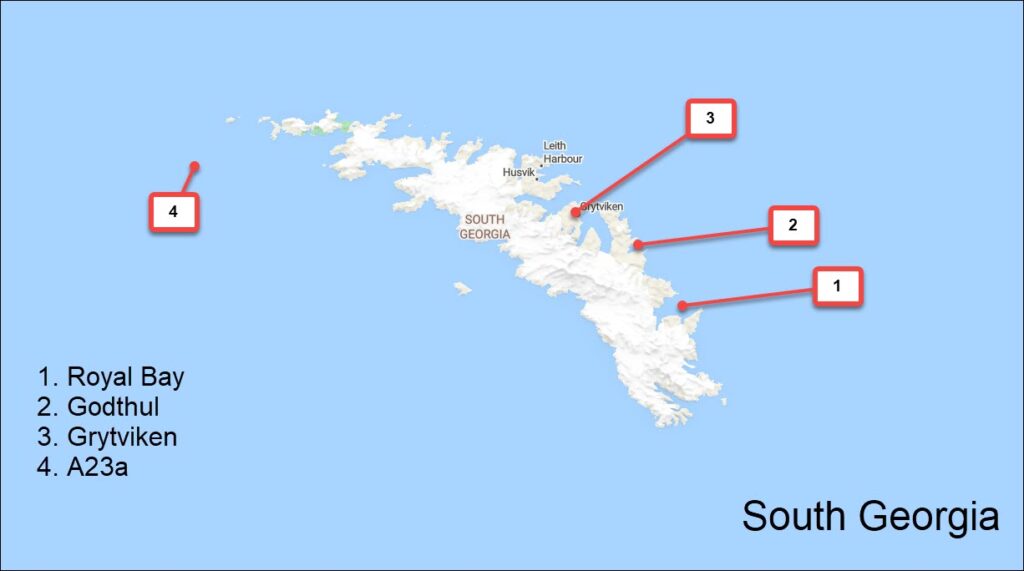
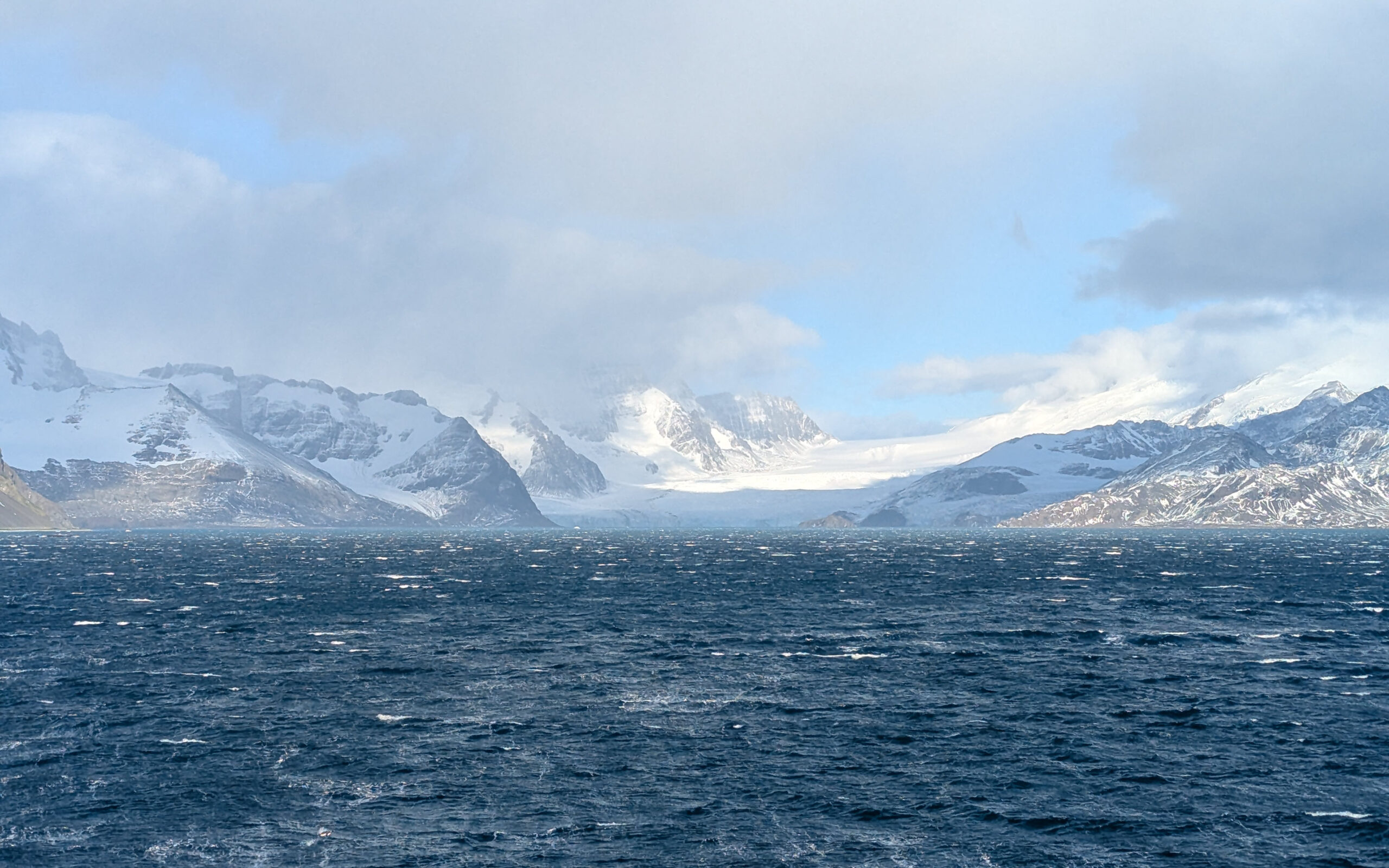
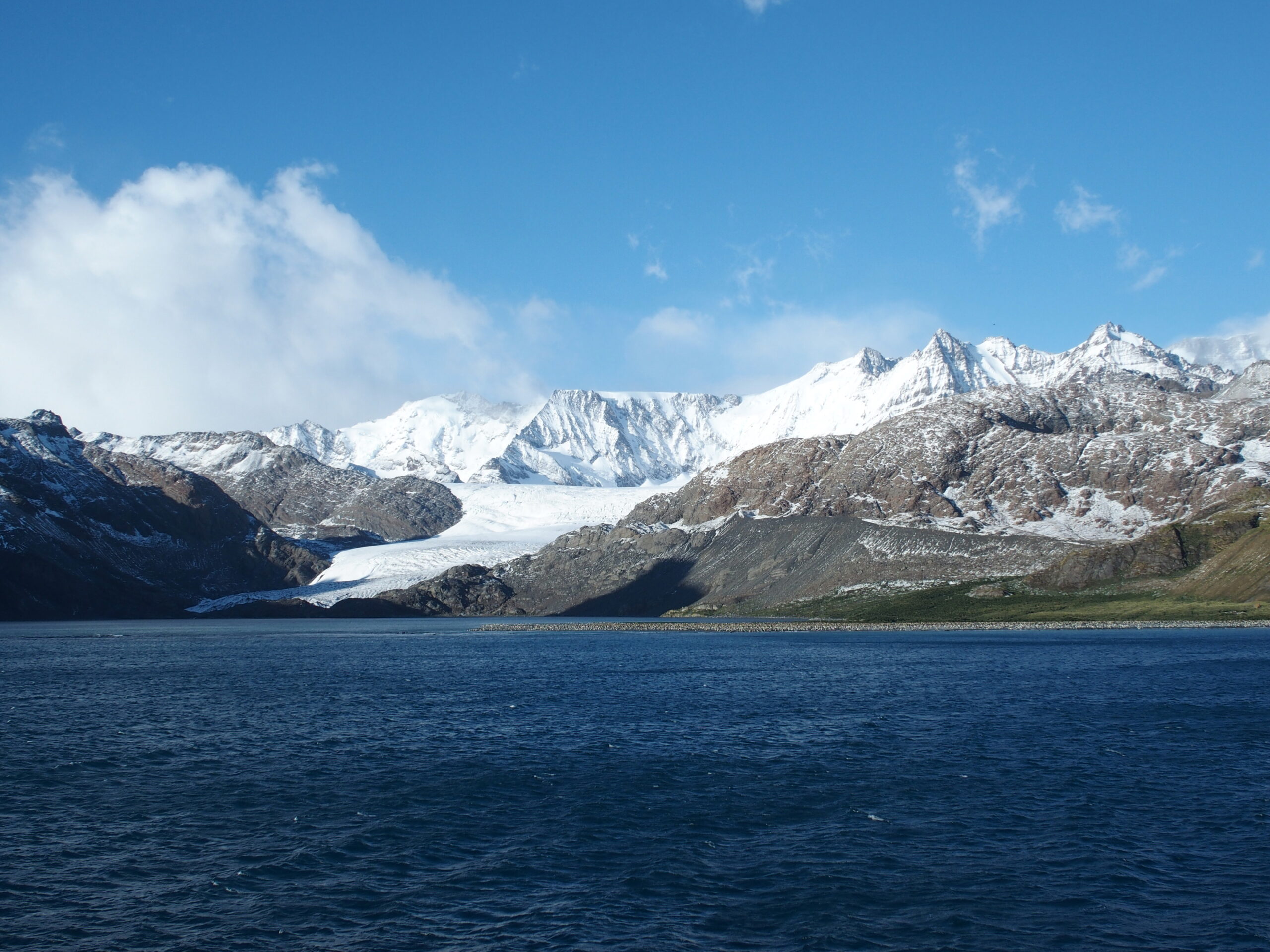
Our first glance of South Georgia presented a place as formidable as Antarctica. The harsh katabatic winds made it unsafe to remain at our initial destination of Royal Bay and we relocated further up the coast to Godthul.
Royal Bay
I never heard the term ‘katabatic winds’ prior to today. We also had the opportunity to experience them. As I understand it, the cold air from the glaciers rushing down to the surface of the water provides its intensity. It was unpleasant to be outside in and potentially dangerous for the ship to be in. Moving up the coast was wise – it was certainly more pleasant. There were certainly no outdoor activities occurring in these conditions.
A colony of King penguins mocked our weakness as we departed. Or so I choose to believe.
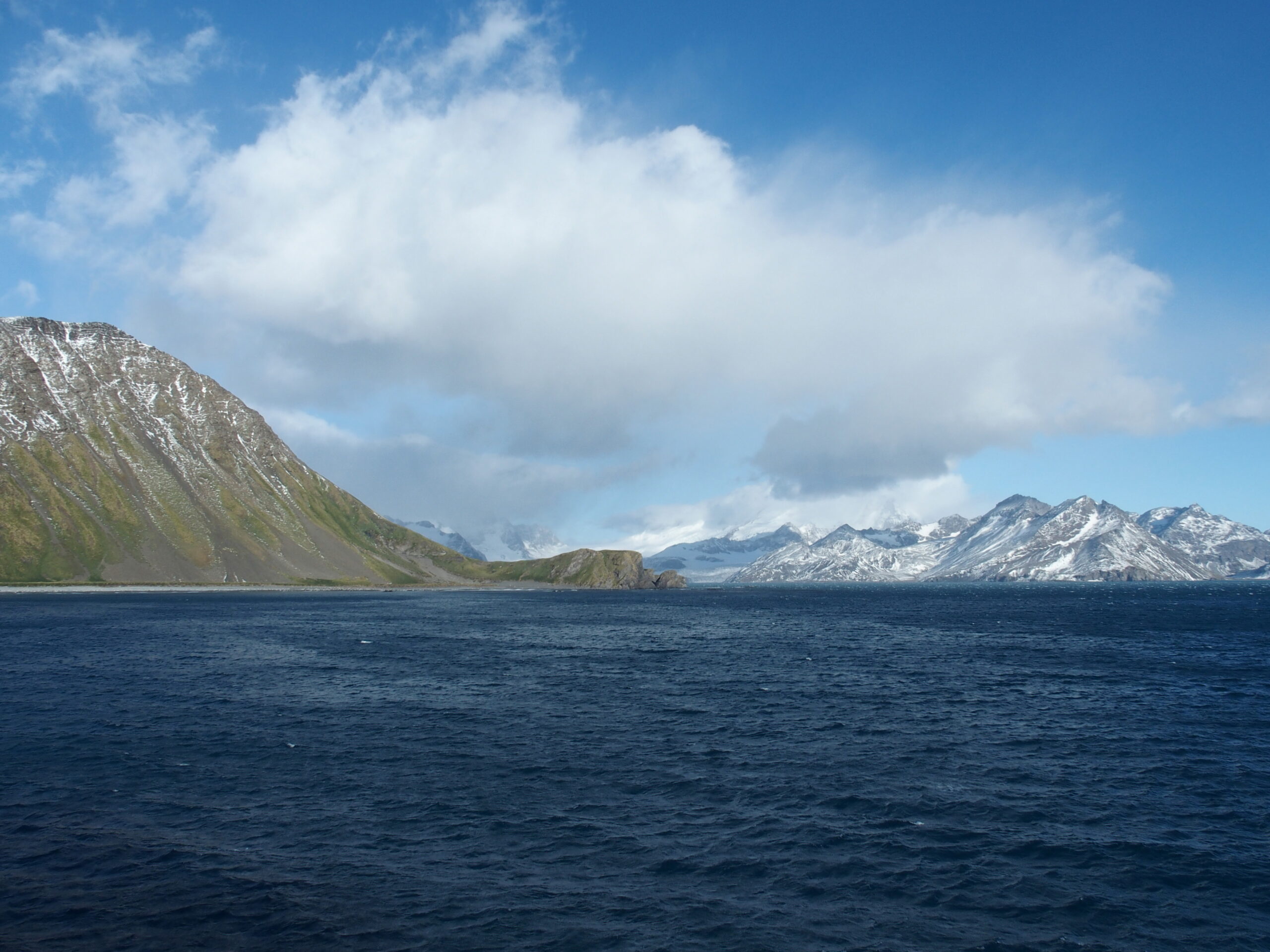
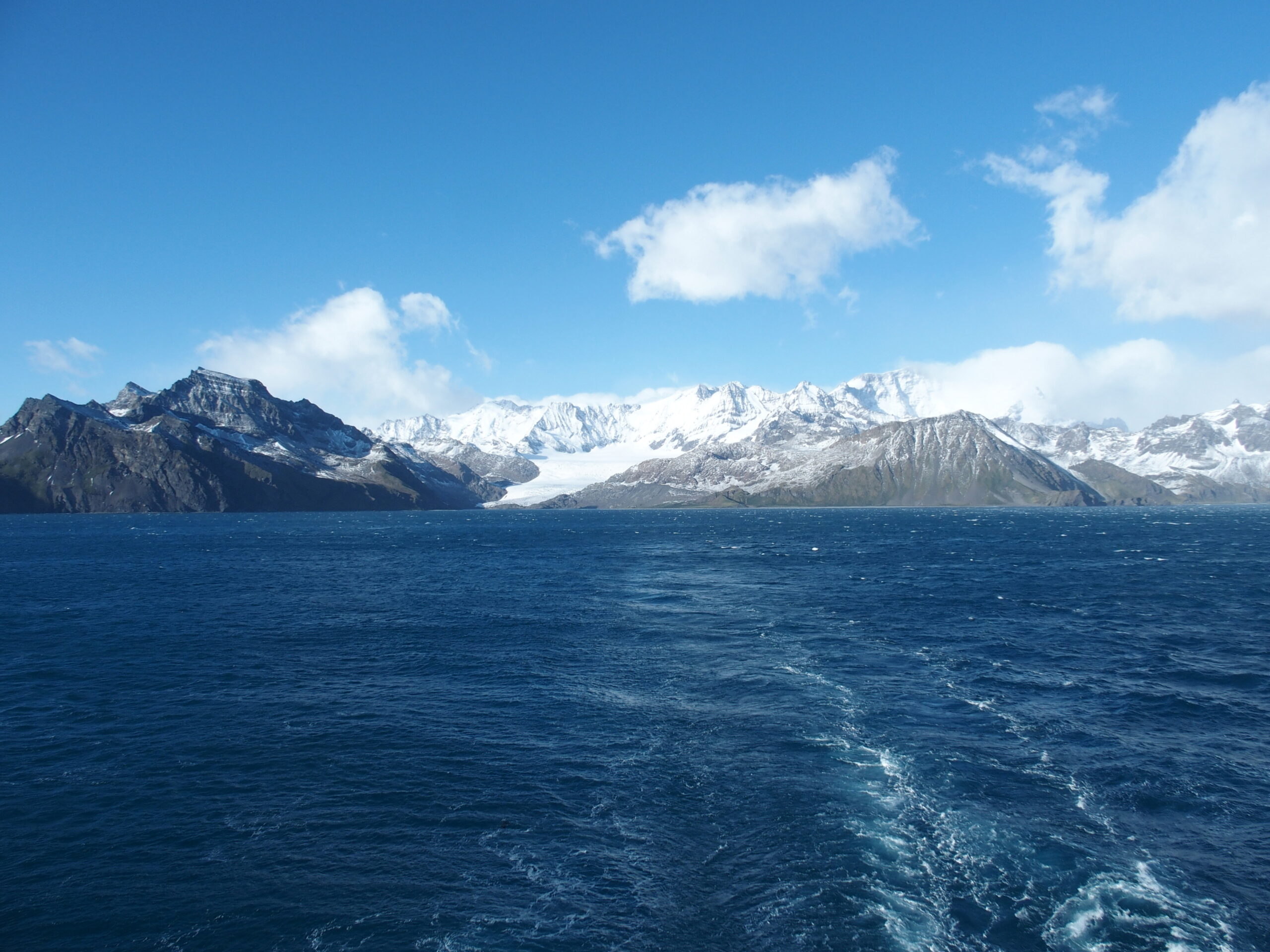
That said, the initial views were as anticipated. Clear skies – despite the winds. Glaciers tumbling into the sea with a backdrop of severe snow-capped peaks. I admit the hints of green astonished me. It shouldn’t, of course, my my brain had become so accustomed to the colors of Antarctica. I can only imagine the shock of the polar explorers encountering a shade other than black, white and blue.
Godthul
The contrast with Godthul was striking. Skies were a deeper shade – or at least friendlier. Seas calmed. We wandered on deck without jackets, enjoying the warmth of the sun. In a word, welcoming.
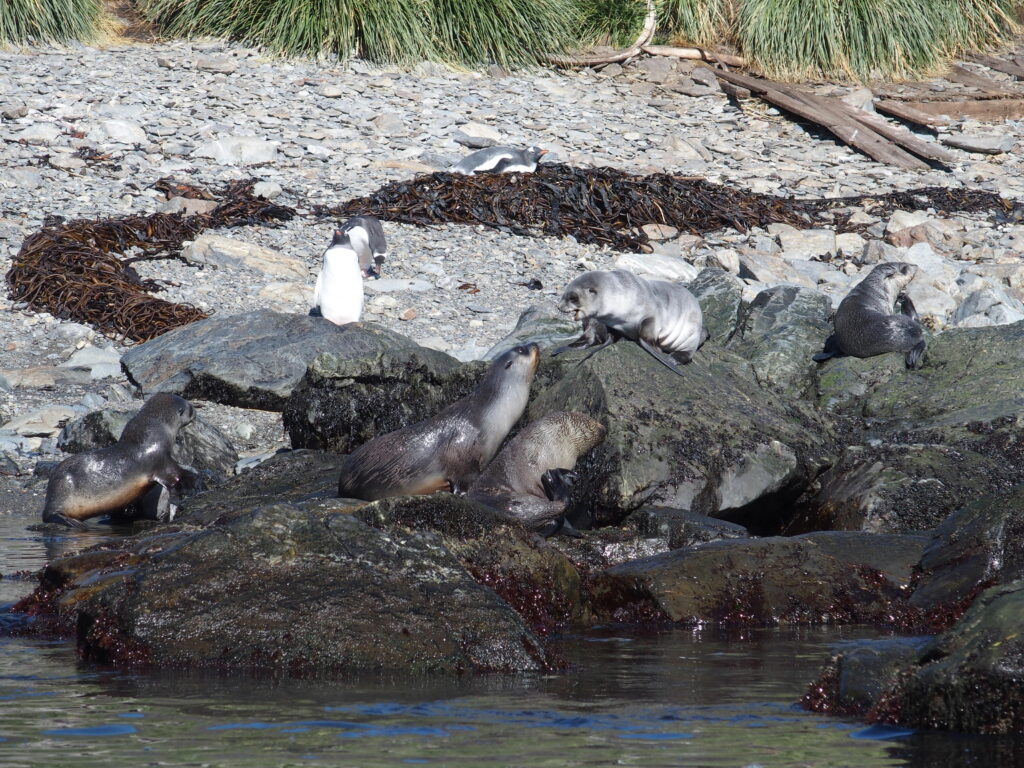
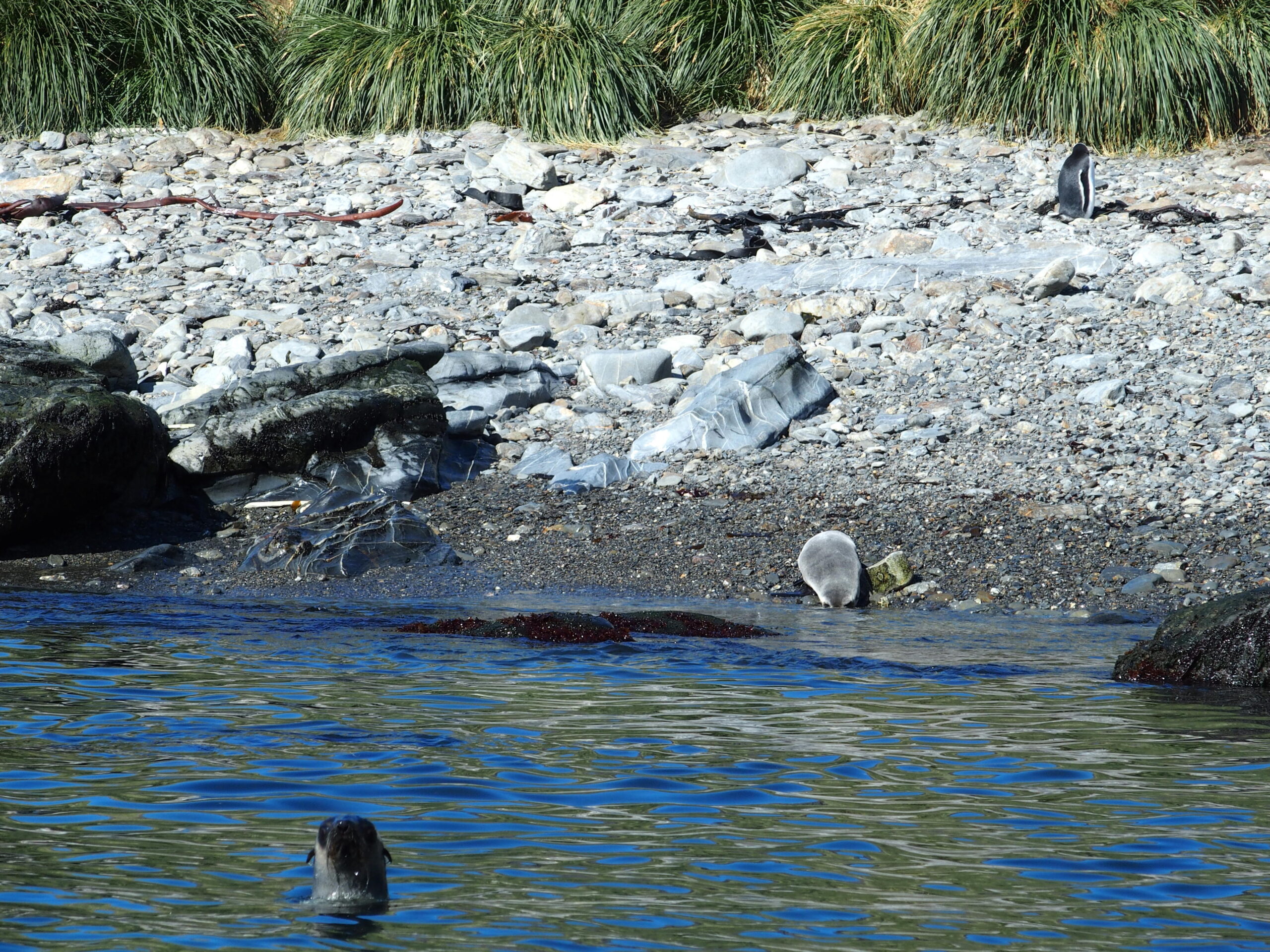
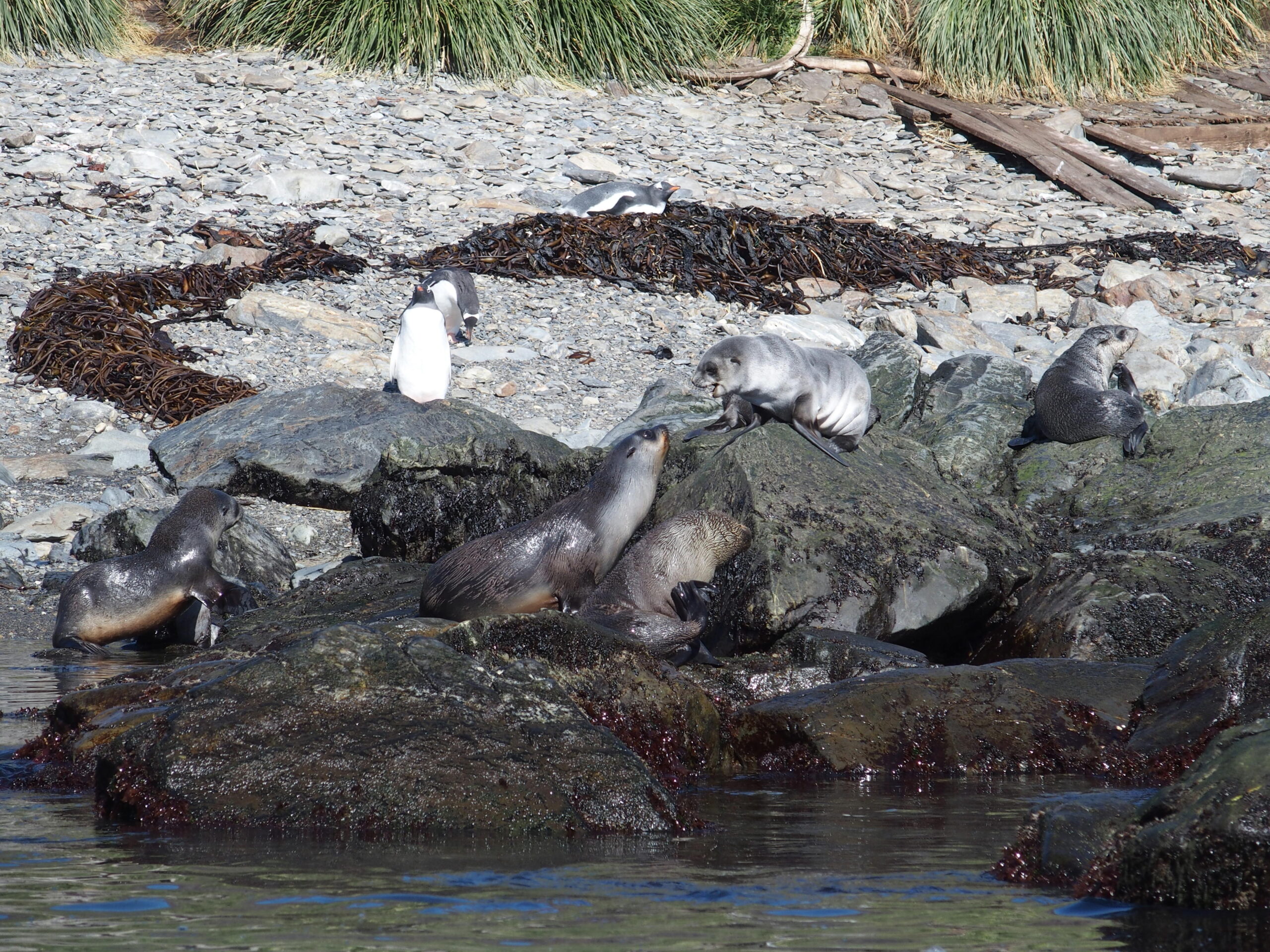
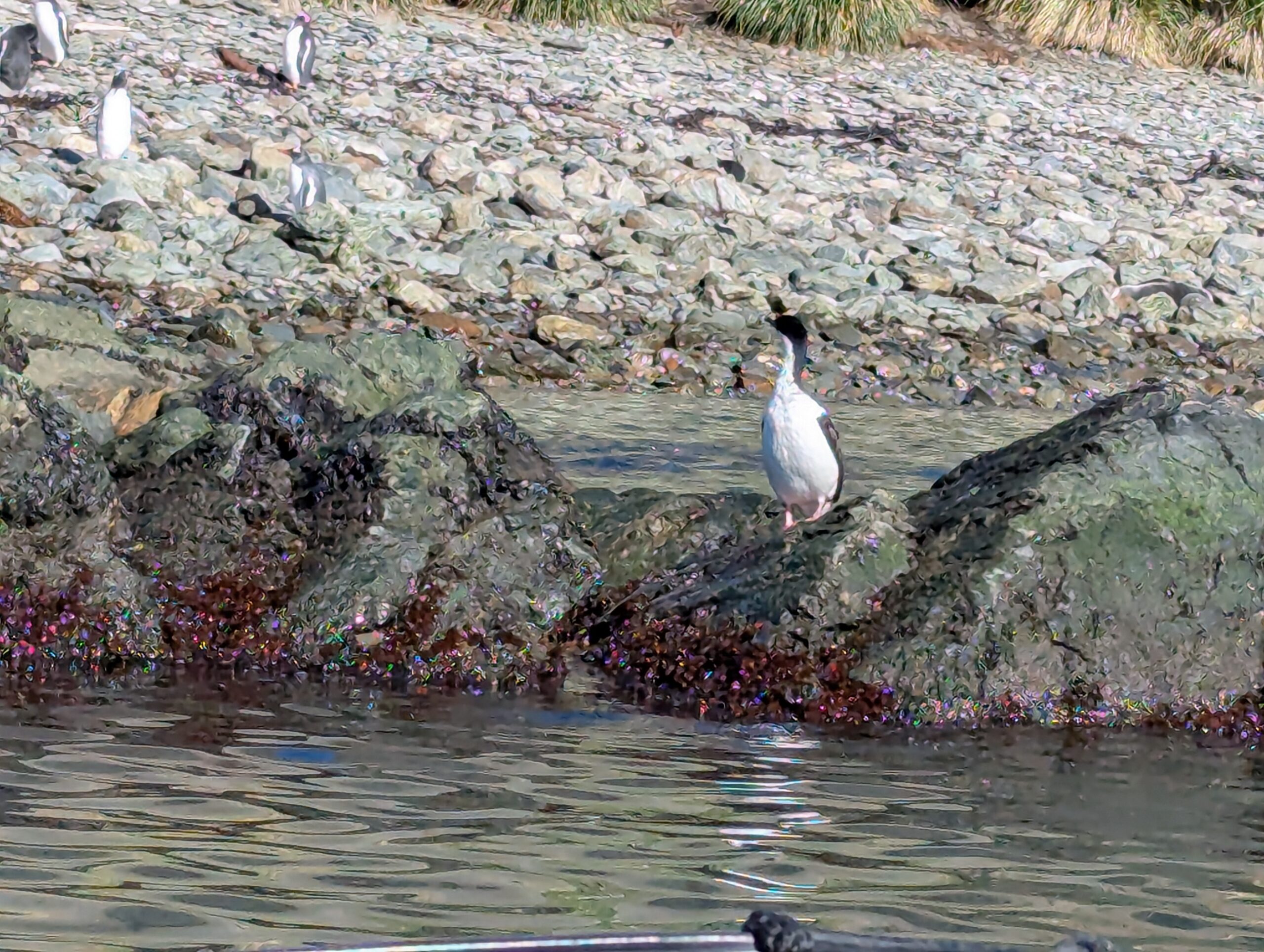
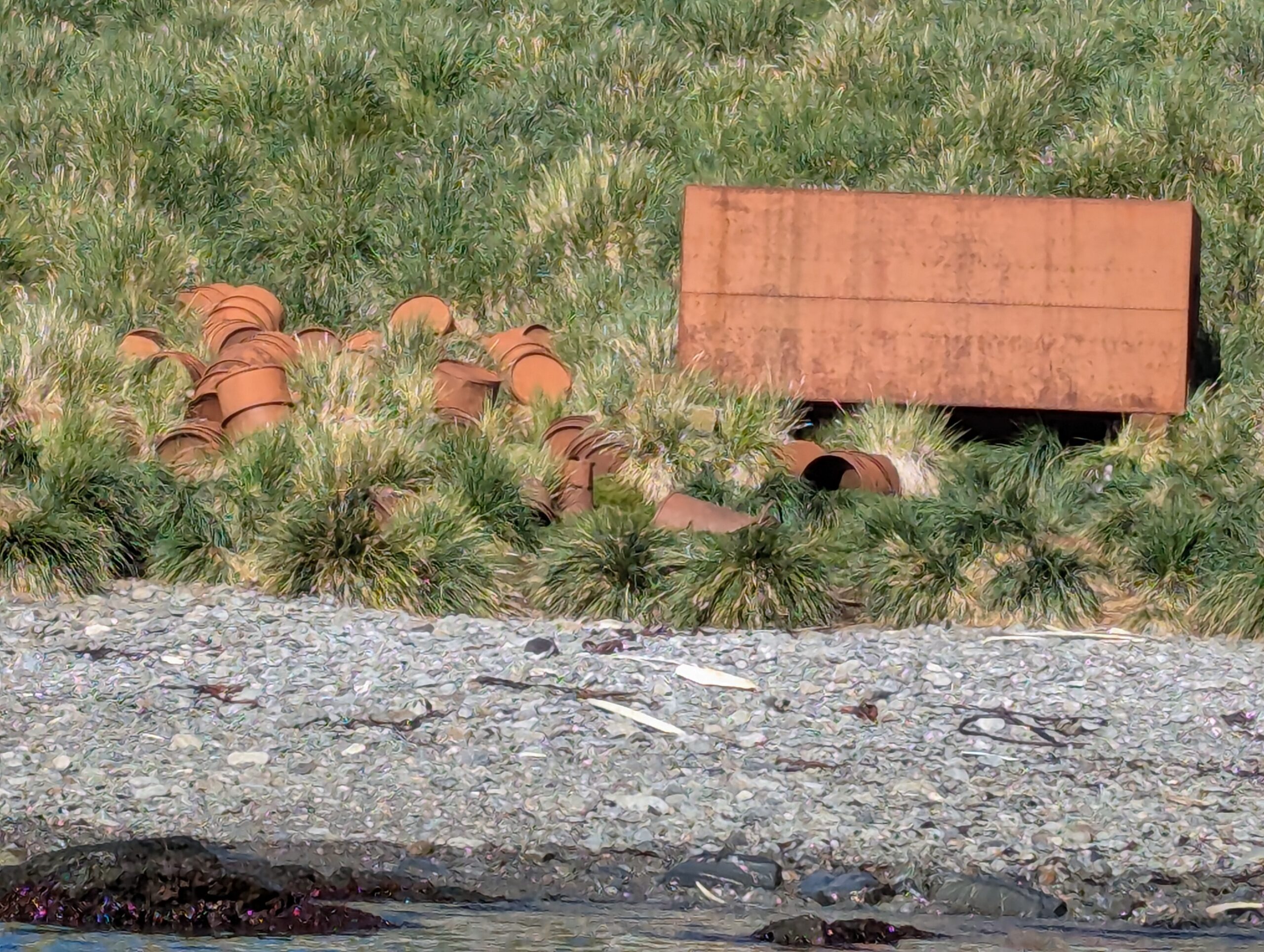
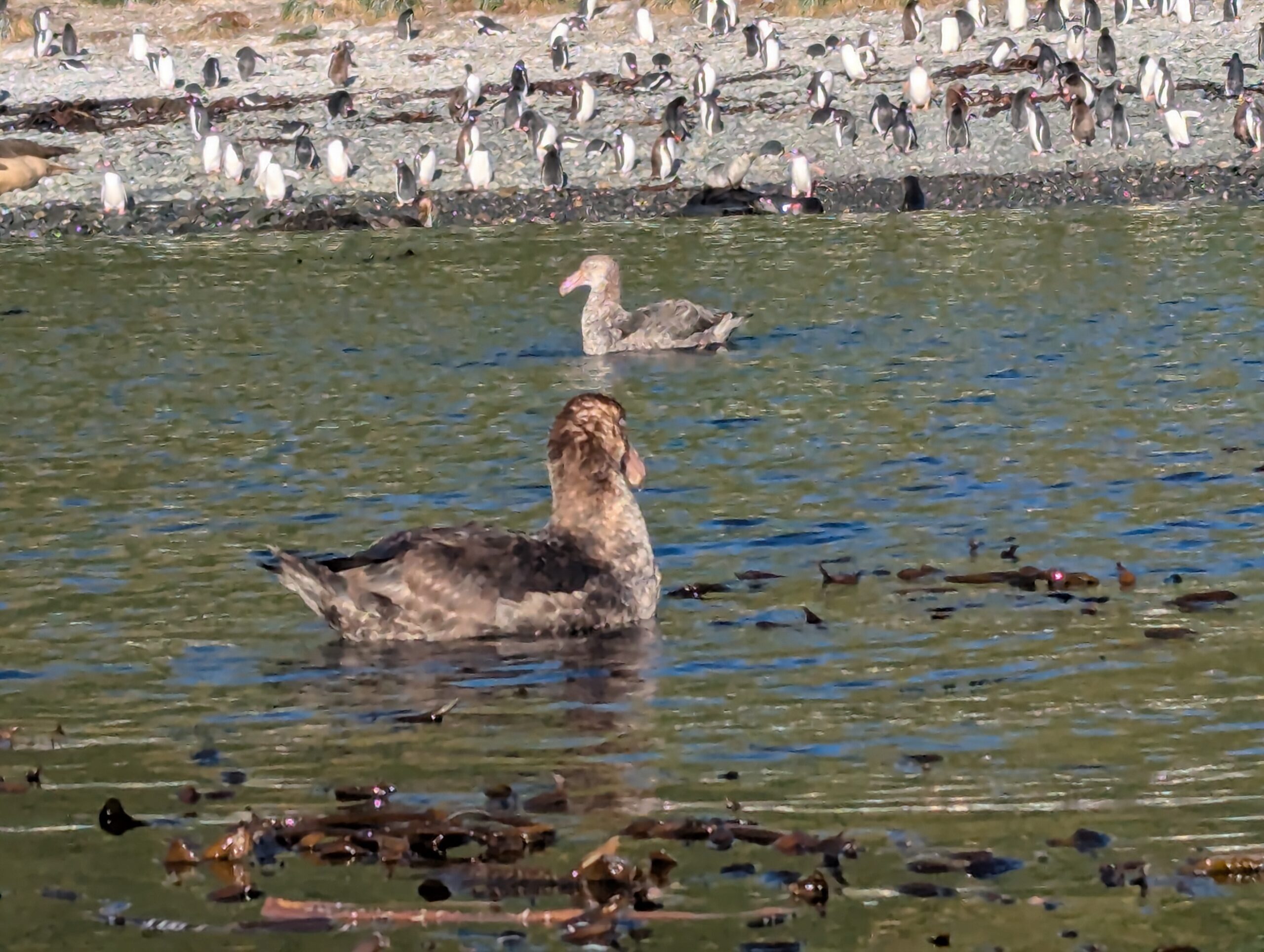
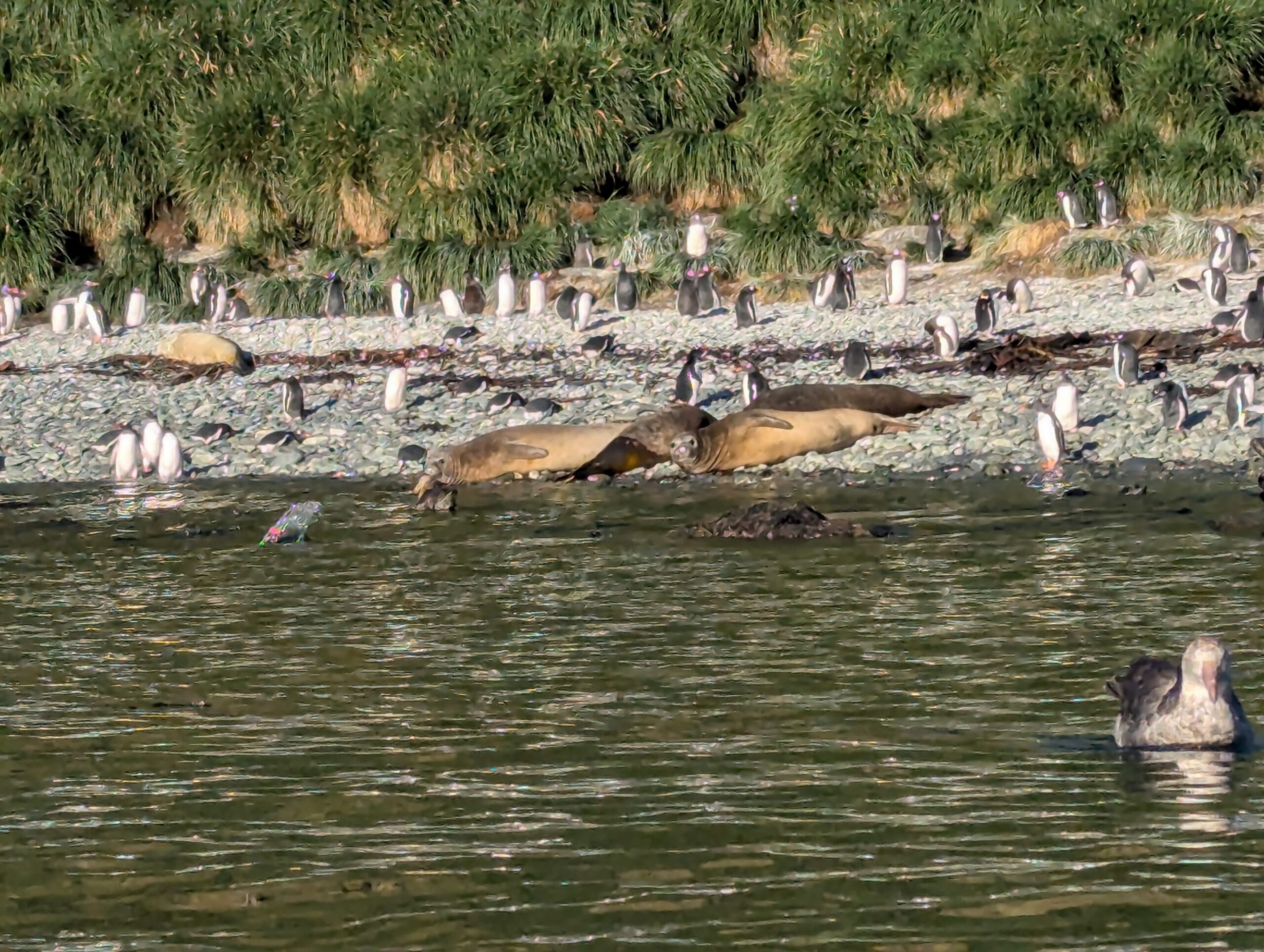
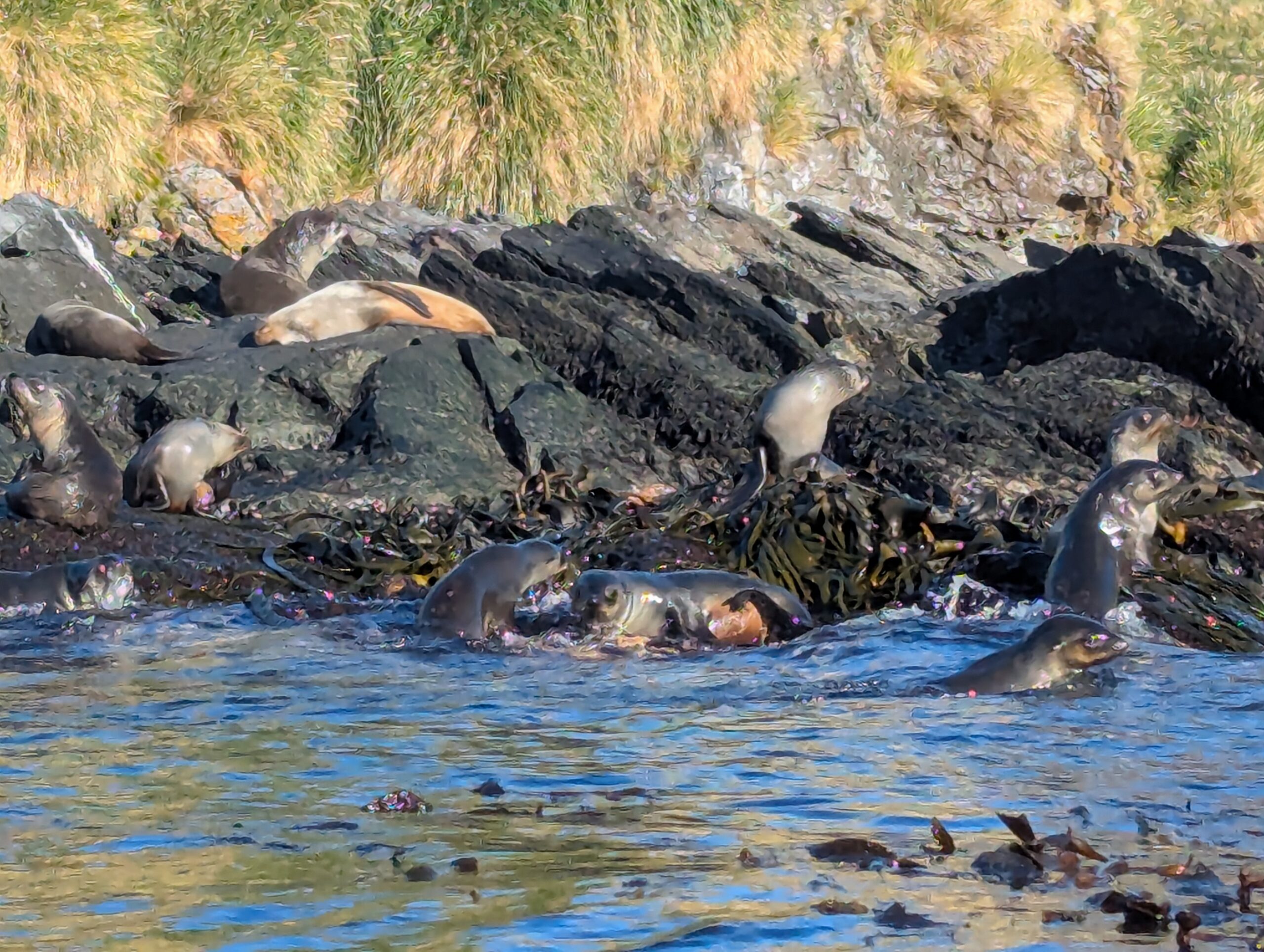
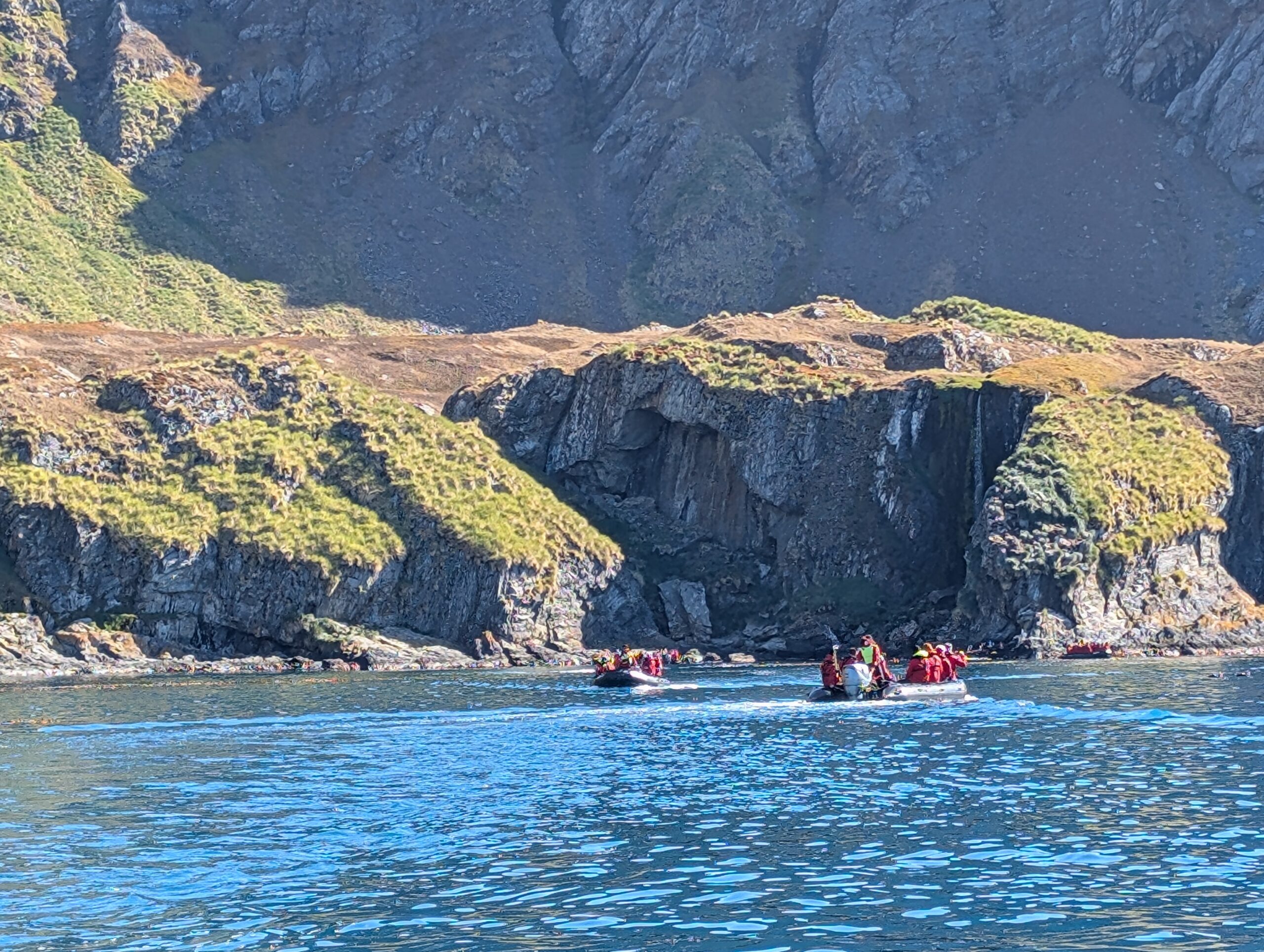
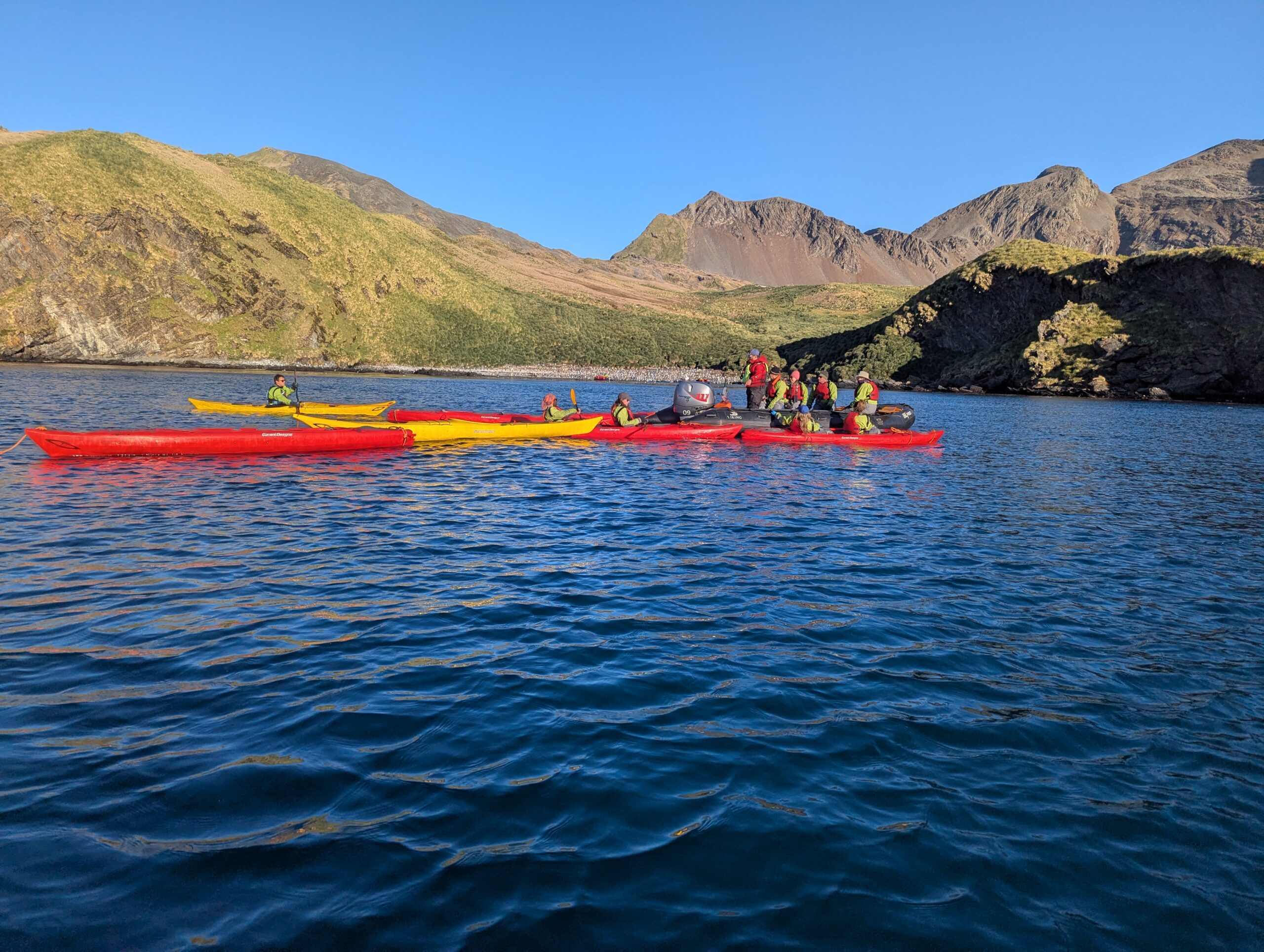
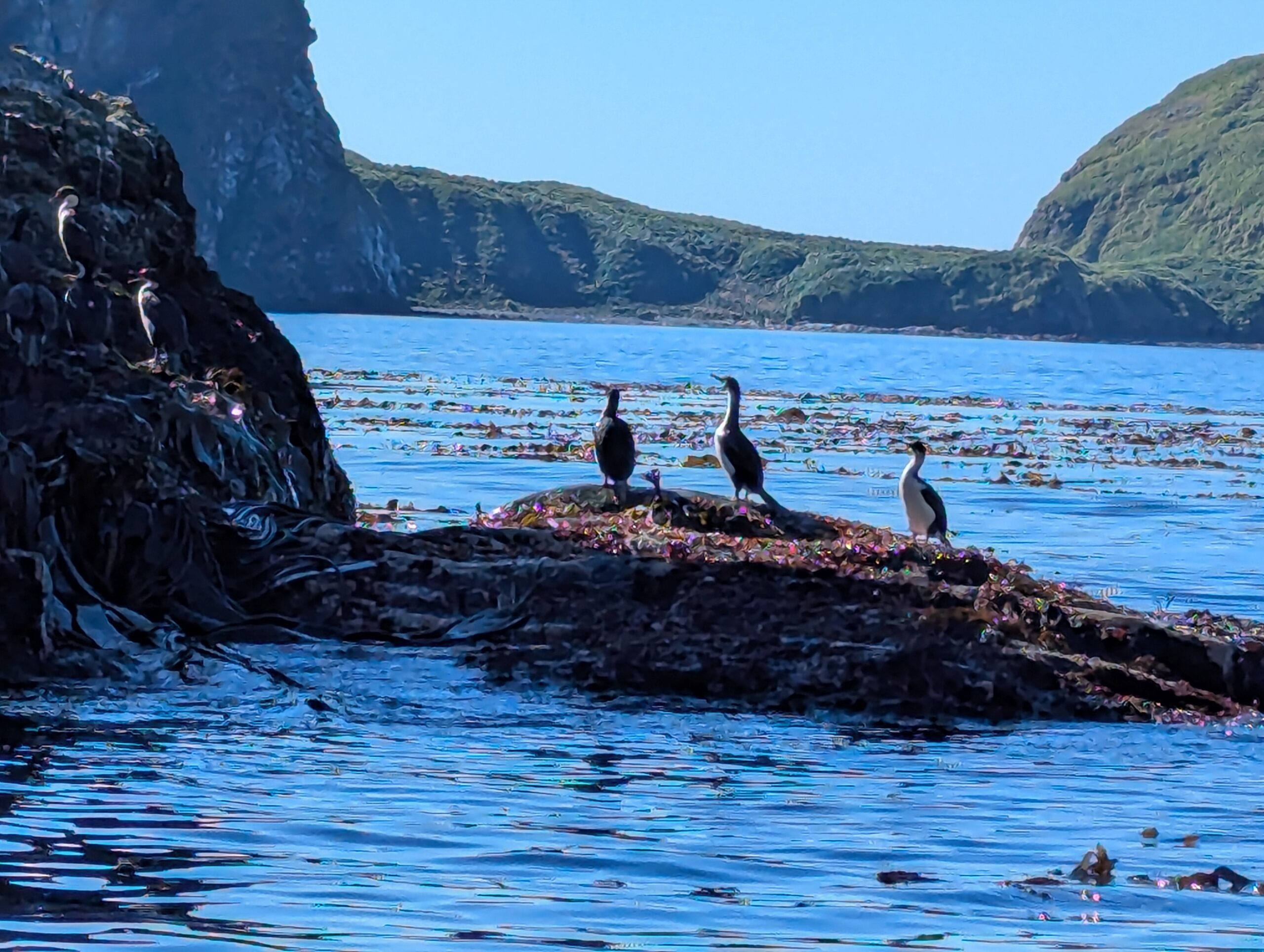
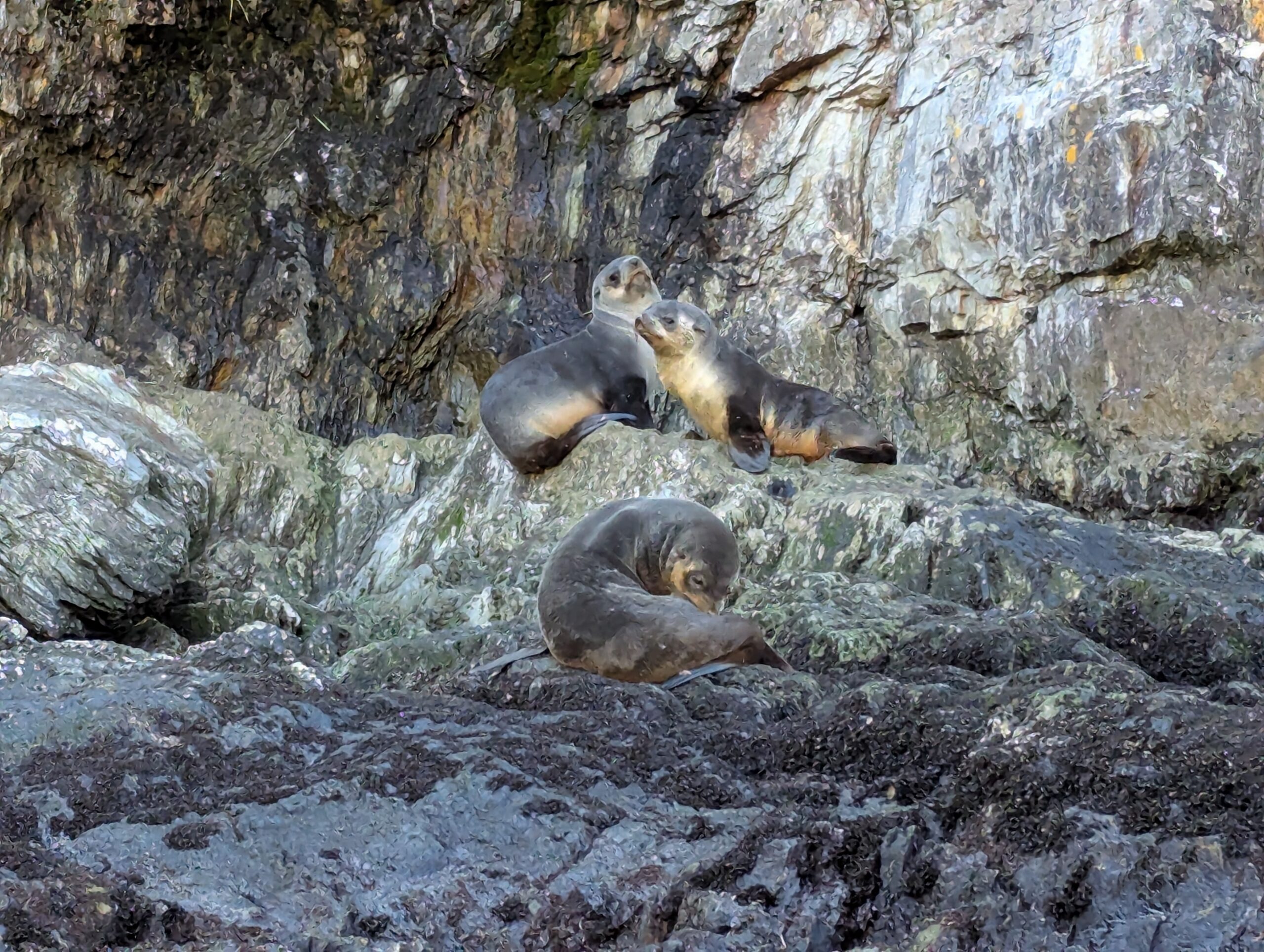
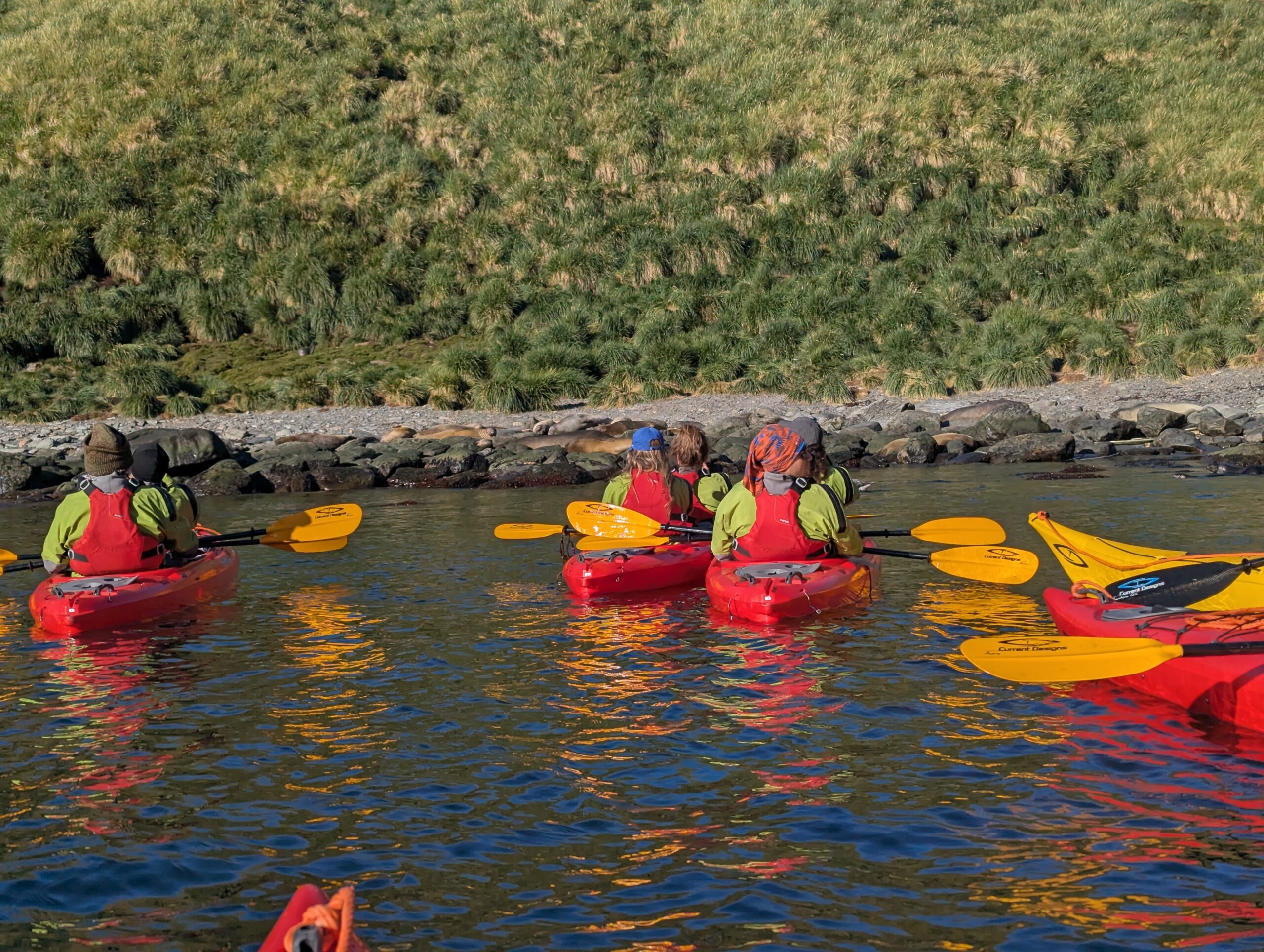
There was no landing at Godthul but we toured the coast by zodiac and later by kayak. Clusters of rusted barrels and containers are remnants of South Georgia’s whaling history. Oblivious to these relics, Gentoo penguins and blue-eyed shags (a local cormorant species) patrolled the beach. Judgmental petrels observed as the play of adolescent fur seals turned the waters into a churning cauldron.
Our little boats were of limited interest to them. The seals were having too much fun chasing after one another. While in the kayak, we had to navigate away from one particularly focused petrel (who can be quite mean) who determined that we were in its way.
We each successfully managed to get ourselves into and out of our kayaks without taking a bath. Despite the chilliness of the water, the sun kept us comfortable. My only regret was wearing glove liners. While they were the only hand covering I had, I probably would have been more comfortable without them, as my hands got cold – and stayed cold – once they were wet.
Since this was the final kayak excursion for the expedition team this sailing, one crewmember took the tradition of performing a barrel roll in his kayak. That is to say: capsizing his kayak and continuing to rotate until he rights himself on the ‘other side’. A big loop. He even did it twice for those unprepared to film him the first time.
Biosecurity
As with Antarctica, biosecurity on South Georgia is critically important. Seeds and soil, of course. The disinfectant washing to prevent accidental transfer of disease between sites will continue. There is also focus on preventing the reintroduction of eradicated invasive species.
That is quite a sentence, let me elaborate.
In the early 20th century, Norwegian whalers introduced reindeer to the island to provide an alternate food source. Since the reindeer had no natural predators, the herds were maintained through hunting. With the decline of whaling, the herds grew unchecked. The overgrazing impacted the habitat of nesting birds. Inbreeding decreased the overall health of the reindeer population. Through a series of corralling and hunting, the island was designated reindeer-free around 2014 – although hunting equipment remains in case any got away.
More insidious were the rats. They adapt to their environments, had no natural predators, and consumed the eggs of ground nesting birds – bringing some species close to extinction.
When scientists began to analyze the problem, they realized that there were distinct rat populations kept separate by the glaciers. With the retreat of the glaciers due to global warming, these populations could intermix and grow – making eradication even more of a challenge. With every motivation to move quickly, they used a series of baiting and detection to target these colonies.
In 2018, South Georgia was declared rodent-free. They have every intent to remain so. Sometime in the evening, a UK patrol ship met to inspect the ship. Using trained dogs, they determined we were also rodent-free (and presumably reindeer-free) and could continue to the island. I am most jealous since I hear the inspection dogs were adorable.
Leave a Reply