March 18, 2001 (Day 11): Helsinki, Finland: Eurohostel – 10pm
Morale: OK. Still bitterly cold, which limits our interest in things outdoors. The sunny skies taunt us. Coming from Minnesota, I like to consider that I am made of stronger stuff. But I have to respect the fortitude of the people who live here year round. It is March, almost spring. Still, the lacerating wind takes away any warmth imparted by the sun.
Since it is Sunday – or so I was told – we slept in and took advantage of the late breakfast hours. The important task for today was to get our tickets to St. Petersburg. Waking up for a 6.30am train is not going to be pleasant, but the positive side is that we arrive around 1pm, local time. Scary to think we will be in Russia in less than two days. I don’t feel particularly prepared.
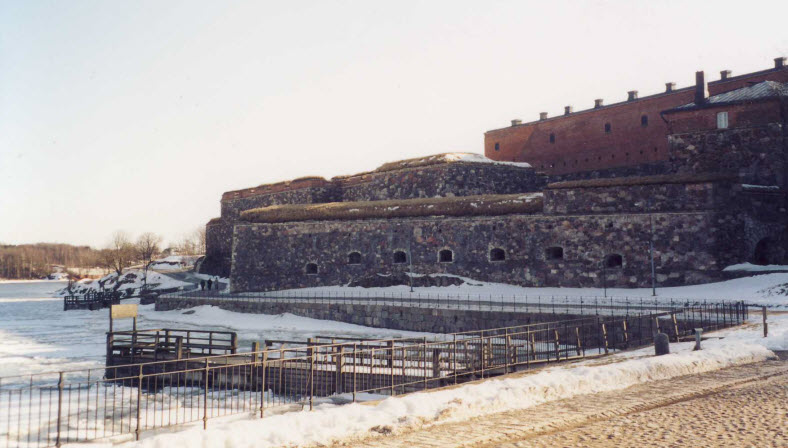
Braved the cold and hopped a ferry across the frozen harbor to Suomenlinna, a fortress built by the Swedes in the 1740s. The history of Helsinki really begins with the building of this fortification. Prior to the 18th Century, Helsinki was a remote fishing village with a population of about 1500. The construction and creation of infrastructure to support the ongoing construction turned it into a city. The structure stretches across five islands, presumably the largest fortress in the world.
The museum gave a good history of the fortress, why it was built, how it was constructed, and the history surrounding it. Suomenlinna was envisioned as the ‘Gibraltar of the North’; a bulwark against Russian expansionism. During the Seven Years War, in the late 1750s, it saw some action against the Russian fleet. While besieged by Russian forces in 1808, the commander of the fortress surrendered under circumstances still controversial today. The garrison had more men and weapons than the Russian forces did. Five weeks of shelling inflicted minimal damage to the structure; the garrison felt they had sufficient supplies to continue. As a result of this war, Finland became part of Russia. The last major fighting occurred during the Crimean War when the British and French bombarded it.
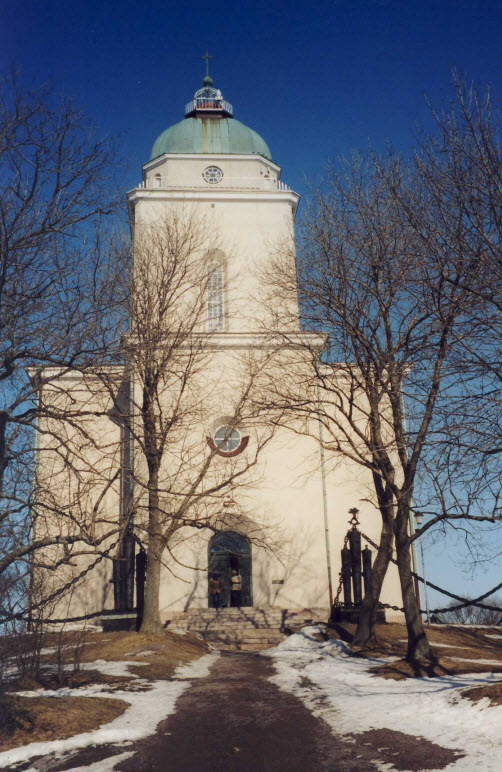
Suomenlinna is an UNESCO World Heritage Site. We learned that world heritage sites can be either places in which nature is unique or sites that display a particular cultural history. This allows assistance and expertise from all over the world to help with restoring and maintaining sites. At the museum, they had a computer kiosk set up talking about World Heritage Sites and listing them. Made a list of all those we are likely to see on this trip .
Before the ferry back, we passed the time warming up in a Suomenlinna coffee shop. We shared a table with others who took the opportunity to get out of the cold including a gentleman with a distinguished 5-inch colored Mohawk and a quarter of the city of Madrid. Outside the café, a couple had left their baby in a pram. As we left, we took a peek inside. The baby was well bundled up, content, and curious what we were so interested in. He was probably more comfortable than those in the café.
On the return voyage, the ferry plowed through the blocks of ice 3” to 8” thick that formed an undulating white pile carpet outside the window. The boat plied the across the harbor with a sound like rocks in a blender. Looking out the rear of the ship, the ice quickly filled in the wake, leaving no indication we had ever been there.
Sign on the ferry said, “Disturbing use of alcoholic beverages is prohibited.” I am not sure what would constitute a disturbing use but I expect it is evidenced by Finnish exclamations of “What the Hell?!” followed by mothers rushing to cover the eyes and ears of their impressionable children.
Excerpts from Anna’s journal included.
Leave a Reply