Posts from the Road…

April 25, 2001 – Vladivostok, Russia
Back in the (Former) USSR
Greetings from Vladivostok. We docked early this morning and will be spending almost the entire day here. This morning we are running errands and will tour this afternoon. Russia is still chilly. While not as cold as it was when we left it previously, it is in stark contrast to the warmth we encountered in Japan and Korea.
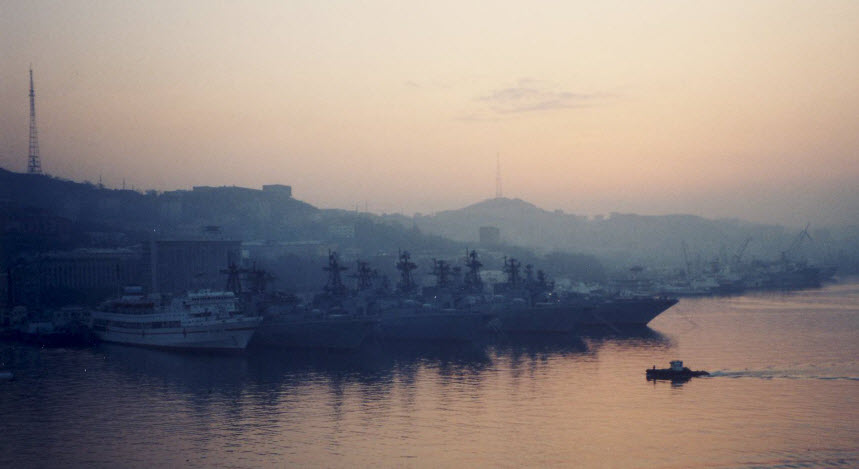
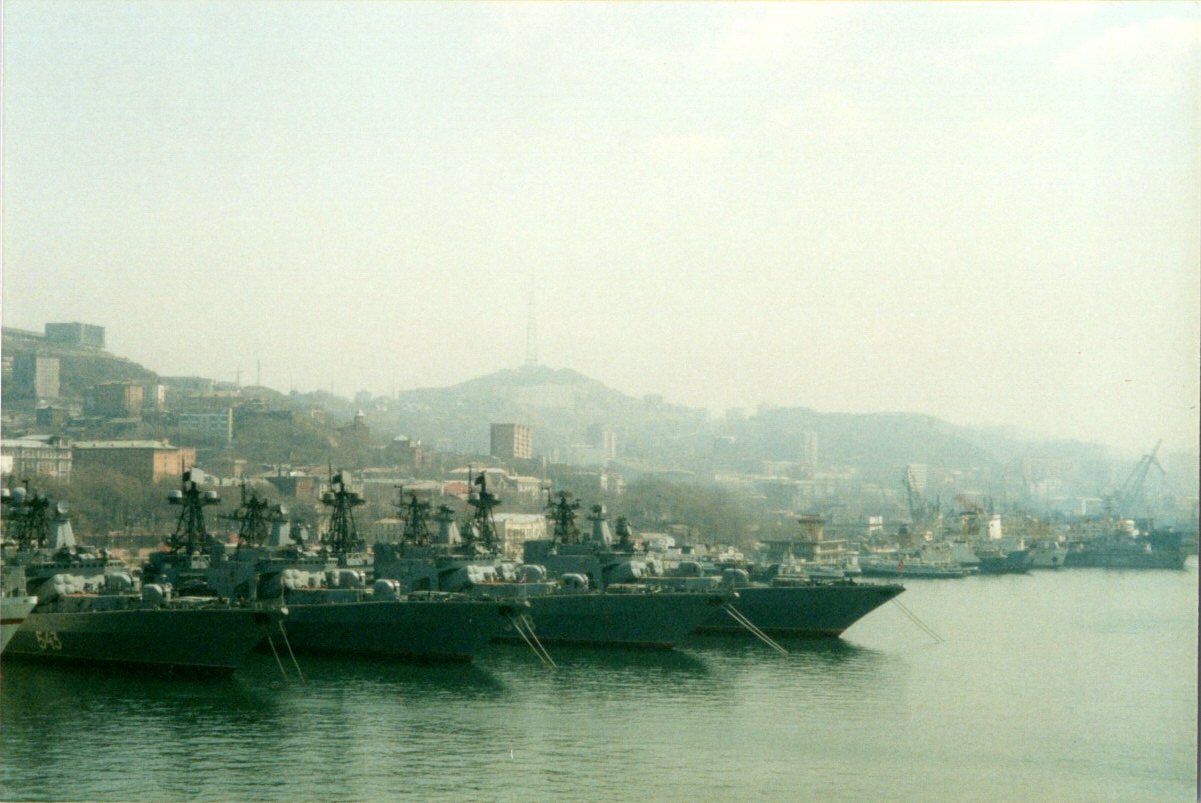
Vladivostok, as well as being the eastern terminus of the Trans-Siberian Railroad, is home to the Russian Pacific Fleet. Elements of this fleet are docked alongside our ship, making quite an impressive sight in the pre-dawn light. Being a military town, Vladivostok was a closed city, even to most Russians, until just about 10 years ago.
What I hope to be able to see here is the Naval Cemetery, containing the graves of some of those who fought in the Allied Intervention during the Russian Civil war. At that time, Vladivostok was captured by a US and Japanese force with the proclaimed intent of securing the port to evacuate the Czechoslovak Legion, who were fighting their way out of Russia eastward along the Trans-Siberian Railroad. The intent was to transport them to the Western Front, but World War One rapidly wound down and they were still trapped in Russia. The last Czech soldiers left in 1920 and the final Japanese troops pulled out just after that.
A consolation site is the statue of the three whales, commemorating the joint US-Russian force which freed three dumb whales trapped under the ice in the late 1980’s. This event generated my favorite quote about work, a quote I still use to this day.
Of all the places we have been, nothing has been a source of greater culture shock than our ship. The sum total of our ages (my beloved travel companion and my own) is the average age of the passengers on the ship, so much so that most of the crew thinks we are part of the crew. We also take it as a good sign that most everyone thinks we are on our honeymoon. Since my cold has gotten worse, everyone seems to think I am British, even the Europeans. That creates quite a “cover”.
We have also managed to regain all of the weight we have lost.
April 25, 2001 (Day 49): Regal Princess, Vladivostok en route to Muroran, Japan – 11pm
Health: improving, although the rich food is playing hell with my digestive system.
Morale: good.
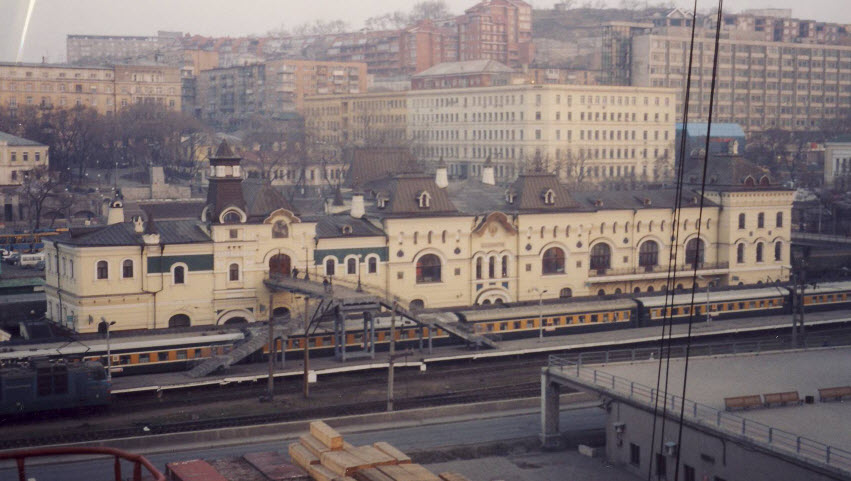
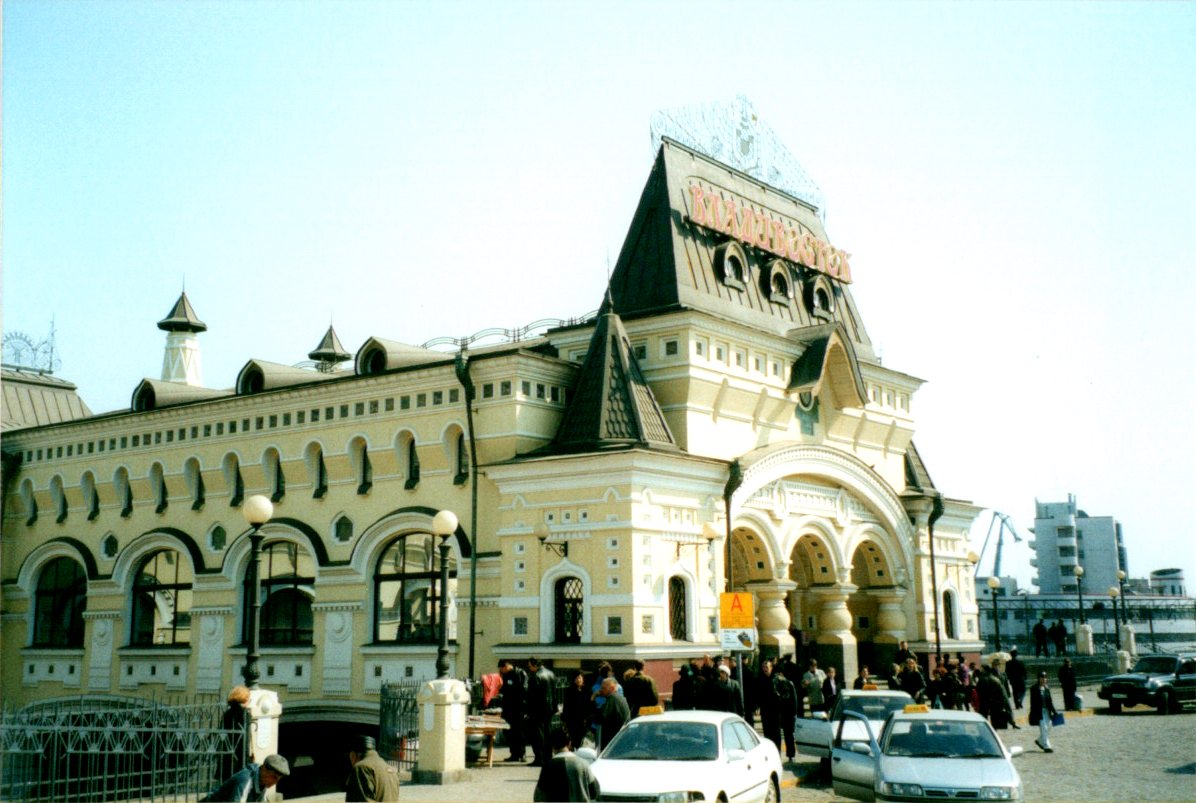
The ship docked in Vladivostok at 5am. We were awakened by the announcement that passports were available to be picked up. Pulling open the curtains in our cabin, we looked down into the rail station, eastern terminus of the Trans-Siberian railway. I pulled something on and trotted down to get our passports. On the way back to the cabin, I stuck my head outside for a look at the city. The sun had not yet risen over the hills and a light fog clung to the waters of the harbor. Visible in the pink pre-dawn light were four ships of the Russian Pacific Fleet, about 200 meters away. I ran back to get the camera before the impending daylight destroyed the scene.
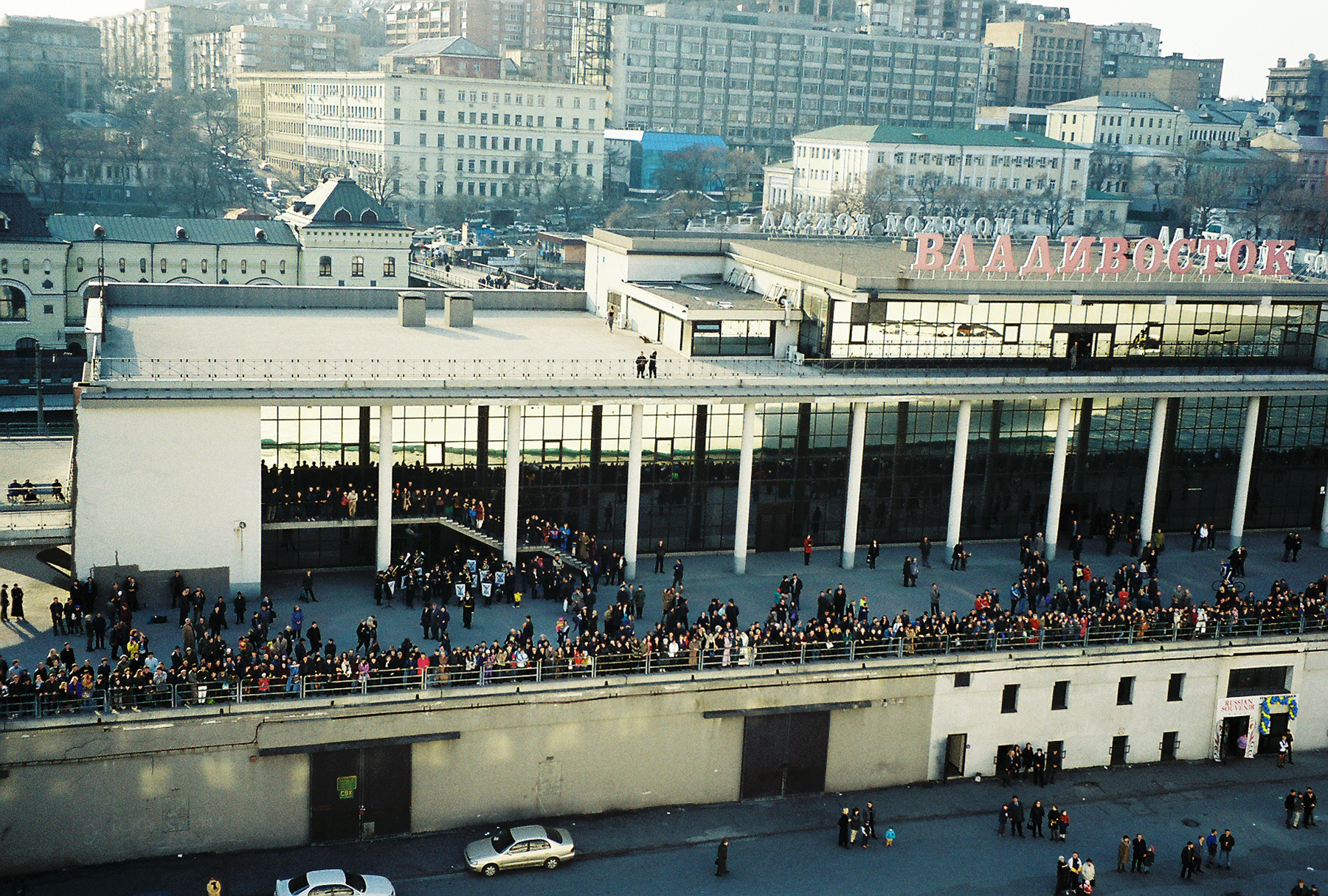
After a bit of breakfast, we were ready to make our way into Vladivostok. A local band performed to welcome us ashore. In lieu of the high-tech cruise card scanner, we were given plastic tags, like a bookmark, to place in our passports. Upon returning to the ship, we were to hand back both items. We were told to plan for an hour for the record keeping – logging that we have returned to the ship – before we should expect to be able to leave again. Since the ship has one gangway for embarking and a separate for disembarking, this was probably to ensure they had enough time to get the documents to the departure lounge.
Finding the bank was the top priority. But before this we purchased stamps for postcards and bought every possible item we could think of with rubles before we wandered across the road to exchange money. It is a relief, certainly, to have the money back in a usable form. I have relaxed about the currency problems since we got to China, but it remains a source of frustration. We had the good fortune to be making an additional stop in Russia, otherwise we would have had to be a bit more creative. I brought with me all the possible paperwork the bank might require – exchange transactions, customs form, everything to prove that we were exchanging back money that we had exchanged in Russia – but it turned out to be a non-issue. The bank gave us dollars without batting an eye.
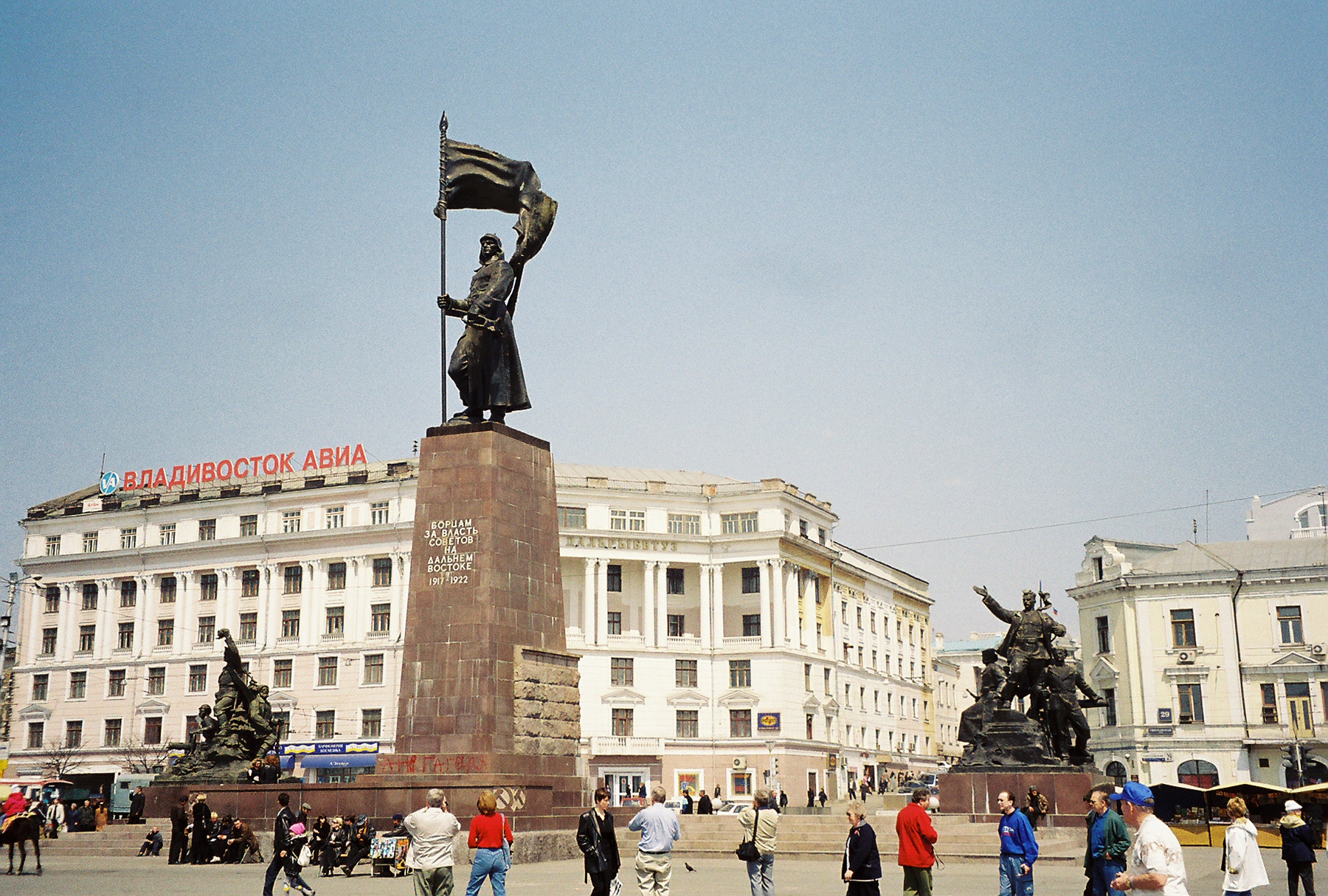
Our event of the day was a bus tour of the city. The tour was OK, I guess. It gave a good chance to see the city in a relatively short period of time. First stop was the Square for the Heroes, celebrating the partisans of the revolution. The focus of this square was a statue of the brave fighters standing tall over the figure of a fallen two-headed eagle. Overlooking this solemn memorial was a multi-story outdoor television screen blaring MTV-like advertisements.
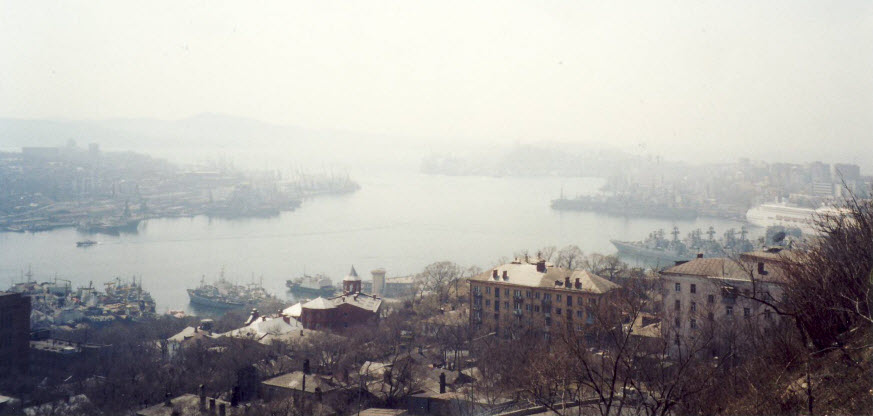
A short bus ride away was the Eagle’s Nest, the highest point in Vladivostok and the site of the only funicular railway in Russia. It did not look like it was running today. The view however was great and the weather most cooperative. We could even see our ship down below.
We have not, however, always been blessed with the best fellow travelers. Our seats on the bus were directly in front of an older British couple whose inane chatter continued incessantly. The poor quality speakers in the bus made it difficult to hear the guide. The babbling Brits made it impossible. When we finally asked them if they could speak quieter as it was hard to hear the guide, they began a discussion between them, at the same volume, about how they were certain they were not speaking too loudly.
Despite the advanced age and unmindful behavior of the others on the bus, Anna was the only one on the tour who managed to injure themselves. While she was getting off the bus she was worrying more about the people ahead of her and not paying enough attention to her surroundings. As a result, she stepped into a little hole and twisted her ankle. She said it hurt quite a bit to begin with, but she was able to get up and walk on it. She said it felt pretty good by the time we left the Eagle’s Nest, but she will probably continue to be aware of it for the next several days.
The winter of 2000-2001 in Russia’s Far East was the coldest in 70 years. Corruption and inefficiency in the energy network left 86,000 people in unheated apartments as the temperature outside dropped to -60°C (The Pole of Inaccessibility, Antarctica, has an average temperature of -58°C). On February 5, 2001, Russian President Vladimir Putin fired the energy minister and the mayor of Vladivostok for their mishandling of the problem.
New York Times, 12 February 2001
After the Eagle’s Nest, our bus took us to visit a series of stuffed animal exhibits: the Vladivostok Oceanarium and the Arsenev History Museum. The Vladivostok Oceanarium demonstrated such prowess in the field of taxidermy that I had to assert that these animals looked more lifelike than Lenin did, for whatever that is worth. To be fair, my favorite part of the whole site was the two puppies playing together outside. The whole building had the feel of a 1950s science fair project pulled out of mothballs to put in front of an audience. The aquarium exhibits looked like the live seafood tanks at the supermarket. For all I knew, that is what these were. I looked at the large crabs, got hungry, and began looking for the checkout lane. My over-loud British friend from the bus peered at a tank of huge piranhas and announced that they did not look so tough. I thought he should stick his hand in to be sure.
But seriously, the Vladivostok Oceanarium would be a great place to visit if you only had a week left to live. The passing of every minute would feel like it took hours. Is Oceanarium even a word?
Next stop was the Arsenev History Museum, specializing in wildlife and cultures from the Vladivostok region. The lower level was full of stuffed animals. Having had my fill at the Oceanarium, I did what any responsible tourist would do: I snuck away from my tour group and went to find the historical section on the second floor – specifically to see the display honoring Yul Brynner, whose family lived just down the street prior to the Revolution. It was near the display on Yul’s family that I caused a bit of a stir by joining another tour group. Eventually, the guides noticed that my tour sticker read “A21” while those in my adoptive group read “A27”. A museum docent approached to address the situation.
Docent: Have you lost your group?
Me: No, they are downstairs.
Docent: [A cloud passes over her face as she structures her next query] Why are you here?
Me: [Wisely avoiding the obvious smart-ass response] Because I am more interested in seeing these displays.
From the look on her face, I could tell trouble was brewing. She instructed me to stay where I was and she disappeared, presumably to locate my group or the police. Assuming I had caused enough problems for one day, I rejoined my group of my own accord. Individual thought breeds chaos.
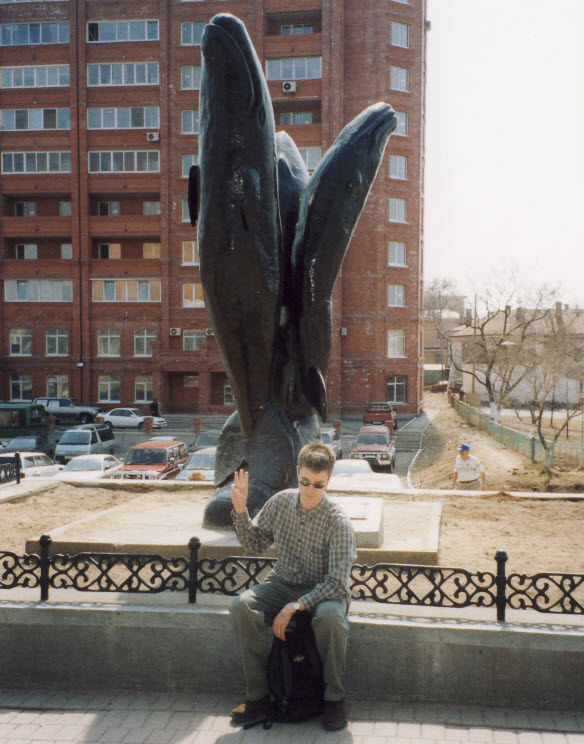
Then, at last, the moment I had been waiting for, a prime reason for taking the bus tour: a visit to the statue of the three whales. In the late 1980’s, three California gray whales were trapped under the ice. The ensuing media frenzy about these whales and the international teams pulled together to save them resulted in one of my favorite quote – and perhaps the closest thing I have to a mantra, at least any that I can repeat in polite company. When asked about his experience, a biologist replied, “I learned a lot. I learned that with persistence, clear thinking, and proper chainsaws you can do anything.” After all this, I could not help but think that if similar energy, money, and attention were focused on, say, restricting whaling it certainly would have saved more whales. More amazing was that this statue warrants a reason to stop a tour bus.
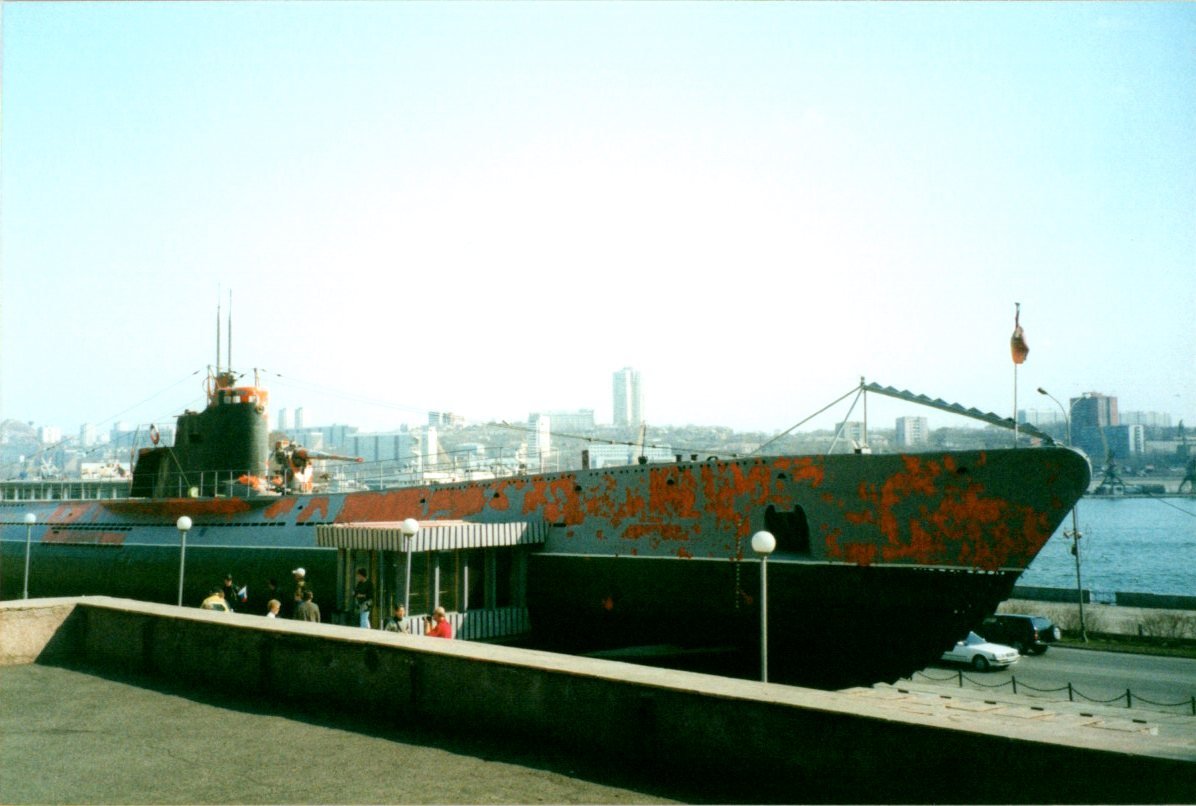
Even more fun than visiting a statue of three stupid whales, if you can believe it, was the chance to run around in a World War II-era sub. It was interesting to see the rather cramped conditions that they lived and fought in. I do not consider myself claustrophobic, but after a few months in there I suspect I could learn. Outside was a memorial to those in the Primorye Region or in Russian Pacific Fleet who lost their lives in the war. My rough estimation put the number at about 12,800 names on this wall.
On the bus our guide taught us a few Russian phrases. Fortunately these were phrases we had learned in class. Anna won the adulation of the guide when she said thank you and good-bye in Russian. She probably thought Anna was a quick study.
The layout of the bay in Vladivostok is similar to Constantinople’s, a fact which seemed to weigh heavily in the selection of this area to house the Russian fleet. It was declared a fortress in the 1880’s. By the outbreak of the First World War it was the largest fortification in the world with over 1400 batteries.
History of Vladivostok, Wikipedia
Vladivostok seems to be a cross between St. Petersburg and Moscow. Like St. Petersburg, the million or so residents of metropolitan Vladivostok contend with crumbling façades, cracked pavement, overcrowded mass transit and non-existent traffic flow patterns. But here and there you see the occasional hint of middle class wealth, like Moscow. Our guide pointed out that, because of its geographical location, it is cheaper to buy higher-quality Asian-made cars than Russian ones. My thought is that with the opening of the city – it has been closed to the West until 1992 – mismanagement aside, its economic health should improve. Siberia is loaded with natural resources. The proximity to Korea and Japan, two major importers of raw materials, could certainly help the situation.
But as a tourist destination, I am not so sure. Vladivostok suffers from being a mere 150 years old. There is not a great depth of history here and I doubt that the city’s favorite son, Yul Brynner, will be a big enough draw. The portions of Vladivostok history that I was interested in – the Allied Intervention and the Czech Legion – were not readily available in museum form. Once you get past the dock, the city is rather picturesque. I guess if Pusan can market itself as a tourist destination, Vladivostok certainly can.
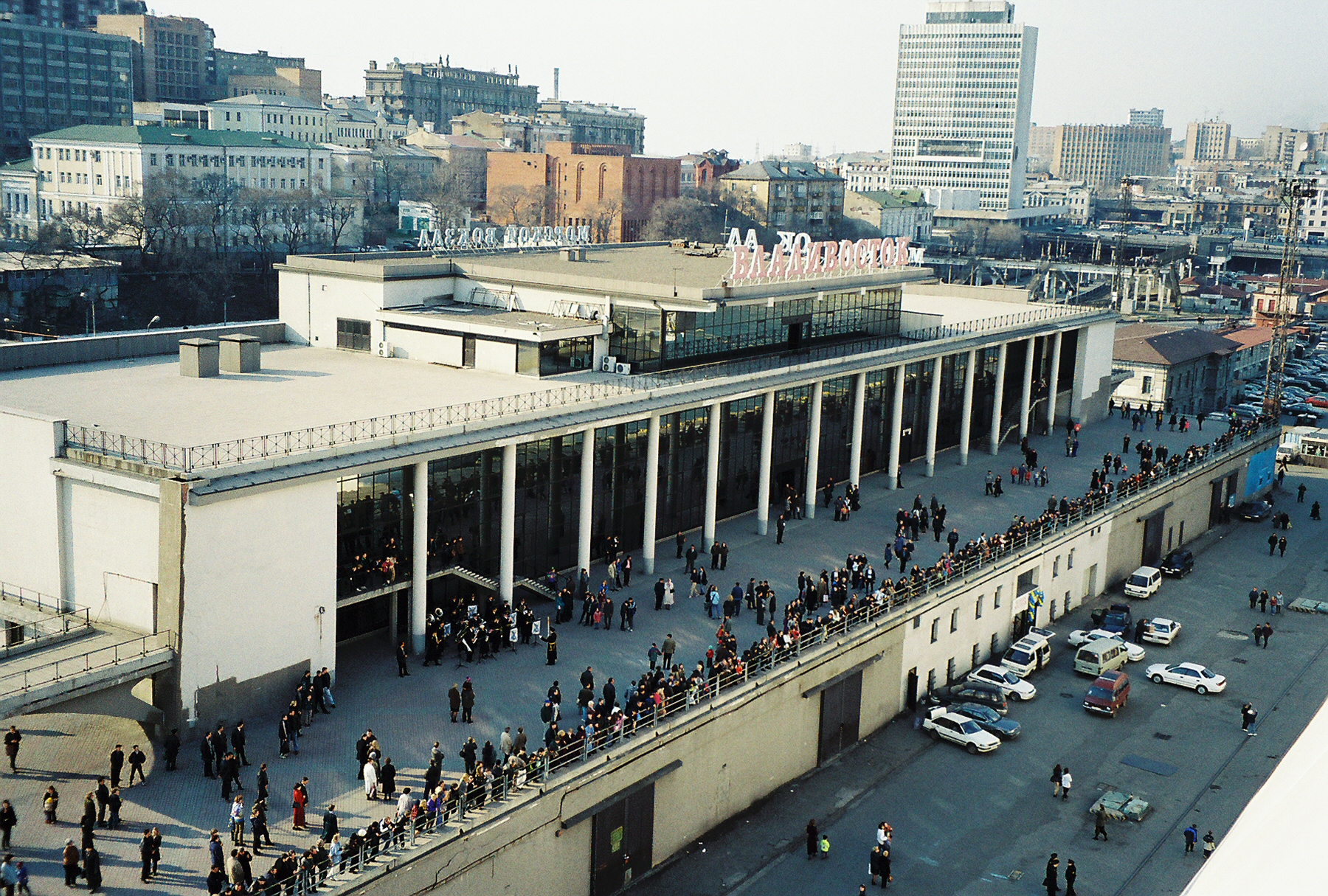
Big send-off as we pulled away from the pier. A band and a waving, cheering crowd assembled at the terminal building to wish us bon voyage. The band conductor pulled people out of the crowd and created impromptu dance performances. My mood was only dampened by someone standing near me, gulping down his gin and tonic, whose enlightened farewell to the crowd was a “So long you stupid bastards. At least I don’t have to live there with you.” The pleasure of his select company is reserved for those of us on the ship.
The soundtrack for this trip seems to be the music of ABBA and My Fair Lady. For reasons unknown, while wandering in Beijing, the song “The Street Where You Live” from My Fair Lady was going through my head. A shudder passed over me in Nara when an instrumental version of that particular song was played over the hotel PA system while we doing laundry. The scary sake I am sure played into that. Amongst the selections played by the Russian band was a medley of tunes from that musical.
We were not up for a proper dinner, so we went upstairs to the Pizza restaurant. This eatery was a nice change from the more formal dining area. We should have gotten a commission for the number of people we referred here. The added benefit of eating here tonight was the great view as we sailed out of the harbor with the setting sun.
Excerpts from Anna’s journal included
Leave a Reply