April 1, 2001 (Day 25): Trans-Mongolian Express, South of Ulaanbaatar, Mongolia – 2pm (Mongolian time)
Health: Fair. Stress does take its toll on the body. Still obsessing about the inability to exchange money at the border – the result being that we have a lot of excess rubles – but it is getting better. Revisiting the situation, I realize that, given the same information, the same unknowns, I am not sure there is much we would do differently. We assumed we would need more money and erred on the side of caution.
Morale: Fair and improving for the reasons mentioned above.
The Gobi Desert is the world’s fourth largest, approximately 500,000 square miles in size.
New York Times Almanac 2002
Passing through the Gobi Desert, another of the many things I never thought I would see. I learned of the Gobi Desert from a dinosaur book I had as a child. There was a type of dinosaur that interested me, Protoceratops, and this book told me they had lived in what is now Mongolia. I was most upset, feeling they should have had the decency to have lived close to where I called home.
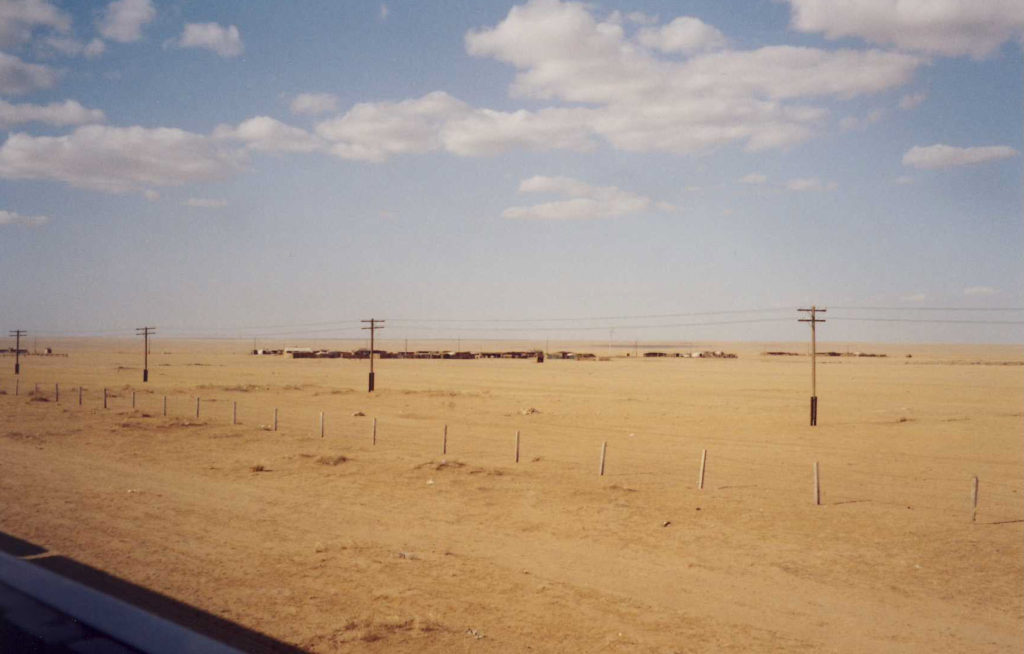
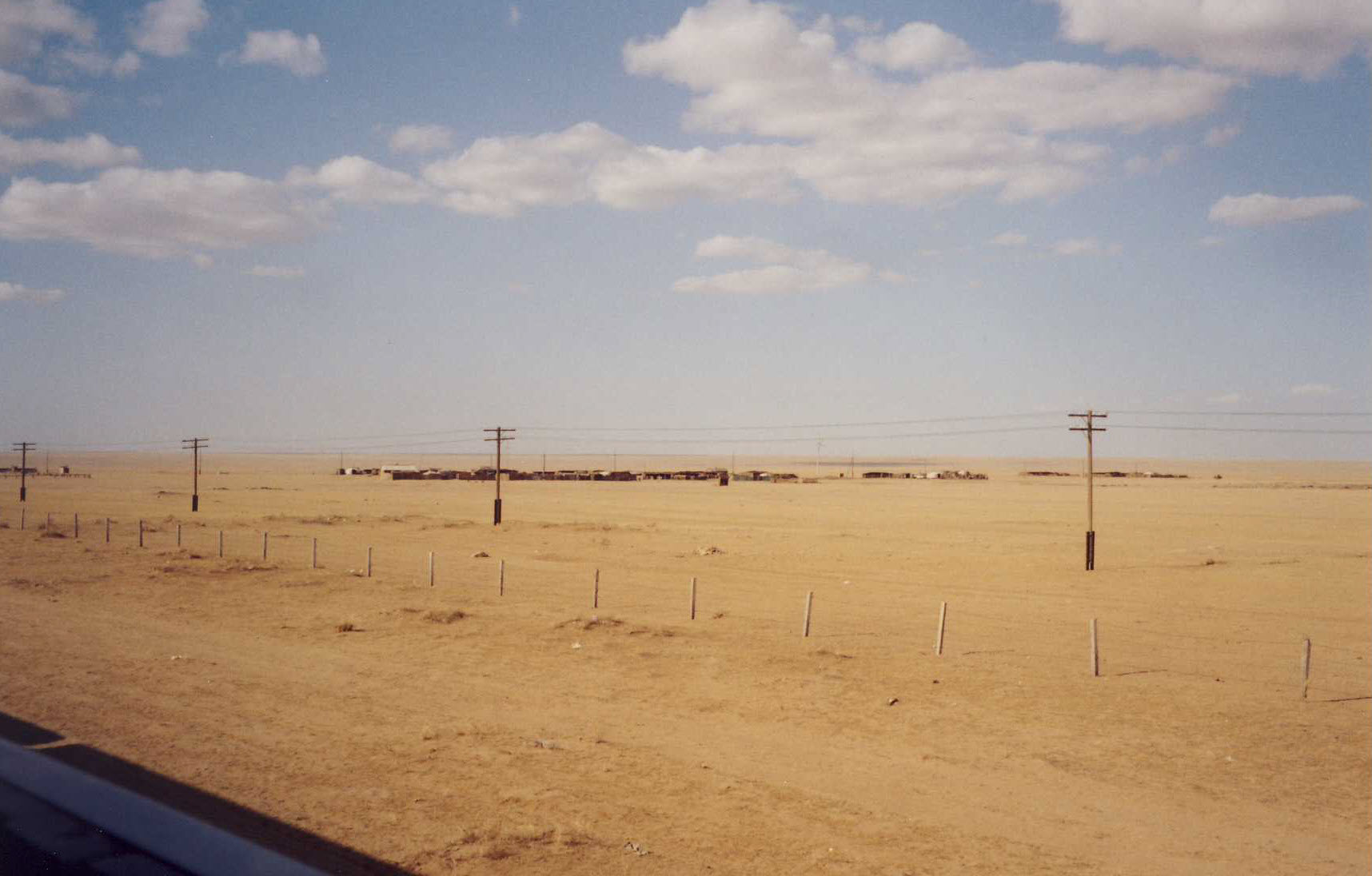
I was very surprised to find the Gobi as green as it was. It was not the rolling sand dunes like I had expected. The terrain is arid, but with small tufts of grasses. The guidebook has indicated the location of oases where camels may gather. Camera at the ready, I have been keeping my eyes peeled. No luck so far.
In the absence of trees, there are only power lines interrupting my line of sight to the horizon. The terrain is so flat and bare I imagine I should be able to see the ocean off in the distance. Our train is hemmed in on both sides by a barbed-wire fence littered with old plastic carrier bags and spotted with the carcasses of horses and dogs. Settlements appear out of nowhere. Sound carries a great distance, uninterrupted by barriers. At a stop earlier, I watched the goings-on at a community about a mile away. Moments later, the sounds of the children reached my ears only slightly muffled from the distance.
The only thing breaking the constant panorama of barbed and electrical wire is the occasional rail official, cheerily waving a baton from atop a slight rise a few meters from the train. There is no indication of how he got there; no automobile, no motorcycle, no horse – I didn’t even see any footprints. It was as though he had been there forever, supplied with food and water by passing trains.
There was been a dramatic change in the weather. The freezing chill of yesterday has given way to a warm, dusty clime. There is still some snow around, but it seems to cluster in shadowy patches. The change in altitude certainly plays a part. The sun, unhindered by clouds, heats up the carriages, prompting the windows to be opened for the first time. The attendants instantly materialize to close the windows, wiping the dust off of the handrails for good measure. The air seems much cleaner – perhaps coincidentally I realized that the Monkey Man disembarked in Ulan Bator. A couple has replaced him in the adjacent cabin.
We made up quite a bit of time, managing to pull into Ulaanbaatar on time – about 8.15am. Anna disembarked for the first time in days to wander the platform. The “jet lag” I joked about – when we switch from Moscow time to local (i.e. Mongolian) time seems to be a real thing. Lots of naps being taken.
Editor’s note: Excerpts from Anna’s journal included.
Leave a Reply